

After Super Tuesday, the presidential nominations for the Democratic and Republican parties are almost decided. At this point, the 2024 US presidential election is relatively calm, but it also holds many implications, not just for the United States.
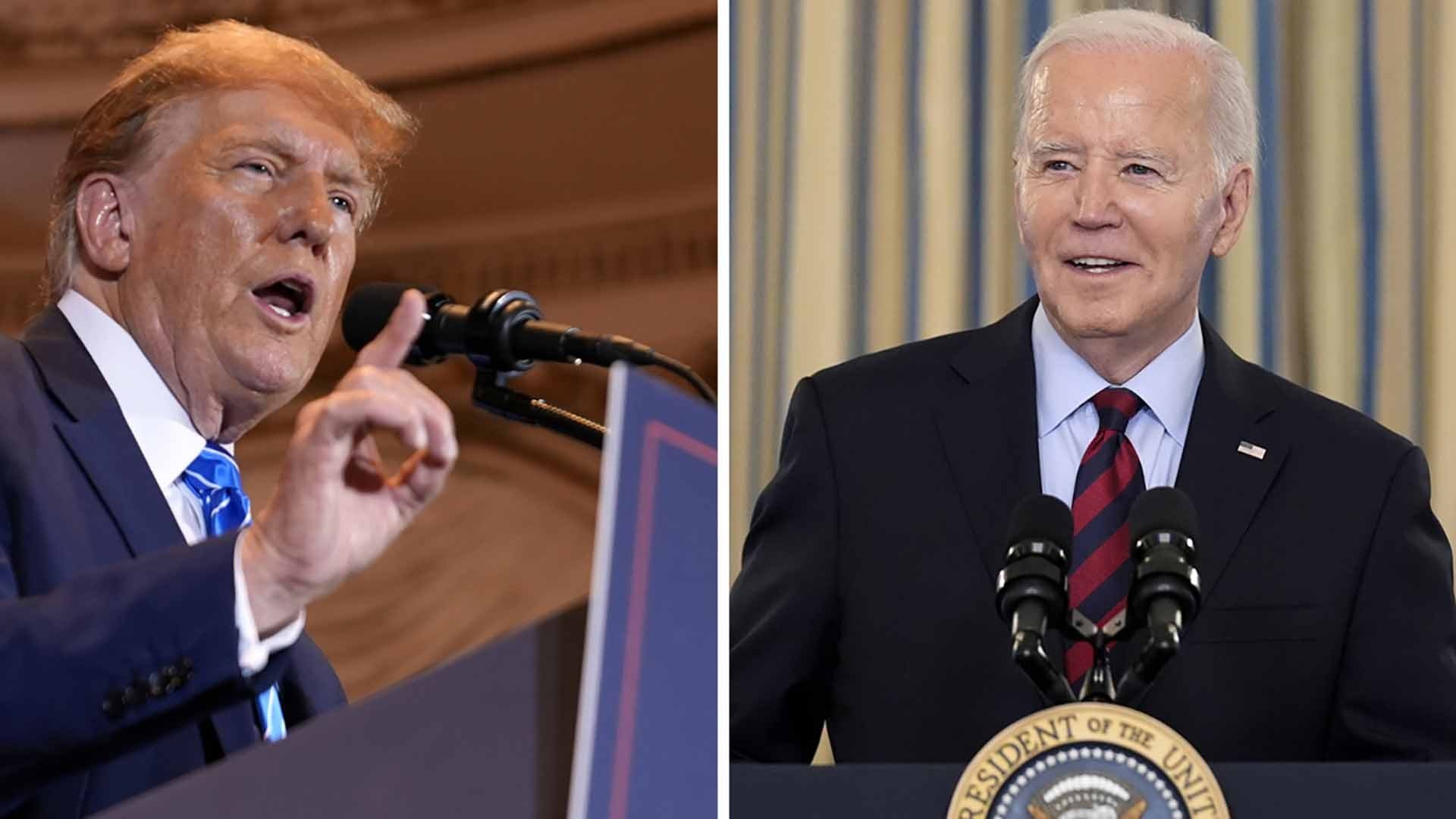 |
| Incumbent President Joe Biden and his predecessor Donald Trump both achieved overwhelming victories on Super Tuesday. (Source: abc7.com) |
Observable features and records
Super Tuesday has fulfilled its purpose. The results were as predicted, with no seismic shifts or turning points. Incumbent President Joe Biden and his predecessor Donald Trump both achieved overwhelming victories. Each candidate also suffered setbacks, but the overall result is higher than the 2020 primary. At this point, it can be confirmed that President Joe Biden has no real opponent. Former US Ambassador to the United Nations Nikki Haley will have to drop out of the race against Trump.
November 2024 will see a repeat of the "two-horse" race between the incumbent and the former president. Both parties and candidates will pour all their efforts into their campaigns, raising funds, overcoming obstacles, and striving for victory in this do-or-die battle. This is the least competitive primary election and the longest presidential campaign in American election history.
There are still about eight months until the official election day. Undoubtedly, this year's US election will set a record for the oldest president (Biden is 81 and Trump is 77). If Trump wins, history will repeat itself for the second time, with a losing presidential candidate winning the next term.
The 2024 election process contains a number of noteworthy issues, not only for Americans but also for the world .
What happens next, and what can we expect?
Up to this point, the primary elections have proceeded smoothly, as predicted. Who will win, and will there be incidents similar to 2020, such as controversies over voter fraud? What are American voters and the international community expecting from this election? A few points for discussion can be made:
First, what do American voters care about? The primary elections show that the top concerns of the American people are domestic issues such as the economy , immigration policy, and social welfare. The economy is number one. Only then come global issues such as foreign policy and climate change...
Previously, Americans showed a moderate level of interest in foreign policy. The crises in Ukraine, the Gaza Strip, the Taiwan Strait, etc., have led to a shift. Approximately 50% of those surveyed now consider foreign policy one of their top five priorities. Other specific issues include gun control, healthcare costs, abortion rights, crime rates, employment opportunities, and terrorism. The views of the Democratic and Republican parties, and the two candidates, on these issues will significantly influence the election results.
Two, who will win? The close data shows the approval ratings for the two candidates are very close. Trump's approval rating is 46-48%, Biden's is 43-44%. Trump's lead is tending to narrow. On Super Tuesday, both candidates largely overcame their controversies. Trump was cleared by the Supreme Court of non-conformity; related lawsuits did not significantly affect him. The reaction of some Democratic voters to his foreign policy regarding the Gaza Strip crisis had a limited impact on Biden.
However, "the night is long and full of dreams," and voters' views on the issues are not necessarily consistent with those of members of the two parties. Nearly ten percent of those surveyed have yet to express an opinion, which is also a significant factor. The final outcome could change; it's not ruled out that there could be unexpected developments related to Trump's legal troubles or a contested election result, as happened in 2020.
Third, what does the world expect? The viewpoints and policies of the two parties have specific differences, but fundamentally they remain focused on maintaining a unipolar world, America's position as the number one superpower; and competing for and protecting America's strategic interests globally...
Following the election, U.S. foreign policy may undergo adjustments. U.S. policy will impact hotspots, international relations, and its adversaries, partners, and allies. However, while the specific adjustments to strategy and approach will be at the level of policy, the fundamental nature will remain unchanged. Countries need to proactively adapt, avoiding waiting and dependence on external forces.
Fourth, there should be no imposition. Some American voters observe that the presidential candidates are all "aging," making it difficult to guarantee their health for another term, especially given the role of a leading superpower. Ultimately, American voters can only choose one of the two candidates from the Republican or Democratic parties. No candidate from another party or liberal can break through. The aging trend is expected to continue between 2025 and 2030.
The US presidential election process has many stages, with specific regulations and careful selection, consistent with the history and traditions of the United States. However, US election history has witnessed many unusual incidents and acknowledges the existence of some "normal" presidents! The same applies to issues related to models and institutions. Imposing one's own criteria on another country is inappropriate and unsuitable.
Source











































































































Comment (0)