

Previously, most of the roads leading to the villages and hamlets of Tram Tau commune were just dirt paths. In the dry season, layers of red dust would swirl up from the motorbike wheels. In the rainy season, these dirt roads turned into slippery mud, with many sections collapsing due to landslides, isolating many villages and hamlets. Some hamlets were not too far from the commune center, but to reach the market or health station, residents had to spend hours trekking through the forest and wading through streams.
Poor transportation infrastructure is not only a problem of difficult travel but also a bottleneck in the highland economy . Agricultural products are difficult to sell due to high transportation costs. Therefore, for the people here, every meter of road widened or paved with concrete holds special significance. It's not just about transportation; it's about opportunities for livelihood and hope of escaping poverty.
In recent years, along with state investment programs and the joint efforts of the people, rural transportation in Tram Tau commune has gradually improved. Many village roads have been concreted, extending from the commune center to remote hamlets.
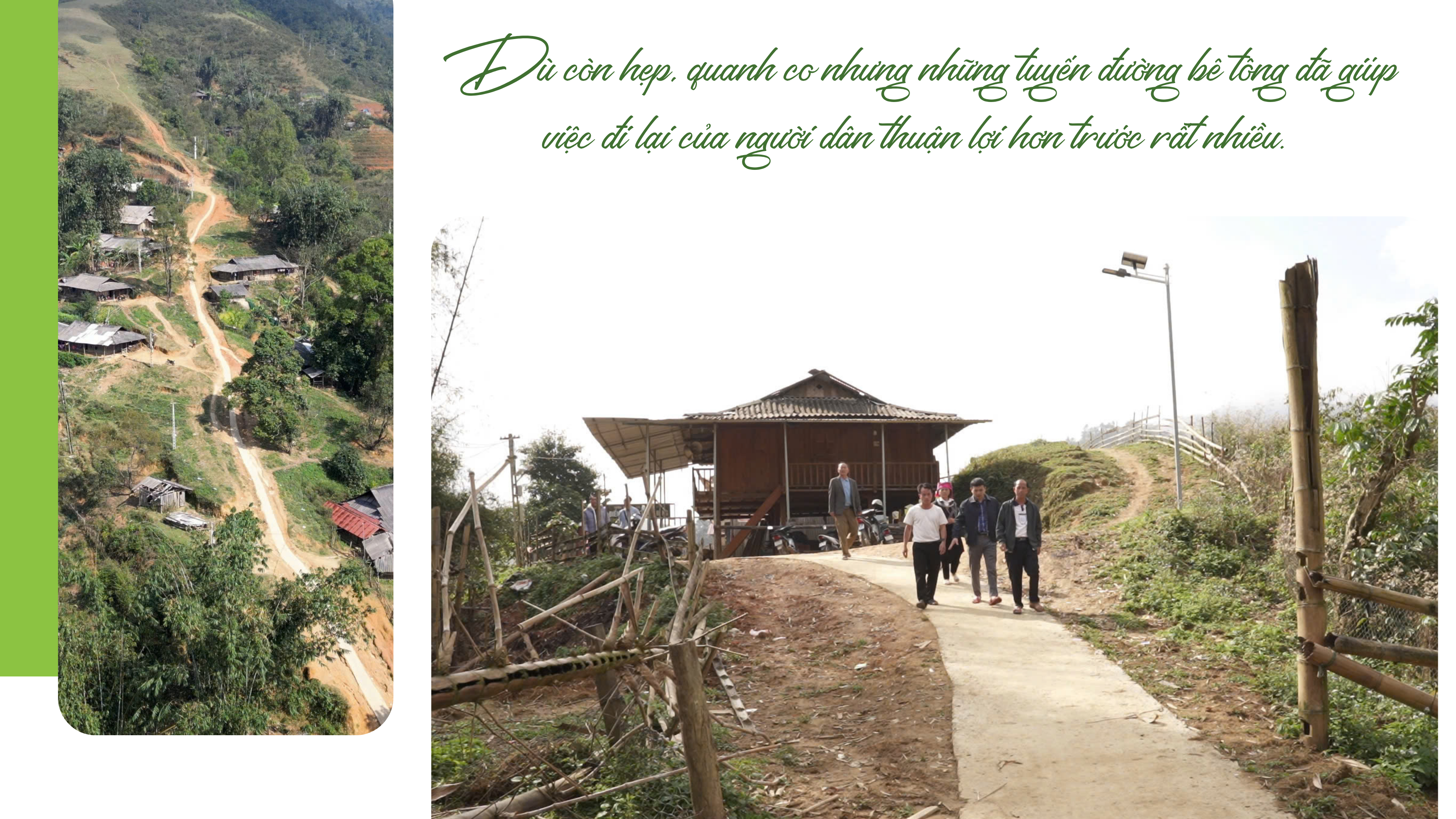
Tong Trong village is a prime example. Located in a rather isolated area, the road leading to the village used to be just a small dirt path, almost impassable by motorbike during the rainy season. When the concrete road was completed, the lives of the villagers changed dramatically.
Mr. Giàng A Lâu, Secretary of the Tống Trong village Party branch, shared: "With the concrete road, economic development is more convenient, and people can travel more easily than before. Thanks to this, living standards have gradually improved, and the number of poor households in the village has decreased by about 20% compared to 2024."
These figures highlight the crucial role of transportation infrastructure in poverty reduction in mountainous regions. When roads are paved with concrete, transporting agricultural products becomes easier, costs decrease, and traders can reach villages directly to purchase them. People are also encouraged to switch to different crops and livestock, expanding production.
Besides promoting economic development, improved transportation also contributes to enhancing teaching and learning conditions at schools in mountainous areas. Teacher Nguyen Thi Dung, a teacher at Tong Trong branch of Bong Sen Kindergarten, recalls: “Before the concrete road was built, we had to walk to the school. Since the road was built, travel for teachers and residents has become much easier, and we feel much more secure working here.”
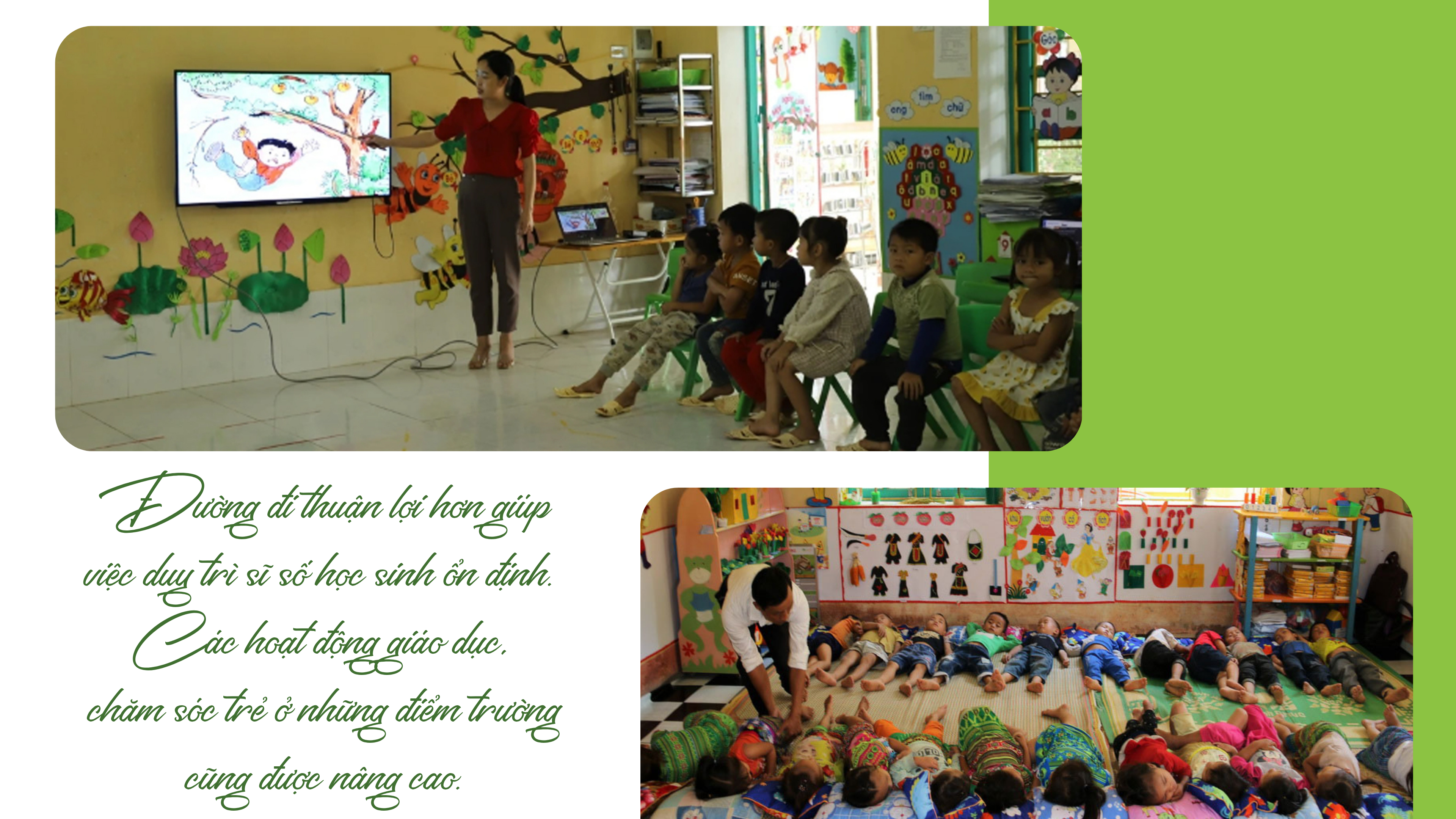
For many families in the highlands, concrete roads have made it easier for their children to get to school.
Following the merger, Tram Tau commune now has over 476 km of rural roads, of which nearly 60% are paved with concrete.
This is a remarkable figure for a mountainous area with complex terrain like Tram Tau. However, compared to development needs, the transportation system still requires comprehensive investment. Between 2025 and 2030, the locality plans to mobilize over 32 billion VND to continue investing in roads, gradually completing the rural transportation network.
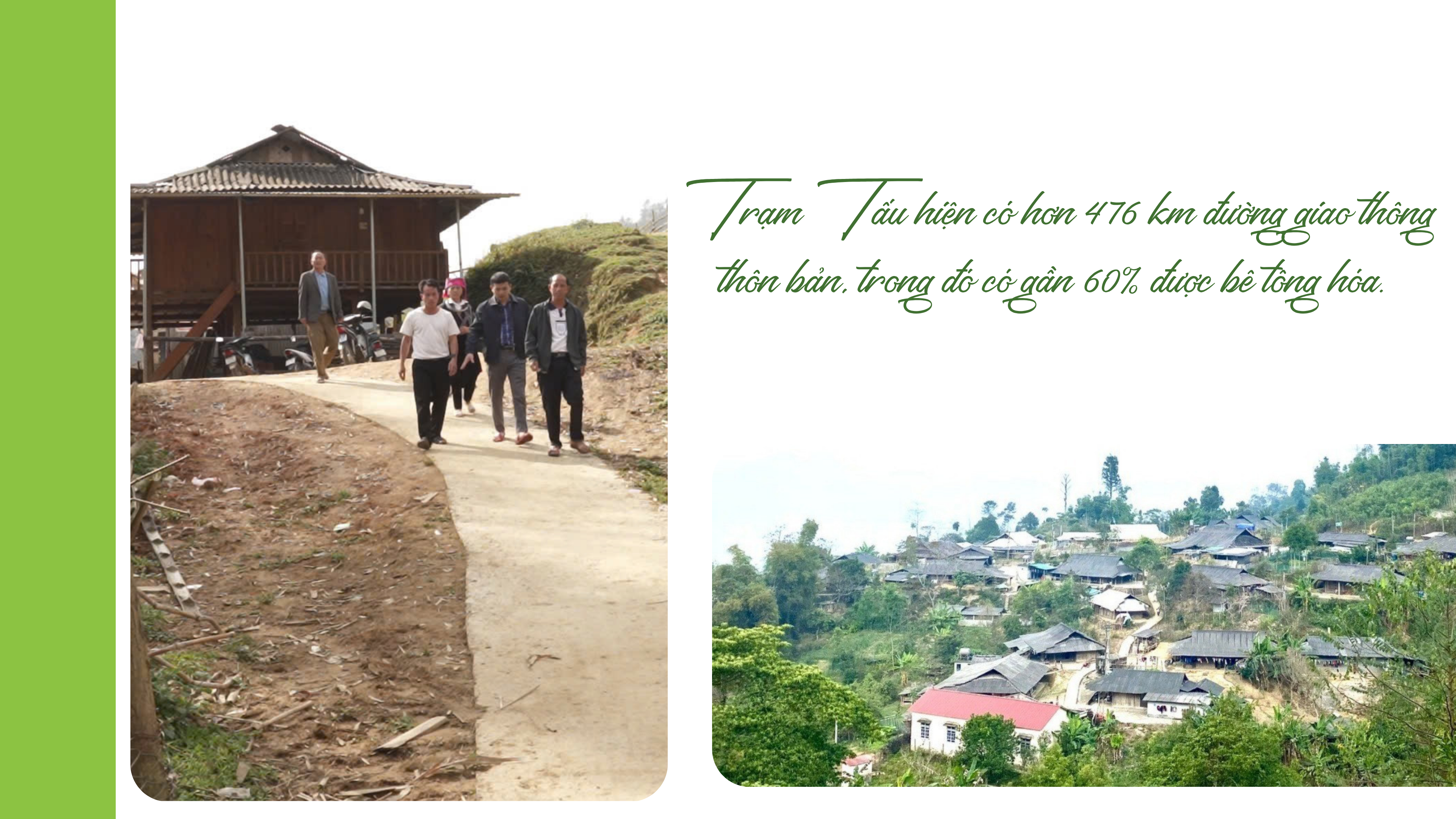
Mr. Bui Hong Anh, Vice Chairman of the People's Committee of Tram Tau commune, said: "The mountainous region has unique characteristics that make transportation very difficult, especially the transportation of materials, which is costly and labor-intensive. In the coming time, we will continue to integrate resources and mobilize the joint efforts of the people and organizations and individuals to gradually improve the village road system."
In fact, every road in the highlands is the result of immense efforts from both the government and the people. Steep terrain, rocky mountains, and deep streams create numerous obstacles in road construction. Therefore, when a road is completed, it will be a testament to the joint efforts and solidarity between the government and the people.
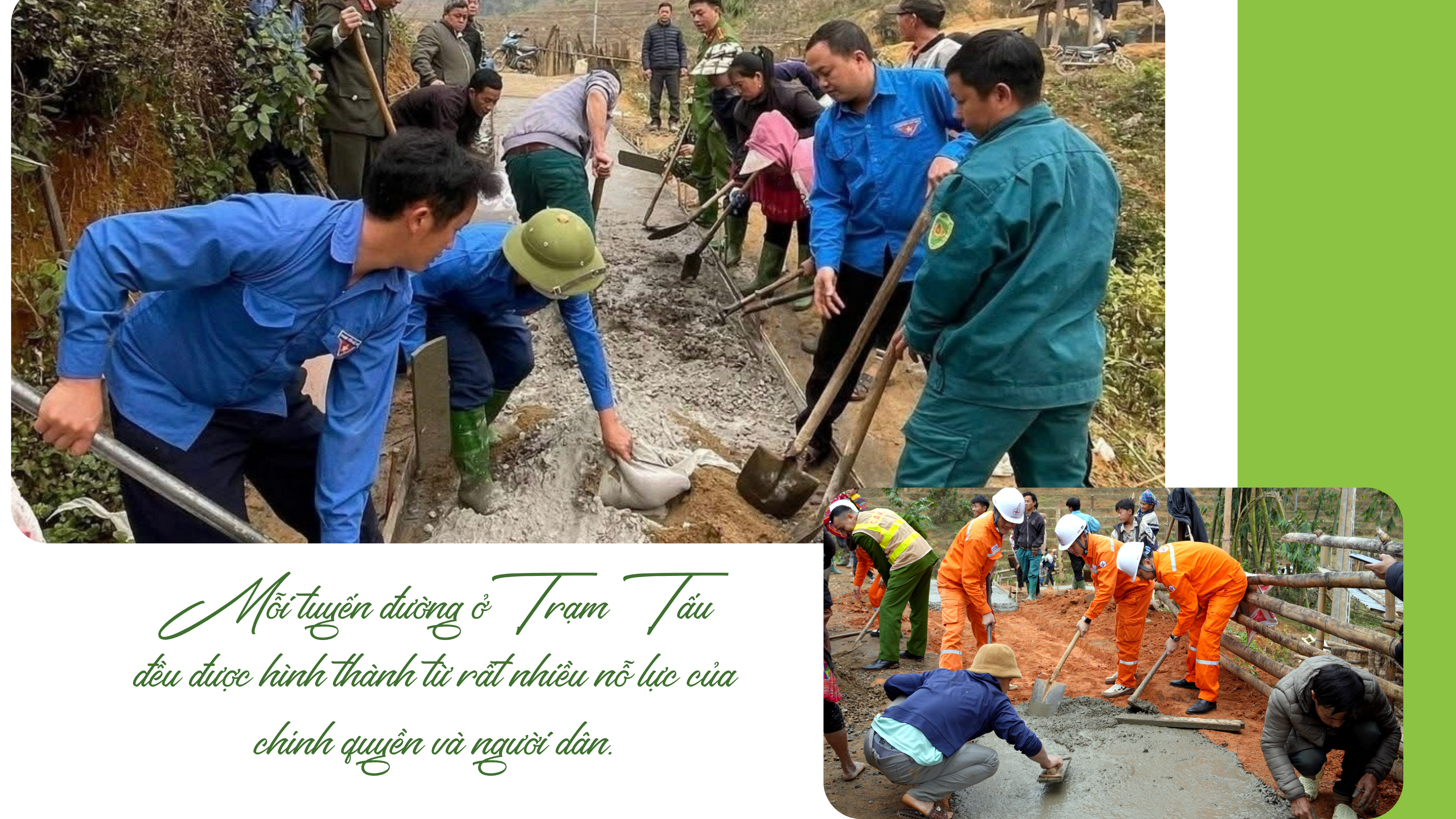
Ms. Mua Thi Ninh from Tong Trong village shared: "Before, the road was narrow and very difficult to travel on. Now that there's a concrete road, people can travel more conveniently, and selling agricultural products is also easier."
The simple words of the highland woman clearly reflected the changes in the village as transportation infrastructure improved. Baskets of corn and cardamom no longer have to be carried for hours on foot up slippery slopes. Children's journeys to school are also less worrisome during the rainy season. However, the journey of road construction in the highlands remains challenging. Many villages still rely on new investment projects to extend the existing concrete roads.
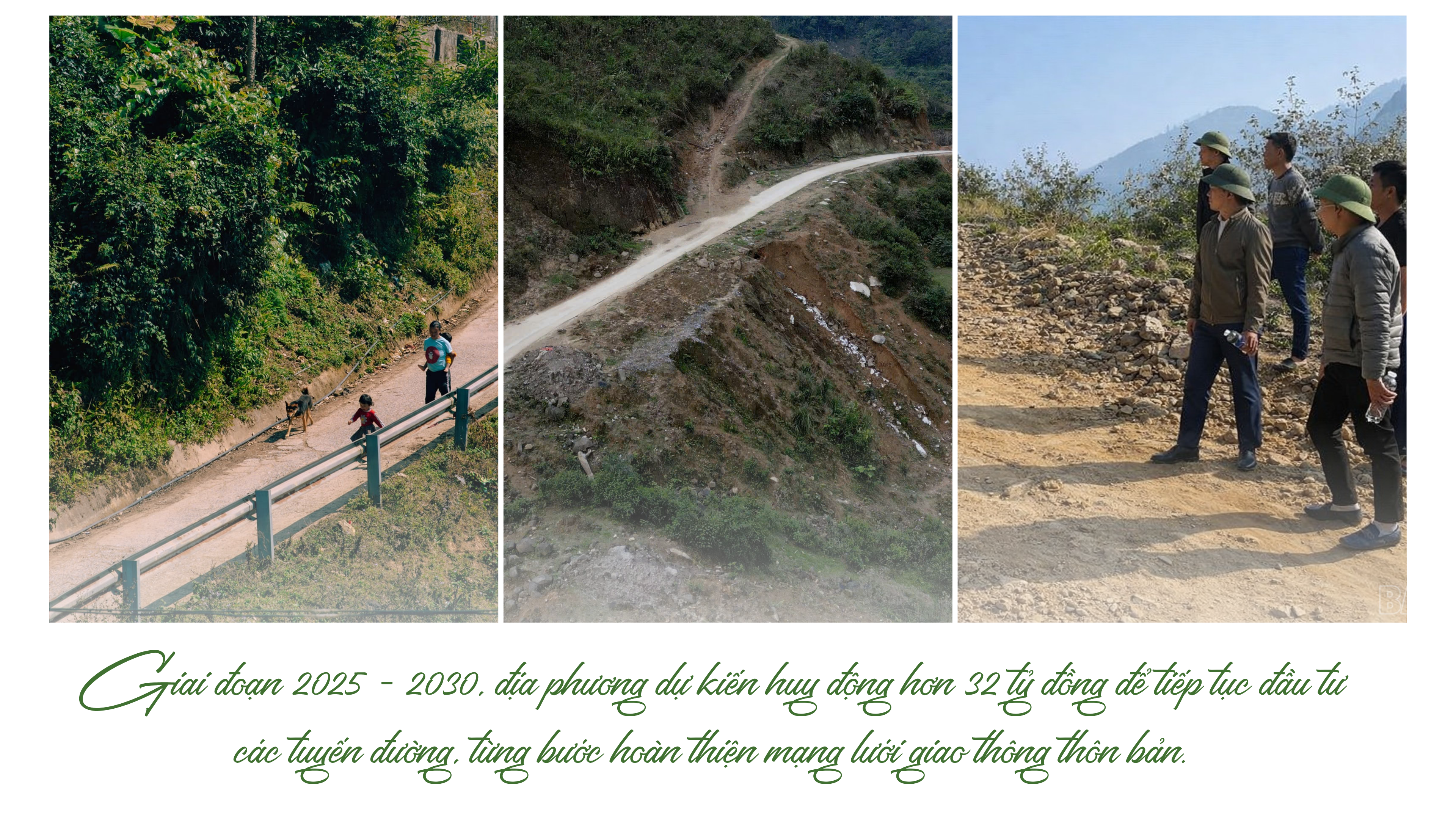
Although the concrete roads are not yet very wide, they have opened up hope for the people of the mountainous region of Tram Tau. With improved transportation, the path to school, to the market, and the journey out of poverty have become closer for the people here. And on these new concrete roads, the rhythm of life in the highlands is changing day by day.
Presented by: Thuy Thanh
Source: https://baolaocai.vn/do-rao-can-de-thoat-ngheo-post896450.html
![[Photo] Memorable moments at the 10th Vietnam-China Border Defense Friendship Exchange](https://vphoto.vietnam.vn/thumb/1200x675/vietnam/resource/IMAGE/2026/03/20/1773986226876_giao-luu-bien-gioi-vntq-lan-10-ben-tq-9737-4225-jpg.webp)












































































Comment (0)