

In 2025, the merger of three provinces (Ben Tre, Vinh Long , and Tra Vinh) into the new Vinh Long will expand administrative boundaries, creating a new and promising development space. This will lay the groundwork for the formation of a new urban-industrial-service center, playing the role of a growth pole in the Mekong Delta region.
 |
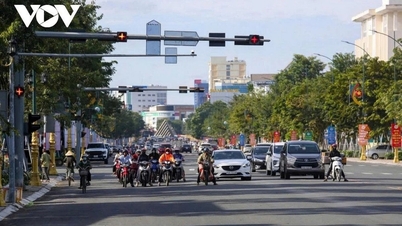
| People walk under rows of green trees in the heart of the city (formerly Tra Vinh ). Photo: Ba Thi |
Urban-industrial-service zone
As a central location, home to many provincial agencies and departments, Long Chau ward has many opportunities for development. According to the Chairman of the Long Chau Ward People's Committee, Doan Van Hue, urban development has received significant attention and guidance from the Party Committee and the government, achieving many outstanding results: infrastructure has been gradually improved, the urban landscape is more attractive, environmental sanitation has improved significantly, and people's awareness has been raised.
Accordingly, the First Party Congress of the ward, for the term 2025-2030, identified two breakthroughs: focusing on developing urban economy , services, and trade associated with digital transformation, increasing budget revenue, creating local jobs, and modernizing urban administration; and effectively managing planning, focusing on land clearance, and coordinating the construction of urban infrastructure and socio-economic development in a synchronized manner.
In the context of the province's overall development, Mr. Doan Van Hue believes that building Long Chau ward into a model, smart, and civilized urban area is an urgent requirement, contributing to the province's overall development. The ward focuses on developing transportation and lighting infrastructure, environmental management, human resource development, and raising community awareness in building a smart and modern urban culture; creating a green, clean, and beautiful living space.
According to the Department of Construction, the province currently has 19 wards; and possesses 3 officially recognized Type II urban areas: Vinh Long City, Ben Tre City, and Tra Vinh City (formerly). These are regional central urban areas, playing a pivotal role in promoting socio-economic development, strengthening regional linkages, and supporting the urbanization process in the Mekong Delta region. These urban areas have had their general planning approved based on sustainable development orientations, integrating ecological urban models, compact urban areas, and concentrated urban areas, adapting to climate change. The efficient exploitation of urban space, integrated infrastructure, and rational land use are being implemented in accordance with the Urban and Rural System Planning for the period 2021-2030, with a vision to 2050.
Mr. Nguyen Quoc Duy, Deputy Director of the Department of Construction, stated that the merger of the three provinces has created a new Vinh Long with a larger population, area, and economic potential. This is the foundation for the formation of a new urban-industrial-service center in the middle reaches of the Tien River, playing the role of the second growth pole after Can Tho City in the central sub-region of the Mekong Delta. This requires the province to review and adjust its spatial development orientation, economic axes, and regional center system to conform with the national master plan.
Developing a multi-centered urban model
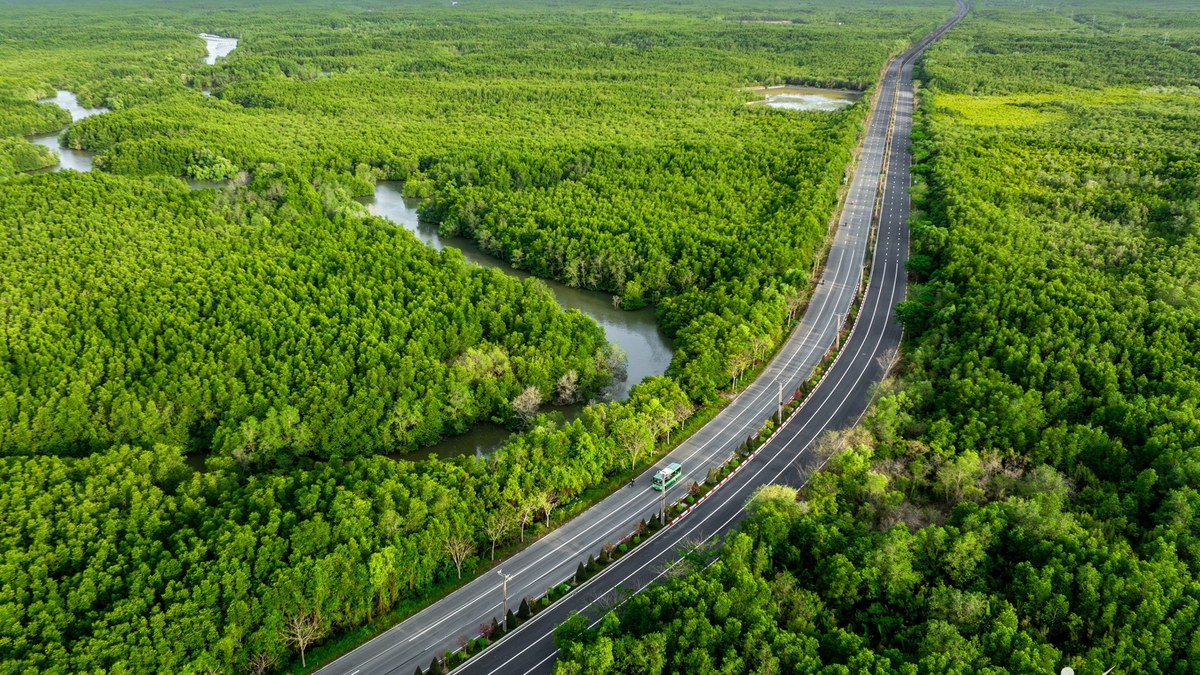
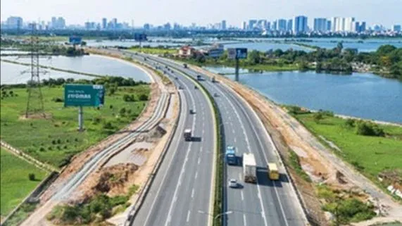
According to Mr. Nguyen Quoc Duy, the cities that were formerly provincial centers will be oriented to become satellite cities, contributing to the formation of a dispersed and interconnected urban structure. Major transportation routes such as National Highway 60, National Highway 53, and the Trung Luong-My Thuan-Can Tho expressway will play a key role in regional connectivity, thereby forming new development corridors. These contents are updated in the provincial planning for the period 2021-2030, with a vision to 2050.
Looking ahead, the province will focus on reviewing and adjusting the urban system planning to ensure it aligns with the new development direction after the merger. Key priorities include: green growth, smart cities, and adaptation to climate change, especially sea level rise in the lower Mekong River basin. In addition, urban space will be organized according to a riverside corridor model and strategic transportation axes, effectively utilizing key routes such as the Tien River, Co Chien River, Ham Luong River, and national highways, expressways, and coastal routes. The province will develop a multi-centered urban model with rational stratification, using existing central cities as nuclei while simultaneously forming new growth poles in potential areas.
Specifically, the plan aims for a harmonious blend of urbanization and the preservation of riverine landscapes and the unique culture of the delta region through an integrated urban-rural model, developing medium and small-scale ecological cities. It also emphasizes the application of digital technology in urban management, public service delivery, infrastructure operation, and environmental monitoring, moving towards a digital city model and urban governance. Furthermore, it focuses on investing in integrated infrastructure: urban ring roads, public transportation, ports and terminals, river bridges, inland waterways, and logistics, strengthening intra-regional and inter-regional linkages.
"The overall goal is to improve the rate and quality of urbanization, enhance the competitiveness of the urban region, and make Vinh Long a major economic and urban center of the Mekong Delta," Mr. Duy emphasized.
Urban-industrial-service zone
As a central location, home to many provincial agencies and departments, Long Chau ward has many opportunities for development. According to the Chairman of the Long Chau Ward People's Committee, Doan Van Hue, urban development has received significant attention and guidance from the Party Committee and the government, achieving many outstanding results: infrastructure has been gradually improved, the urban landscape is more attractive, environmental sanitation has improved significantly, and people's awareness has been raised.
Accordingly, the First Party Congress of the ward, for the term 2025-2030, identified two breakthroughs: focusing on developing urban economy, services, and trade associated with digital transformation, increasing budget revenue, creating local jobs, and modernizing urban administration; and effectively managing planning, focusing on land clearance, and coordinating the construction of urban infrastructure and socio-economic development in a synchronized manner.
In the context of the province's overall development, Mr. Doan Van Hue believes that building Long Chau ward into a model, smart, and civilized urban area is an urgent requirement, contributing to the province's overall development. The ward focuses on developing transportation and lighting infrastructure, environmental management, human resource development, and raising community awareness in building a smart and modern urban culture; creating a green, clean, and beautiful living space.
According to the Department of Construction, the province currently has 19 wards; and possesses 3 officially recognized Type II urban areas: Vinh Long City, Ben Tre City, and Tra Vinh City (formerly). These are regional central urban areas, playing a pivotal role in promoting socio-economic development, strengthening regional linkages, and supporting the urbanization process in the Mekong Delta region. These urban areas have had their general planning approved based on sustainable development orientations, integrating ecological urban models, compact urban areas, and concentrated urban areas, adapting to climate change. The efficient exploitation of urban space, integrated infrastructure, and rational land use are being implemented in accordance with the Urban and Rural System Planning for the period 2021-2030, with a vision to 2050.
 |
| A view of Phu Khuong ward's urban area. Photo: Trung Hieu |
Mr. Nguyen Quoc Duy, Deputy Director of the Department of Construction, stated that the merger of the three provinces has created a new Vinh Long with a larger population, area, and economic potential. This is the foundation for the formation of a new urban-industrial-service center in the middle reaches of the Tien River, playing the role of the second growth pole after Can Tho City in the central sub-region of the Mekong Delta. This requires the province to review and adjust its spatial development orientation, economic axes, and regional center system to conform with the national master plan.
Developing a multi-centered urban model
According to Mr. Nguyen Quoc Duy, the cities that were formerly provincial centers will be oriented to become satellite cities, contributing to the formation of a dispersed and interconnected urban structure. Major transportation routes such as National Highway 60, National Highway 53, and the Trung Luong-My Thuan-Can Tho expressway will play a key role in regional connectivity, thereby forming new development corridors. These contents are updated in the provincial planning for the period 2021-2030, with a vision to 2050.
Looking ahead, the province will focus on reviewing and adjusting the urban system planning to ensure it aligns with the new development direction after the merger. Key priorities include: green growth, smart cities, and adaptation to climate change, especially sea level rise in the lower Mekong River basin. In addition, urban space will be organized according to a riverside corridor model and strategic transportation axes, effectively utilizing key routes such as the Tien River, Co Chien River, Ham Luong River, and national highways, expressways, and coastal routes. The province will develop a multi-centered urban model with rational stratification, using existing central cities as nuclei while simultaneously forming new growth poles in potential areas.
According to architect Tran Ngoc Chinh, Chairman of the Vietnam Urban Planning and Development Association, given the province's geographical location deep inland, near Can Tho City, while new economic growth drivers are located in the coastal and riverside areas of Tra Vinh and Ben Tre (formerly), the province needs a strategic vision to develop a multi-polar, closely linked urban system, rather than focusing on building a single core city. Instead, it should aim for a "multi-polar urban network" model, where each city plays a specialized role, complementing each other to create a sustainable development ecosystem.
Specifically, the plan aims for a harmonious blend of urbanization and the preservation of riverine landscapes and the unique culture of the delta region through an integrated urban-rural model, developing medium and small-scale ecological cities. It also emphasizes the application of digital technology in urban management, public service delivery, infrastructure operation, and environmental monitoring, moving towards a digital city model and urban governance. Furthermore, it focuses on investing in integrated infrastructure: urban ring roads, public transportation, ports and terminals, river bridges, inland waterways, and logistics, strengthening intra-regional and inter-regional linkages.
"The overall goal is to improve the rate and quality of urbanization, enhance the competitiveness of the urban region, and make Vinh Long a major economic and urban center of the Mekong Delta," Mr. Duy emphasized.
TUYET HIEN
Source: https://baovinhlong.com.vn/thoi-su/202602/do-thi-vinh-long-บน-hanh-trinh-moi-a8d0664/


















































Comment (0)