

Competing to "showcase amazing products"
The Chinese newspaper Jing Daily recently reported that DFS, the travel retail arm of Moët Hennessy Louis Vuitton (LVMH), is planning to open a 7-star duty-free shopping and entertainment complex on Hainan Island, China. With over 420 duty-free retail locations in airports, resorts, and hotels, DFS aims to conquer the world's leading luxury goods market once the complex is completed in 2026.
This "mega" project is planned to be located in Sanya, right on Yalong Bay, one of the most beautiful bays on Hainan Island. DFS Yalong Bay is being studied for a scale of 128,000 m² (equivalent to Marina Bay Sands in Singapore), where it will house stores from LVMH brands, including fashion , accessories, cosmetics, perfumes, watches, jewelry, and high-end restaurants and food courts. LVMH estimates that by 2030, this complex will attract more than 16 million visitors annually, becoming a rival to Hong Kong, Macau, and Singapore.
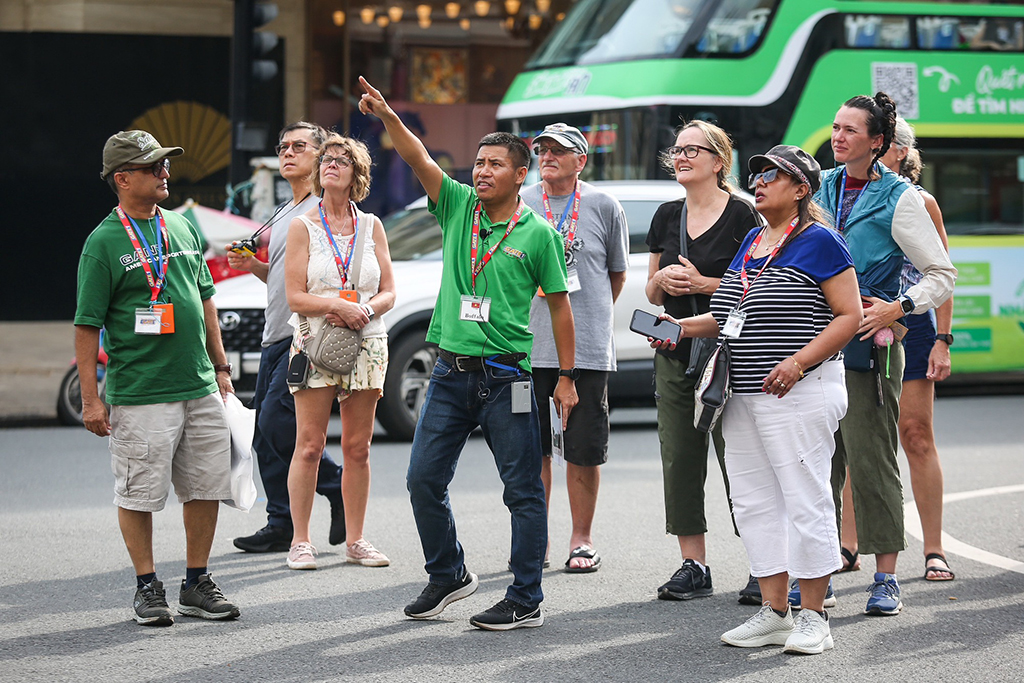
Vietnam is increasingly facing the intense competition for international tourists among countries with developed tourism industries.
According to Jing Daily, DFS and LVMH are heavily investing in Hainan Island because it is being planned to become a new shopping paradise for the Chinese market. Known as the "Hawaii of China," it is becoming a magnet for affluent customers, boasting some of the world's largest duty-free shopping centers with around 800 brands, and enjoying favorable government tax exemption policies. Prices for products sold there are 10-40% lower than those in mainland China.
During the pandemic years, due to pursuing a zero-Covid policy, almost no international tourists visited Hainan Island. In 2020, the island only received 200,000 visitors. The number of domestic tourists decreased from 81.6 million to 64.3 million. However, thanks to the policy of increasing duty-free shopping quotas for domestic tourists, tourism revenue and duty-free revenue increased by 30% compared to the pre-pandemic year; at the same time, Hainan's GDP increased by 4.2%, double the growth rate of China's 2.3%. Yet, the government is still not satisfied and is continuing to actively invite leading global businesses to invest in high-end products. When planning the development of DFS Yalong Bay, LVMH received a commitment from Beijing that it would be the only luxury shopping complex on Hainan Island.
With incentives from Beijing, LVMH boldly proceeded with the construction of a 7-star luxury complex. International media noted that the Chinese government's policy has two main objectives: firstly, to attract international tourists, and secondly, to encourage mainland Chinese citizens to travel and shop domestically, thereby limiting the outflow of foreign currency.
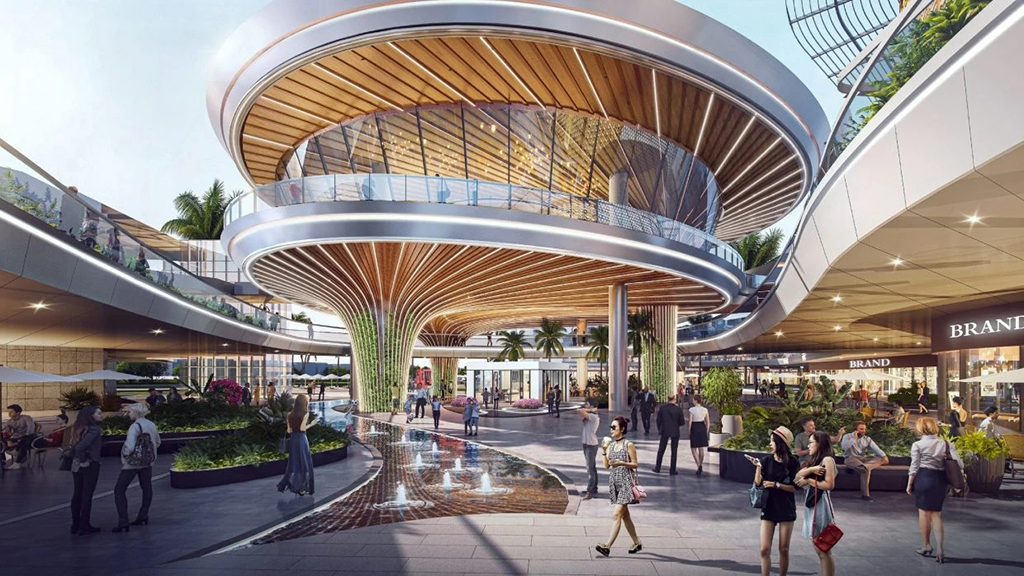
DFS Yalong Bay perspective: The project will increase tourism competition in the area.
Similarly, two days ago, the Thai government also issued new regulations, piloting a policy allowing restaurants and entertainment venues such as clubs and karaoke bars in some provinces and cities like Bangkok, Phuket, Pattaya, Chiang Mai, and Samui to stay open until 4 am, starting from December 15th; at the same time, the government plans to organize approximately 3,000 sports and cultural events to increase tourism revenue and stimulate local economic development.
Thailand is planning to extend visa-free periods for tourists to boost its international visitor numbers; at the same time, it is adjusting many policies and developing new products not only to serve international tourists but also to meet the needs of its citizens as they reduce spending on overseas travel. Meanwhile, Taiwan has chosen to offer cash incentives to tourists to stimulate tourism.
Without taking risks, it's difficult to expect breakthroughs.
Despite having the advantage of opening its doors earlier, Vietnam is still struggling to find a solution to the problem of lagging behind and how to catch up. We exceeded our target for international tourists three months before the end of the year, but while Vietnam's target was 12-13 million tourists, Thailand had already surpassed 23 million international tourists by mid-November and is hoping to reach 28 million this year. Significantly, while international tourism hasn't yet recovered, the domestic market is gradually cooling down. High airfares, a lack of attractive new products, and the loss of appeal for some "hot" destinations due to price gouging and security issues are inadvertently driving people to travel abroad.
With regret at seeing other countries surpass Vietnam one after another, and then looking at LVMH's massive investment of billions of USD in Hainan Island, Jonathan Hanh Nguyen, Chairman of the Inter Pacific Group (IPPG), expressed his concern: Hainan Island is close to Vietnam and has all the natural conditions to develop almost all types of services, from resort tourism, shopping, exploration, entertainment, and healthcare. On one side, there is Singapore, also a shopping paradise, and on the other side, we see Thailand – Vietnam's tourism rival – has surpassed it to become a paradise for entertainment… Clearly, Vietnam's tourism is dwarfed by formidable competitors and will find it increasingly difficult to surpass them unless we have more groundbreaking policies and more unique products.
It's even more regrettable that the man dubbed the "king of luxury goods" a decade ago had ambitions to open large shopping malls and duty-free shops on the streets for tourists to spend lavishly in many locations. IPPG even negotiated with suppliers to achieve prices equal to those in France and Singapore, and lower than in China, despite being retail and subject to taxes. However, IPPG's projects, plans, ideas, and passionate investments in large-scale constructions and unique products to "empty the wallets" of tourists, as seen in Singapore, Thailand, and Hainan Island, were met with enthusiastic support wherever they went, but encountered numerous difficulties in implementation.
Dr. Vo Tri Thanh, former Deputy Director of the Central Institute for Economic Management Research, acknowledges that the obstacles and shortcomings affecting the recovery and development of Vietnamese tourism have been fully identified by the Government and relevant authorities. Everyone understands that many legal and institutional obstacles prevent tourism from achieving breakthroughs. While there has been decisive action from various levels and sectors to finalize comprehensive projects such as duty-free zones and new product types, implementation in practice remains slow. The key is to adopt a new approach in terms of perception, legal framework, institutions, and implementation.
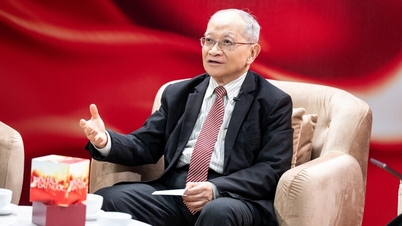
Dr. Vo Tri Thanh, former Deputy Director of the Central Institute for Economic Management Research.
"There are things that are still lacking, and demanding a complete institutional and legal framework would take a lot of time. There are new models where we lack experience, requiring a spirit of daring to act and make decisive decisions, based on the best efforts for projects that are evaluated and viewed from multiple perspectives. We cannot demand 100% perfection. In other words, to achieve breakthroughs, we must accept a certain level of risk. We must change from our mindset to our approach and methods," emphasized Dr. Vo Tri Thanh.
"Every step we hesitate takes is a lost opportunity to another destination. In business, opportunity is paramount. Foreign investors won't wait for us forever. The slower we are, the more limited our chances of getting ahead."
Mr. Jonathan Hạnh Nguyễn , Chairman of Inter Pacific Group (IPPG)
Source link



![[Photo] General Secretary and President To Lam presides over a working session with the Central Policy and Strategy Committee on the development of the materials industry.](https://vphoto.vietnam.vn/thumb/1200x675/vietnam/resource/IMAGE/2026/05/21/1779359935432_a3-bnd-3129-1412-jpg.webp)































































Comment (0)