

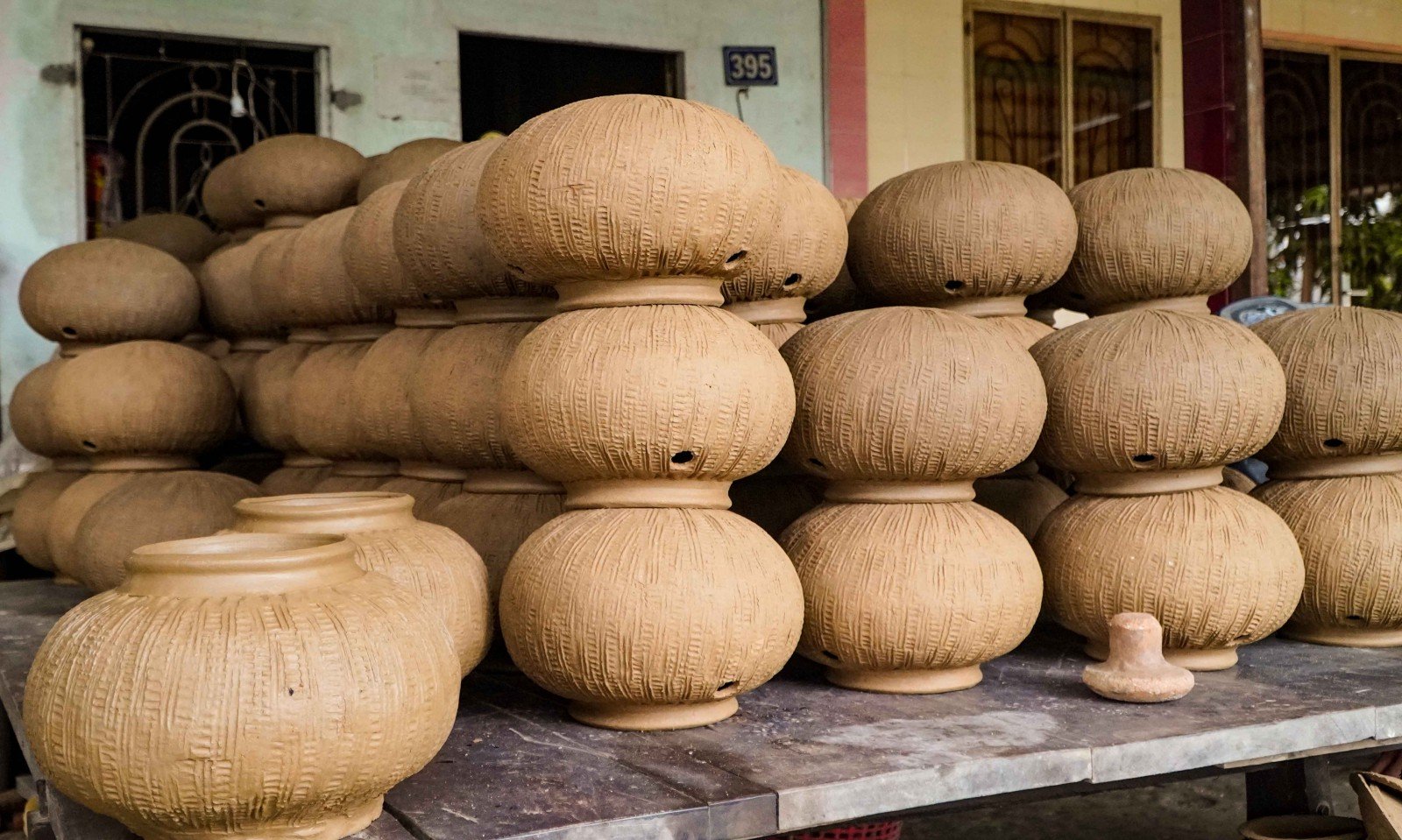
The finished clay pots have been fired in a red-hot kiln, ensuring durability and beauty.
The craft of making earthenware pots in Tho Son commune, now Hon Dat commune, was recognized as a traditional craft by the People's Committee of Kien Giang province (now An Giang province) in 2019.
The Khmer people often call clay pots "ca om," and they are used for everything from family meals to cultural rituals. These pots are used for cooking rice, brewing herbal medicine, stewing fish, and more, helping to preserve the original flavors of traditional dishes.
When mentioning the craft of making earthenware pots in Hon Dat commune, many locals remember Mrs. Thi Kim Huong, a Khmer woman who dedicated her entire life to the craft. Although Mrs. Huong passed away more than 10 years ago, the story of her skillful hands and dedication to preserving the craft is still remembered with great respect by the people.
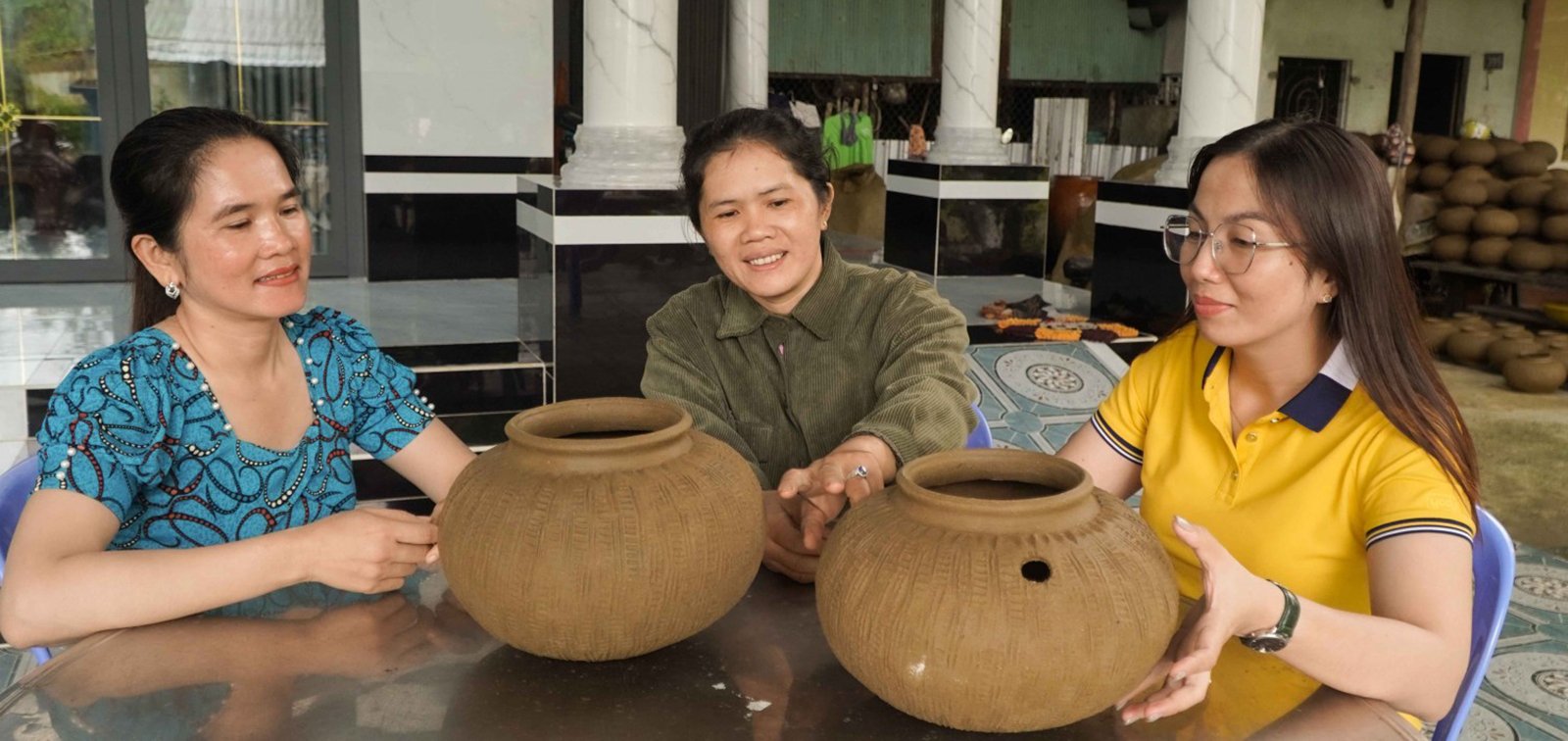
The Khmer people of Hon Dat commune are proud of their traditional pottery-making craft.
Continuing the craft of Mrs. Huong is her granddaughter, Danh Thi My Hang, residing in Hon Queo hamlet. Having been involved in the craft for over 12 years, Ms. Hang understands the hard work involved in producing finished pots. The biggest challenge currently is the increasing scarcity of clay and rising prices, which drive up costs. Nevertheless, her love for the craft and her responsibility to her family's traditional trade are the driving forces that keep her and other households going, constantly improving designs and expanding the market for their products.
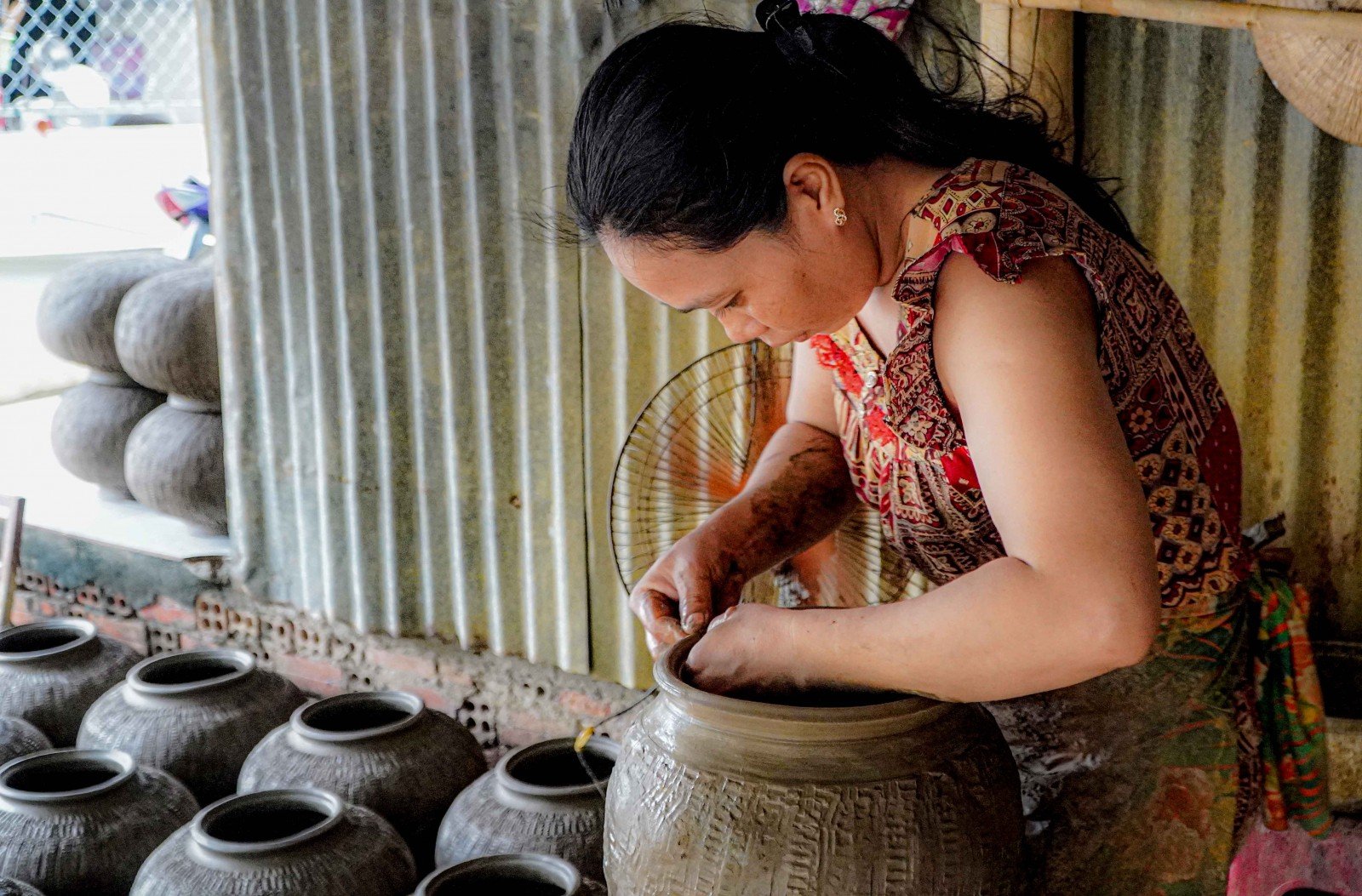
Ms. Danh Thi My Hang is meticulous with every step in making clay pots.
Ms. Hang recounted: “During the COVID-19 pandemic, our house was overflowing with pots because we couldn't sell them. After the pandemic, regular customers returned, and business stabilized. Every day, my mother and I make pots, while my husband delivers them to Can Tho, Ho Chi Minh City, and neighboring provinces.”
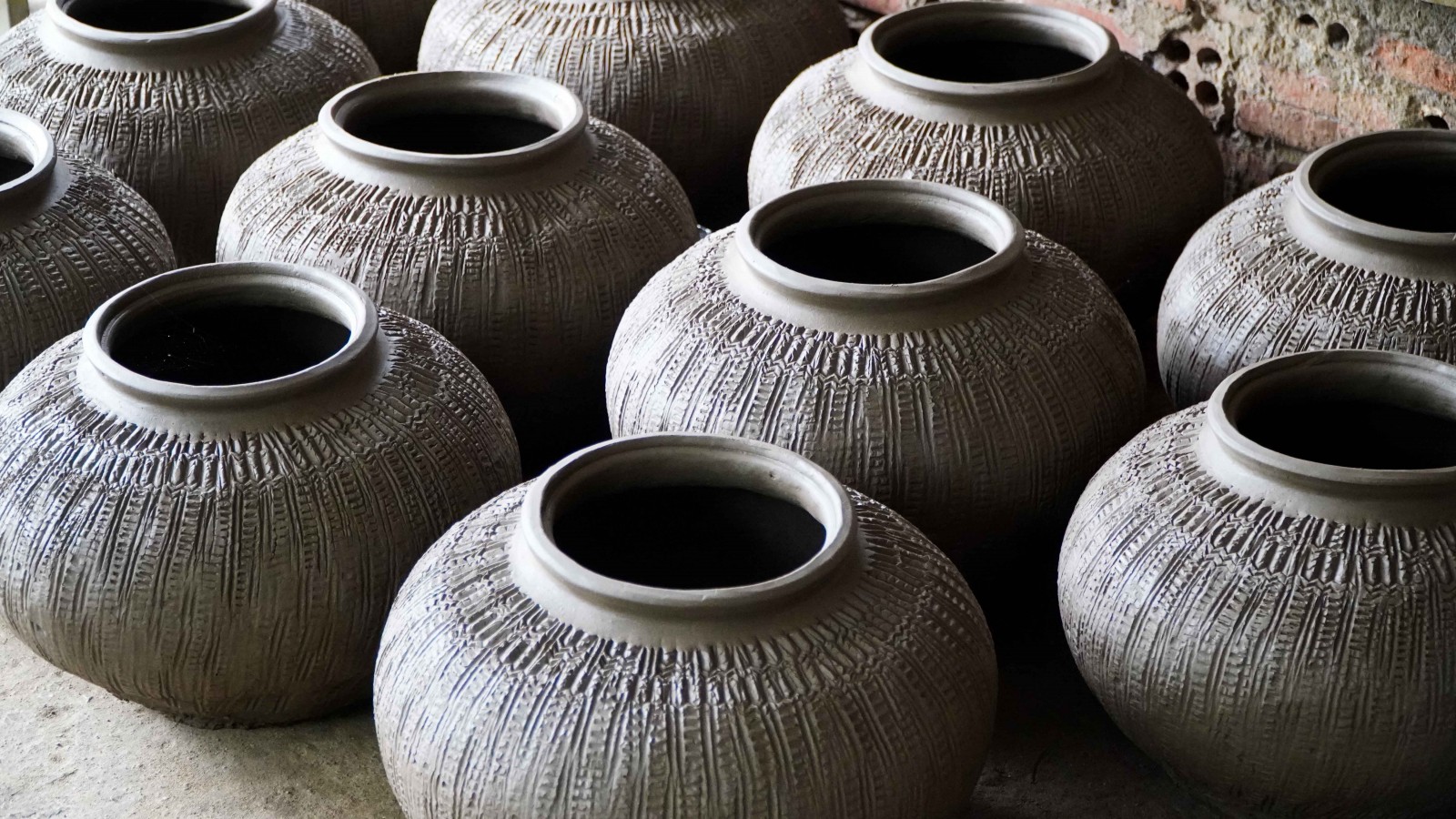
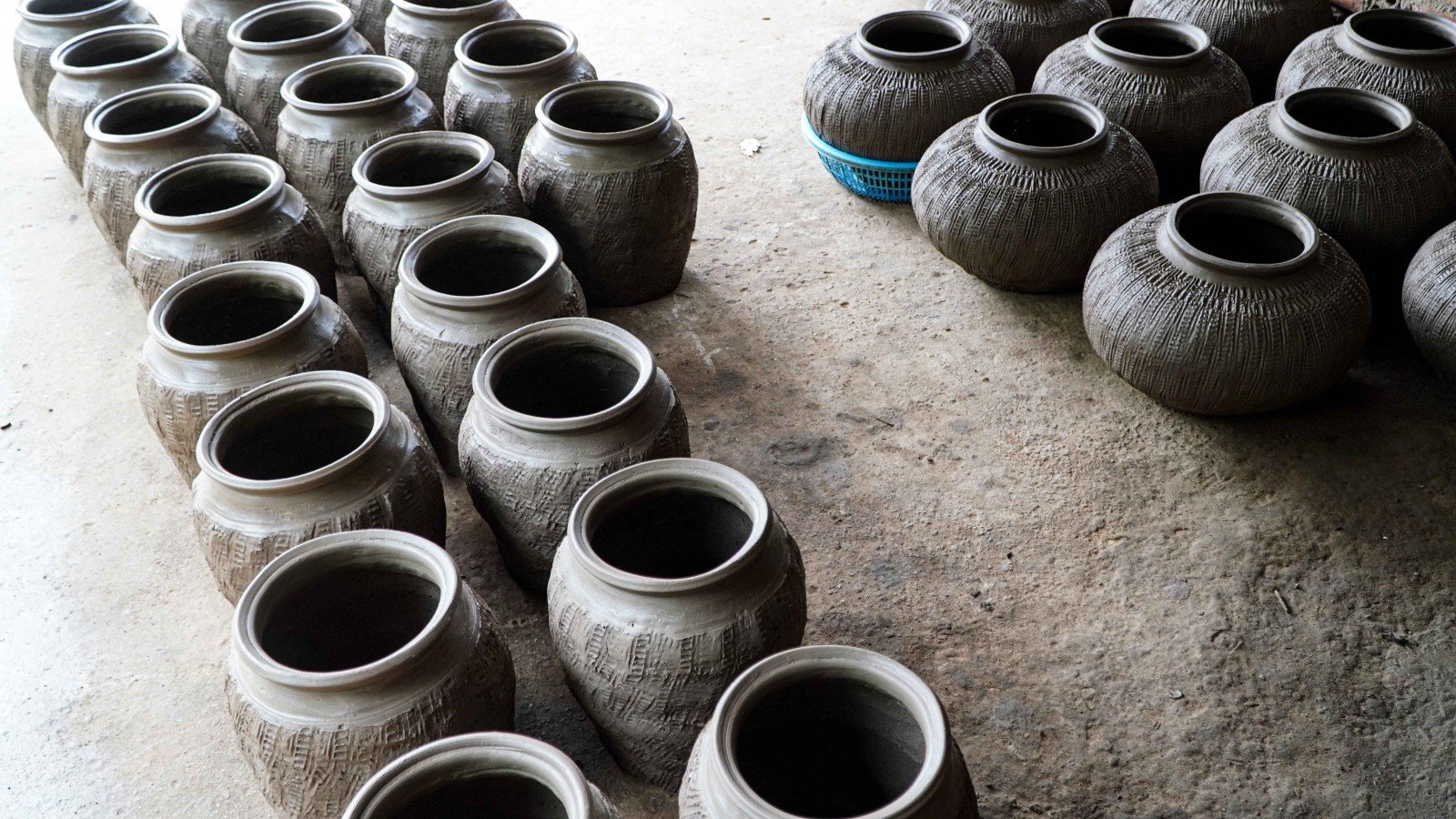
The clay pot is in the finishing stages and has not yet been fired in a red-hot kiln.
To make a complete earthenware pot, the craftsman goes through many steps such as preparing the clay, shaping it, forming the rim, stamping the sides, pounding the bottom, drying it in the sun, and then firing it in a red-hot fire. All of these steps are done manually, requiring meticulousness and experience.
Ms. Do Thi Kim Dieu, who has been involved in the craft for over 15 years, said she only makes about 35 pots a day. "The income isn't high, but thanks to this craft, my family's finances are stable. The important thing is preserving the traditional craft of my ancestors," Ms. Dieu shared.

For Ms. Thi Nhu, making clay pots is hard work but enjoyable because it allows her to continue the traditional craft passed down from her grandparents.
Ms. Thi Nhu's family is also one of the households that have been making clay pots for many years. Besides cultivating over 20 acres of rice, she and her husband still make clay pots. Ms. Nhu said: “The craft was passed down from my grandmother. The clay for making pots must be mixed in the correct ratio of 70% sandy clay and 30% pliable clay; it must be kneaded thoroughly before being molded. After making the pots, they are dried completely and then fired at a red-hot fire to make them strong and durable. Every month I sell 300-400 pots; traders come directly to my house to pick them up.”
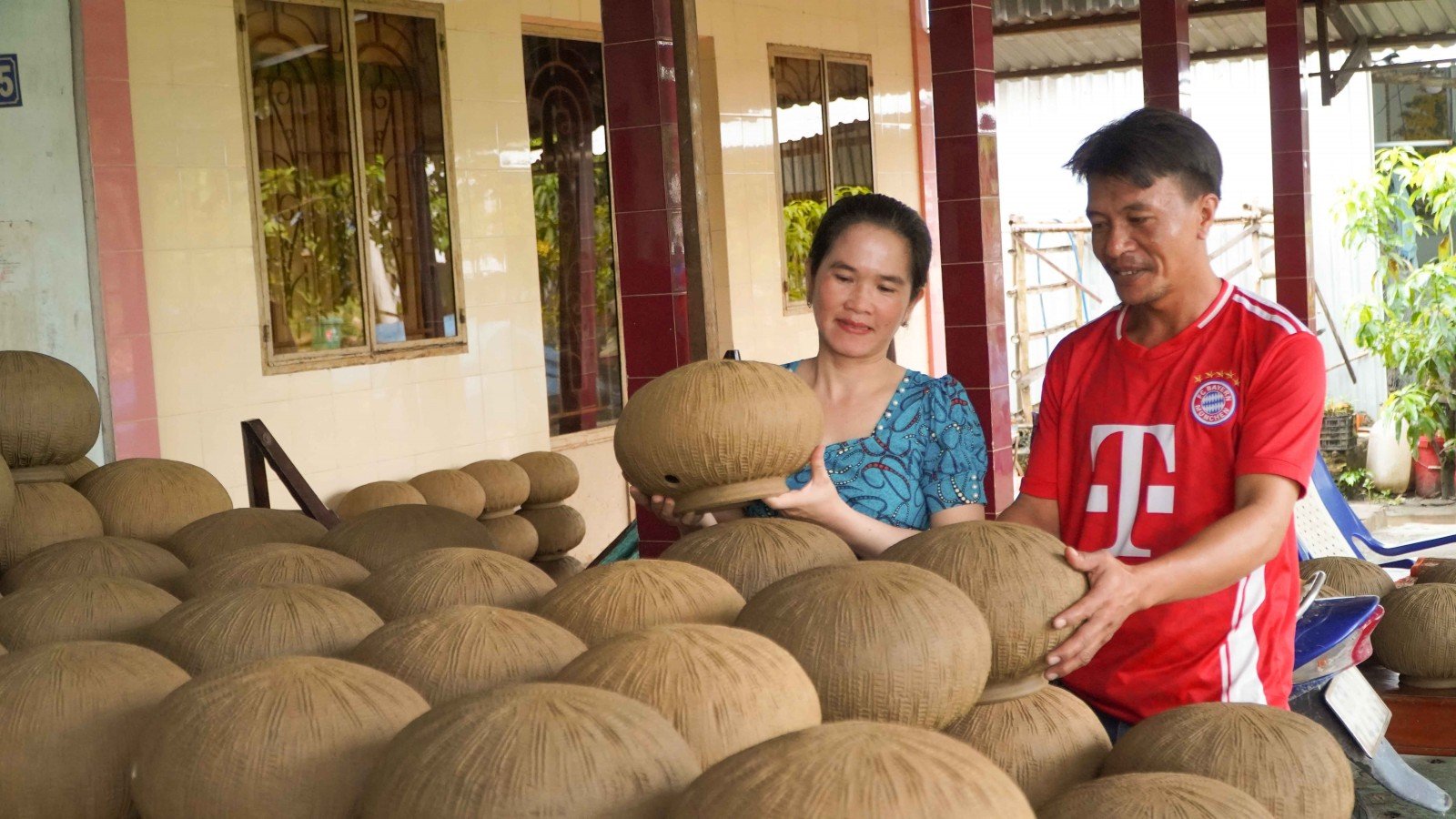
Every month, Ms. Thi Nhu's family sells 300-400 clay pots.
What makes the earthenware pots from Hon Island so special is the unique, pliable, smooth, and highly cohesive clay. This ensures the pots don't crack during firing, retain heat well, and are durable. However, processing the clay correctly is not easy, requiring skill and experience passed down through generations. Each pot must be meticulously crafted, with a round rim and an attractive shape, to be truly appealing to customers.
Clay pots sell for 20,000 - 50,000 VND each, depending on type and size, with a profit margin of only about 3,000 - 10,000 VND per pot, providing a stable income of a few million VND per month. Besides its economic value, the craft of making clay pots brings spiritual value to the lives of the Khmer people. The more attached they are to the craft, the more excited and proud they are to preserve their traditional craft, contributing to the preservation of cultural identity within the community.
From rural kitchens to eateries and restaurants, Hon Dat clay pots are increasingly popular for preparing dishes like rice cooked in a clay pot, grilled chicken, braised fish, and more. Amidst modern life, these rustic clay pots still retain the authentic flavors of the countryside.
Text and photos: THU OANH
Source: https://baoangiang.com.vn/dong-bao-khmer-xa-hon-dat-giu-nghe-lam-ca-om-a467996.html
























































































Comment (0)