The global oil flow map is being redrawn by fluctuations related to Western sanctions. According to Bloomberg, oil from Russia, Iran, and Venezuela is flowing into the largest economies in Asia, particularly China and India .
The effectiveness of the embargo
Bloomberg recently cited data from market analysis firm Kpler indicating that over 30% of China and India's combined crude oil imports in April came from Russia, Iran , and Venezuela. This figure is significantly higher than the 12% recorded in February 2022, the month in which Russia launched its special military operation in Ukraine.
Exports from traditional suppliers are shrinking. Specifically, the amount of crude oil that India and China import from West Africa and the US has decreased by more than 40% and 35%, respectively.
The figures above demonstrate that the flow of oil in the world is being reshaped. After Russia's military intervention in Ukraine, Western countries blocked the supply of oil and related products from Russia to their markets, while imposing a price ceiling of $60 per barrel to divert the flow elsewhere. These Western measures were designed to reduce Russia's revenue while maintaining the supply of oil to the world market.
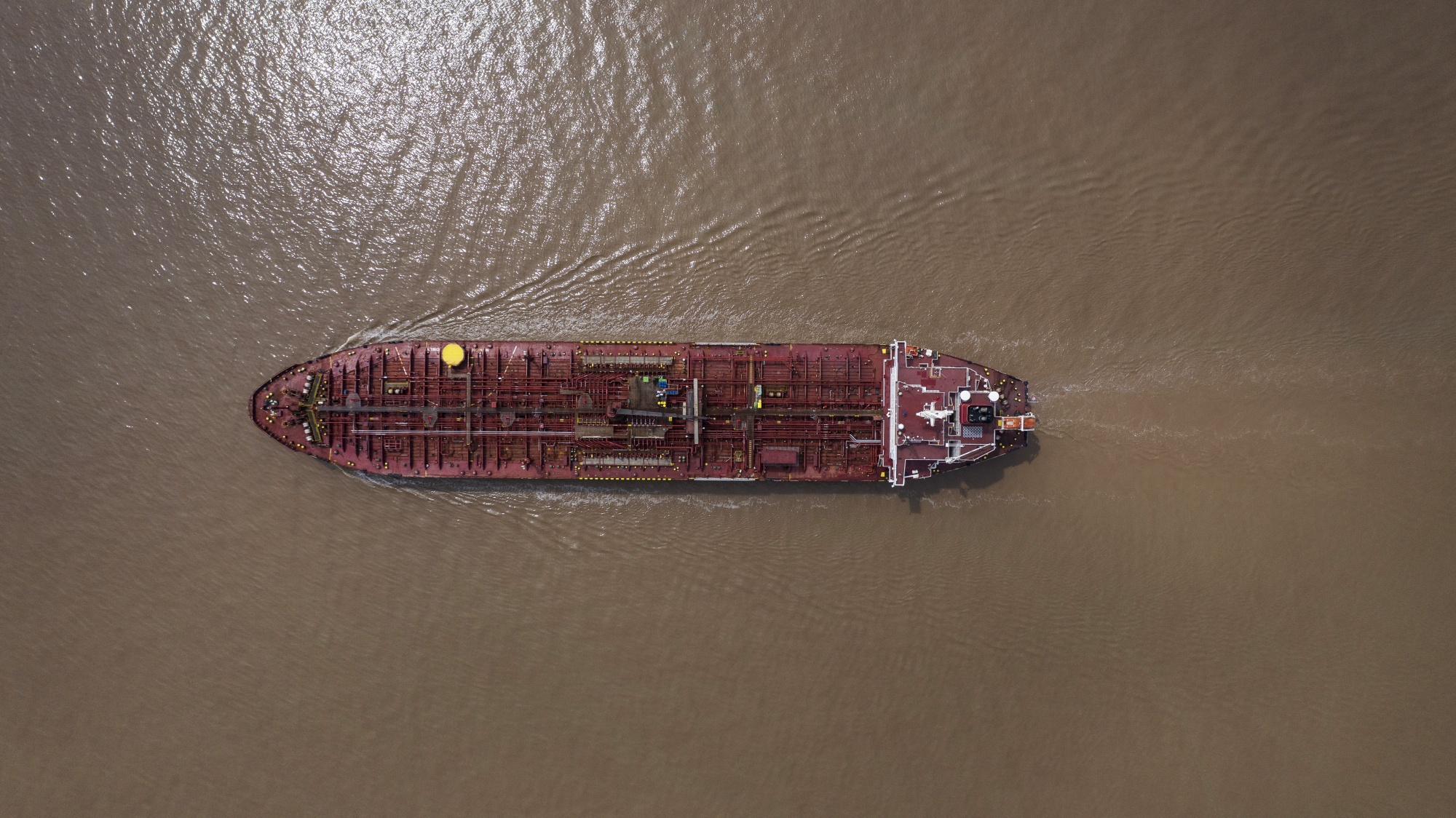
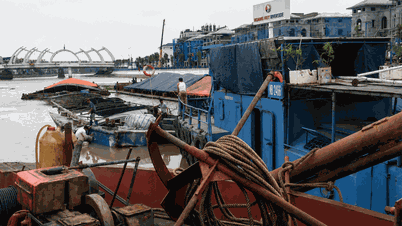
An oil tanker off the coast of Ningbo city, Zhejiang province in eastern China.
Data from the International Energy Agency, based in Paris (France), shows that sanctions against Russia have achieved the desired effect, with the country's oil exports in March rising to their highest level since the Covid-19 pandemic began, but revenue fell by almost half compared to March 2022.



The U.S. Treasury Department also said this month that the price cap has helped maintain oil supplies from Russia while cutting Moscow's revenue. "The price cap policy is a new tool of state economic management skill. This regulation has helped limit Russia's ability to profit while promoting stability in global energy markets," said U.S. Treasury Secretary Janet Yellen.
Sanctions on Russian oil have not been effective.
Who benefits?
"It's clear that Asian customers are winning thanks to cheap oil," commented Wang Nengquan, a former economist at China's Sinochem Energy. In the past few months, Asia, with India leading the way, has become Russia's largest trading partner, helping Moscow restore oil exports to normal levels, according to Wang, who has more than three decades of experience in the oil industry.
In a research report published by the Oxford Institute for Energy Studies (UK), researchers stated that nearly 90% of Russia's oil exports go to India and China.
Between these two countries, India has been the biggest increase in imports of Russian crude oil, while China has been buying more oil from Russia while maintaining supplies from Iran and Venezuela at significant discounts. Crude oil from these two countries has long been subject to US sanctions.
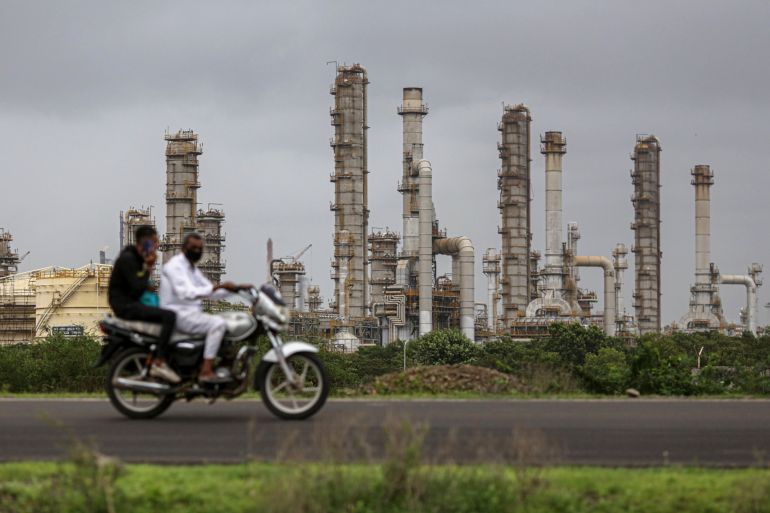
Reliance Industries' oil refinery in Gujarat, India.



Oil refineries are believed to be the biggest beneficiaries of the cheap crude oil supply. Data from Baroda Bank (India) shows that Russian oil now accounts for nearly 20% of India's annual crude oil imports, a sharp increase from just 2% in 2021.
Reuters, citing Indian government figures, reported that India imported $31 billion worth of crude oil from Russia in the 12 months ending March 2023, a sharp increase from just $2.5 billion the previous year. Part of this was used by India to meet domestic demand and curb inflation, while the remainder was refined into diesel and jet fuel for sale to the West. Exports of petroleum products from the South Asian nation to Europe totaled $15 billion over the past year, a 70% increase. European Union (EU) officials have recently expressed concerns about this, arguing that it undermines the effectiveness of sanctions against Russia.
EU High Commissioner for Foreign Affairs Josep Borrell has called for measures to prevent this development. Accordingly, a proposal has been made to impose taxes on private oil refineries such as Reliance Industries, owned by Indian billionaire Mukesh Ambani, and Nayara Energy, in which Russia's Rosneft holds a stake. Data from the UK-based analytics firm Vortexa shows that Reliance Industries and Nayara accounted for 60% of India's oil imports from Russia in January.
However, implementing the aforementioned proposal is considered difficult and requires the consensus of all 27 EU members. Refineries often blend various types of crude oil from different sources before processing, making it very difficult to determine the origin of each barrel of finished product. Furthermore, India has also emphasized that products processed from petroleum of a third country are not subject to EU sanctions. Therefore, to avoid conflict with India, the EU may target European companies that purchase refined oil originating from Russia.
Source link
![[Image] National conference summarizing one year of operation of the overall organizational model of the political system, the three-tiered government model.](https://vphoto.vietnam.vn/thumb/1200x675/vietnam/resource/IMAGE/2026/07/01/1782882811691_ndo_br_1-jpg.webp)







![[Podcast] World News July 1st: Iran Refuses to Meet with US Envoy](https://vphoto.vietnam.vn/thumb/402x226/vietnam/resource/IMAGE/2026/07/01/1782896024877_khung-thumbnail-tham-khao-tu-mau-cu-500-x-500-px-900-x-600-px-15.jpeg)