Dangerous complications
Diabetes is a chronic disease that occurs when the body does not produce enough insulin or does not use insulin effectively to control blood sugar. In children, type 1 diabetes is the most common form. This is an autoimmune disease that causes the pancreas to lose its ability to produce insulin, requiring children to be treated with insulin replacement therapy for life. In addition, type 2 diabetes is increasingly common in children and adolescents, especially those who are overweight, obese, or have a sedentary lifestyle.
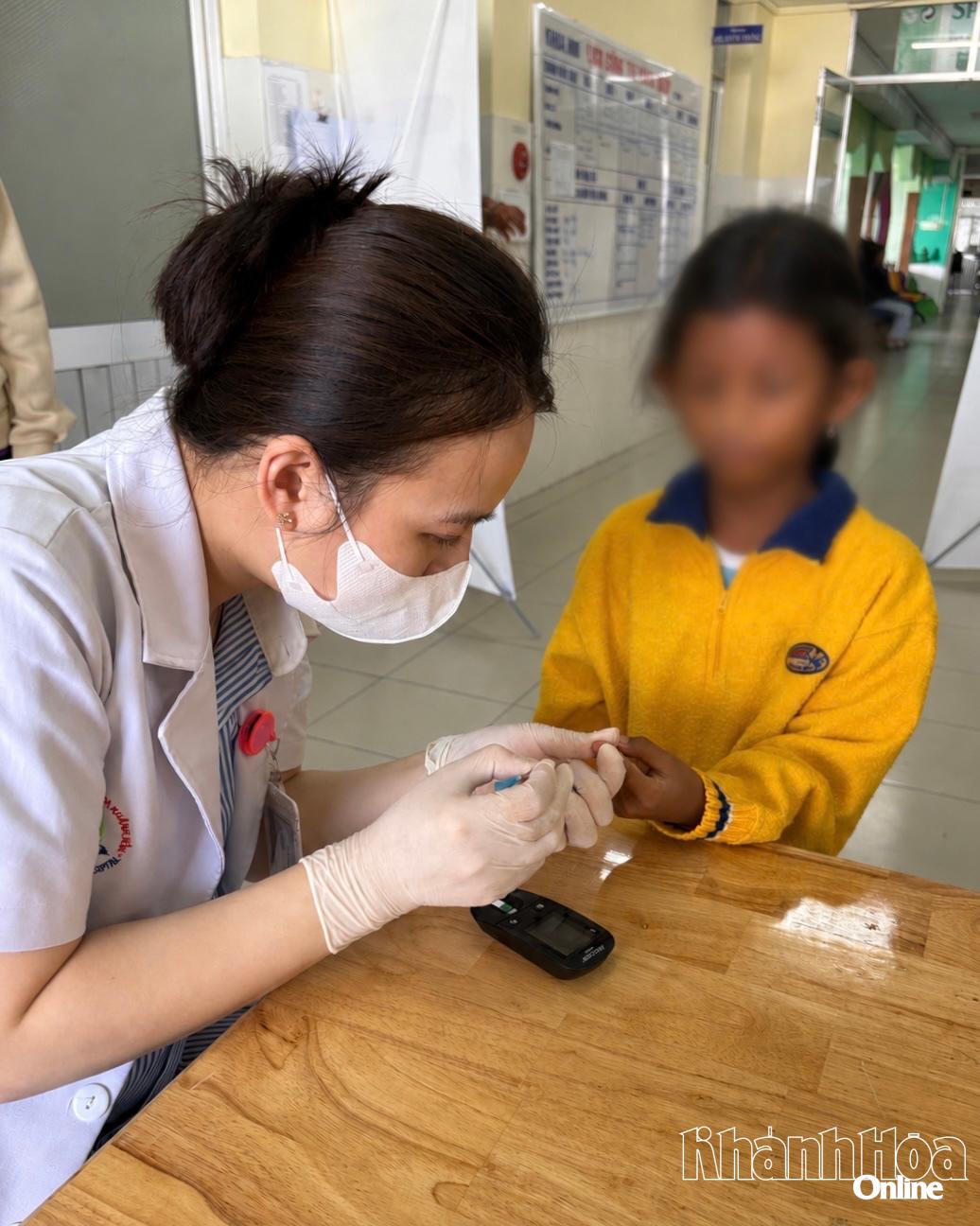 |
| Medical staff at the Pediatrics Department of Khanh Hoa General Hospital take blood samples to check blood sugar levels in children with diabetes. |
According to Dr. Vo Nguyen Hoang Uyen Linh from the Pediatrics Department, the initial signs of the disease often include excessive thirst, frequent urination, increased appetite but still weight loss, prolonged fatigue, or reduced concentration in studies. However, these symptoms often develop silently and are easily mistaken for normal changes in a child's development, so in many cases, the disease is only detected when it has caused dangerous complications. One of the most worrying acute complications is diabetic ketoacidosis. This is a condition where the body lacks insulin severely, preventing cells from using sugar for energy and forcing them to burn fat instead. This process produces ketones, causing the blood to become acidic. If not treated promptly, children can fall into a coma, experience multi-organ failure, and even die. At the Pediatrics Department of Khanh Hoa General Hospital, many cases have been recorded where this complication has already appeared. For example, a 7-year-old girl named Pinang Xu A. from Khanh Vinh commune suffered from malnutrition. In a short period, the child experienced rapid weight loss despite eating normally, and was subsequently admitted to the hospital in a lethargic state with severe diabetic ketoacidosis and very high blood sugar levels. Another case involved Tran Huu B. (14 years old, Ninh Hoa ward) who was obese. He lost nearly 20kg in a short time, frequently experienced thirst, fatigue, and vomiting. Upon admission, he was diagnosed with severe diabetic ketoacidosis.
Dr. Vo Nguyen Hoang Uyen Linh stated: “The cases mentioned above show that diabetes can appear at any age, from young children to teenagers. If not detected early, the disease can not only cause acute complications but also have long-term effects on many organs in the body such as the eyes, kidneys, cardiovascular system, and nervous system.”



Accompanying you in caring for children.
Medical experts affirm that, although it is a chronic disease, diabetes can be effectively controlled if children are diagnosed early, treated correctly, and receive long-term support from family, school, and healthcare professionals.
 |
| A pediatrician from Khanh Hoa General Hospital with a child patient at a club meeting. |
Based on this reality, the Pediatrics Department of Khanh Hoa General Hospital has established a Children's Diabetes Club to create an environment for connection, support, and companionship with pediatric patients and their families during treatment. This is not only a place for children already diagnosed with the disease but also a source of useful information for families with children at risk or interested in preventing and early detection of diabetes. Through regular meetings, doctors guide parents and children on how to monitor blood glucose at home, use insulin correctly, develop appropriate nutritional plans, and recognize abnormal signs requiring medical intervention. In addition, parents practice skills in handling common situations such as hypoglycemia, hyperglycemia, or other issues that arise during childcare. Ms. Nguyen Thi Hong H., whose child has diabetes, shared in the club: "Joining the club has helped me understand more about how to prevent dangerous complications for my child and how to care for him properly."
Dr. Nguyen Ngoc Huy, Head of the Pediatrics Department at Khanh Hoa General Hospital, said: “Along with the club's activities, the department focuses on the management and treatment of endocrine diseases in children. After overcoming the emergency phase, the children are monitored long-term, with regular check-ups, insulin dose adjustments, and nutritional counseling appropriate for each age group. Continuous management helps limit the risk of complications and improve the quality of life for children. In the future, the Pediatrics Department plans to expand its programs with more in-depth counseling, outpatient monitoring, and community activities to improve the effectiveness of comprehensive management and care for children with diabetes and other endocrine diseases.”
Diabetes is a long treatment journey, but it's not a barrier to a child's future. With advances in medicine and the support of family, school, and healthcare professionals, children with diabetes can absolutely live healthy, confident lives if detected early and treated correctly.



C.DAN
Source: https://baokhanhhoa.vn/xa-hoi/y-te-suc-khoe/202606/dong-hanh-voitre-mac-dai-thao-duong-fc64eee/