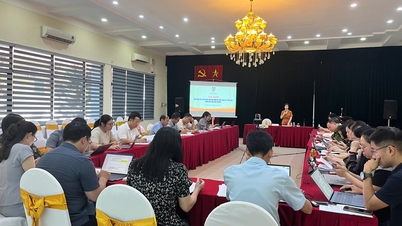
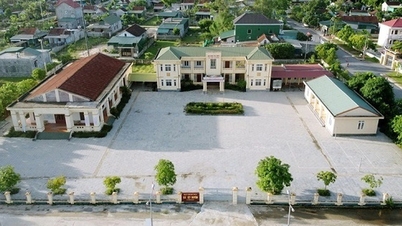
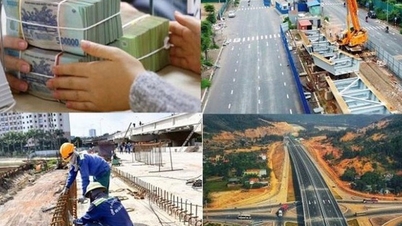
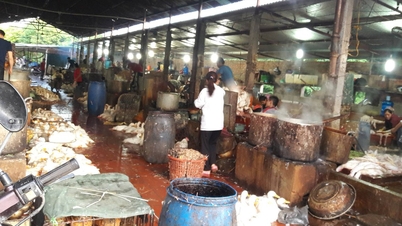
Over the years, alongside the achievements, the traditional resettlement model has revealed many limitations. Many resettlement areas are built separately from dynamic development zones, lacking synchronized social infrastructure, sufficient living space, and essential services. As a result, many households, despite having new homes, have not yet achieved long-term stability.
Therefore, Hanoi 's policy of developing multi-purpose urban areas, combining social housing, commercial housing, and resettlement housing within a synchronized urban space in terms of technical and social infrastructure, is an expected direction that will create positive changes.
Allocating approximately 40-50% of the housing stock in these urban areas to resettlement for key projects not only addresses housing needs but also opens up a new approach in housing policy, forming a sustainable resettlement mechanism for the new development phase of the Capital.
This orientation becomes even more necessary as Hanoi enters a phase of accelerated infrastructure investment and urban spatial restructuring, requiring the city to proactively prepare a large-scale resettlement housing fund instead of continuing to handle each project individually.
While previously the primary goal was to provide alternative housing after land acquisition, the focus has now shifted to ensuring living conditions, livelihoods, and development opportunities for the people. Housing is no longer the ultimate goal but has become the foundation for people to access education , healthcare, employment, commercial services, and urban amenities.
This model also has a positive impact on the progress of key projects. One of the reasons why land clearance is difficult is the concern about living conditions after relocation.


When people see opportunities to live in urban areas with better quality, more amenities, and more favorable conditions for livelihood development, social consensus will increase. This is a crucial condition for accelerating the progress of the city's infrastructure and urban renovation projects.
From a broader perspective, the quality of resettlement directly impacts the development capacity of the capital city. Therefore, investment in resettlement should not only be viewed as a social welfare task, but also as an investment in development. A good resettlement policy not only helps people settle down but also contributes to creating land for infrastructure projects, opening up new development spaces and creating additional impetus for the city's growth.
For this sound policy to be effective, the development of resettlement housing in multi-purpose urban areas needs to be implemented with comprehensive and substantive solutions. First and foremost, the quality of resettlement housing must be ensured to be commensurate with the overall quality of the entire urban area.
In reality, some previous projects have faced issues with substandard construction quality and inadequate operational management, leading to rapid deterioration of the structures.
Therefore, it is necessary to apply unified standards for planning, design, construction, acceptance testing, and operational management to the entire urban area, avoiding the mindset of allocating the best parts to commercial housing and the rest to resettlement. The ultimate goal is to create truly livable spaces.
Furthermore, ensuring livelihoods should be considered a crucial criterion in resettlement efforts. While housing is fundamental, stable income is what determines people's long-term commitment to the area. Therefore, the planning process needs to be linked to the development of commercial and service activities, job creation, and vocational training support to help people quickly stabilize their lives after relocation.



The city also needs to proactively build a resettlement housing fund instead of reacting to emerging needs. When the supply is prepared early, land clearance will be smoother, reducing the need for projects to wait for resettlement housing or to repeatedly adjust plans. This also helps to use land resources efficiently and reduce social costs. Resettlement will then no longer be a secondary step after investment projects but will become an important driving force in sustainable urban development.
Source: https://hanoimoi.vn/dong-luc-phat-trien-do-thi-1160074.html




![[Photo] General Secretary and President To Lam attends the 13th National Congress of the Ho Chi Minh Communist Youth Union](https://vphoto.vietnam.vn/thumb/1200x675/vietnam/resource/IMAGE/2026/06/25/1782356968989_ndo_br_1-jpg.webp)

























![[Photo] General Secretary and President To Lam attends the Central Public Security Party Committee Conference](https://vphoto.vietnam.vn/thumb/1200x675/vietnam/resource/IMAGE/2026/06/24/1782302063612_a1-bnd-9302-9166-jpg.webp)