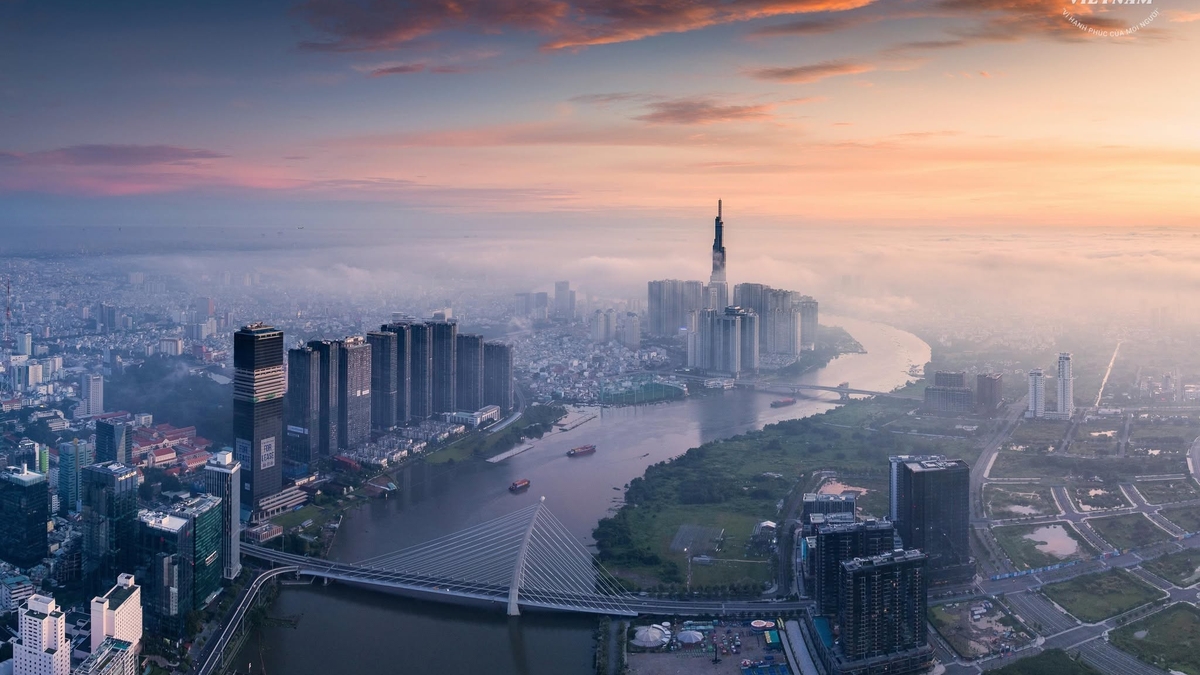
The Vam Co River is a river in Southern Vietnam, part of the Dong Nai River system. It is 280km long, originating in Cambodia, with over 190km of its length within Vietnamese territory. It has two direct tributaries: the Vam Co Dong River and the Vam Co Tay River.
According to French -language sources, this river is called "Vaïco," derived from the Khmer word "piăm vaïco," meaning "cattle herding channel," which the Vietnamese mispronounced as Vàm Cỏ. This suggests that the river was formerly a route used for herding cattle.
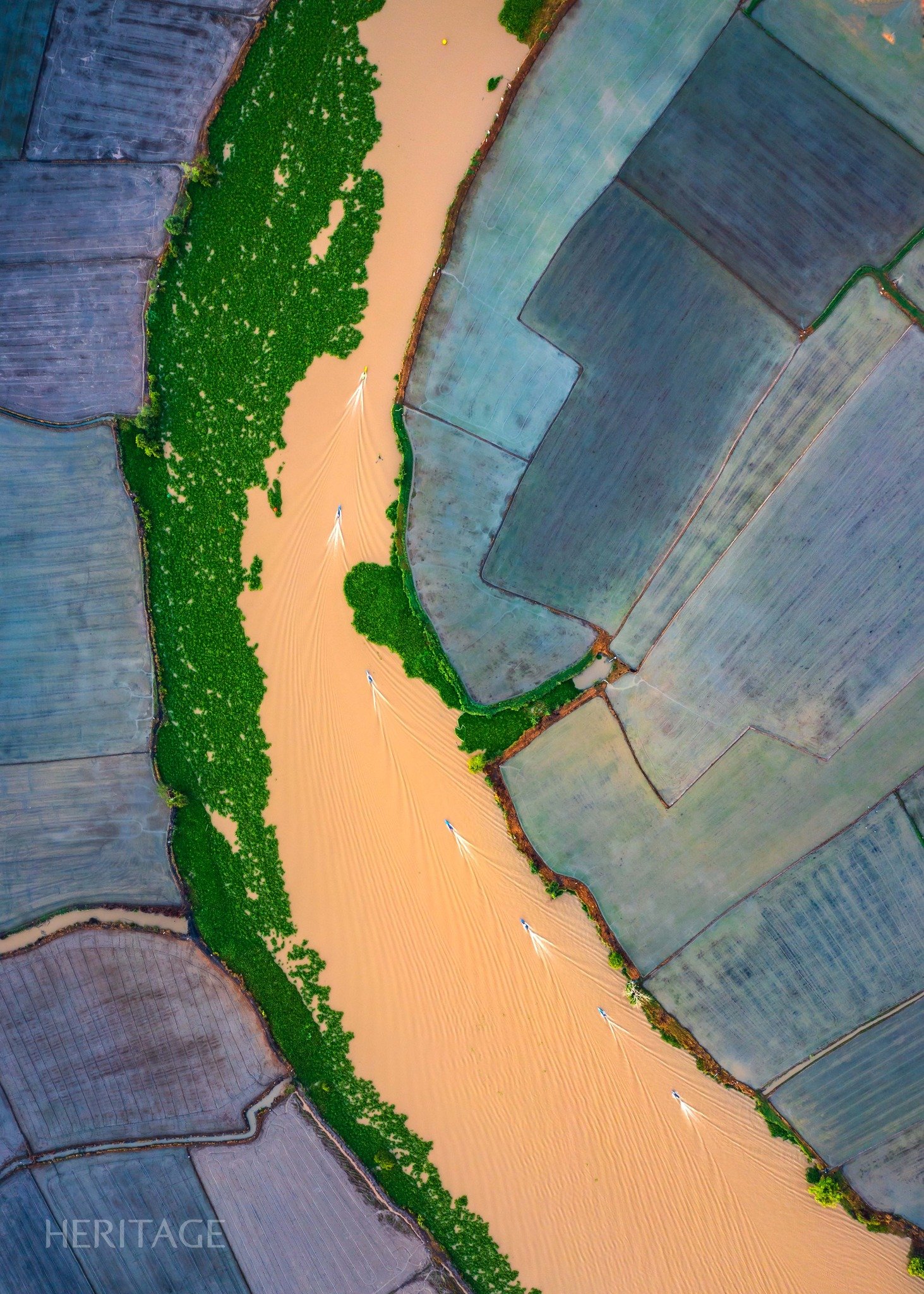
The Vàm Cỏ Đông River flows into Vietnam at Thành Long border commune, Châu Thành district, then through Bến Cầu, Hòa Thành, Gò Dầu, and Trảng Bàng districts ( Tây Ninh province ).
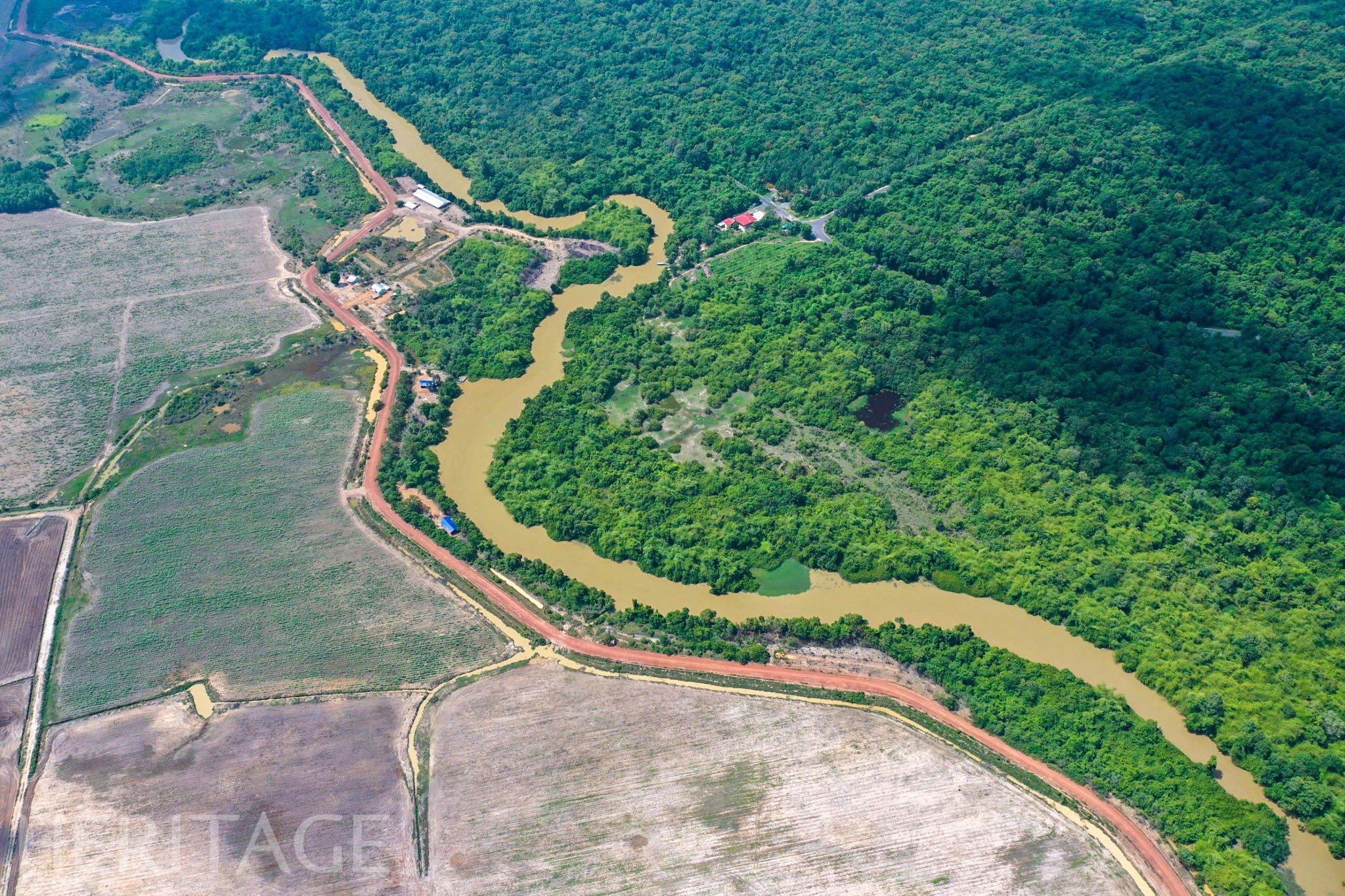
Flowing through the districts of Duc Hoa, Duc Hue, Ben Luc, and Can Duoc (Long An province), and combining with the West Vam Co River in Tan Tru district (Long An province), it forms the Vam Co River.
You may also like
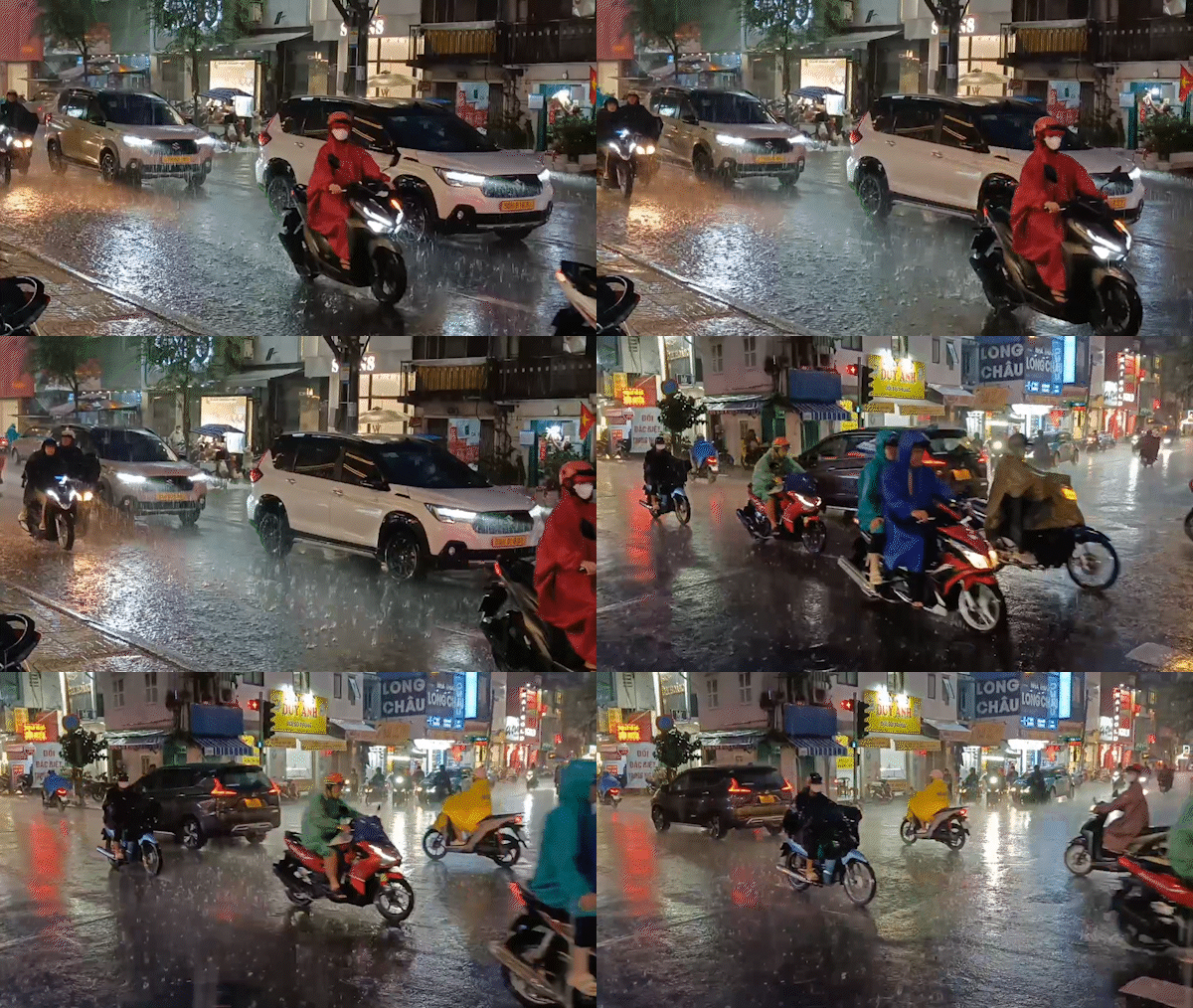
Today, June 26th, it is raining in many places.According to the meteorological agency, today (June 26), the North and South of Vietnam will experience widespread thunderstorms. People should be wary of tornadoes, lightning, strong gusts of wind, and localized flooding. 
Tay Ninh: Emergency situation declared due to landslide along Ranh Canal.Given the complex and dangerous situation of landslides in the border area, on June 18th, the Vice Chairman of the People's Committee of Tay Ninh province, Nguyen Minh Lam, officially issued Decision No. 10693/QD-UBND declaring a state of emergency due to landslides along the Ranh Canal bank in Bau Chua hamlet, Tuyen Thanh commune, Tay Ninh province. This is an urgent measure to protect the lives and property of the people and agricultural production infrastructure in the area. 
The section of the Vàm Cỏ River flowing through Long An forms a natural and administrative boundary between the two provinces of Long An (Cần Đước district on the left bank) and Tiền Giang (Gò Công town and Gò Công Đông district on the right bank), emptying into the Soài Rạp River and flowing into the East Sea.
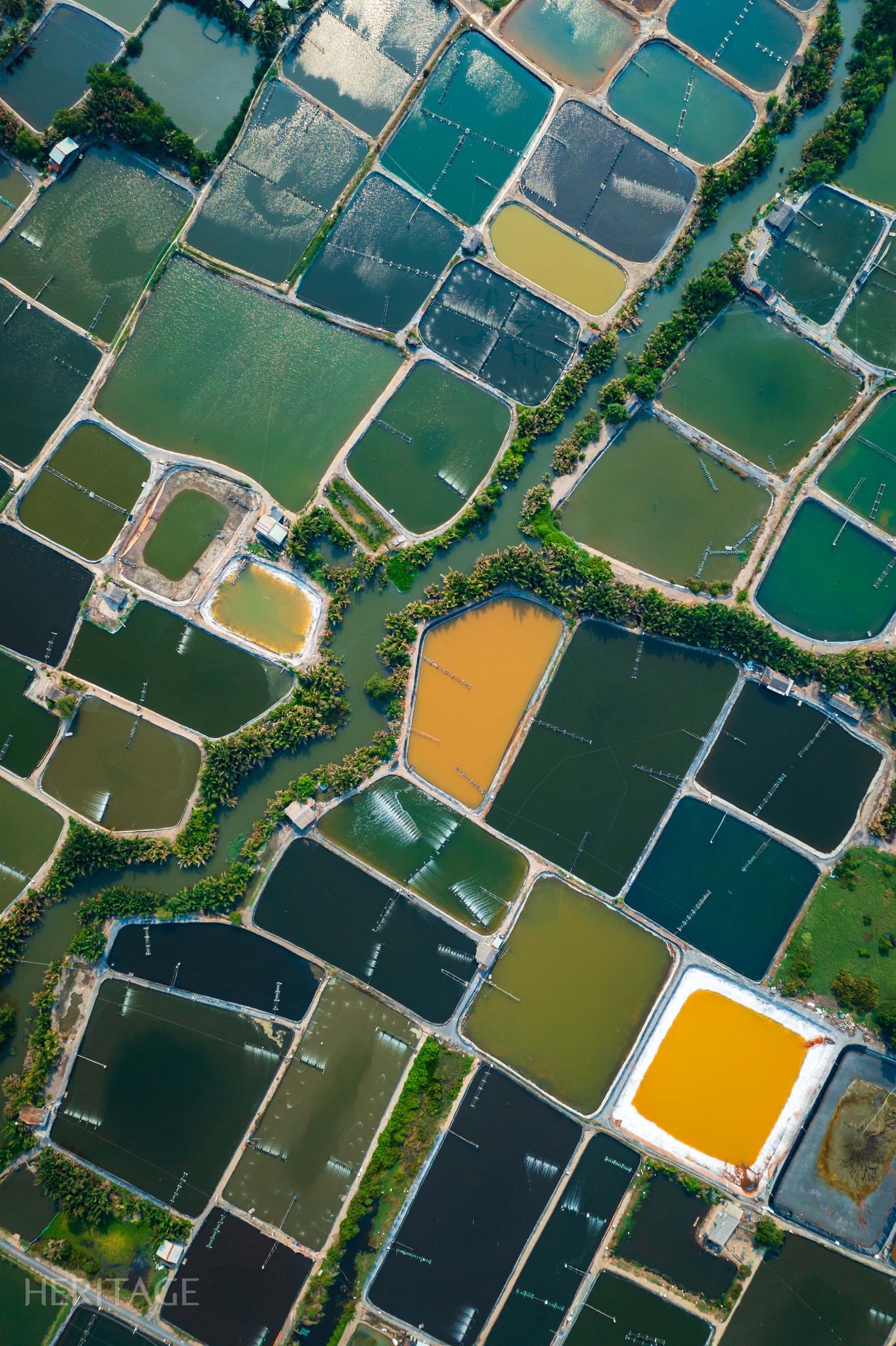
In particular, the section near the confluence of the Vam Co River and the Soai Rap estuary has another striking name: "Vam Bao Nguoc" (Reverse Vam Bao). This is because the final section curves sharply, forming three consecutive arcs that seem to enclose something, which is also the origin of the word "Bao" in "Bao Nguoc".
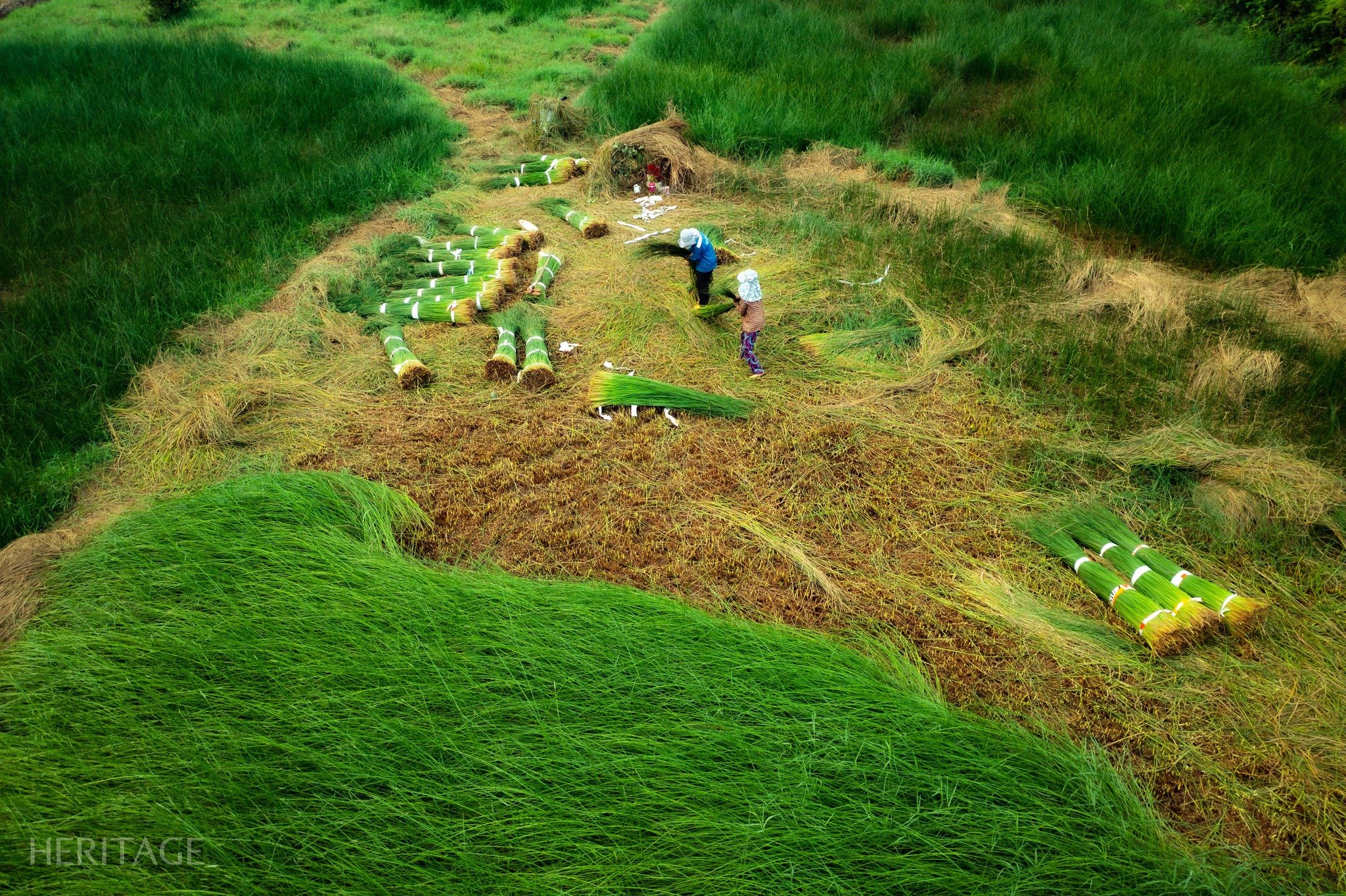
The legendary Vàm Cỏ Đông River has long been an endless source of inspiration in folk songs, poetry, modern music, and sweet, lyrical vọng cổ (traditional Vietnamese opera). This river possesses a graceful beauty, winding like the graceful figure of a young woman bowing to welcome guests.
"The Vam Co River carries discarded fishing nets downstream."
"Thúy Kiều is separated from Kim Trọng just as I am separated from myself."
"The Vam Co River has clear water, you can see the bottom."
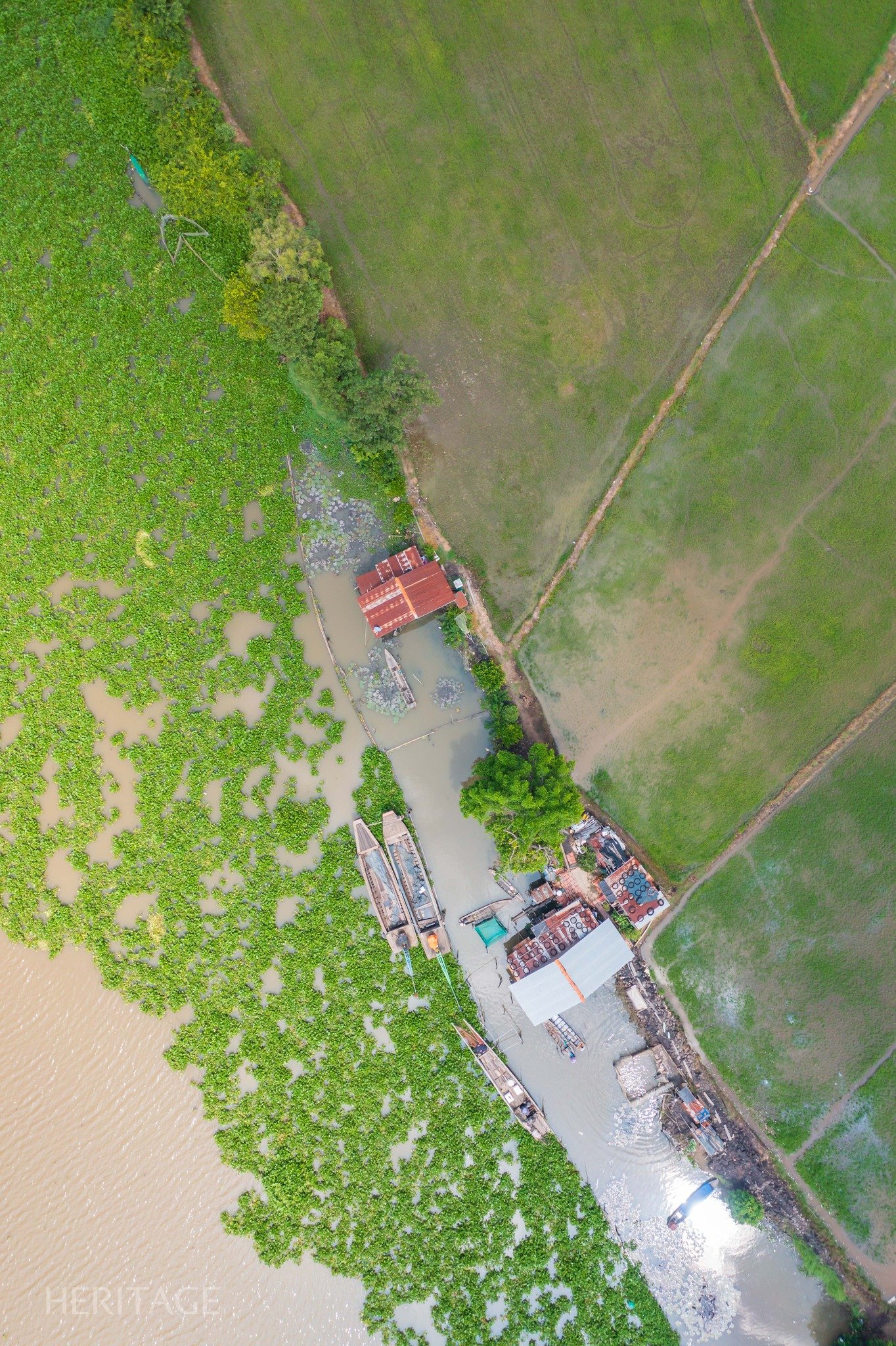
The Mekong River flows gently downstream.
Anyone going to My Thuan, Tien Giang?
"I miss the musician from the old days."

Strengthening the friendship between Vietnam and the United States.On July 3rd, as part of the Pacific Partnership - Friends of the Pacific 2026 program, the U.S. Army Pacific delegation, led by Lieutenant General Joel Vowell, Deputy Commander of the U.S. Army Pacific, paid a courtesy visit to the Quang Tri Provincial Military Command. The most notable example is the poem "Vam Co Dong," composed in 1963 by musician Hoai Vu (real name Nguyen Dinh Vong, from Quang Ngai, born in 1935), while he was on a mission from the "R" region – the code name for the revolutionary command area in Tay Ninh – along the Vam Co River down to the "lower region" of Long An.
"Do you know where you are, all the way by the Red River?"
His hometown also has a river.
He kept calling out with heartfelt longing.
Vam Co Dong! Oh, Vam Co Dong!
Oh...oh Vam Co Dong, oh river!
The water is a deep blue, its flow unchanging...
This poem was set to music by composer Truong Quang Luc (born in 1935) and became a song of the same name; and it resonated deeply in the vong co song "The River of My Homeland" by composer Huyen Nhung.
Heritage Magazine





![[Photo] General Secretary and President To Lam working with the Technical and Professional Center, Ministry of Public Security](https://vphoto.vietnam.vn/thumb/1200x675/vietnam/resource/IMAGE/2026/07/06/1783318005842_a1-bnd-1129-2263-jpg.webp)