


In particular, the locality has preserved a unique cultural space with a system of historical relics, customs, and scholarly traditions that have endured through generations.
A highlight of tourism
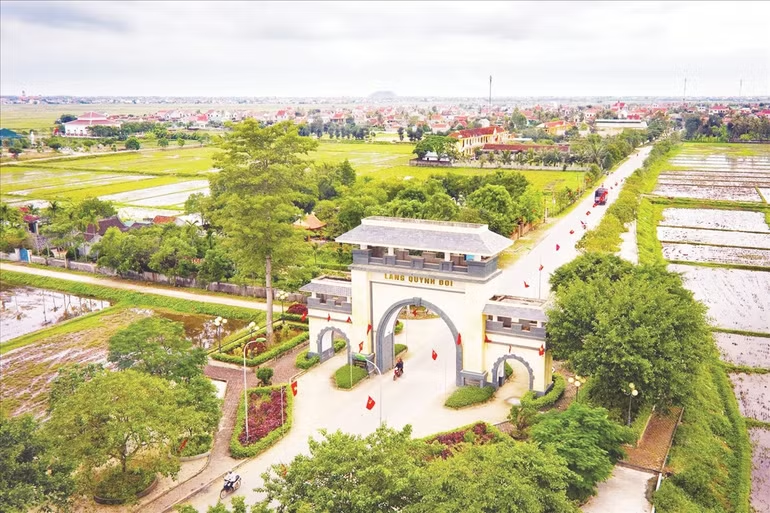
According to historical records, Quynh Doi village was established in the 13th century. Throughout the Le and Nguyen dynasties, the village produced hundreds of successful scholars, including many PhDs, high-ranking scholars, and vice-scholars. Since the August Revolution, this tradition has continued with dozens of professors, associate professors, PhDs, masters, and many accomplished intellectuals in the fields of science, education, military , and medicine.
In this land, the spirit of learning has permeated the thinking and lifestyle of generations. Many prominent figures, such as the poet Ho Xuan Huong, honored by UNESCO as a World Cultural Figure, the revolutionary Ho Tung Mau, and the Hero of the Armed Forces Cu Chinh Lan, have enriched the cultural depth of this village, which already boasts a rich tradition of scholarship. Currently, the village has eight national-level and three provincial-level historical sites, notably Quynh Doi Temple, Ho Family Ancestral Temple, the Temple of Duke Ho Sy Duong, and the memorial stele of the poet Ho Xuan Huong. Ancient architectural works with exquisite carvings, along with a system of ancestral halls and temples, have created a cultural space steeped in historical significance.
In recent years, the local government and people have begun to exploit the cultural value to develop tourism. With the "Wooden Fish Village - After the Glory" tour, launched at the end of 2023, visitors can explore the historical site and enjoy short plays reenacting the story of "The Nghe An Scholar and the Wooden Fish," and scenes depicting President Ho Chi Minh's childhood when he visited the village. The actors in these plays and scenes are local people. More than 1,500 households have been assigned numbers, and the village roads and alleys are clean and beautiful, giving visitors the impression of a civilized and organized rural environment. Mr. Ho Duc Nhan, a native of the area, donated many tree trimming machines to the hamlets in the village, ensuring that every row of trees and every path is well-maintained.
Recently, the Ky Phuc Festival, held on the 8th and 9th days of the first lunar month, was maintained with solemnity, becoming a gathering of the community. The ritual of carrying the deity from the temple to the communal house, the traditional eight-instrument orchestra, the five-element flags, the incense altar, the dragon palanquin… recreated the traditional festival atmosphere of Nghe An province. This is a valuable intangible cultural asset that could be studied and developed into a deep-seated experiential tourism product. However, the current number of visitors is still modest; promotional activities are not widespread; and supporting services are limited. Quynh Doi is only at the beginning of its tourism journey.
Make changes to create a more vibrant living space.
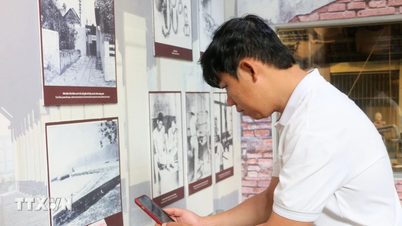
Experience from many localities shows that cultural tourism development is only sustainable when the essence of the heritage is preserved. For Quynh Doi, the most valuable asset is its tradition of studiousness and respect for etiquette. Therefore, it needs to be positioned as a vibrant educational space where students, researchers, and others can learn about the scholarly tradition, the flow of Confucian culture, and the influence of the spirit of learning on community development. Extracurricular programs and experiences such as "a day as a student in the past," recreating Confucian classrooms, competitions in writing Han-Nom characters, and discussions of Ho Xuan Huong's poetry could become distinctive products. Digitizing genealogical records, royal decrees, and inscriptions; building a digital museum about the scholarly tradition; and applying automated narration technology using QR codes, if implemented more effectively, would help tourists access information in a lively and modern way without disrupting the ancient atmosphere.
Quynh Doi's advantage also lies in its favorable geographical location, close to Quynh Beach and famous spiritual tourist destinations in Nghe An. Therefore, connecting them into a tour route could extend the length of stay for tourists. A morning visit to the village temple and listening to stories of scholarly achievements; an afternoon experiencing the beach and local cuisine; and an evening participating in meditation and relaxation activities… Simultaneously, it is necessary to train a team of local tour guides who are knowledgeable about the village's history and possess engaging storytelling skills. Stories about "children born hearing the sound of reading," and families with generations of teachers and doctors… are rich in emotion if conveyed vividly.
During a survey in June 2025, a team of experts from the Netherlands Network of Senior Experts (PUM) highly appreciated the local area's unique cultural and historical heritage, considering it a crucial advantage for developing distinctive and sustainable tourism products. However, the province's thematic tourism forums also frankly pointed out that, despite a significant increase in the number of visitors to Nghe An in 2025, the cultural and historical products have not yet been fully exploited in depth, lacking linkages and competitiveness. This shows that Quynh Doi needs to continue innovating its approach, developing distinctive products, to make the destination increasingly attractive and a highlight on the province's cultural tourism map.
To achieve sustainable development, Quynh Doi needs to build a brand as a "village of scholars" associated with intellectual and scholarly values. This brand would serve both tourism and traditional education for the younger generation. Annual events, such as the Festival honoring talented individuals, the Ho Xuan Huong Poetry Festival, and the Nghe An Scholars Forum, have the potential to become cultural hubs for the region. Collaborating with universities and research institutes to organize seminars and discussions in the village would also contribute to enhancing academic value. More importantly, the people must be the main actors in the development process. Each family preserving its way of life and landscape; each clan preserving its genealogy and documents; each young person being proud of their homeland's traditions – this is the foundation for ensuring that tourism does not diminish its cultural identity.
Source: https://nhandan.vn/du-lich-o-lang-khoa-bang-quynh-doi-post951496.html

![[Photo] Close-up of an Australian warship visiting Tien Sa port, Da Nang](https://vphoto.vietnam.vn/thumb/1200x675/vietnam/resource/IMAGE/2026/03/28/1774675489416_tau-5-jpg.)










![[Photo] Exciting Pickleball Tournament for Vietnamese Students in China](https://vphoto.vietnam.vn/thumb/402x226/vietnam/resource/IMAGE/2026/03/28/1774697117110_ndo_br_thiet-ke-chua-co-ten-2026-03-28t163115142-png.)













































Comment (0)