

 |
| Spring outing |
From a small riverside dock in front of Lan Vien Ancient Monument, we boarded a newly completed 10-seater electric boat, ready to begin transporting tourists . The boat left the dock silently, without smoke or noise, a very natural choice for Hue as it embarks on its journey towards green development. The Perfume River before us is not just a landscape, but an ecological axis of the city, where the water, trees, alluvial plains, and sandbars create a gentle balance between nature and humanity.
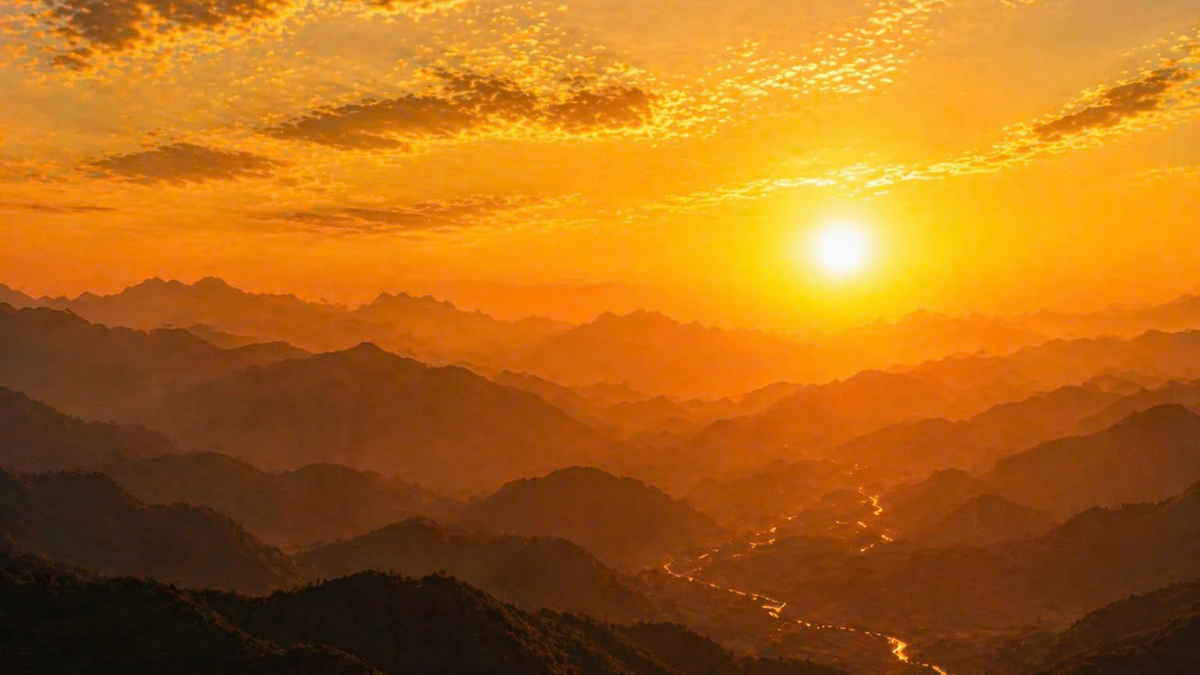
The boat sailed upstream in the late afternoon, revealing a gentle golden sky. The Phước Duyên Tower of Thiên Mụ Pagoda gradually emerged against the blue backdrop of the sky and the ancient pine trees on Hà Khê hill, like a spiritual landmark of the land. Golden sunlight fell on the river's surface, shimmering like silver. Following the wishes of Professor Thái Kim Lan, owner of Lan Viên Cố Tích, we decided to experience the river route connecting the two famous national temples: Thiên Mụ and Diệu Đế. This can be considered a typical Buddhist axis of Huế ; Thiên Mụ is the symbol of the beginning of the expansion of the territory, built by Lord Nguyễn Hoàng in the early 17th century, and Diệu Đế was once a center of urban Buddhism, built by King Thiệu Trị in the mid-19th century.
Viewed from the river, Thien Mu Pagoda always possesses a unique beauty: serene yet majestic. For over four hundred years, the pagoda has been more than just a religious structure; it is a place where history, faith, and identity are embodied. The evening bells from the ancient tower resonate down onto the water, echoing far and wide like a reminder that amidst the hustle and bustle of modern life, Hue still offers a space for people to reconnect with themselves.
The boat turned its bow downstream as the sun began to set. At this time, the Perfume River became the urban axis – an open space connecting layers of architecture and periods of the city's development. The newly built Nguyen Hoang Bridge emerged with its soft, modern shape, like a fresh brushstroke on the ancient landscape. Next came the Da Vien Bridge, spanning the Da Vien islet, where the railway bridge with its solemn appearance from over a century ago converged with the new, grand and magnificent Da Vien Bridge, opening up a modern transportation space. The two bridges run parallel, like two layers of time, showing that Hue is moving forward without losing its memory.
The lush green Dã Viên islet, like a lung in the heart of the river, evokes the unique ecological structure of Hue city, where the river, islets, and vegetation create a harmonious landscape. To the west of the islet was once the famous Dữ Dã Garden of King Tự Đức, the foundations of the Quan Phong Pavilion and the Dữ Dã Viên Ký stele still remaining. Passing through, one realizes that the value of the Perfume River lies not only in its poetic beauty, but also in its deep cultural layers and its role in regulating the climate, preserving the living environment, and shaping the urban identity.
The boat glided along gently, the only sounds being the gentle lapping of waves against the sides, mingled with the rustling of the wind. We discussed the beauty of the river and the future of the city. Professor Dr. Thai Kim Lan recounted her wish to erect a beautiful and meaningful monument to Princess Huyen Tran at the western end of Da Vien islet as an eternal symbol of Hue. This reminded us of the story from 720 years ago when the princess of Dai Viet sacrificed herself to gain the two provinces of O and Ly, a vast expanse of land, so that we could have Hue today…
The Phu Xuan Bridge continues the vibrant rhythm of life, then the Truong Tien Bridge emerges in the fading twilight. Six spans and twelve arches cast their reflections on the water, like bridges connecting the past and the present. Each bridge is a landmark of urbanization, but when viewed from the river, they all become soft and blend into the overall landscape.
The boat passed by Dong Ba Market, the largest traditional commercial center of the ancient capital, where the daily life of Hue is most clearly reflected. From here, the boat turned into the Dong Ba canal. The space narrowed, the two banks drew closer together, and the pace of city life seemed to slow down. Dieu De Pagoda appeared on the right with its ancient triple-arched gate, a highlight of the Buddhist axis in the heart of the Gia Hoi old town. At that moment, an old folk song suddenly came back to mind:
Dong Ba - Gia Hoi two bridges
Looking towards the four-story building with two bells, one can see the Myriad Emperor's palace.
It's not just a geographical indicator, but a memory of the ancient city of Phu Xuan, where commerce, religion, and community life blended together in one space. Today, sitting on a small electric boat, passing through those layers of landscape, we can better understand the structure of Hue: a heritage city organized around the river, where heritage, urban life, Buddhism, and ecology are not separate, but intertwined and mutually supportive.
As the boat returned to the dock, the sun had truly set over the river. The water reflected long, shimmering streaks of light, like the new currents of a Hue striving towards a green and sustainable future. The spring excursion ended, but the journey on the Perfume River continues, in memory, in belief, and in a development model where heritage is the foundation for tomorrow.
Source: https://huengaynay.vn/van-hoa-nghe-thuat/du-xuan-tren-dong-huong-163222.html













































![[Photo] Hue: Admire the 2.4 trillion VND sea bridge, the longest in Central Vietnam.](https://vphoto.vietnam.vn/thumb/402x226/vietnam/resource/IMAGE/2026/05/24/1779614018347_anh-man-hinh-2026-05-24-luc-16-13-29.png)





















Comment (0)