Proactive response to fake news
In late September 2025, the once peaceful Jôk hamlet (Cư M'gar commune) unexpectedly became the focus of conflicting information on social media. The conflict stemmed from a land dispute involving over 50 hectares of land. When the landowner erected a corrugated iron fence around the plantation, some residents protested, fearing it would affect their shared access road. During the argument, many people livestreamed the event on Facebook. Within minutes, numerous edited video clips appeared on social media, along with inflammatory and accusatory posts.
That evening, the phone of Mr. Y Pher Niê, the head of Jôk village and a respected figure in the community, rang incessantly. People called to inquire, express their anger, and some even threatened to go to the scene to "demand justice." Mr. Y Pher recalled: "Many people immediately believed what appeared on Facebook because they thought it was real images and real people. In reality, the incident was completely different. If it hadn't been explained in time, the consequences would have been unpredictable."
 |
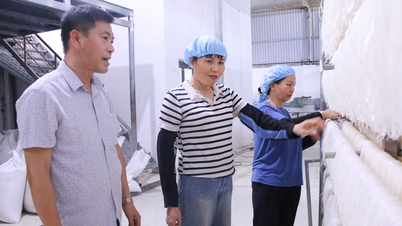
| Officials from Cư Pui commune are instructing residents of Tliêr village on how to identify misinformation online. |
That very night, he, along with the Party branch secretary and the commune police, discussed and agreed on a plan to disseminate information and stabilize the situation. The following morning, a village meeting was held. Information from the internet was compared with reality, and each point was clearly explained. After the meeting, the people understood the true nature of the incident and were no longer swayed by false information.
This is just one of many stories demonstrating the destructive power of fake news online. During the floods in the province at the end of 2025, social media was flooded with unverified information about the number of fatalities, rescue efforts, and the operation of reservoirs and hydroelectric power plants. Some individuals even used AI technology to manipulate images and create fake videos impersonating Party and State leaders with realistic voices and images to distort policies and guidelines.
According to Colonel Nguyen Quang Vinh, Head of the Cyber Security and High-Tech Crime Prevention Department of the Provincial Police, the worrying aspect lies not only in the nature of the misinformation itself but also in its speed of dissemination. With just a share button or an unverified comment, thousands of people can access harmful information in a very short time. As social media becomes a daily information channel for many citizens, the struggle to protect the Party's ideological foundation in cyberspace has become more complex and intense than ever before.
Enhancing the role of "information filters"
It was 10 PM. The office of the Cyber Security and High-Tech Crime Prevention Department was still brightly lit. On the computer screens, dozens of Facebook, TikTok, and Telegram groups were being continuously scanned. Lieutenant Nguyen Tri Phong, a cybersecurity officer, shared: "A harmful video can spread to tens of thousands of people in just a few hours. If we are slow to handle it, the consequences are unpredictable."
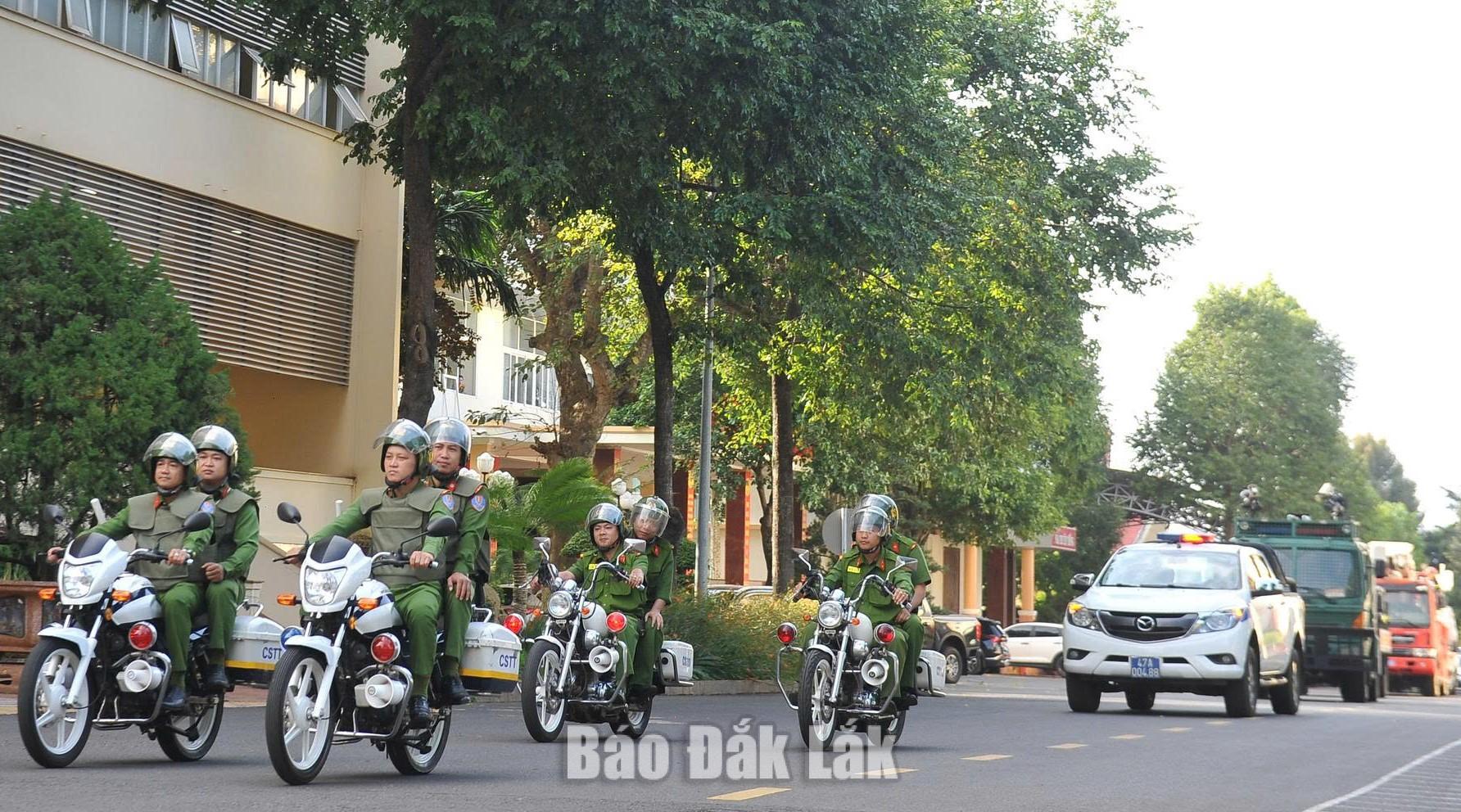 |
| The provincial police have launched a major campaign to crack down on crime. |
According to statistics from the Provincial Police, during the recent peak period, functional forces detected and handled 85 cases of disseminating and sharing harmful and toxic information; coordinated the removal of hundreds of false articles and comments; and neutralized many reactionary websites and channels from abroad targeting the area.
However, the fight against cybercrime is not just about preventing and dealing with violations. More importantly, it's about increasing "resistance" within the community. In many localities in Dak Lak , the content on identifying fake news and harmful information has been incorporated into Party branch meetings, village and hamlet meetings, and group activities. Village elders and respected individuals have become "bridges" between the government and the people, and also the closest "information filters" to the people. When false rumors appear, they directly explain to the people what is true.
On another front, young people are also participating in the fight using the language of their generation. At Tay Nguyen University, Y Chuôr Bkrông, the Youth Union Secretary, has collaborated with union members to create numerous short videos on TikTok and Facebook to promote the history of the Party, spread examples of good people and good deeds, and refute false information on the internet. Dry content is presented through vivid images and accessible language, suitable for the information consumption trends of young people.



"The reality is that information gaps are always fertile ground for fake news to thrive. When official information arrives late, misinformation has the opportunity to fill that gap. Conversely, when the truth is conveyed quickly, vividly, and convincingly, distorted narratives will have little chance of surviving," Y Chuôr emphasized.
Le Thanh
Source: https://baodaklak.vn/van-hoa-xa-hoi/202606/dung-la-chan-so-tren-khong-gian-mang-c604441/


![[Photo] Strengthening character and expertise: Intense training for artillery soldiers.](https://vphoto.vietnam.vn/thumb/1200x675/vietnam/resource/IMAGE/2026/06/30/1782815602541_lu-368-1875-4571-jpg.webp)