|
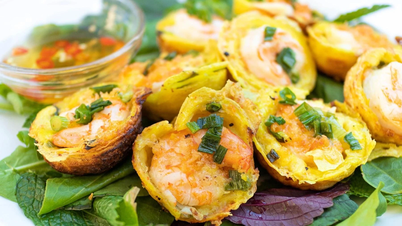
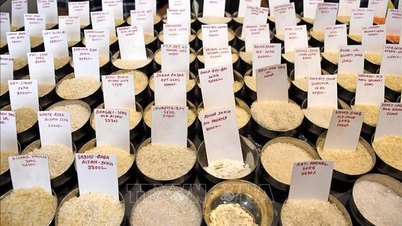
| "Khẩu nua lếch" sticky rice is a specialty of the ethnic minority communities in Bang Van commune. |
United in overcoming difficulties
Bang Van commune has 16 villages, over 1,200 households, and more than 5,400 inhabitants. In recent years, the commune has taken advantage of state support funds and mobilized internal resources from the people to focus on investing in socio-economic development. As a result, the rural landscape is increasingly improving, and the lives of the people are gradually being enhanced.
Many locals told us: Last year, the people of Bang Van commune faced a "double disaster." When African swine fever caused significant damage to livestock farmers, resulting in the culling of over 1,200 pigs, the impact of typhoons No. 10 and No. 11 simultaneously destroyed crops and agricultural produce in many areas, and damaged numerous transportation and irrigation infrastructure projects. 28 households were affected by the storms, with 8 having to relocate to safe shelters, and estimated losses exceeding 8 billion VND.
During epidemics and natural disasters, the commune's Party committee and government focused on leading and directing response efforts to control diseases in livestock, while ensuring that households affected by natural disasters quickly stabilized their lives. Particularly in 2025, 254 households with 1,161 people in 12 villages facing difficulties and unable to be self-sufficient in food received a total of 42.6 tons of rice subsidized by the State, delivered by the local government...
Sharing with us, Mr. Vi Thanh Phuong, Chairman of the People's Committee of Bang Van commune, said: Based on the actual soil conditions and the economic development experience of our ancestors, Bang Van commune clearly identifies agriculture as a crucial sector in economic development. From there, the commune has devised solutions to overcome difficulties, oriented production, and selected suitable crops and livestock to encourage people to produce, creating concentrated commodity production areas.
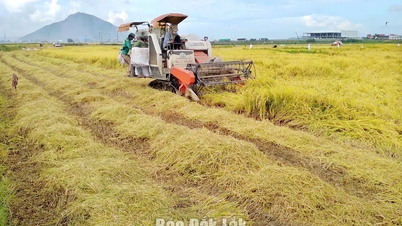
Bang Van commune has a total area of nearly 670 hectares of grain crops. The total grain production is estimated at 3,115 tons/year; the average grain production is 576 kg/person/year. Mr. Chu Nong Quang, from Doan Ket village, shared: "The villagers live off rice and tobacco. Thanks to these two crops, my family has a stable income of nearly 200 million VND/year."
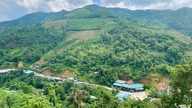
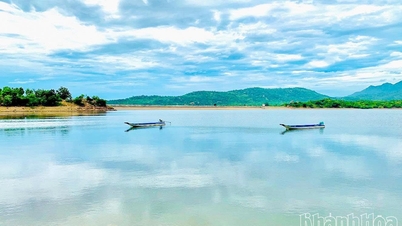
At this time, the rice paddies of Bản Duồm and Đoàn Kết, known for their specialty sticky rice variety Khẩu nua lếch, have been harvested, making way for sweet potatoes, corn, or other vegetables. To ensure a reliable water supply for crops, irrigation systems such as the Phai Lít, Hang Slậu, Khuổi Đươn, and Cốc Quân canals are being maintained and repaired.
Speaking with us, Mr. Nong Ngoc Hon from Ban Duom village said: "Thanks to the irrigation project, the rice paddies of my family and other villagers in the area, where we grow the specialty rice 'Khau Nua Lech', are more proactive in farming... 'Khau Nua Lech' rice is sown and planted during the main cropping season, covering more than 62 hectares per season, with an average yield of 46 quintals/hectare. Not only is it sufficient for our own consumption, but for many years now, 'Khau Nua Lech' sticky rice has become a valuable agricultural product."
Don't let the land rest.
 |
| This Tet holiday, Mrs. Dinh Thi Huyen's family in Thuong An village is happier because they have a new house. |
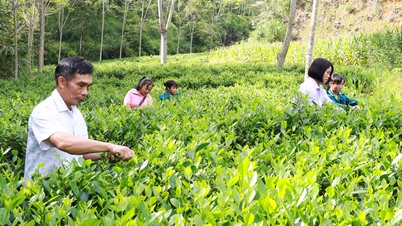
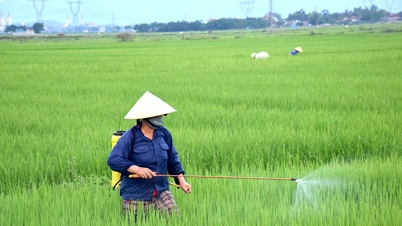
Meeting hardworking farmers toiling in the fields, and inquiring about their income, they jokingly said: "Currently, families earning over 100 million VND per year are considered exemplary producers, a dream for many." And all the farmers I met were conscious of striving to improve their family's economic situation. Proof of this is the fact that there is no longer any abandoned land. Many areas of mixed orchards have been cleared and converted to crops with higher economic value such as pumpkins, squash, and gourds; and fruit trees like oranges, tangerines, seedless persimmons, and pink bananas... bringing stable income to many households.
In particular, the commune is famous for its delicious chestnuts. With an area of 35 hectares, of which more than 13 hectares are for harvesting, in 2025 the people of Bang Van will have nearly 53 tons of chestnuts to supply markets inside and outside the province.
Many new crops have taken root and are thriving in Bang Van commune. Alongside these crops, a project to breed buffalo and white horses, supported by the State, is underway for residents in Hop Thanh, Khuoi Slao, and Van Minh villages. Currently, relevant authorities, the commune government, and participating households have signed commitments to raise the animals and are preparing to select and purchase breeding stock.
The economic life of the people in Bang Van commune is improving. What is particularly valuable is that although each family still faces difficulties, they always show mutual support and compassion. In 2025, 29 households in the commune received government assistance for housing, and local residents contributed labor and construction materials.


In her new house, still smelling of fresh cement, Mrs. Dinh Thi Huyen from Thuong An village was moved: "When we moved into the new house, the villagers came to share our joy and give us gifts. With a sturdy house to live in, my family will try our best to overcome poverty."
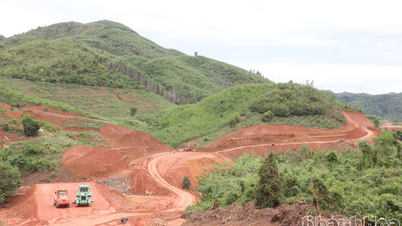
Walking along the wide, paved roads from the central market of the commune to Pù Mò village and the newly constructed Khinh Héo road, completed in December 2025, we heard locals tell stories about the poverty reduction and new rural development movements. Despite many difficulties, we could sense the bright, positive changes reflected on the faces of many people.
Source: https://baothainguyen.vn/xa-hoi/202601/gan-lam-bang-van-cdb2261/