From Three "Chickens" to Three "Lanterns"
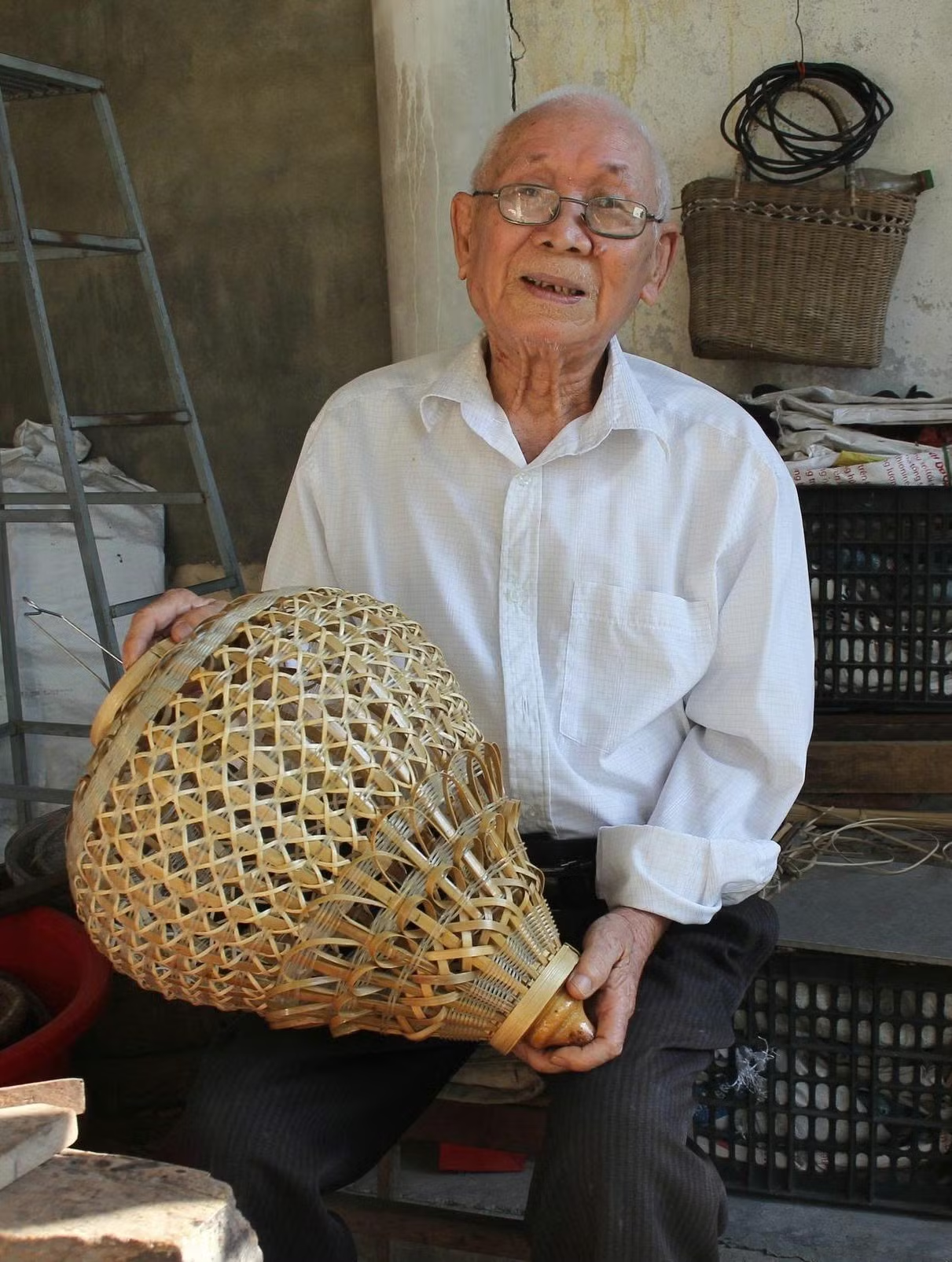
The rhythmic clicking sound of splitting and shaping bamboo slats echoed from the small courtyard in front of artisan Huynh Van Ba's house on Phan Dinh Phung Street ( Hoi An Dong Ward, Da Nang City), blending with the afternoon sunlight casting long shadows on the golden bamboo slats. Despite being 93 years old, he still diligently works with his bamboo frames every day. When talking about his lanterns, his voice remains clear and strong, his eyes sparkling with pride.
Born in Thang Binh district, Quang Nam province (formerly), Mr. Ba's childhood was closely associated with the bamboo groves of his village. "Since I was little, I've loved weaving and making products from bamboo," he said.
The villagers gave her names, all derived from bamboo. Initially, she was called Ba "the chicken farmer" because back then, her family raised fighting roosters, and she experimented with weaving baskets and cages for them. Then she became Ba "the weaver" after her weaving skills improved. Whatever product a customer requested, she would try her best to make it. Some people bought lampshades to open a restaurant, and customers would only sit at tables with lampshades.
Then he started thinking about how to make lanterns out of do paper. He had a friend who was a good artist, so he asked him to draw for him. Then he created a type of lantern with a bamboo frame, adding a few flowers and butterflies as decorations around it for a unique look. Grandpa Ba proudly said, "No one else outside has this kind of lantern."
Grandma Ba recounted that, before, she made lanterns for many temples and pagodas, but none of them could be folded. In 1990, international tourists saw the lanterns hanging in communal houses and temples and were delighted, expressing their desire to buy them as gifts. However, the traditional lanterns couldn't be folded and were difficult to transport. They said, "If there were a foldable one, I would buy it at any price."
From then on, artisan Huynh Van Ba began making his first foldable lanterns. “During the day, I would go looking for tools and materials, and at night I would lie there thinking and experimenting for months. After a few months, I succeeded. At first, I made them like a fan that could be unfolded and folded, but I didn't think they looked good. Then I came up with the idea of making lanterns like umbrellas, which could be pulled out and squeezed in.”
"Luckily, the government supported me by sending me to various places to learn. I also planned everything carefully; foreigners are strong, so when I made the lanterns, I designed them to be easy for them to use and fold, and they could fit thirty or fifty in a box," Mr. Ba recalled. And now, everyone usually calls him Ba "the lantern maker."



At that time, the workshop employed about thirty or forty people. The government salary was only thirty dong, but making lanterns could earn dozens of dong a day, so everyone applied for a job. They said, "Thanks to you and the lantern-making trade, my family and I were able to survive through difficult times." The old man confided, "I'm not seeking personal gain; I only hope to provide employment for everyone."
Unlike today's silk or brocade, Hoi An lanterns were once simply made from dó paper. Today, from that humble material, there are about 10 basic designs such as round lanterns, onion-shaped lanterns, and dumpling-shaped lanterns. Unlike other places, Hoi An lanterns are handcrafted from natural bamboo, making them durable and free from chemical treatments. International tourists particularly favor the plain white lanterns, as well as those featuring images of girls in ao dai (traditional Vietnamese dress) or the ancient town.
Creating these lanterns requires many steps. Each step demands meticulousness, skill, and patience from the craftsman. Whether it's a small or large order, for decades, Mr. Ba's family workshop has maintained its traditional handcrafted methods. Each craftsman handles a specific stage in a production line model, which allows for faster production of each lantern.
Bamboo is the material used to make the frame of the lantern. To ensure the frame is both flexible and sturdy, mature bamboo stalks, at least three years old, must be selected. Upon arrival, the bamboo needs to be boiled to prevent insect infestation and to make it more pliable.
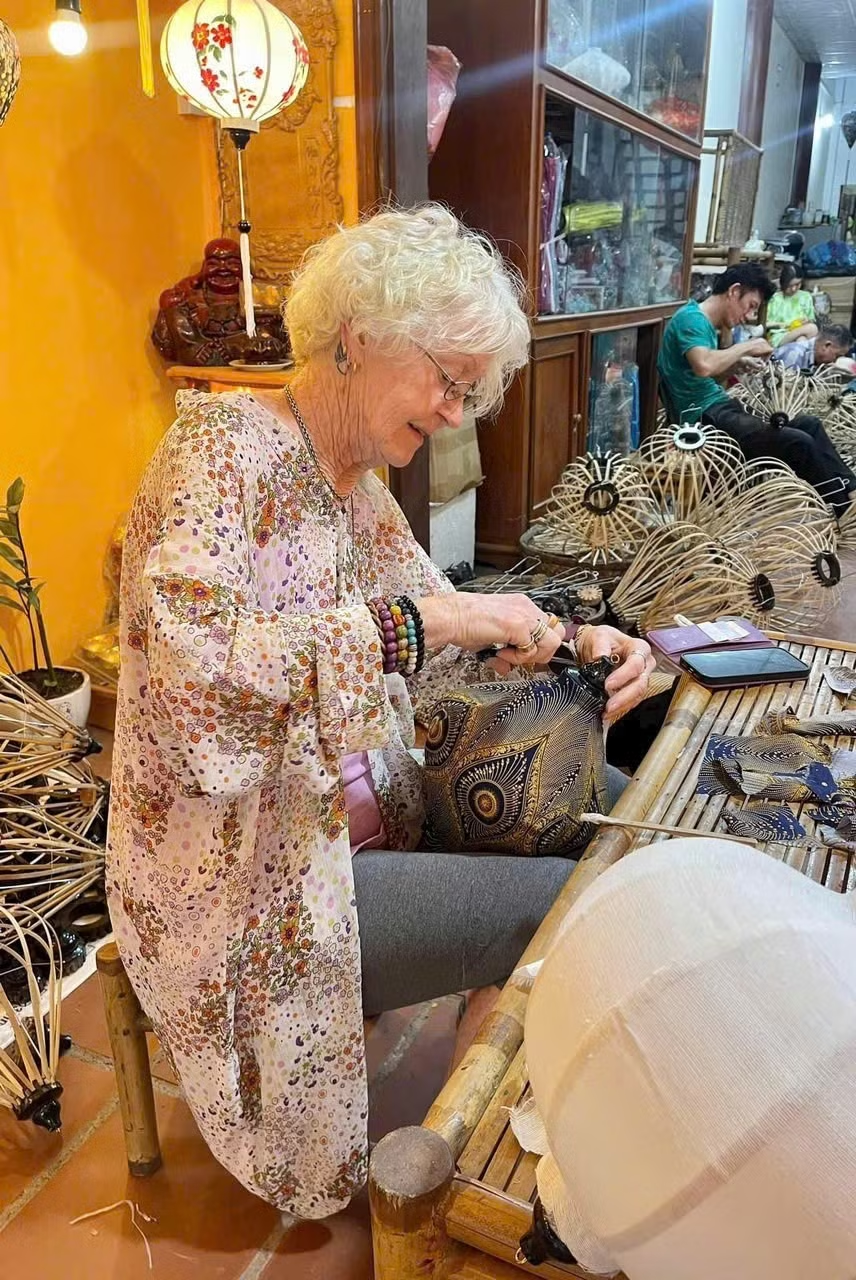
Next, they begin splitting the strips into thin slats, drilling holes at both ends, and threading steel wire through. Each lantern requires 12 strips, arranged evenly on the mold. After shaping them on the mold, the craftsman will wrap them in silk fabric and decorate them with patterns to add more color to the lanterns.
Bringing lanterns to the world.
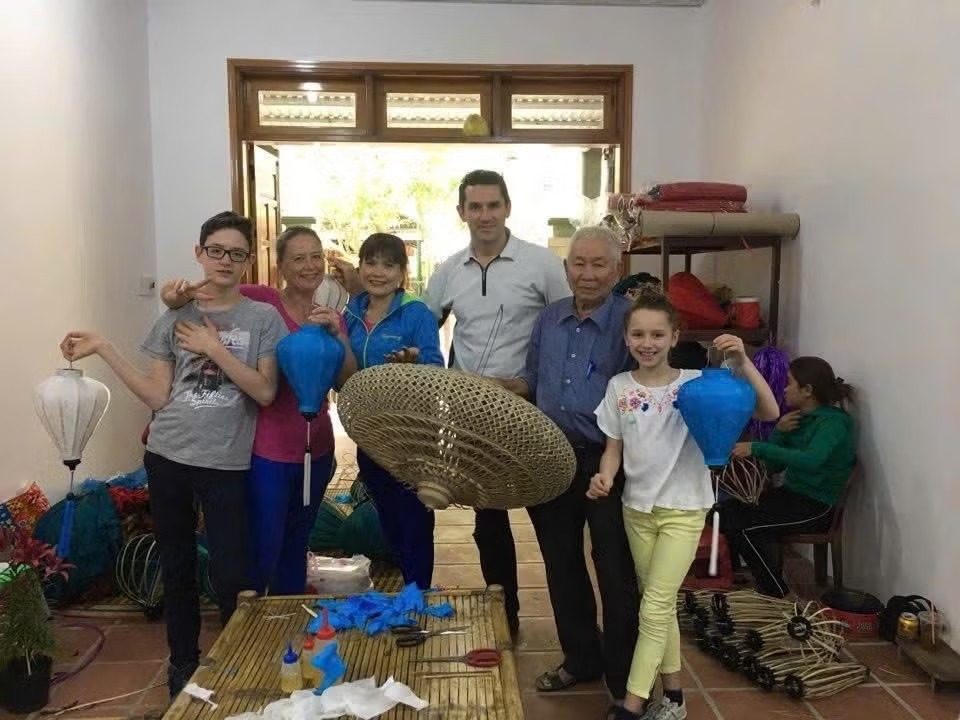
Recognizing the tourists' enthusiasm for his unique creation, Mr. Huynh Van Ba added hands-on classes for visitors whenever they visit his lantern-making workshop. This allows tourists to have a memorable experience along with a souvenir – a lantern they made themselves.
For Mr. Ba, each lantern is not just a product, but the soul of Hoi An. To keep this cultural product alive amidst modern life and present in the hearts of tourists, it's necessary to innovate designs and understand their preferences. But amidst all these changes, one principle remains unchanged, as he firmly believes: "Do business honestly, ensure quality and durability, and don't sacrifice the value of the lanterns for profit."
“For me, Hoi An lanterns are not just a means of livelihood, but a lifetime of dedication. The fact that tourists praise their beauty and appreciate them, the government supports them, and they create jobs for the local people is the greatest joy. That title is an honor, but it also reminds me to continue creating.” – Meritorious Artisan Huynh Van Ba (93 years old)
Those were also the things that the old man always advised his son, Huynh Van Trung, 60 years old, who inherited the family business.



Continuing his father's legacy, amidst a village rich in traditional crafts, Mr. Trung is still keeping the flame of the craft alive with his hands and love for his homeland's heritage. Perhaps that's why, even today, his handcrafted lanterns remain popular with tourists.
"Being accepted and considered beautiful by both locals and foreign customers is a new achievement for Vietnamese handicrafts," said Mr. Ba.
Even though she has now handed over the workshop to her children, the 93-year-old artisan still diligently pours her love for Hoi An into every bamboo slat and brushstroke on the silk covering the lanterns. Not only that, she continues to research and create even more new designs.
In 2010, Mr. Ba was awarded the title of Outstanding Artisan for his remarkable contributions to the creation and development of the lantern-making craft. He still cherishes the idea of building a space to display traditional rattan and bamboo products for tourists to visit.
Source: https://tienphong.vn/gap-cha-de-cua-den-long-gap-noi-pho-co-post1854743.tpo
![[Photo] A phone-free summer afternoon at the village library](https://vphoto.vietnam.vn/thumb/1200x675/vietnam/resource/IMAGE/2026/06/27/1782551770949_anh-1-jpg.webp)
![[Photo] Thousands of people participate in a run to show their support for the campaign "Sharing a common determination to build drug-free communes, wards, and special zones".](https://vphoto.vietnam.vn/thumb/1200x675/vietnam/resource/IMAGE/2026/06/27/1782554475933_0673e2a3df7b5e25076a-8283-jpg.webp)