

Visiting Truong Sa today, whether on the above-water or submerged islands, one can see the vibrant, cheerful, and optimistic spirit of the soldiers and civilians who are "clinging to the sea and defending the islands" day and night. The clearest evidence of this is the lush green vegetable gardens and fruit trees laden with sweet, wholesome produce.
oOo
In April of this year, a delegation from the Vietnam Navy and 164 delegates from Ho Chi Minh City visited Da Tay A Island (part of the Da Tay island cluster - also known as the "city" of submerged islands in the Truong Sa archipelago, Khanh Hoa province).

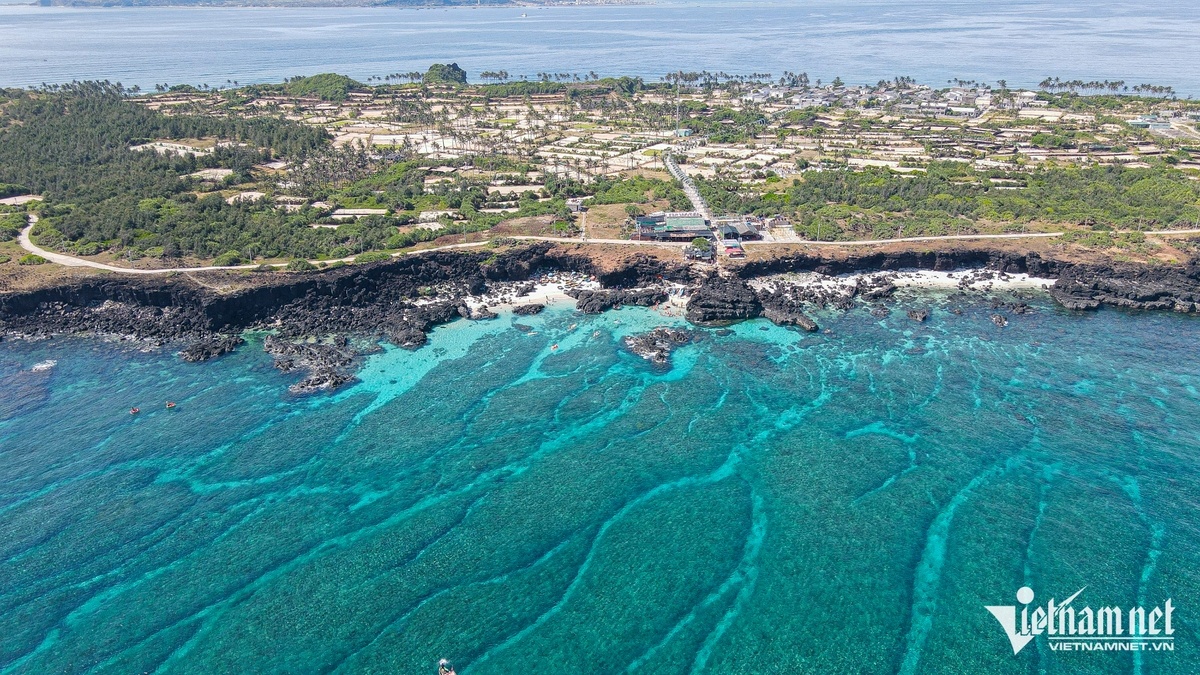
Stepping onto Da Tay A Island, one can feel the vibrant energy of modern, dynamic life, despite being more than 235 nautical miles from the mainland. The island boasts many sturdy structures, including a temple, a school, a multi-purpose cultural center, and an ice production factory.
But what the soldiers and civilians on Da Tay A Island are even more proud of are the lush vegetable gardens that have flourished on this remote island. In particular, they have even managed to grow watermelons. Here, we met "Mai An Tiem" Tran Minh Dat (a sailor working for the East Sea Seafood Exploitation Service Company Limited, under the Ministry of Agriculture and Rural Development ) – the man who successfully cultivated these verdant, fruit-laden watermelon fields on Da Tay A Island.

Growing watermelons on this island, with its unique climate characteristic of the Truong Sa archipelago, is a remarkable feat of overcoming nature, accomplished by this sailor with a "farmer background."
Lieutenant Colonel Le Huu Phuoc, Commander of Da Tay Island, said that after receiving the watermelon garden and watermelon cultivation techniques from officials of the Ministry of Agriculture and Rural Development, the military and civilians on the island have taken very good care of and developed the watermelon garden.

In the Spratly Islands today, not only is the shortage of fresh water and vegetables a thing of the past, but there is also no worry about water scarcity for irrigation. Besides utilizing rainwater and wastewater from daily life, many islands, both above and below sea level, have desalination plants that convert seawater into brackish water.
The watermelon field on Da Tay A Island has 200 vines, with both long, seeded watermelons and round, seedless ones. Only one fruit is left to develop on each vine. This is also the secret that Mr. Dat applies to help the watermelons reach "huge" sizes of 6-8 kg.
Watermelons grown on the island can be harvested in an average of 65 days. However, only one crop can be grown each year, from around March to June, when the waves are calm and the sea is still.

Due to the unique coral sand soil on the island, melon plants not only need more fertilizer than on the mainland but also require watering at least twice a day.
Holding the giant watermelons, the fruits of his own hard work and dedication, Mr. Dat beamed with happiness.
Dat recounted that six years ago, when he first set foot on Da Tay A Island, he thought about finding a way to grow more fruits and vegetables to both add more greenery to the island and improve the nutritional value of meals for everyone.
Having experience growing watermelons on the mainland, he boldly ordered seeds to be shipped to the island for experimental planting.
Not long after, the hard work, creativity, and optimistic spirit of the sailor, who was wholeheartedly devoted to the sea and the island, were richly rewarded with successive harvests of fragrant, sweet watermelons that yielded abundant fruit for the past six years.
"The guys on the island even sent watermelons back to their families on the mainland as gifts. Everyone was surprised because they didn't think watermelons could still be grown here, and that they could send them back as presents," said Dat, grinning widely.
Lieutenant Colonel Le Huu Phuoc, Commander of Da Tay Island, said that after receiving the watermelon garden and watermelon cultivation techniques from officials of the Ministry of Agriculture and Rural Development, the military and civilians on the island have taken very good care of and developed the watermelon garden.
"The melons are large and very sweet, not much different from watermelons grown on the mainland," commented Lieutenant Colonel Le Huu Phuoc.
Seeing the "giant" watermelon garden on the island with their own eyes filled the delegation with delight. "This 'achievement' is the clearest evidence of the tireless work ethic, optimism, joy, and love of life of the soldiers and civilians 'clinging to the sea and defending the island'," one delegate shared.


























































Comment (0)