

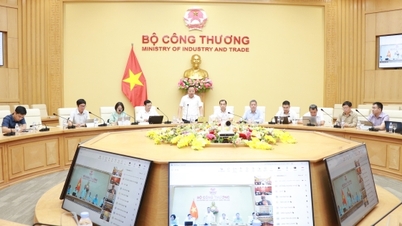
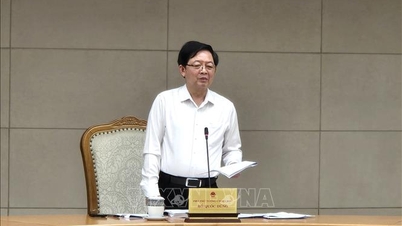
This was shared by Ms. Bui Thi Thanh Tam, Chairwoman of the Board of Members of the Northern Food Corporation, at the New Year's meeting of outstanding state-owned enterprises organized by the Standing Committee of the Government on the morning of March 3rd in Hanoi .
People are still making a profit.
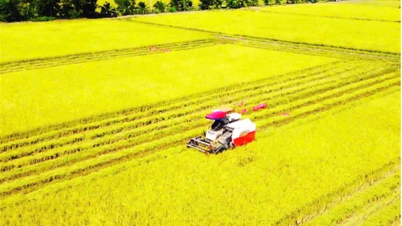
According to Ms. Bui Thi Thanh Tam, entering 2024, information from the Ministry of Agriculture and Rural Development indicates that rice production is expected to reach 43 million tons. After allocating funds for domestic consumption and ensuring food security, the target for export is 7.5-8 million tons of rice. Currently, it is March 2024, the peak of the Winter-Spring crop season, the largest crop of the year, with a harvest of approximately 6 million tons of rice, of which 3 million tons are for export.
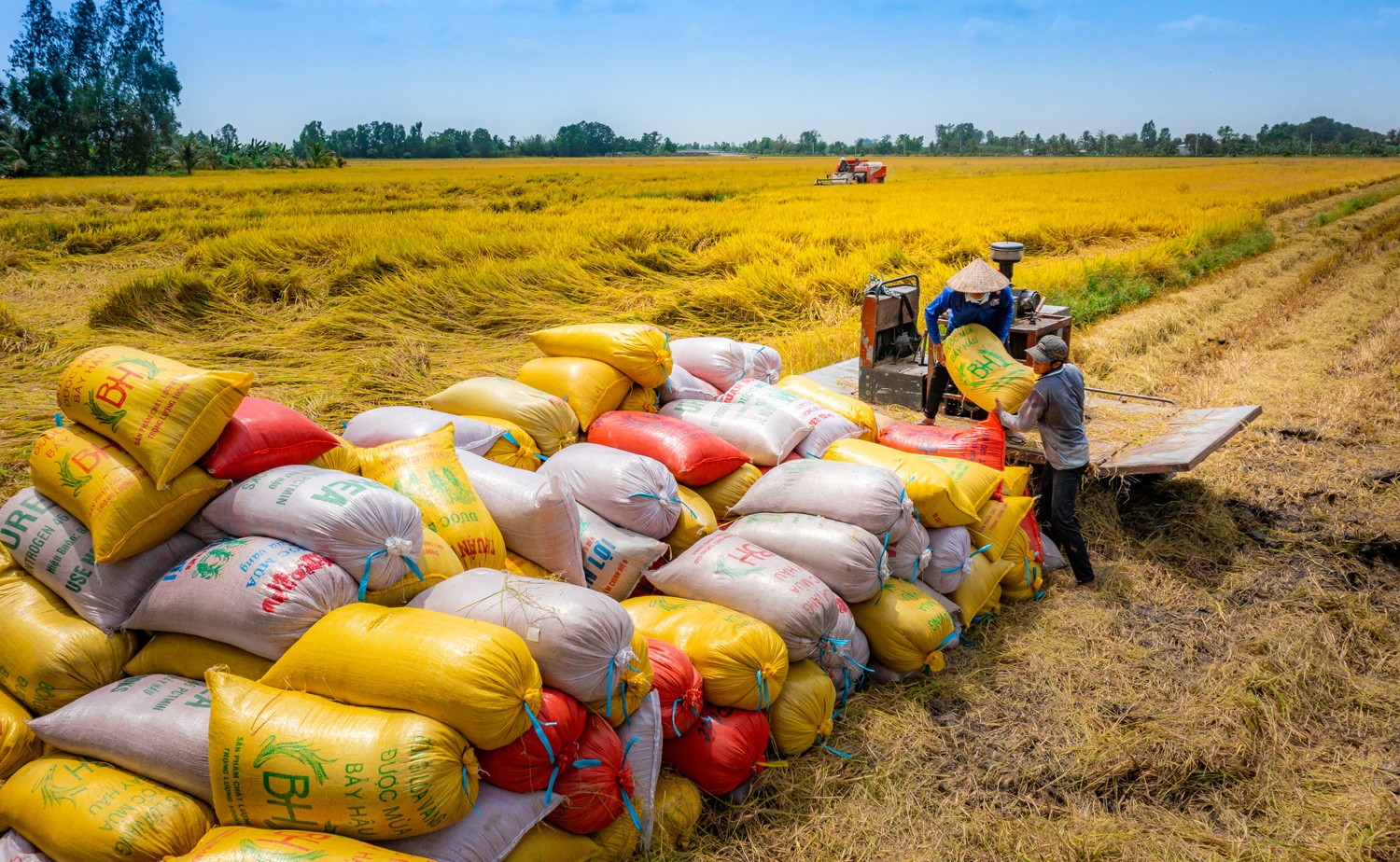 |
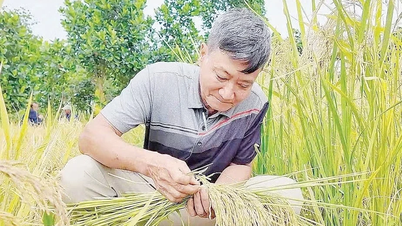
| Farmers in Hau Giang province harvest rice. Photo by Hien Thanh. |
Recently, there have been reports that rice prices have dropped by about 30%, and businesses and importers are slowing down purchases to wait for prices to fall. Regarding this issue, the reason is that rice prices, which had been continuously high in the third and fourth quarters of 2023 following India's export ban, have decreased since mid-January 2024, falling from over 9,000 VND/kg to 7,300-7,800 VND/kg. Although prices have decreased, they are still higher than those of the 2023 Winter-Spring crop and, importantly, still higher than prices of previous crops.
Ms. Tam also affirmed that the current rice price still allows farmers to make a profit of about 60% based on the production cost announced by the Financial Association, which is approximately 4,000 VND/kg, and this decrease is based on the previously high prices. In 2023, prices increased dramatically, and now they are decreasing, but this decrease is based on the previously high prices.
Previously, the government set a target of ensuring a 30% profit for farmers. Looking back at Vietnam's export history, now in its 35th year of rice exports, almost every year, during the winter-spring crop season, meetings about rice become a hot topic.
The government is very concerned about farmers. There were times, about 7-10 years ago, when, during harvest season, if the selling price of rice was below the production cost, the government would implement temporary stockpiling and allow businesses to purchase the rice to boost the price for farmers.
This approach requires the government to subsidize bank interest rates and does not guarantee market principles. However, currently, we have not only had a good harvest but also received good prices. This is a great success and is also the result of a long process of restructuring the agricultural sector and close guidance from the government.
The main reason for the drop in rice prices.
Regarding the recent drop in rice prices, Ms. Bui Thi Thanh Tam explained that it is currently the main harvest season, with all fields being harvested simultaneously across all provinces.
 |
| Ms. Bui Thi Thanh Tam, Chairwoman of the Board of Members of the Northern Food Corporation: We only account for 15-18% of the total rice exports of the whole world. - Photo VGP/Nhat Bac |
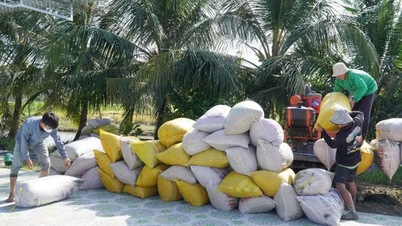
The reason is that last year, when prices were high, provinces planted rice simultaneously, and farmers were very enthusiastic, so they all started harvesting at the same time. Now, with all regions harvesting at the same time, congestion is occurring in the fields, at factories, and even at inland ports. Furthermore, to procure 6 million tons of rice, preparations regarding bank credit and logistics are necessary, which will lead to congestion and delays.
Furthermore, Thailand, the Philippines, and Indonesia also harvest their crops during March-May. In addition, some African countries currently have large rice stocks. The Philippines, in particular, has a surplus of rice at high prices, so they are prioritizing domestic consumption before importing further.
"Recently, the Vietnam National Food Corporation offered our products to several importers, but they said they 'will study it further and may discuss it later.' World market prices are currently undergoing adjustments. We only account for 15-18% of the total global rice exports," Ms. Tam stated.
Last January, Vietnam participated in a tender in Indonesia with a very large quantity; the total tendered quantity was 500,000 tons, but Vietnamese exporters won nearly 400,000 tons at high prices.
At current prices, farmers are making a profit and are very happy, and it's certain that at these prices, they will continue to increase their production.
Looking ahead, the Government and relevant ministries and agencies have predicted that 2024 will continue to be a year of high demand for rice, and importers are still planning to implement their plans.
Businesses continue to buy rice.
Regarding consumption, Ms. Bui Thi Thanh Tam informed that currently, both the Northern and Southern Food Corporations are following the directives of the Prime Minister and the Chairman of the State Capital Management Committee to continue purchasing rice. Since Tet (Lunar New Year), they have purchased approximately half a million tons of rice continuously day and night without rest, and affirmed that they will continue purchasing in the future.
It's also worth noting that private companies' warehouses are currently purchasing rice.
This morning (March 3rd), the Corporation received a new directive from the Prime Minister issued yesterday (March 2nd). In this directive, the Prime Minister instructs ministries, agencies, the Vietnam Food Association, provinces, and especially the two state-owned food corporations, to increase production in the new situation to ensure domestic food security and simultaneously guarantee exports. If this directive is implemented, we will not only address short-term concerns but also ensure long-term goals.
At the event, representatives from the Northern Food Corporation also presented three recommendations to the Government and relevant ministries and agencies.
Firstly, the General Department of State Reserves typically holds a tender in March for approximately 200-250 thousand tons of rice. This quantity is sufficient to contribute to stimulating demand. If conditions permit, we propose that the General Department of State Reserves and the Ministry of Finance expedite the procurement and stockpiling program, as businesses need contracts to implement the program and, more importantly, to ensure quality in storage.
Secondly, the State Bank of Vietnam and the commercial banking system are both interested in rice exporting and processing businesses. This year, the situation is challenging, so we request that banks continue to pay attention, reduce interest rates, and ease lending conditions.
Thirdly, regarding the Sustainable Development Project for 1 million hectares of high-quality rice monoculture, this project is of great significance both domestically and internationally. We propose that the Government assign relevant ministries, agencies, and provinces to implement the project, and conduct a review of the previous large-scale model rice field program. When organizing conferences, we request that ministries and agencies invite the business community to participate.
Source


![[Photo] General Secretary and President To Lam meets with National Assembly delegates from ethnic minorities.](https://vphoto.vietnam.vn/thumb/1200x675/vietnam/resource/IMAGE/2026/04/20/1776696701056_a1-bnd-8331-3342-jpg.webp)
![[Image] National Assembly discusses the implementation of the socio-economic development plan.](https://vphoto.vietnam.vn/thumb/1200x675/vietnam/resource/IMAGE/2026/04/20/1776696707422_ndo_br_img-20260420-185419-jpg.webp)


























































Comment (0)