Thirst in the heart of a heritage site
From November of the previous year to June of the following year, a drought grips the entire Dong Van Karst Plateau. When rainwater reservoirs run dry, people begin their familiar journeys: traversing sharp rocky slopes, carrying water in cans back home. This dry season, the family of Mr. Ly Mi Ho, from Ma Tia village, Dong Van commune, has to travel nearly 5 km to fetch water. Each trip, their old motorbike can only carry about 60 liters of water for the family to use for the whole day. Mr. Ho shared: "Here, when the dry season comes, there's not enough water. Water is very precious, so my family has to be very careful with every little bit, only daring to prioritize drinking and cooking, while trying to save water for bathing and washing."
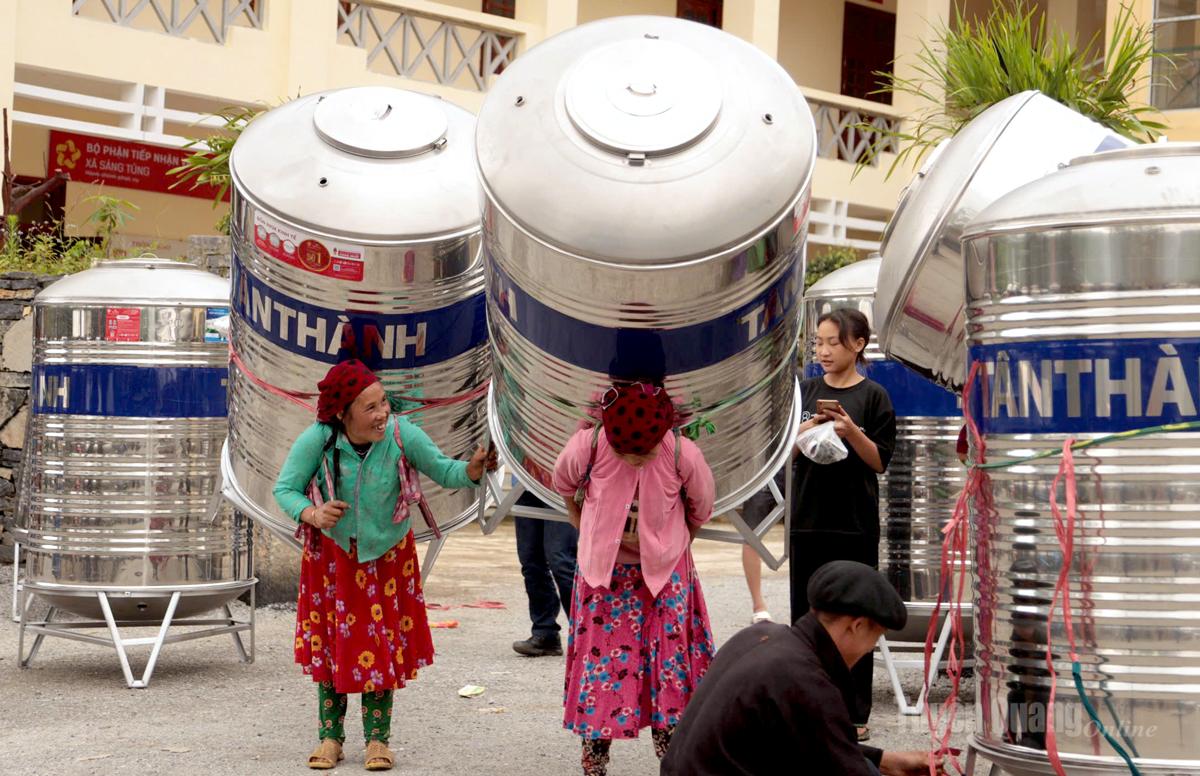 |
| Residents of Pho Bang commune receive water tanks, proactively storing water for daily use during the dry season. |
Considered the "peak of thirst" in the rocky plateau, Meo Vac commune faces a particularly severe water shortage every year. Mr. Ly Mi Lu's family in Ma Pi Leng village has to cross the mountains twice a day to fetch water. When the streams dry up, he and other villagers have to pool money to buy water at a cost of 1-1.2 million VND for a 10 cubic meter truckload. Mr. Lu confided: "In some years with prolonged droughts, my family has to spend tens of millions of VND to buy water for daily use. We just hope for rain or a stable supply of clean water so that life will be less difficult."
This year, under the influence of the El Nino phenomenon, the early onset of hot weather and reduced rainfall have exacerbated the water shortage in the Dong Van Karst Plateau. Many hanging lakes have dried up, the land is cracked, crops are withering, and the "thirst" is not only engulfing villages but also penetrating deep into the classrooms of the highlands. Before the summer break, more than 300 boarding students at Sung Trai Secondary School in Lung Phin commune had to study and live in water-scarce conditions for months. The natural water sources in the central hanging lake and the school's reservoir dried up early, forcing the school to spend tens of millions of dong each month to buy water and maintain the minimum meals and living expenses for the boarding students.
The majestic and pristine Dong Van Karst Plateau is also one of the most water-scarce regions in the country. With over three-quarters of its area covered by limestone and jagged rocks, low forest cover, limited and difficult-to-exploit groundwater resources, and poor natural water retention, hundreds of thousands of people here have long suffered from water shortages for both daily life and production. Over the years, government investment in the construction of elevated reservoirs has helped alleviate this problem. However, most of these structures are small-scale and entirely dependent on rainwater; many reservoirs have deteriorated and silted up but have not been comprehensively renovated or repaired. Meanwhile, population growth and tourism development have led to ever-increasing water demand, making the issue of water supply in this rocky region more urgent than ever.
Solving the water shortage problem
Faced with the increasing pressure of climate change, solving the water shortage problem on the Dong Van Karst Plateau cannot be limited to temporary solutions but requires a comprehensive, long-term strategy. From 2002 to the present, the Government has allocated investment capital to build 124 elevated reservoirs on the Dong Van Karst Plateau. These reservoirs high in the mountains have significantly contributed to ensuring water supply for tens of thousands of households, gradually improving the lives of people in the highlands. However, due to the increasingly evident impacts of climate change, along with population growth and the increasing demand for water for daily life, production, and tourism, many existing structures no longer meet the actual needs.
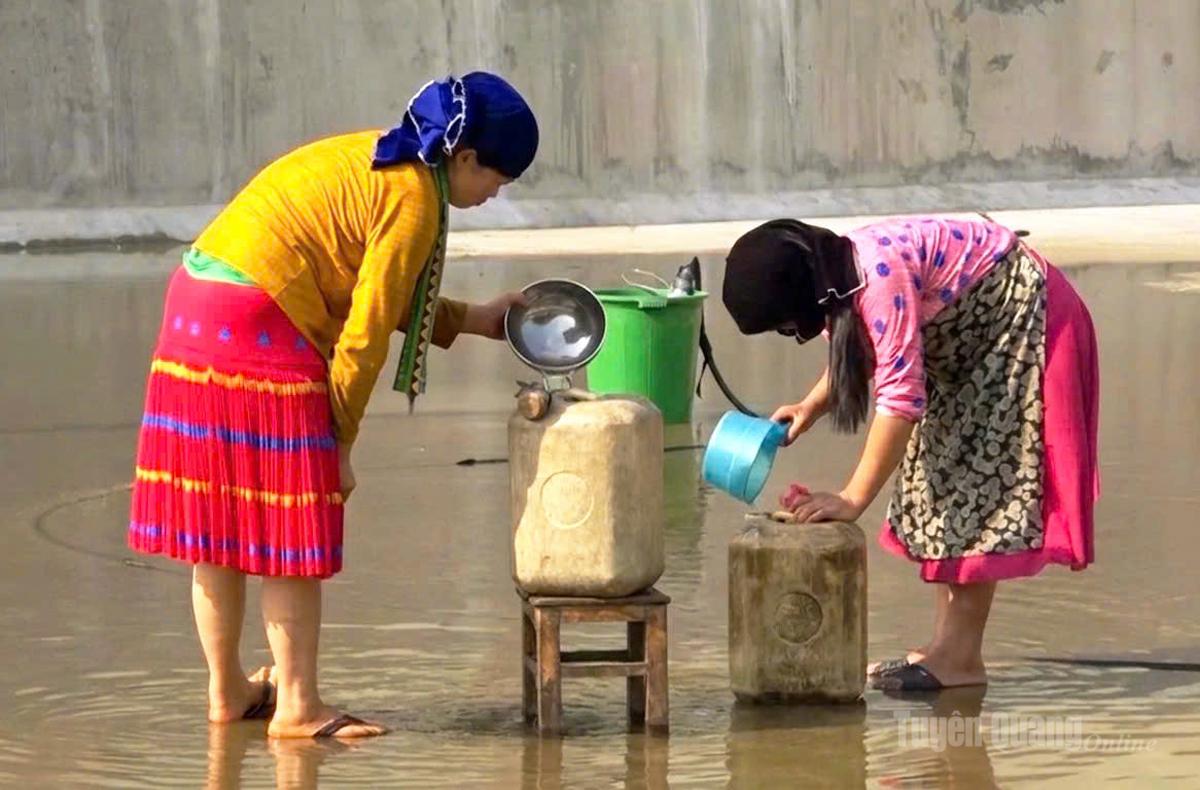 |
| The people of Ta Phin village, Dong Van commune, carefully conserve every can of water as the reservoir dries up. |
Recognizing this situation, the Provincial People's Committee issued Plan No. 47 on ensuring water security and the safety of dams and reservoirs, which prioritizes investment in elevated reservoirs, aiming to build nearly 400 reservoirs to essentially meet the water needs of the people. Simultaneously, it coordinated with the Institute of Water Resources Science to survey and propose plans for constructing large-capacity reservoirs with a volume of three million cubic meters or more.
According to Professor Tran Dinh Hoa, to sustainably solve the problem of water security, it is necessary to shift strongly from a reactive mindset to a proactive, long-term one. The focus should be on investing in large-scale, centralized water reservoirs in densely populated areas on the rocky plateau. At the same time, it is necessary to research and develop a mechanism for interconnecting existing elevated reservoirs and lakes to flexibly regulate water resources between regions, limiting situations where some areas have excess water while others experience shortages at the same time.
To realize the goal of ensuring water security, at the end of 2024, the People's Committee of Quan Ba (formerly) district commenced a project to provide clean water for the people with a total investment of over 52 billion VND. The project is a comprehensive investment from the main dam, water treatment plant, transmission pipeline system to central reservoirs. According to the design, the project will provide clean water to approximately 1,460 households during the rainy season and about 900 households during the dry season.
Mr. Tran Xuan Duong, Director of the Rural Water Supply Center, said: “The province's orientation is to prioritize investment in centralized water supply projects using gravity flow, built synchronously from water sources and treatment systems to the water supply network to each household. This is an important solution to ensure that people in mountainous areas have access to clean water that meets standards, while also improving the efficiency of management and operation of the projects, aiming for safe and sustainable water supply.”
Besides investing in water supply infrastructure, localities are also gradually restructuring agricultural production to adapt to climate change. People are encouraged to switch to drought-resistant crop varieties suitable for the rocky mountainous soil conditions; expanding smart agricultural production models and applying water-saving irrigation technologies. In Pho Bang commune, many households have invested in automatic irrigation systems for their pear orchards, applying IoT technology combined with solar energy. Through soil moisture sensors, the amount of irrigation water is precisely regulated according to the needs of the plants, contributing to significant water savings.
Not only in agricultural production, but also in the tourism sector, water conservation is becoming an urgent requirement. Every day, the Dong Van Karst Plateau welcomes thousands of tourists, leading to a high demand for water for accommodation and meals. In response to this, local authorities have intensified efforts to promote and encourage accommodation establishments and tourist destinations to commit to water conservation, while also raising tourists' awareness of water resource protection. Mr. Sung Mi Phin, owner of ChaiTo Homestay in Sa Phin commune, shared: “I regularly post videos about the water shortage faced by local people so that tourists can better understand life on the karst plateau. Understanding these difficulties, many tourists have proactively used water sparingly, reduced waste, and joined hands in protecting this precious water resource.”
Prolonged droughts, withered crops, and the hardship faced by people due to water shortages are the realities that the northernmost region of Vietnam is confronting. In the context of increasingly severe climate change, ensuring water security is not only an urgent immediate requirement but also a long-term strategic task. Every water infrastructure project built and every effective adaptation solution implemented will not only contribute to improving people's lives but also create a foundation for the sustainable development of this frontier region in the future.

![Water security in the Mekong Delta: [Part 1] When the 'rice bowl' gradually loses its ability to retain people.](https://vphoto.vietnam.vn/thumb/192x108/vietnam/resource/IMAGE/2026/05/28/1779937163427_1415-image00220230718165933-17068901867521153615427-111010_61.jpeg)
Text and photos: Hoang Ha
Infrastructure must go hand in hand with urban planning.
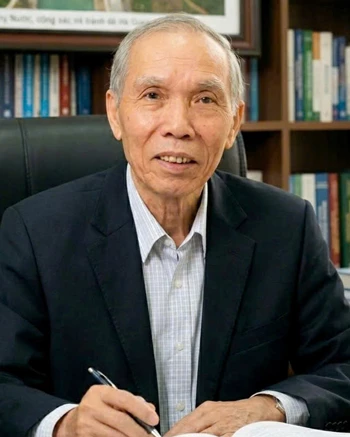 |
| Assoc. Prof. Dr. Vu Cao Minh Vietnam Academy of Science and Technology |
In my opinion, the water shortage problem on the Dong Van Karst Plateau cannot be viewed as an isolated issue of irrigation infrastructure, but must be considered within the overall development plan for the highland region, where water, population, and livelihoods are designed in a coordinated manner from the outset. Given the unique karst topography and very low natural water storage capacity, relying solely on small-scale structures like hanging reservoirs or household tanks is only temporary and unlikely to ensure long-term stability.
From a planning perspective, the focus should shift to an integrated model, reorganizing residential spaces in conjunction with water resources, limiting spontaneous development in water-scarce areas, and forming concentrated residential clusters linked to large-scale water supply systems. Furthermore, irrigation systems should be designed to be interconnected, linking reservoirs and gravity-fed water supply networks, forming a flexible "water network" instead of fragmented structures...
Strengthening management and ensuring water security.
 |
| Comrade Le Anh Dung Head of the Provincial Irrigation Sub-Department |
In my opinion, investing in the construction of large-scale, multi-purpose reservoirs is a fundamental and long-term solution to address the shortage of drinking water in the rocky plateau region.
The Provincial Irrigation Department continues to review and assess the current state of water resources and irrigation and water supply systems to advise on solutions for efficient and sustainable exploitation and use. The focus is on upgrading and repairing dilapidated elevated reservoirs and storage tanks; researching investment in water storage and rainwater harvesting facilities to improve water regulation and supply capacity during the dry season. Simultaneously, it will strengthen water resource monitoring and surveillance, investigate and assess groundwater reserves, establish water source protection corridors, and protect water-generating areas.
The Sub-Department continues to promote the use of water efficiently, encourage the adoption of advanced irrigation models, and shift crop structures to suit water-scarce conditions, while mobilizing social resources to invest in water supply projects in disadvantaged areas.
Proactive response
 |
| Comrade Nguyen Thi Hoai Chairman of the People's Committee of Mau Due Commune |
Currently, the commune has 3 elevated reservoirs for water storage; however, 2 of these structures have deteriorated and are damaged, reducing their water supply efficiency.
To proactively address water shortages, the commune is focusing on integrating resources from national target programs to support residents in building household-scale rainwater storage tanks, while also providing water tanks to households in sparsely populated areas. The locality has proposed that the province provide funding for the repair of elevated reservoirs, and relevant agencies are currently conducting on-site surveys. In the long term, the commune has requested the province to invest in the construction of a large-scale water reservoir to ensure water supply for domestic use and production for approximately 1,000 households in 8 lowland villages in the area.
Investing in upgrading and expanding water supply and water storage facilities.
 |
| Comrade Truong Thi Luu Principal of Ta Lung Semi-Boarding Ethnic Minority Junior High School, Meo Vac Commune |



On average, the school provides accommodation and living expenses for over 500 boarding students each year. Therefore, the demand for water for cooking, daily life, personal hygiene, and educational activities is always very high.
Currently, the school's main water source comes from a nearby reservoir, but it only meets about 80% of the demand. During the rainy season, the water supply is generally stable, but at the peak of the dry season, the stored water volume decreases significantly, and at many times it is insufficient to meet the needs of teachers and students.
Therefore, we hope to continue receiving attention from all levels and sectors in investing in, upgrading, and expanding water supply and water storage facilities in the area. This is a fundamental solution to ensure a stable water supply for schools in mountainous areas, helping teachers and students to teach and learn effectively, especially during the peak months of the dry season.
We hope to receive investment for more large reservoirs soon.
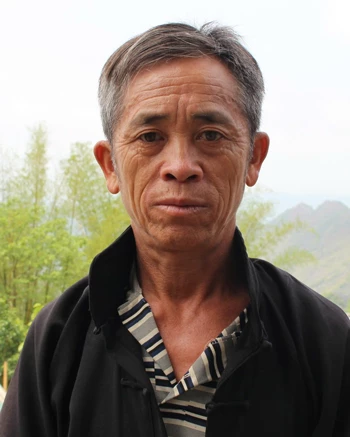 |
| Comrade Truong Thi Luu Mr. Sung Seo Pao, Sung Pinh B village, Thang Mo commune |
Every dry season, as our water reservoirs gradually run low, we have to walk long distances to carefully collect small cans of water from the rocky streams. Every activity, from eating and drinking to bathing and washing, must be done sparingly. Without the refreshing rains, the land becomes even drier, and seeds struggle to germinate. Crops are less productive, affecting our income and making life even more difficult. Our people have only one simple wish: that our village will soon receive investment in larger reservoirs and a stable water supply system. With an abundant water source year-round, the hardship of carrying water will lessen, and we will feel more secure and committed to our homeland, and be more enthusiastic about cultivating the crops to come.
Source: https://baotuyenquang.com.vn/xa-hoi/202606/giai-con-khat-บน-cao-nguyen-da-9403a3a/


![[Image] National conference summarizing one year of operation of the overall organizational model of the political system, the three-tiered government model.](https://vphoto.vietnam.vn/thumb/1200x675/vietnam/resource/IMAGE/2026/07/01/1782882811691_ndo_br_1-jpg.webp)