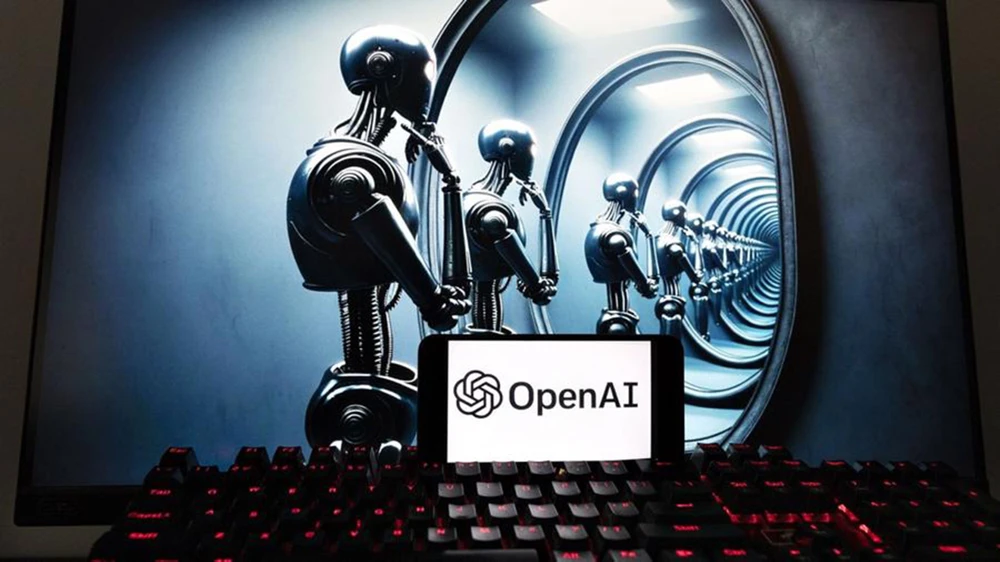
On January 26, the U.S. Federal Trade Commission (FTC) announced it is monitoring investments by major technology corporations such as Microsoft, Google, and Amazon in artificial intelligence (AI) startups OpenAI and Anthropic.
Preventing unfair competition
This is part of an effort by US regulators to ensure regulations keep pace with AI developments, preventing large tech corporations from engaging in unfair competition and stifling rivals in a field that promises to undergo significant changes in the future. Specifically, the FTC will conduct research to gain deeper insights into market trends and business practices, and then use the conclusions drawn to take legal action.
The head of the committee, Lina Khan, affirmed that the research will further clarify the nature of investments and collaborations, as well as the risks of unfair competition in the field of AI generation.
Meanwhile, Microsoft Vice President Rima Alaily said that the company would provide all the information requested by the FTC, while emphasizing that collaboration between independent companies like Microsoft and OpenAI is a driving force for competition and innovation.



For its part, Google hopes the FTC will uncover companies that have an unfriendly approach in the field of AI.
Anthropic and Amazon declined to comment on the FTC's decision. Amazon, Microsoft, and Google are the world's largest providers of cloud computing data centers, specializing in storing and processing large-scale data. Recently, these three giants have been investing heavily in generative AI technology. This includes Microsoft's $13 billion investment in OpenAI, the company that created the ChatGPT chatbot.
Last year, Amazon and Google also invested $4 billion and $2 billion respectively in Anthropic – a company considered a competitor to OpenAI and with great potential for future growth.
Preventing the acquisition of secrets.
In early January, the European Commission (EC) also conducted a preliminary review of Microsoft's investments in OpenAI to rule out the possibility of them secretly acquiring and merging with smaller companies. The examination of Microsoft's investment in OpenAI was primarily a competition policy-oriented approach, to determine whether Microsoft's massive bet amounted to a full takeover and gave the multinational corporation control of the startup.
As the primary enforcement body for competition rules, the EC has the power to monitor, approve, and, if necessary, eliminate business concentrations that could harm economic relations across the market. If Microsoft's investment falls under the European Union's (EU) Mergers and Acquisitions Regulation, the tech giant would have to formally notify the regulator. The investigation would be applied retroactively as the investment is ongoing and could lead to remedial measures.



The EU's move reflects concerns about fair competition and potential market distortions arising from Microsoft's extensive integration of OpenAI products into its core businesses. The EU's scrutiny follows a UK investigation into whether the balance of power between Microsoft and OpenAI has shifted, potentially giving one party more control or influence over the other.
VIET ANH
Source























![[Video] Weather forecast for tonight and tomorrow, July 3, 2026: Tropical depression likely to strengthen into a storm tonight](https://vphoto.vietnam.vn/thumb/402x226/vietnam/resource/IMAGE/2026/07/02/1782997465372_dem-2-png.webp)