

This highlights the urgent need for education to not only integrate technology, but also to simultaneously cultivate soft skills, critical thinking, and the ability to balance the digital world with real life.
When children get their hands on the world of AI.
On a weekend evening, Linh Chi (9 years old), residing in An Hai ward, showed her mother a painting she had just drawn using Midjourney (an AI image generation application that allows users to create unique works of art from text descriptions). When asked about her feelings and thoughts about the painting, she innocently said: "These are simple things, Mom, I only need a few clicks to complete them."
Ms. Pham Thi Hoang Hai, Linh Chi's mother, expressed: "I'm happy to see my daughter quickly adapting to technology because she has good skills and can apply what she's learned well. However, I still have many concerns because the paintings she creates using the app lack the exploration, inspiration, and genuine feeling for beauty. She won't understand the value of the process of nurturing and creating an artistic product. Technology can help her complete the product quickly, but I still want her to understand and experience genuine emotions in the face of art's beauty."
This isn't just Ms. Hai's concern, but a common worry among many parents whose children are exposed to digital technology and AI applications at an early age. Experiencing modern technology is necessary in the digital age, but without proper guidance, children can easily become detached from real life and negatively impact their holistic development.
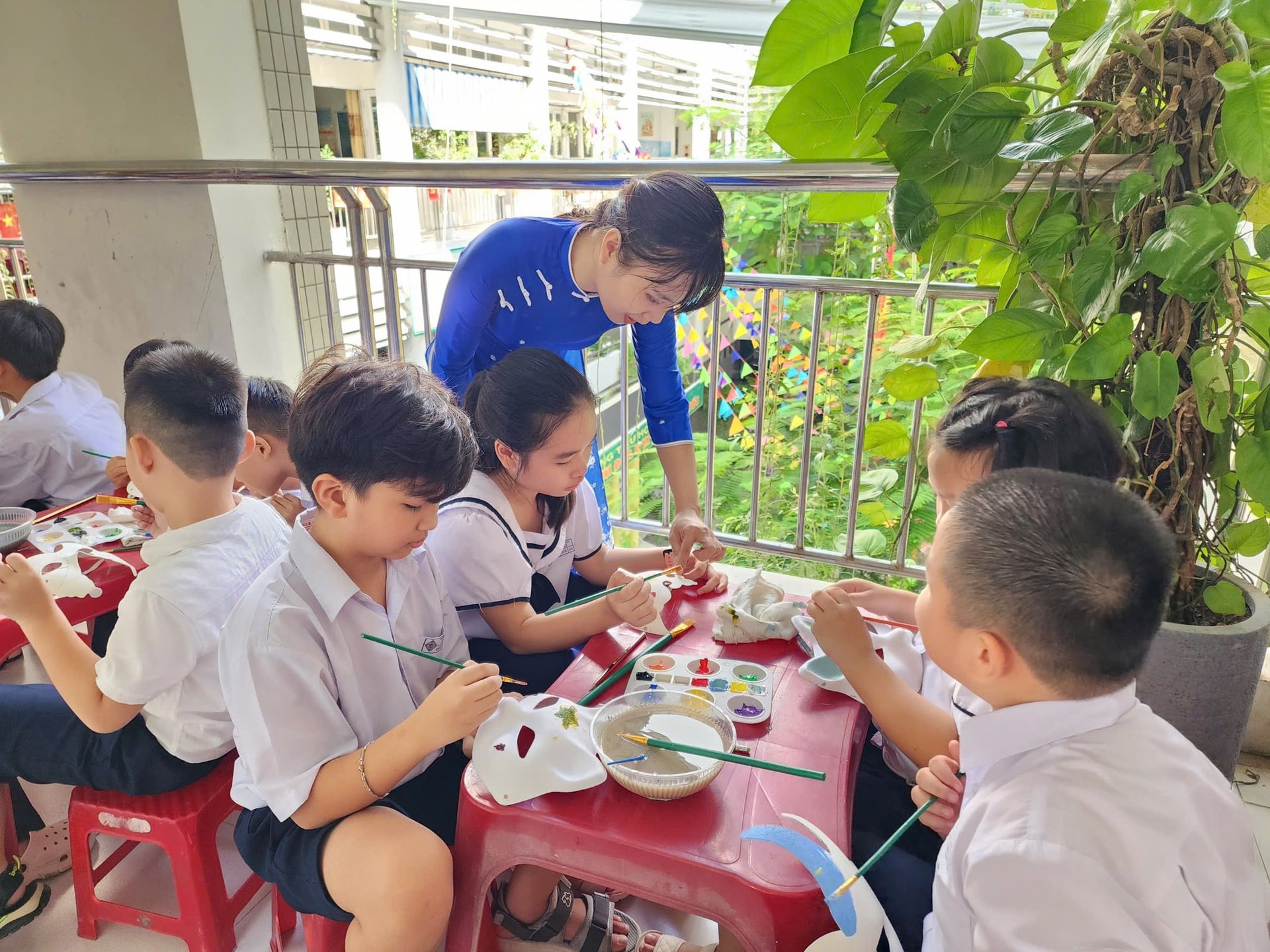
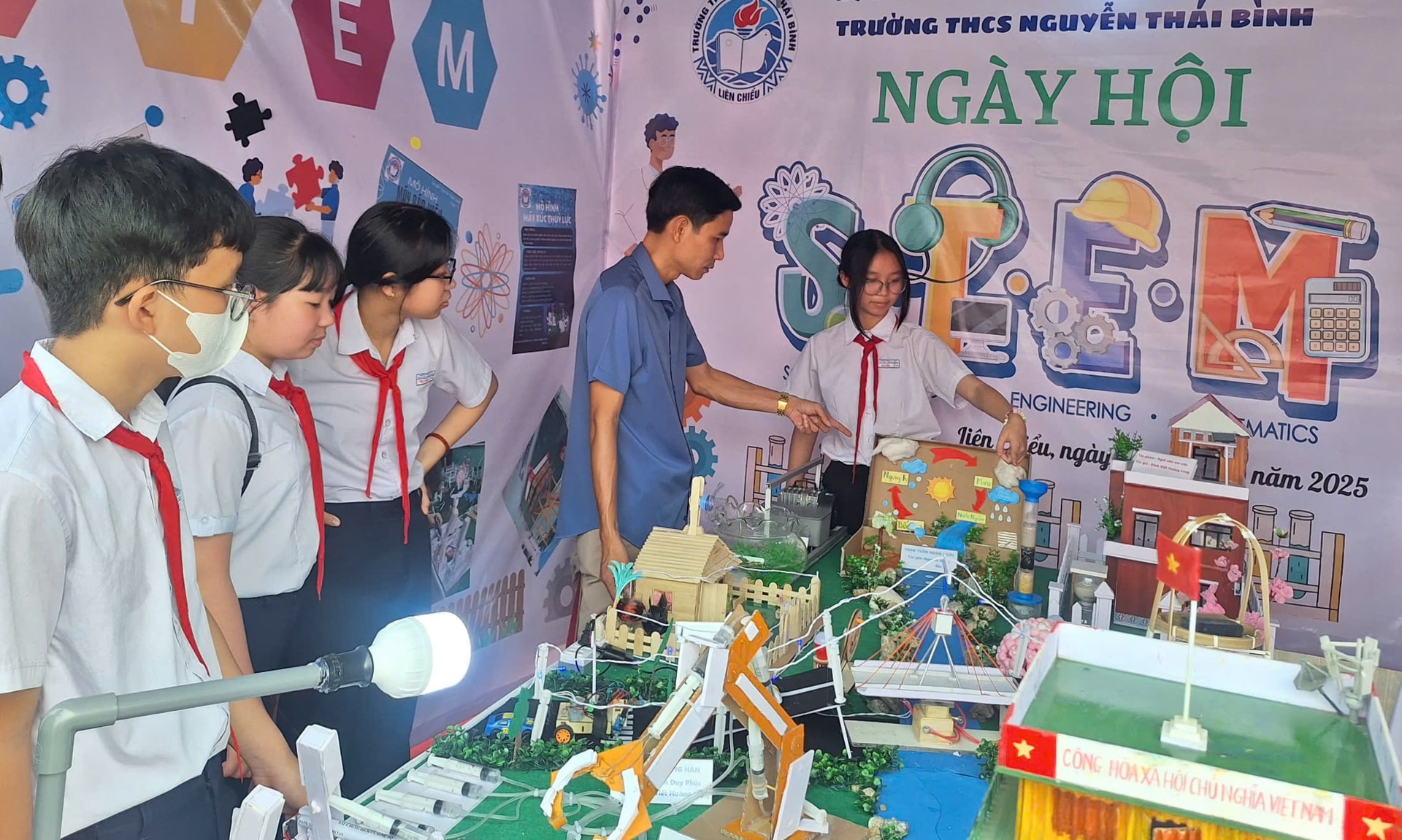
In line with the general trend, schools in the city are also conducting many training activities and applying AI to teaching and learning. Ms. Do Thi Le, Principal of Hung Vuong Primary School (Hai Chau ward), shared that applying AI in teaching and learning makes lessons more dynamic. Students have faster and more diverse access to knowledge, and lessons are more engaging.
However, Ms. Le only encouraged school teachers to apply AI to content that is difficult to recreate in reality. “Trees, flowers, birds, familiar objects… children should be able to see, touch, and feel them with their senses. Real-world experience is still the best way for children to learn,” Ms. Le emphasized.
How to properly integrate AI into the classroom?
Also acknowledging the positive changes brought about by AI applications in teaching and learning, Ms. Thai Vi Linh, Principal of Chi Lang Primary School (An Hai Ward), believes that in the context of AI being increasingly integrated into education, the role of teachers is gradually changing, from knowledge transmitters to guides, organizers, and leaders of learning activities. Teachers need to know how to use AI appropriately to support teaching, but should not become dependent on AI-generated content. In addition, teachers themselves must constantly learn and improve their professional knowledge and technological skills.
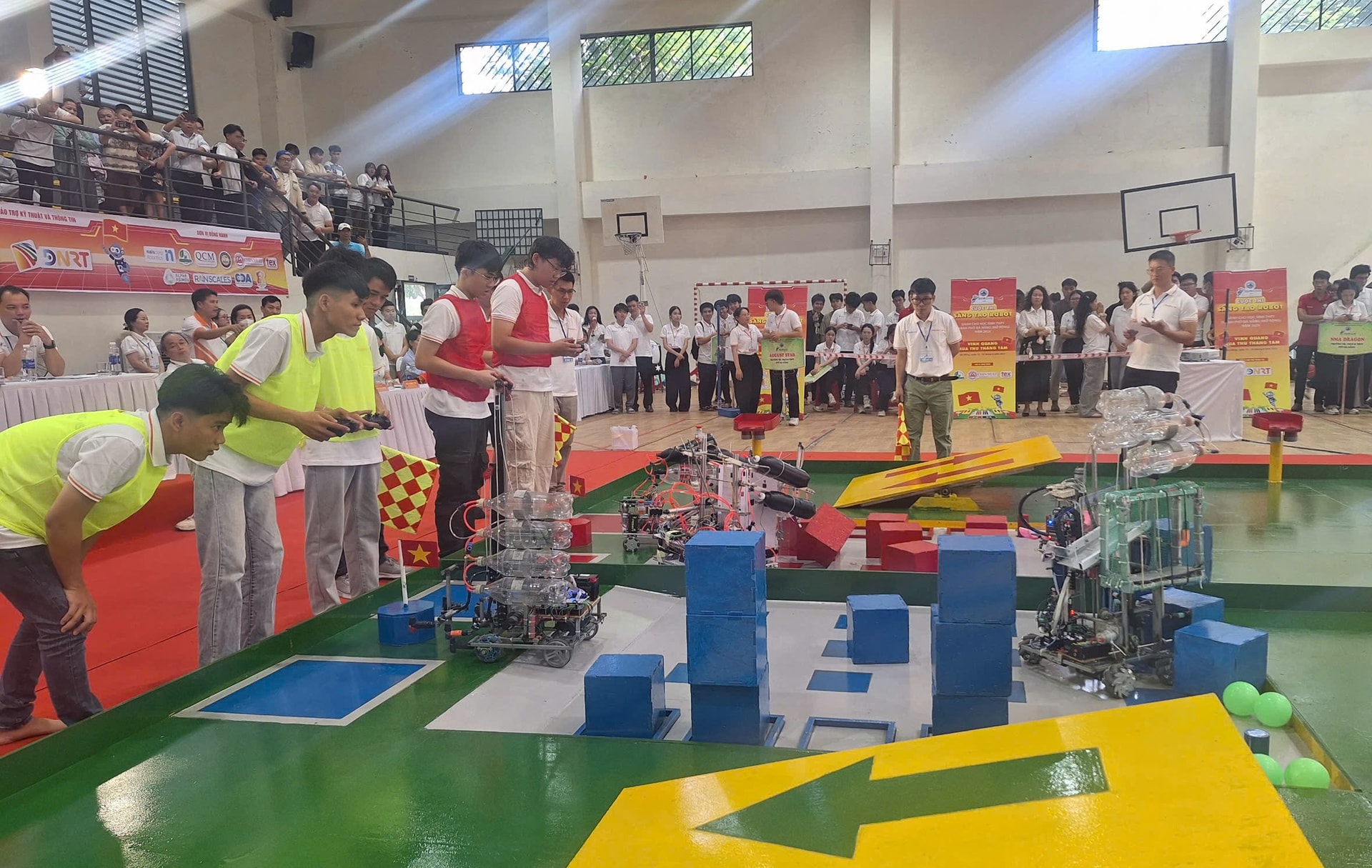
Ms. Linh also emphasized that while integrating AI into education from an early age is necessary, it also requires strict management. This is because AI is not entirely accurate and always carries the risk of errors if not properly verified, especially for students, who lack the skills to compare, analyze, and evaluate information.
"AI is just a supporting tool; it cannot replace the role of a teacher in teaching students how to be good people, igniting a passion for learning, or guiding them through difficulties with empathy and encouragement," Ms. Linh shared.
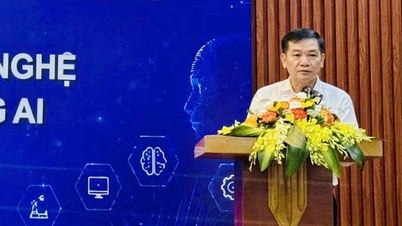
The application of AI in teaching and learning offers many benefits but also presents numerous challenges. Dr. Trinh Cong Duy, a lecturer in the Faculty of Information Technology at the University of Technology (Da Nang University), believes that students need to be guided to use AI as a tool to support thinking, suggest ideas, analyze, and expand on issues, but they must take responsibility for their own learning outcomes.
I'm not overly concerned about AI replacing the role of teachers. Because education is not just about imparting knowledge, but also about nurturing character, inspiring creativity, guiding life values, and developing students' thinking and emotional abilities. These things can only be fully achieved through the understanding, empathy, and life experience of human beings, specifically teachers.”
Ms. Thai Vi Linh
Principal of Chi Lang Primary School
The key is not to ban AI, but to educate students on how to learn with AI intelligently and ethically. This shifts the teacher's role from transmitter to guider and trainer of critical thinking. Teachers need to guide students in asking the right questions of AI, distinguishing between information and knowledge. They should integrate experiential activities and group discussions to cultivate emotional intelligence, collaboration skills, and genuine communication. AI can be integrated into lessons in a critical thinking approach by having students use AI to find solutions, but then requiring them to analyze, compare, and evaluate the AI's results.
"As for parents, instead of worrying, they should work with the school to create a balanced learning environment. AI can help children explore faster, but humans remain at the center; only humans have emotions, values, and responsibilities," emphasized Dr. Trinh Cong Duy.
Source: https://baodanang.vn/giao-duc-the-he-alpha-3306688.html
![[Photo] National Assembly Chairman Tran Thanh Man attends the groundbreaking ceremony for the National Highway 1A spatial axis project.](https://vphoto.vietnam.vn/thumb/1200x675/vietnam/resource/IMAGE/2026/05/19/1779161360398_ndo_br_bnd-1412-jpg.webp)
![[Photo] Capturing the moment the tide recedes at Yen Binh Son rapids - a million-year-old scenic spot in Quang Ngai.](https://vphoto.vietnam.vn/thumb/1200x675/vietnam/resource/IMAGE/2026/05/19/1779175463885_yen9-1199-jpg.webp)
























































![[Photo] General Secretary and President To Lam receives Indian Defense Minister Rajnath Singh](https://vphoto.vietnam.vn/thumb/402x226/vietnam/resource/IMAGE/2026/05/19/1779184046302_anh-man-hinh-2026-05-19-luc-16-46-58.png)





















Comment (0)