

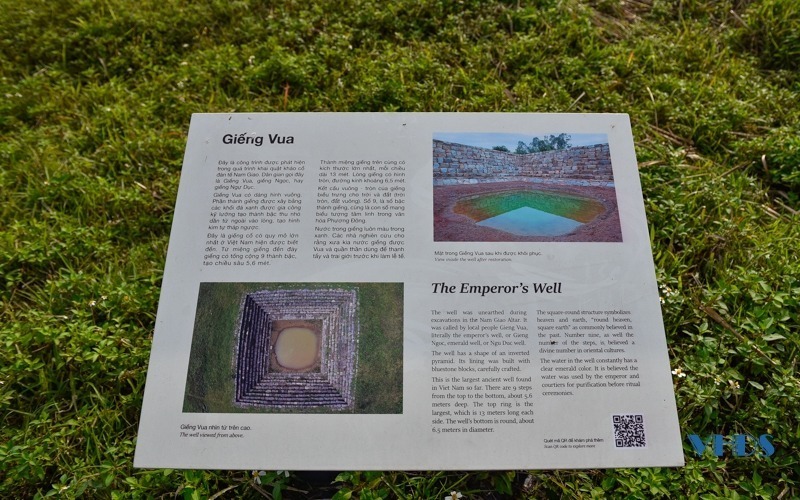
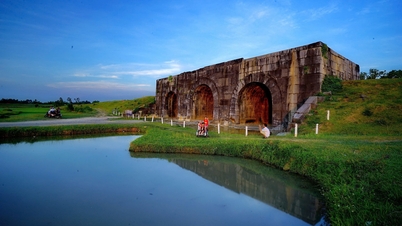
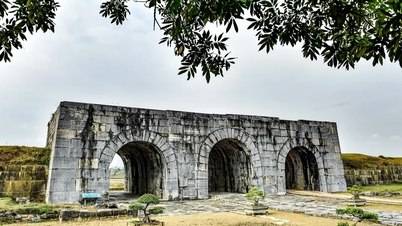
The King's Well was discovered in the southeastern corner of the Nam Giao sacrificial altar in Vinh Thanh commune, Vinh Loc district, Thanh Hoa province, within the Ho Dynasty Citadel World Heritage Site.
According to historical records, in 1397, Ho Quy Ly built a new capital in the An Ton area (present-day Vinh Loc district, Thanh Hoa province). Later, in 1398, he moved the capital from Thang Long to An Ton, renaming it Tay Do (Ho Dynasty Citadel). To complete the new capital, in addition to building palaces within the Imperial Citadel and constructing the outer walls, the Ho Dynasty also built the Nam Giao sacrificial altar.
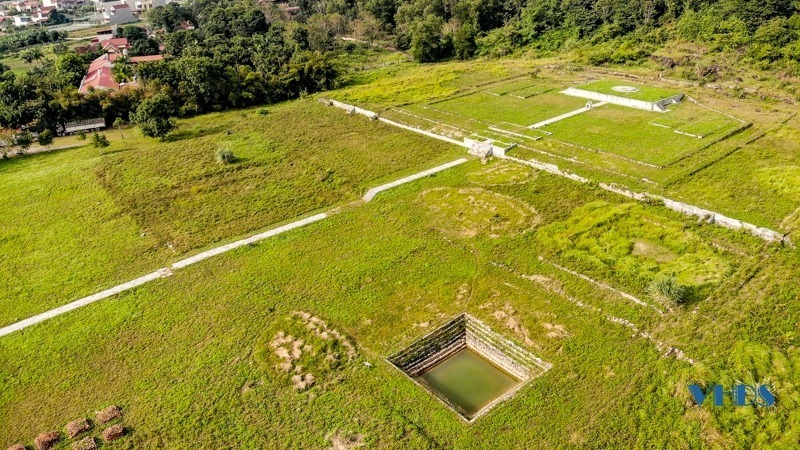
The King's Well is part of the Ho Dynasty Citadel World Heritage Site. Photo: VHDS
The well is also known as the Royal Well or Royal Well. It is located in the southeast corner of platform 4 of the Nam Giao sacrificial altar. The well has a square base (13m x 13m). The structure of the King's Well consists of two parts: the well walls are built of stone blocks, the well's interior is circular (6.5m in diameter), with a funnel-shaped cross-section, and the depth from the well's mouth is 4.90m.
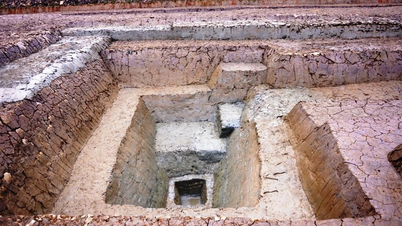
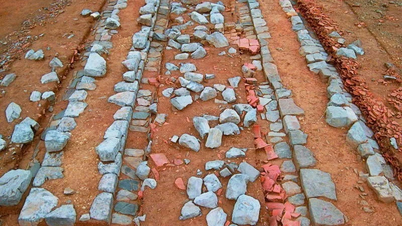
The King's Well is lined with stones forming steps that gradually narrow from the outside to the inside, with nine steps from top to bottom. The well's interior is circular and its cross-section is funnel-shaped. Among the stones lining the well's steps, alongside the square blocks, there are several circular stones, which archaeologists are still trying to decipher.
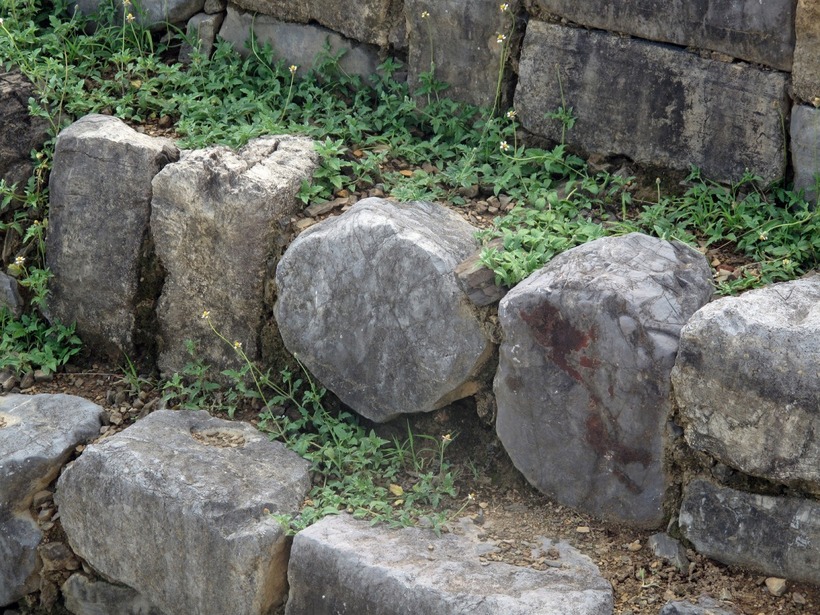
Among the stone steps lining the well are several round stones, and archaeologists are still trying to decipher their meanings. (Photo: VnExpress)
From the top step to the bottom, the well is 5.6 meters deep. The structure of the well also represents the symbolic interpretation of heaven (round) and earth (square) in the Nam Giao sacrificial ceremony.
From 2004 to 2016, the Nam Giao Altar in Tay Do underwent four excavations covering a total area of 18,000 square meters. The King's Well relic received significant attention from archaeologists during the first excavation of the Nam Giao Altar (2004). However, it was not until the fourth comprehensive excavation of the Nam Giao Altar (2009-2011) that archaeologists fully uncovered the well's structure.
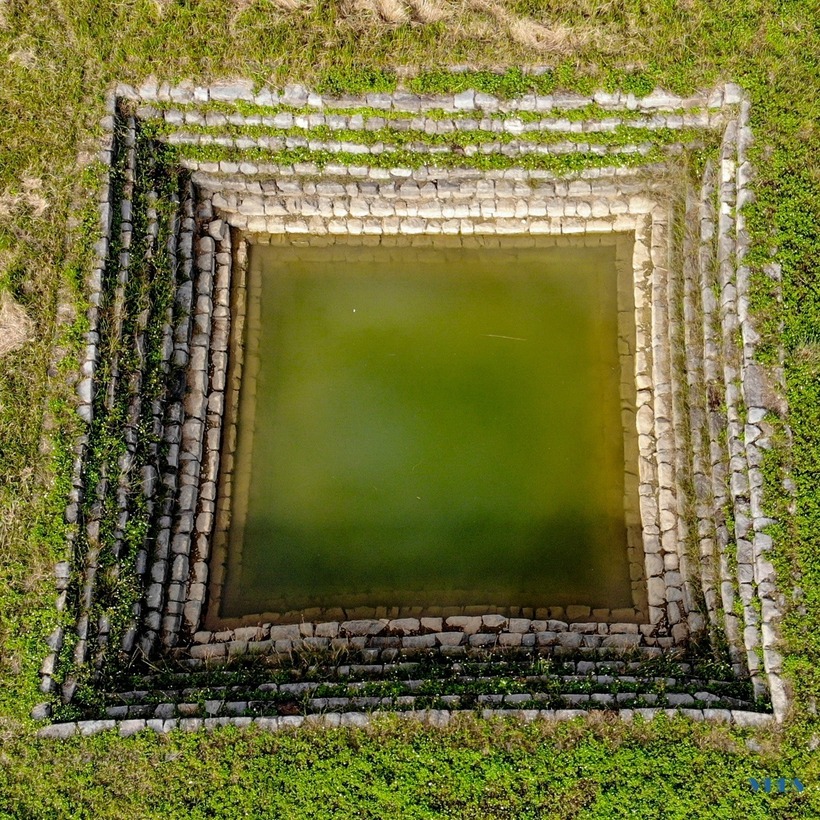
Vua Well is also known as Ngự Duyên Well or Ngự Dục Well. Photo: VHDS
The King's Well is an important structure within the Nam Giao - Tay Do sacrificial altar complex. In the past, the well was built to serve the rituals of worship and fasting (worshippers would bathe, eat vegetarian food, and abstain from alcohol) before the ceremony. Today, visitors to the King's Well will receive detailed explanations from tour guides.
The Nam Giao Altar is the place where the spiritual power of the dynasty is manifested before heaven, earth, and the nation's history. It is where ceremonies are held to worship heaven, praying for national peace and prosperity, or on occasions of general amnesty. The altar embodies the sacredness of heaven and earth and is where the hopes of the ancient Vietnamese people are entrusted. Therefore, it can be said that this 600-year-old King's Well is very sacred, a treasure of the nation and the world.
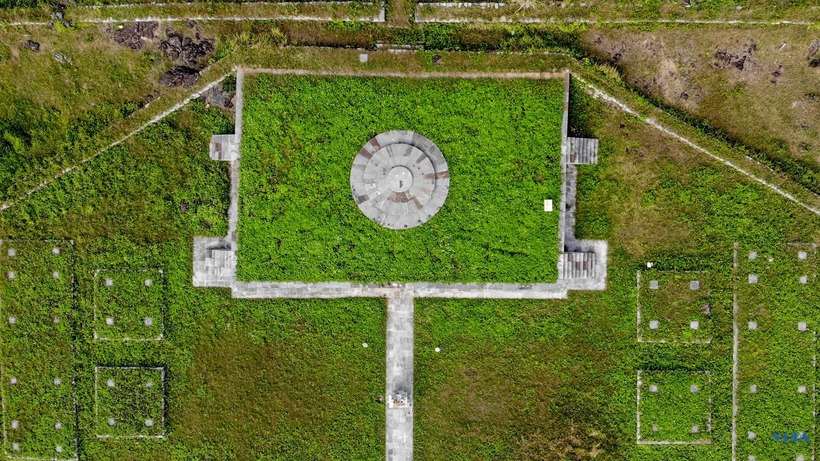
Nam Giao Altar. Photo by VHDS.
When visiting the King's Well and the Nam Giao Altar, tourists will receive detailed explanations from tour guides. Photo: VHDS
Source: https://doisongphapluat.nguoiduatin.vn/gieng-vua-600-tuoi-o-thanh-nha-ho-a515437.html
![[Image] National Assembly discusses the implementation of the socio-economic development plan.](https://vphoto.vietnam.vn/thumb/1200x675/vietnam/resource/IMAGE/2026/04/20/1776696707422_ndo_br_img-20260420-185419-jpg.webp)

![[Photo] General Secretary and President To Lam meets with National Assembly delegates from ethnic minorities.](https://vphoto.vietnam.vn/thumb/1200x675/vietnam/resource/IMAGE/2026/04/20/1776696701056_a1-bnd-8331-3342-jpg.webp)





































































Comment (0)