

Mo Muong is a folk performance art expressed in rituals associated with the spiritual and religious life of the Muong people. The performance and chanting of the Mo takes place within the community and in individual families holding a ceremony. Over time, opportunities to practice and preserve the unique cultural values of Mo Muong are gradually shrinking, and solutions are urgently needed to preserve and promote it.
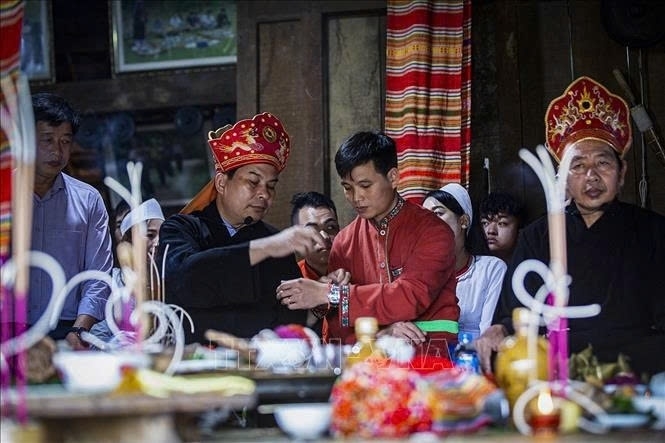
Shaman Bui Van Minh during a house-cooling ceremony of the Muong people. (Archival photo)
Preserving the Mo Muong heritage
According to Master Shaman Bui Van Minh, from Man Hamlet, Van Son Commune, Lac Son District, Hoa Binh Province, Muong shamanism is a folk performance art expressed in rituals associated with the spiritual beliefs of the Muong people. The performance and chanting of shamanism take place within the community and in individual families holding a ritual.
The practitioners of Mo Muong are the shamans, who possess the knowledge of Mo, have memorized tens of thousands of Mo verses, and are proficient in the rituals and customs. They are respected figures trusted by the community. During the ritual, the shaman is the one who speaks, recites, and sings the Mo songs.
The Muong people do not have their own written language, so their incantations (mo chants) are passed down from one generation of shamans to the next through oral tradition, and are preserved and maintained through folk rituals of the Muong people.
Mo Muong consists of three main parts: the incantation, the performance, the performance environment, and the people performing the mo performance. Of these, the incantation, closely linked to the performer, occupies the most important position.
Muong shamanism encompasses numerous shamanic chants and verses used in specific rituals. There are nine categories of Muong shamanism: Shamanism in Funeral Rites (Shamanic chants), Shamanic chants for the deceased (Shamanic chants for the deceased), Shamanic chants for warding off misfortune, Shamanic chants for seeking fortune, Shamanic chants for Tet (Lunar New Year), Shamanic chants for the Earth God, Shamanic chants for chopsticks, Shamanic chants for warding off evil spirits from the house, and Shamanic chants for the midwife.
Currently, Mo Muong is mainly used in funerals or rituals to pray for health and peace among the Muong people.
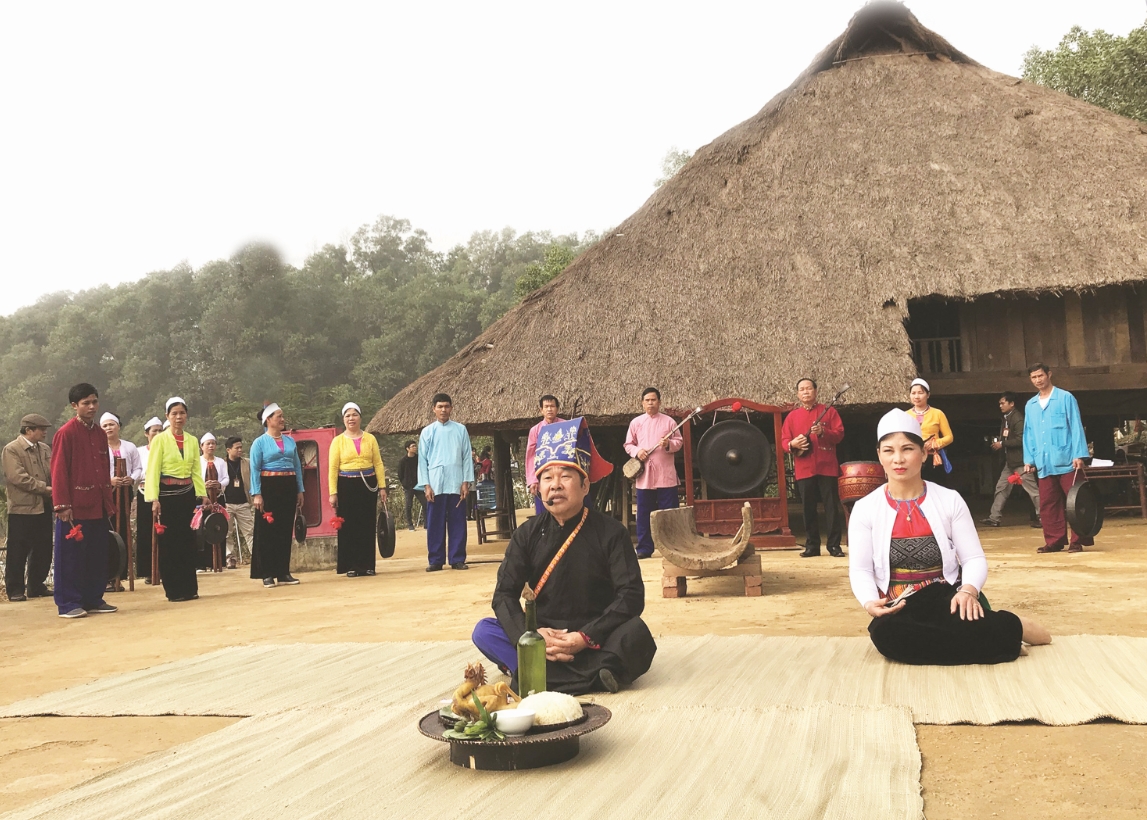
The Muong people often use Mo in rituals.
According to statistics from the Department of Cultural Heritage, Ministry of Culture, Sports and Tourism, the Mo Muong heritage currently exists in 7 provinces and cities: Hoa Binh, Thanh Hoa, Ninh Binh, Phu Tho, Son La, Dak Lak and Hanoi.
Hoa Binh is considered the "cradle" of Muong culture. Over the years, Hoa Binh province has issued many important documents in the field of culture, including identifying Mo Muong as one of the heritages that need to be preserved, protected, and promoted in community life, such as Directive No. 08-CT/TU, dated January 20, 2016, of the Standing Committee of the Provincial Party Committee on strengthening the leadership of Party committees at all levels in the work of preserving, protecting, and promoting the value of Mo Muong cultural heritage in the province. The Provincial People's Committee has established the Hoa Binh Mo Muong Steering Committee. In 2018, the Provincial People's Committee approved and issued the Project "Preservation and promotion of the value of Mo Muong cultural heritage in Hoa Binh province for the period 2019 - 2025 and beyond". The province issued the Project "Preservation and Development of the Cultural Values of the Muong Ethnic Group and the Hoa Binh Culture in the period 2023 - 2030 in the province". As a result, the awareness of all levels, sectors and the community about the cultural values of Mo Muong has undergone many positive changes.
Ms. Quach Thi Kieu, Director of the Department of Culture, Sports and Tourism of Hoa Binh province, said: Hoa Binh province always pays attention to disseminating information and raising awareness among Party committees, government agencies, especially leaders at all levels, sectors, localities, units, and all strata of the people about the role and profound humanistic significance of the Mo Muong cultural heritage. We are developing promotional materials about the unique and typical values of the Mo Muong heritage to widely disseminate and promote it through mass media and social networks... We are producing promotional films about the Mo Muong cultural heritage to broadcast on television channels, electronic portals, and YouTube channels to promote the value of the heritage.
Furthermore, Hoa Binh province encourages Mo Muong artisans to continue practicing and regularly transmitting the Mo Muong heritage. It considers, selects, and proposes the recognition of Mo Muong artisans as outstanding artisans according to regulations; and develops and promulgates mechanisms and policies to reward and honor those who have contributed to the preservation, safeguarding, transmission, and learning of Mo Muong, in order to promptly encourage and motivate the Mo Muong artisans to pay more attention to training and building a new generation of artisans.
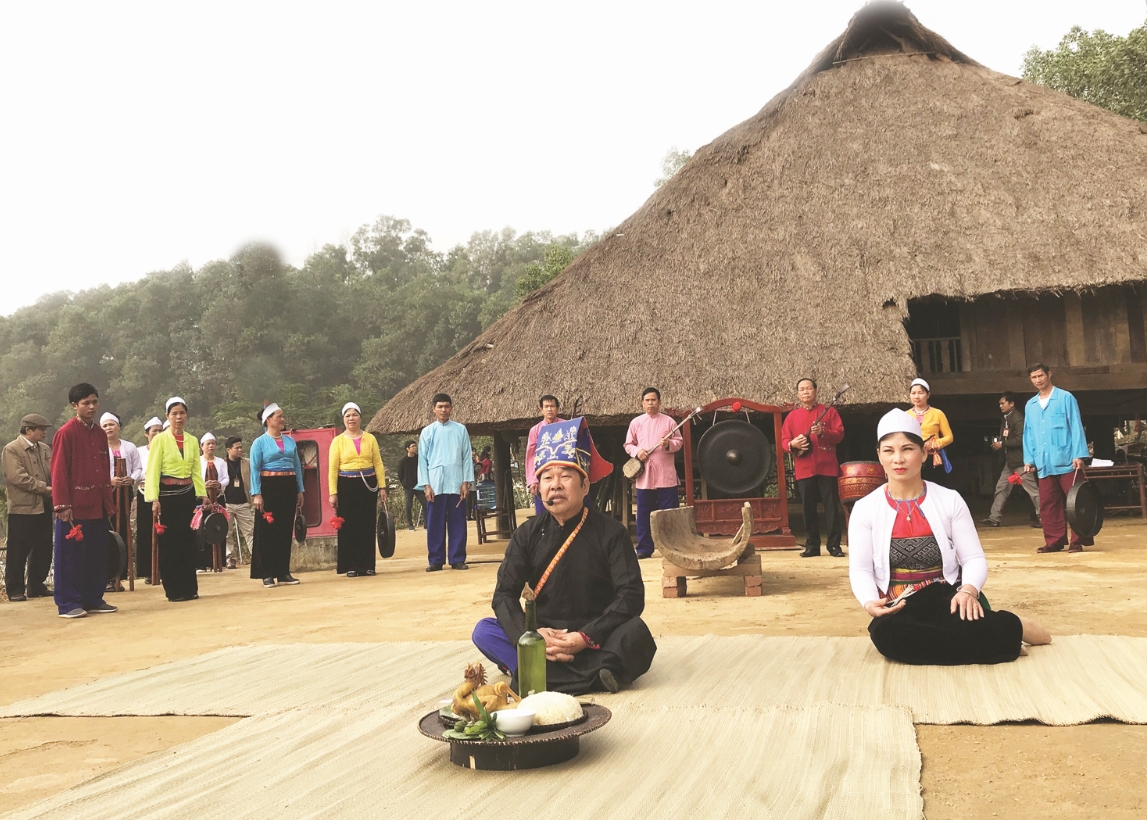
The shamans are performing the rituals of the Muong shamanic tradition.
Currently, the Muong shamanic chants are passed down from generation to generation through oral tradition and are preserved through folk rituals of the Muong people. Therefore, over time, the number of chants and chants is no longer as complete as it was originally. Furthermore, the number of books and publications researching the culture of the Muong people in general and the Muong shamanic cultural heritage in particular is limited. Consequently, the process of researching, disseminating, and teaching this cultural heritage faces considerable difficulties.
On the other hand, the current problem facing the Mo Muong tradition is the number of practitioners. According to Bui Huy Vong, an outstanding artisan and researcher of Muong ethnic culture, the number of Mo shamans in the villages is gradually decreasing, with many of them over 80 years old. The number of people who want and are able to learn Mo shamanism is not large, as it requires memorizing a vast number of Mo verses. Furthermore, learners must possess the necessary aptitude, a deep understanding of Muong culture, high moral character, prestige, and complete sets of ritual objects and offerings (passed down from generations of ancestors who practiced the craft)...
Establishing the Mo Muong Cultural Heritage Conservation Area
Good news for researchers of Muong culture and the Muong ethnic community: the Mo Muong Cultural Heritage Conservation Area Project, covering an area of 36.02 hectares and with a total investment of 50 billion VND from the Hoa Binh provincial budget for the period 2021-2025, was recently launched by the People's Committee of Cao Phong district (Hoa Binh province) in early January 2025.
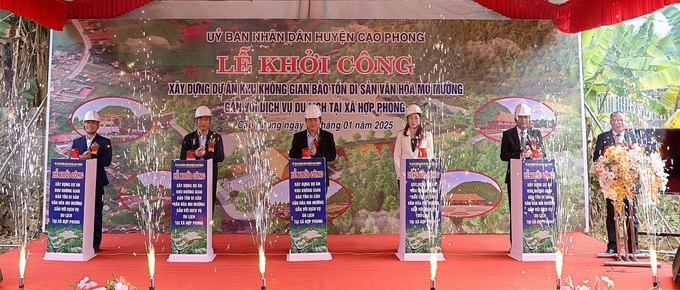
The Mo Muong Cultural Heritage Conservation Area has begun construction in Cao Phong district, Hoa Binh province.
This is an extremely necessary and urgent project, aimed at continuing to preserve and promote the value of the Mo Muong heritage; fully preserving the values of the origins of national culture, the foundation of national spiritual culture, and overcoming the risk of the erosion of the value of the national intangible cultural heritage of Mo Muong in Hoa Binh.
This will contribute to enhancing socio-economic development resources, making the Mo Muong heritage a distinctive and outstanding tourism product associated with exploiting the potential and developing tourism in Cao Phong district in particular and Hoa Binh province in general.
The establishment of the Mo Muong Cultural Heritage Conservation Area, linked with tourism services in Hop Phong commune, is one of the indispensable conditions for including the Mo Muong heritage in the list submitted to the Government and the United Nations Educational, Scientific and Cultural Organization (UNESCO) for inclusion in the list of representative intangible cultural heritage of humanity.
The project will become an important step in preserving traditional culture and opening up opportunities for tourism development, promoting the unique image of Hoa Binh province.
Thanh Phong (Dan Toc Newspaper)
Source: https://baophutho.vn/gin-giu-gia-tri-van-hoa-cua-mo-muong-229663.htm


![[Photo] General Secretary and President To Lam meets with National Assembly delegates from ethnic minorities.](https://vphoto.vietnam.vn/thumb/1200x675/vietnam/resource/IMAGE/2026/04/20/1776696701056_a1-bnd-8331-3342-jpg.webp)


![[Image] National Assembly discusses the implementation of the socio-economic development plan.](https://vphoto.vietnam.vn/thumb/1200x675/vietnam/resource/IMAGE/2026/04/20/1776696707422_ndo_br_img-20260420-185419-jpg.webp)







































































Comment (0)