


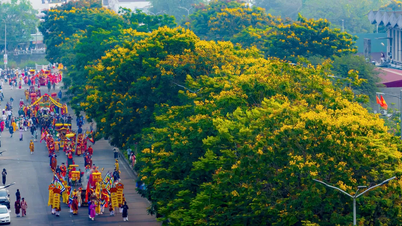
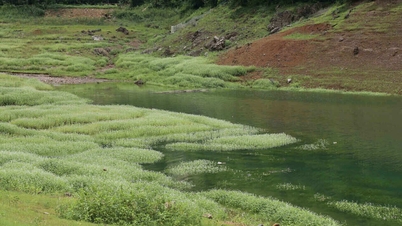
A view of Hac Thanh from above.
Guided by a folklore researcher, I quietly visited Bach Hac Pagoda for a year-end pilgrimage. The pagoda, named after the White Crane, sits peacefully in Tanh Xa village. Crossing the wide main road, nestled within the ancient residential area of Hac Thanh ward, upon arriving, it felt as if time had stopped.
Going back more than two centuries, after his first trip to the North, King Gia Long chose the Tho Hac area to establish the provincial capital of Thanh Hoa , naming it Hac Thanh. This choice not only had administrative significance but also contained a strategic vision. According to feng shui, Hac Thanh was situated on auspicious land: to the north, the Ma River meandered around it; to the south, the gentle Bo Ve River flowed peacefully; to the west, the Phuong Linh and An Hoach mountains resembled a phoenix spreading its wings, with elephants and horses bowing in reverence. It was a "non-battlefield," peaceful and favorable for long-term development.
Besides its advantageous location, Hac Thanh was also a "crossroads" – a place where waterways and roads intersected. From the beginning of the 19th century, along with the relocation of the town center, the Nguyen dynasty built schools, established examination halls, opened provincial markets, and cattle markets. Craft streets formed, creating an early urban landscape with a bustling pace of life yet retaining a strong cultural identity. From this center, many generations of scholars from Thanh Hoa province emerged, contributing to the glory of their homeland and country.
But the history of Hac Thanh is not only written in glorious pages of scholarship, but also deeply etched with heroic epics of national defense. In the 13th century, Chu Van Luong, under the orders of King Tran, came to develop the land along the Ma River, established the Nam Ngan camp, recruited young men to train troops, and contributed to defeating the Yuan-Mongol invaders. Upon completing his mission, he chose to stay and remain connected to this land – a choice that demonstrates the enduring appeal of the land and people of Thanh Hoa.
Spring arrives in Hac Thanh today, not only in the colors of flowers and the rhythm of the streets, but also in the cultural atmosphere of the ancient villages. Villages like Bo Ve, Ve Yen, and Mat Son, with their spiritual relics and the ancestral temple of the Later Le Dynasty, remain a spiritual anchor for the people. Amidst the increasingly bustling urban life, these spaces offer much-needed tranquility, connecting the past with the present, tradition with the future.
From the remnants of ancient Vietnamese settlements along the Ma River to the ancient village of Dong Son – the cradle of a brilliant culture thousands of years ago – the cultural heritage of Hac Thanh has never been interrupted. Through the ups and downs of history, this land of cranes has preserved its unique identity: valuing morality, prioritizing education, fostering community spirit, and possessing a strong sense of patriotism. Truly, it is a sacred land that produces talented people. Hac Thanh will forever remain a central hub, a place that embodies and spreads the spirit and character of the people of Thanh Hoa.
Today, in Hac Thanh, names like Tho Hac and Bach Hac evoke the sacredness of this land. These place names recall the living memory of an ancient land – where every inch of soil, every river, carries layers of cultural and historical sediment. It's not just a geographical space, but a realm of consciousness – where the past always coexists with the present. Indeed, the mountains, rivers, street names, and village names remain unchanged for millennia – becoming a part of our very being, shaped by the years we have lived and loved.
Hac Thanh is beautiful. Its beauty is not only the dazzling splendor of a scenic area, but perhaps also a quiet, serene, gentle, and pristine beauty.
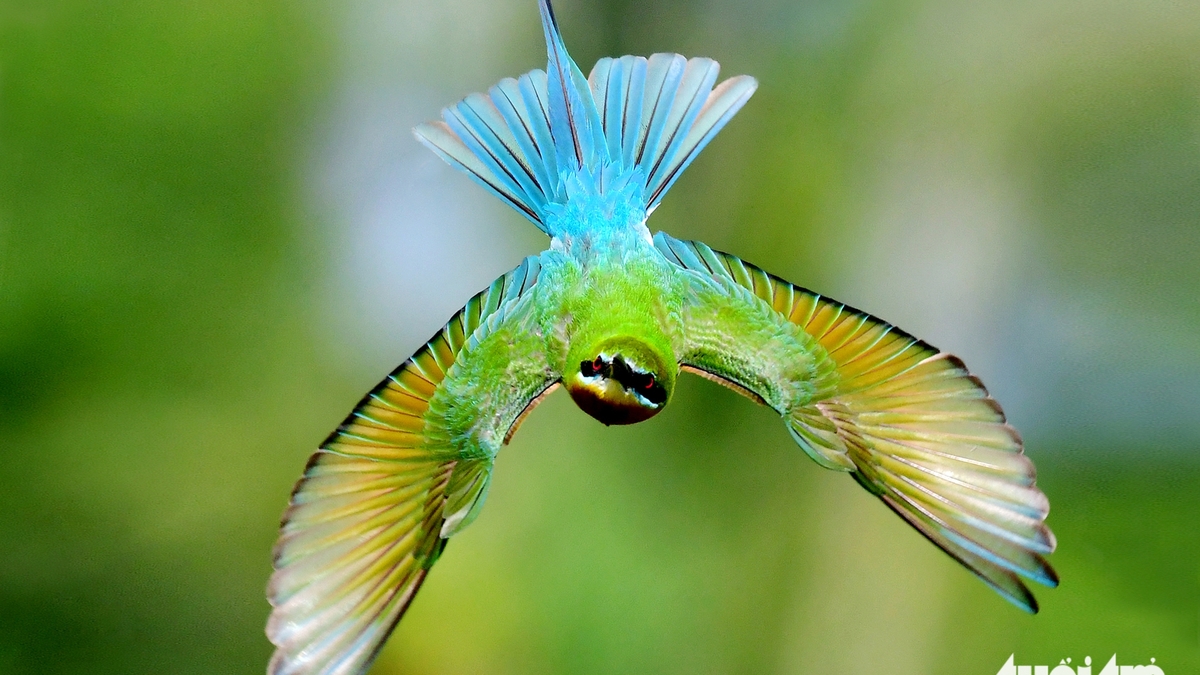
Once, while visiting Hac Thanh and strolling through Thanh Quang Park (a historical site of the former power plant), a young writer remarked: "Hac Thanh is ancient but not overly so, beautiful but not ostentatious, perfectly balanced, peaceful, and charmingly harmonious." Perhaps this balance, this very degree of perfection, is also Hac Thanh's charm. Suddenly, I thought: like a crane in flight, graceful and elegant, not overly boisterous but proud—that is the essence of Hac Thanh.
Entering a new era, that character and spirit have not been lost but have been continued and enriched by the spirit of innovation, creativity, and integration. Today's people of Hac Thanh are more dynamic, more confident, and adept at accessing modern knowledge and technology, while still maintaining sincerity, compassion, and responsibility towards the community. On the journey to becoming a smart, model ward, leading the entire province, what is most commendable is that this spirit of innovation does not pursue mere form or speed, but is based on a foundation of people. All policies and initiatives aim to improve the quality of life and create a civilized, safe, and humane urban environment. Amidst increasingly rapid development, Hac Thanh chooses a path of harmonious and sustainable development – where technology is the tool, reform is the driving force, and the happiness of the people is the ultimate goal.
The arrival of the Year of the Horse brings with it a new rhythm of life spreading through every street and residential area of Hac Thanh, signaling a new phase of development. Within this flow, digital transformation is gradually permeating management activities and social life. E-government, digital government, and smart government serving the people are being built synchronously. Administrative reform is being accelerated towards transparency and efficiency, using people's satisfaction as a measure. From streamlined procedures and digitized public services to the increasingly professional service style of officials, the government apparatus is gradually shifting from "management" to "service." This momentum and style demonstrate the strong transformation of the ward on its journey to becoming a central ward of the province in the new era.

Hac Thanh strives to become a smart, model ward in the future.
Entering 2026, Hac Thanh is facing a "golden opportunity." A large-scale "super ward" for the entire country is not simply an administrative addition, but a merger of the cultural core with ample space for development. The Resolution of the First Congress of the Hac Thanh Ward Party Committee, term 2025-2030, has set the goal of becoming a smart, model ward of the province by 2030. In this livable ward, there will be sustainable economic development, leading digital technology, digital transformation, and innovation in the province, and the material and spiritual lives of the people will be improved. Most importantly, there will be an efficient, effective, and effective government that is close to the people, promptly addressing their legitimate needs.
Visiting Hac Thanh today, the most significant thing we see is the gradual emergence of e-government and smart cities, yet we still feel a peaceful, nostalgic atmosphere. Old corners and alleys remain, and the north, south, west, and east sides of the ward still retain moss-covered roofs and the melodious ringing of temple bells.
In the exhilarating spirit of spring, Hac Thanh emerges with a beauty like a crane soaring in rare balance: high to embrace the new winds of the era, yet never leaving the soil of its homeland. The past does not close behind the pages of history, but quietly supports the present with enduring values. Therefore, development here is not noisy or hasty, but calm and steady, placing people with a system of values: civility, friendliness, speaking kind words and doing good deeds at the center. This is how Hac Thanh preserves its cultural depth while building sustainable prosperity – so that with each spring, this land not only changes in appearance but also becomes richer in value and faith.
Text and photos: Nguyen Huong
Source: https://baothanhhoa.vn/gio-xuan-nang-canh-hac-bay-278320.htm


























































Comment (0)