

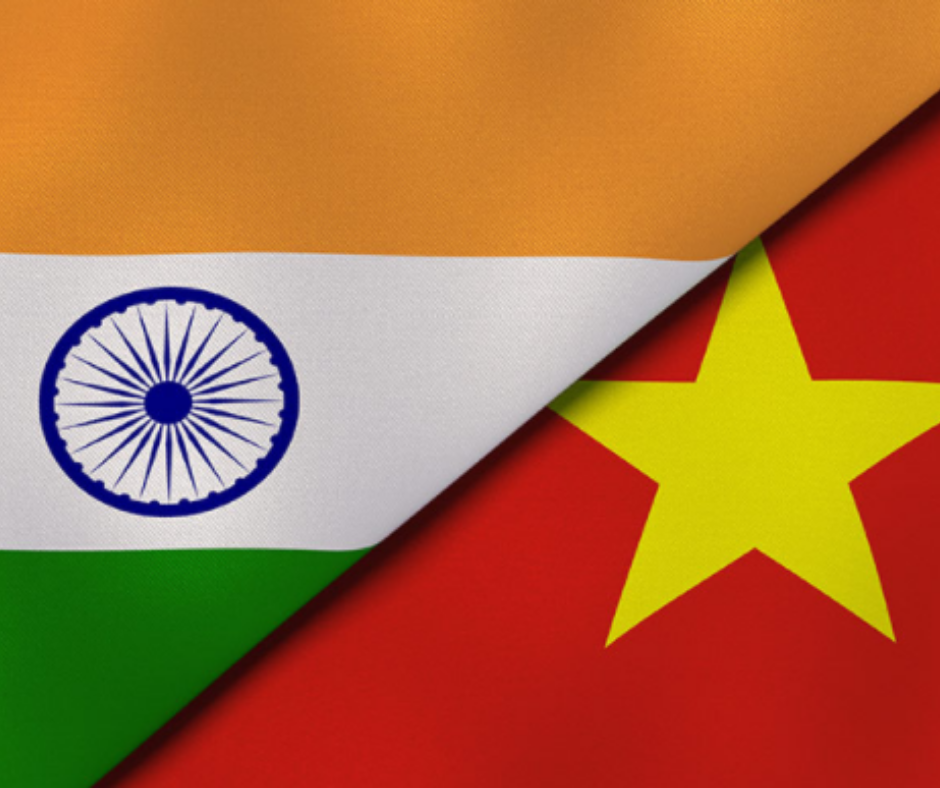
- Country name: Republic of India
- Capital city: New Delhi
- National Day : January 26, 1950
- Area: 3,287,590 km² (7th largest in the world )
- Population: Approximately 1.425 billion people (estimated by 2026)
- Climate: India's climate is highly diverse due to the influence of the Himalayas and the Thar Desert (tropical monsoon in the south, temperate climate in the north). India has four seasons: winter (January to February); summer (March to May), southwest monsoon (June to July), and northeast monsoon (October to December).
- Languages: Hindi and English. English is the language of business.
- Religion: India has no state religion. The Indian constitution guarantees freedom of religion and equality among religions. There are six main religions: over 80% of the population follows Hinduism, 13% follows Islam, 2% follows Christianity, 1.9% follows Sikhism; about 1% follows Jainism; and 0.75% follows Buddhism.
- Currency: Indian Rupee, exchange rate 1 USD = 92.40 Rs (March 2026)
- Time zone: GMT + 5:30 (Vietnam time minus 1 hour and 30 minutes)
- Government System: India is organized as a federal state and follows a parliamentary democracy. India has three branches of government : Legislative, Executive, and Judicial, at the state and national levels.
- Current Prime Minister : Narendra Modi (since 2014).
2. History
India, with over 5000 years of history, is one of the cradles of human civilization. The Ashoka dynasty (273-323 AD) was the most prosperous period in ancient Indian history, expanding India's territory to almost its present-day size. From the late 15th century, Europeans began to arrive in India. First came the Portuguese, establishing a center in Goa, followed by the Dutch who set up several trading posts in India, then the French and the British. In 1858, Britain occupied the entire Indian subcontinent.
Britain granted independence to India on August 15, 1947. On January 26, 1950, India declared the establishment of a Republic.
3. International Relations
Since gaining independence, India has pursued a path of national independence and self-reliance, pursuing a foreign policy of peace and friendship with all countries. India plays a significant role and has a voice in the United Nations and other regional and international forums. Following the Cold War, India pursued a policy of diversifying its relations, prioritizing ties with neighboring countries, balancing relations with major powers, strengthening relations with the United States, and implementing its "Look East" policy; striving to become a permanent member of an expanded United Nations Security Council.
India participates in the following international and regional organizations: ADB, AfDB (non-member), ARF, AsDB, ASEAN (dialogue partner), BIMSTEC, BIS, C, CERN (as observer), CP, EAS, FAO, G-15, G-24, G-77, IAEA, IBRD, ICAO, ICC, ICFTU, ICRM, IDA, IFAD, IFC, IFRCS, IHO, ILO, IMF, IMO, Interpol, IOC, IOM (observer), ISO, ITU, MIGA, MONUC, NAM, OAS (observer), ONUB, OPCW, PCA, PIF (partner), SAARC, SACEP, SCO (observer), UN, UNCTAD, UNESCO, UNHCR, UNIDO, UNIFIL, UNMEE, UNMIS, UNMOVIC, UNOCI, UPU, WCL, WCO, WFTU, WHO, WIPO. WMO, WTOO, WTO
4. Business culture
The foundation of the relationship: Trust is a crucial element. Fundamentally, Indian entrepreneurs are trustworthy. Whether with local or foreign partners, Indian entrepreneurs prefer to gain their partners' trust from the outset. Indian entrepreneurs value relationships and people. They are always punctual. Indians also discuss issues in a different way. They feel that a vertical approach to problem-solving is not comprehensive.
Etiquette: Rituals exist to show respect for others. Differences in status must be respected. There is no custom of using first names in business communication. People dress formally when attending meetings. Casual attire is acceptable on weekdays.
Communication and Etiquette: Communicate gently. Maintain an arm's length distance from others. Eye contact is important, but avoid staring directly into someone's eyes. Use titles and surnames when addressing others; Indians often use "Sir" or "Madam."
'Namaste' is a traditional greeting. A handshake is usually accompanied by "Hello" or "Hi." Indians are hospitable and friendly.
Be punctual, but also be flexible and accept that others may arrive late to social events.
Use your right hand to present business cards. Arrange seating at the meeting table according to hierarchy.
The meeting began with a "brief social chat" (restaurants, family, travel, economics, etc.) and then moved on to work.
Firmly saying "No" is considered impolite. An acceptable way to refuse is "I will try." Indians enjoy helping others solve problems and also expect others to try to solve their own problems.
Try not to refuse any food or drink offered by Indians. You can decline the first offer, but accept the second.
Feet are considered unclean; if you accidentally touch someone's feet, say "sorry."
5. Economic Situation
a. Overview (as of February 2026)
India's Gross Domestic Product (GDP) for the third quarter of the 2025-2026 fiscal year recorded real growth of 7.8%, maintaining its position as the world's fastest-growing major economy for several consecutive quarters.
The service sectors, particularly finance and tourism, continued to maintain stable growth, achieving double-digit growth of approximately 11.0%. Meanwhile, the agricultural sector, which employs over 40% of the workforce, recorded slower growth at 1.4%, but still played a crucial role in socio-economic stability.
b) Vietnam-India Trade Relations
India and Vietnam have a long-standing economic and trade relationship that has continuously developed over time. From a modest figure of US$200 million in 2000, according to Vietnamese figures, bilateral trade turnover increased to US$14.89 billion in 2024. According to Indian data for the fiscal year from April 2024 to March 2025, bilateral trade reached US$15.76 billion, recording a 6.40% increase compared to the previous year. India's exports to Vietnam reached US$5.43 billion (down 0.75%) while India's imports from Vietnam reached US$10.33 billion (up 10.59%). In the fiscal year 2024-2025, Vietnam is India's 20th largest trading partner and 15th largest export destination globally. India is Vietnam's eighth largest trading partner, seventh largest export market, and tenth largest source of imports.
In the 2024-2025 fiscal year, India's main exports to Vietnam include: frozen beef, seafood, machinery and equipment, electrical equipment, automotive parts, pharmaceuticals and pharmaceutical ingredients (APIs), chemicals, base metals, cereals, cotton, animal feed, and gemstones & jewelry. India's main imports from Vietnam include electronics, telecommunications equipment, machinery and mechanical equipment, iron and steel, base metals, chemicals, plastic products, steel products, footwear, apparel, textile raw materials, wood, rubber, coffee, etc.
The two sides have established institutional mechanisms in the economic field, including the Joint Committee on Economic, Trade, Science and Technology Cooperation (JCM), the Joint Trade Subcommittee, and Joint Working Groups on Agriculture, Health, Information and Communication Technology (ICT), and Science and Technology. The 18th meeting of the Joint Committee on Economic, Trade, Science and Technology Cooperation, co-chaired by the Indian Minister of External Affairs and the Vietnamese Minister of Foreign Affairs, took place in Hanoi in October 2023. The 5th meeting of the Joint Trade Subcommittee, co-chaired by Mr. Rajesh Agrawal, Additional Secretary of the Indian Ministry of Commerce and Industry, and Ms. Phan Thi Thang, Deputy Minister of Industry and Trade of Vietnam, was held in New Delhi in August 2023. Both sides are currently reviewing the ASEAN-India Goods Trade Agreement (AITIGA), which is expected to be completed by the end of 2025.
Indian Investment in Vietnam: Indian investment in Vietnam is estimated at approximately US$2 billion, including investments made through third countries. Between January and December 2024, according to the Vietnam Foreign Investment Agency, India had 48 new investment projects worth US$86.69 million. As of 2024, India had 432 active FDI projects with a total registered investment capital of US$1,095.33 million. The main investment sectors are energy, mineral exploration, agricultural processing, sugar, tea, coffee, consumer goods, agrochemicals, IT, and automotive parts.
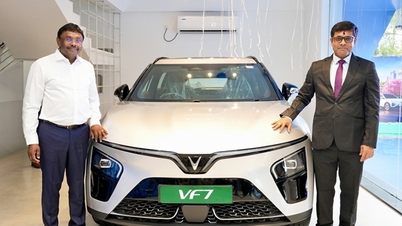
Vietnamese Investment in India: According to the Indian Department of Industrial Promotion and Internal Trade, as of 2024, Vietnam had invested US$12.69 million in the pharmaceutical, information technology, chemical, and construction materials sectors. This figure does not include the investment by VinFast Group – which is building an electric vehicle manufacturing plant in the SIPCOT industrial park in Thoothukudi, Tamil Nadu, with an initial investment of US$500 million, currently in the final stages of completion.
In the first two months of 2026, bilateral trade between Vietnam and India reached over US$3 billion, an increase of 24%. This represents a 24% increase compared to the same period in 2025, continuing the positive growth momentum in economic and trade relations between the two countries. Specifically, Vietnam's exports to India reached approximately US$1.8 billion, a 23% increase year-on-year, demonstrating the continued expansion of demand for Vietnamese goods in the Indian market.
6. Product categories that the Indian market has high import demand for from Vietnam:
- Electronics and components: Mobile phones, computers, electronic products, electronic components (this is the product group with the largest export value).
- Machinery and Industry: Industrial machinery, equipment, tools, and spare parts.
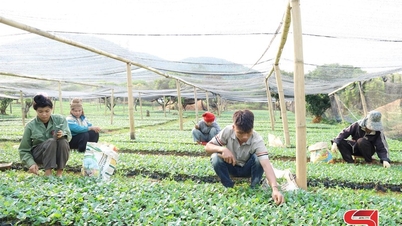
- Agricultural products and spices: Black pepper, cashew nuts, coffee, spices (cinnamon, star anise, etc.).
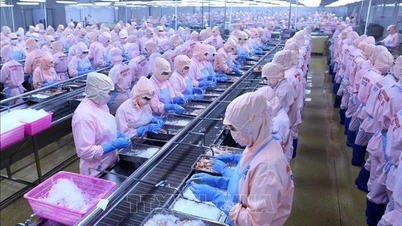
- Seafood: Processed and fresh seafood products.
- Raw materials for production: various types of iron and steel, chemicals, plastics, fertilizers.
- Consumer goods: Handicrafts, fast-moving consumer goods.
- Textiles, leather goods, footwear.
Source: https://songv.langson.gov.vn/tin-tuc-su-kien/ho-tro-doanh-nghiep/gioi-thieu-thi-truong-an-do.html































Comment (0)