

In Gia Lai, the host province for the National Tourism Year 2026, conservation is no longer a standalone effort, but is becoming a socio-cultural development strategy linked to community livelihoods, opening up a new direction for sustainable tourism.
The breath of the forest in a new life
Amidst the vast Tây Nguyên (Central Highlands) region, where villages still maintain their distinctive communal way of life, the inauguration ceremony of the traditional communal house in Kép 1 village (Ia Ly commune) is not just a cultural event, but also signifies a return to one's roots. It is a shared space where community memories are revived, where rituals and community activities take place, and where indigenous knowledge is passed down through generations.
According to Gia Lai provincial leaders, the communal house (nhà rông) not only contributes to promoting community tourism but also serves as a "cultural axis" connecting people with tradition. In line with the Central Committee's Resolution on development orientation, the structure has transcended its purely architectural value to become a "living cultural institution," where identity is preserved and present in daily life.
Notably, the "community-centered" approach emphasizes that people are no longer merely beneficiaries but become active participants in the preservation process. From preserving the communal house space and organizing cultural activities to promoting the image of the village, all efforts are linked to a self-awareness of cultural values – a decisive factor in ensuring that heritage remains relevant and continues to function in contemporary life.
However, under the impact of urbanization, "villages within the city" like Op village (Pleiku) are facing the risk of losing their traditional rituals. Engagement ceremonies, new rice harvest festivals, and water-blessing ceremonies – once closely associated with community life – are now becoming increasingly rare, mainly preserved in the memories of the older generation.
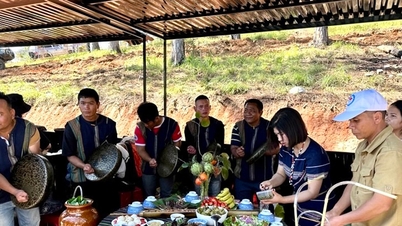
The reenactment of the Gia Rai engagement ceremony here has opened up a cultural experience space for the younger generation. Through direct participation and listening to the guidance of the village elders, young people have gained a deeper understanding of the customs, thereby forming an awareness of preserving family and community values. In doing so, culture is "awakened" in contemporary life, instead of only existing in museums or books.

Open spaces of community culture
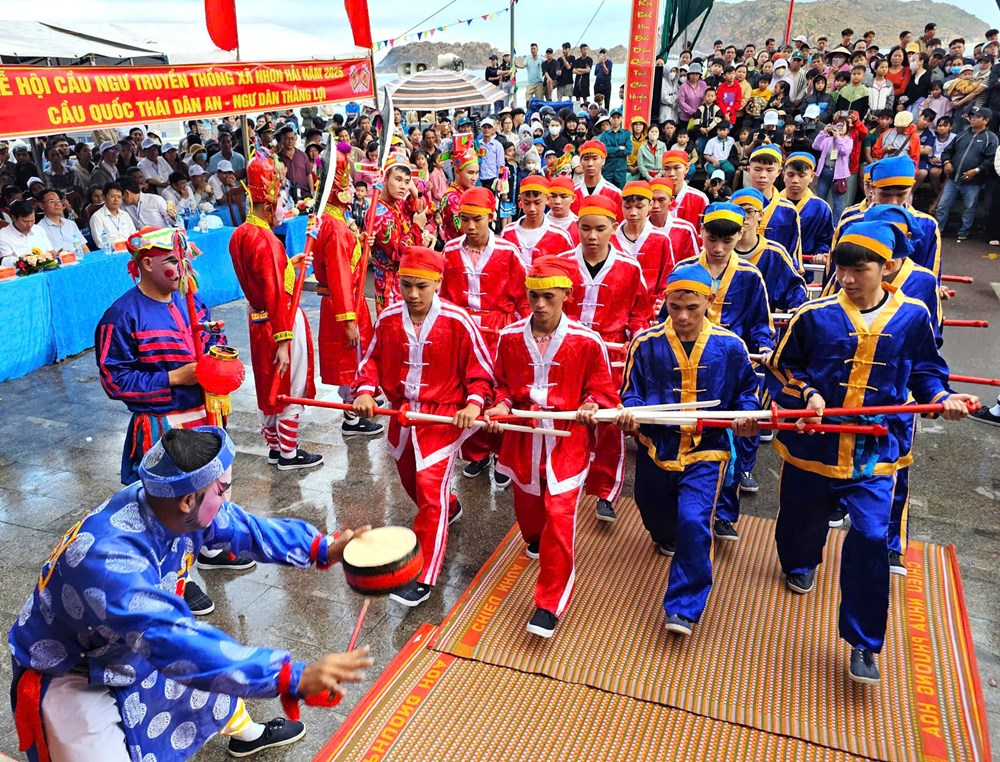
Not confined to mountainous areas, the story of cultural preservation in Gia Lai has expanded to coastal regions, where the lives of fishermen are closely intertwined with beliefs and nature. From rain-praying ceremonies and water-blessing rituals to fishing festivals, each ceremony reflects the harmonious relationship between humans and their environment – a philosophy of sustainable development that has long existed in folk culture.
Notably, the restoration and promotion of festivals are carried out on the principle of respecting original values, with the community playing a central role. The government plays a supporting and facilitating role – a model that is highly regarded in the preservation of intangible cultural heritage.
In its development orientation, Gia Lai is promoting the process of building a dossier to register the Nhon Hai Fishing Festival as a National Intangible Cultural Heritage. At the same time, the proposal to classify the Nam Hai Ancestral Mausoleum also demonstrates an effort to systematize maritime cultural values within a legal framework and ensure sustainable preservation.
The atmosphere of preparation for the Fishing Festival in Nhon Hai (taking place from March 29-31) shows the vitality of community culture when placed in the context of tourism development. With diverse cultural and sporting activities, the festival is both a religious event and an attractive "cultural product," contributing to promoting the image of the coastal region, its landscape, and the lives of fishermen to domestic and international tourists.
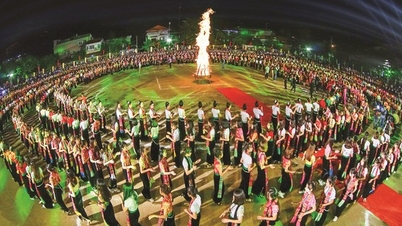
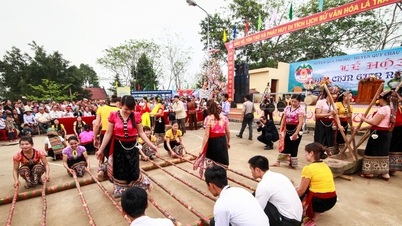
Significantly, in this new approach, tourism products are not separate from culture; rather, culture has become the core foundation. Performances of the Ba Trao dance, the gong and drum space, or traditional martial arts are vivid expressions of regional identity.
Culture – the “connecting axis” of sustainable development
In the overall National Tourism Year 2026, Gia Lai does not aim for a mere number of events, but rather focuses on building a tourism brand based on its unique identity. This is clearly demonstrated in the artistic script for the opening ceremony, where elements of Central Highlands culture such as gongs, brocade fabrics, and wooden sculptures are incorporated as "storytelling languages" about the region.
The connection between the vast forests and the ocean, between the cultures of different ethnic groups and the ecological space, is creating a profound travel journey – where visitors not only “come to see” but also “live” in the cultural experience.
From a broader perspective, these efforts demonstrate a significant trend in regional socio-cultural development: a shift from passive to active preservation, linked to livelihoods and economic development. When culture becomes a "soft power," it helps preserve identity while creating new values, contributing to improving community life.
The message from Gia Lai reveals a clear direction: preserving culture is not about retaining past values, but about creating conditions for them to continue to be present and contribute to contemporary life. When each village and each festival becomes a "cultural touchpoint," regional development is not only measured by economic growth, but also shaped by community memory, identity, and continuity across generations.
Source: https://baovanhoa.vn/van-hoa/giu-le-giu-lang-de-di-duong-dai-214852.html












































































Comment (0)