


The craft village, located in Tay Binh A hamlet along the Mac Can Dien canal, continues its peaceful days, following the rhythm of the ebb and flow of the tides. Every day, the more than 2km long road leading to the village is lined with piles of coconut fronds and leaves, and drying coconut leaf stalks.
The simple, one-story houses, with their small courtyards, reveal scenes of men and women busily engaged in various tasks: splitting coconut fronds, cutting leaves, smoothing coconut fibers, and bundling brooms.
In the countryside, this seemingly simple and rustic craft has become a source of livelihood for hundreds of rural workers of all ages. Elderly people who have been involved in the coconut broom-making craft for generations recount that the profession emerged in 1990. Initially, only a few households were involved, and the products were mainly sold locally.
Over time, the number of households participating in broom making gradually increased, and the demand also expanded. Following the flow of the Mac Can Dien canal, the products spread to many places inside and outside the province. From there, the artisans also explored ways to make higher quality brooms.
From a spontaneously formed craft village, it gradually developed into a small-scale handicraft village with dozens of households participating and hundreds of workers. In 2010, the People's Committee of An Giang province recognized "Vinh Chanh Coconut Broom-Making Village" as a traditional craft village.
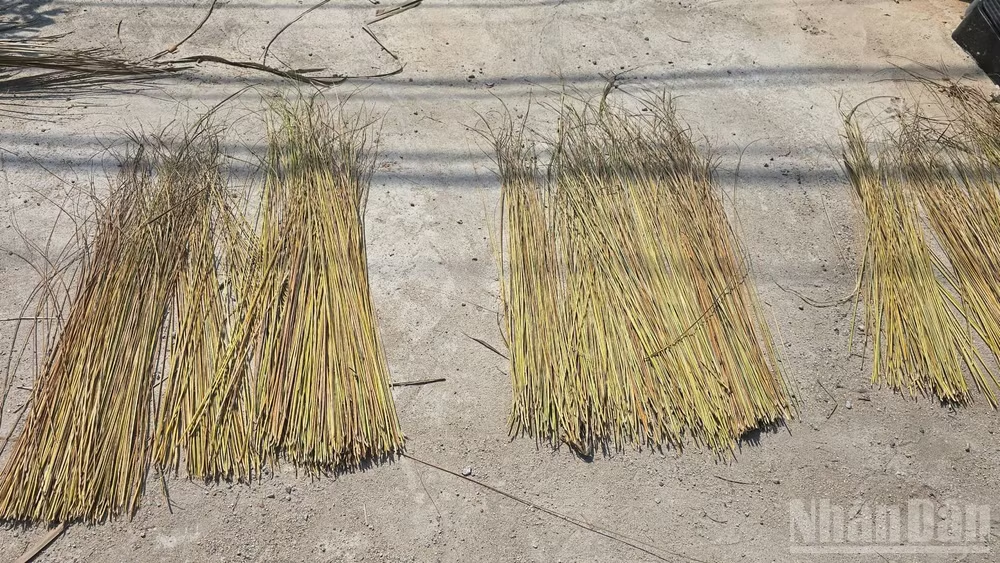
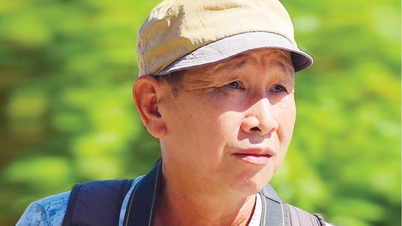
In the scorching midday sun, 65-year-old Dinh Van Tru sat on the roadside. He was surrounded by the green of piled coconut fronds. He meticulously smoothed each coconut frond, hand-polishing it until it was smooth. Mr. Tru said he had been doing this for over 10 years, finding the work light and not physically demanding.
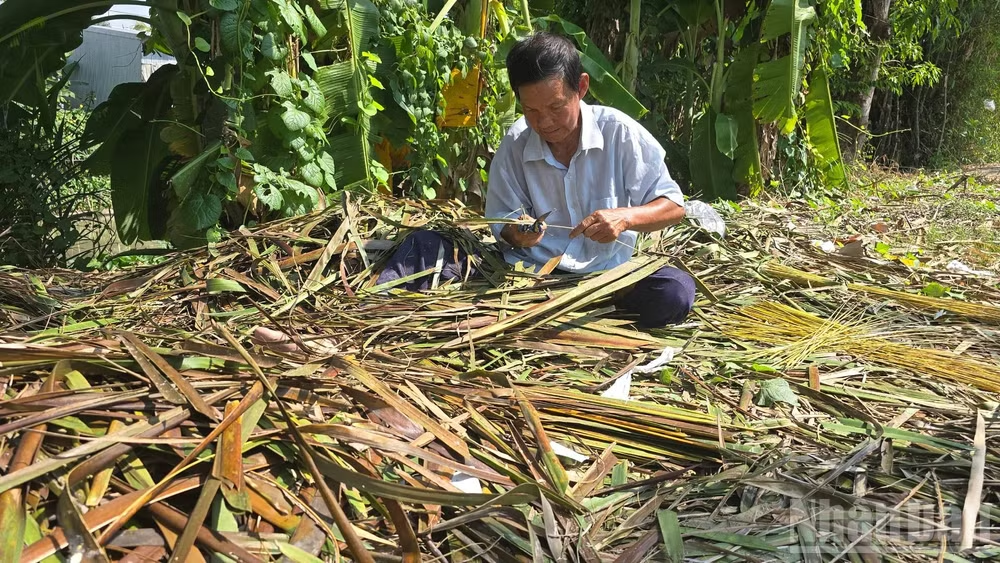
Mr. Tru shared: "For every kilogram of finished coconut fiber scraped, I get paid 5,000 dong by the owner. I can make 4 to 5 kilograms a day. When I'm tired, I rest, and when I have free time, I continue working. This job is suitable for older people because there is no time pressure." According to Mr. Tru, after scraping the coconut fiber, it must be dried in the sun to become strong enough to make good brooms.
Depending on their preferences and skills, each person takes on different jobs. For example, Ms. Nguyen Thi Tuyet Lan takes coconut fibers to bundle into brooms, and for each broom she makes, she gets paid 6,000 dong. Ms. Lan says the pay is low, but there's work to do every day.
Broom-making is a suitable job for older women in rural areas like Mrs. Lan. The work isn't physically demanding, but it requires patience and concentration. Otherwise, the finished product will be criticized, damaging the reputation of the broom maker and the entire village.
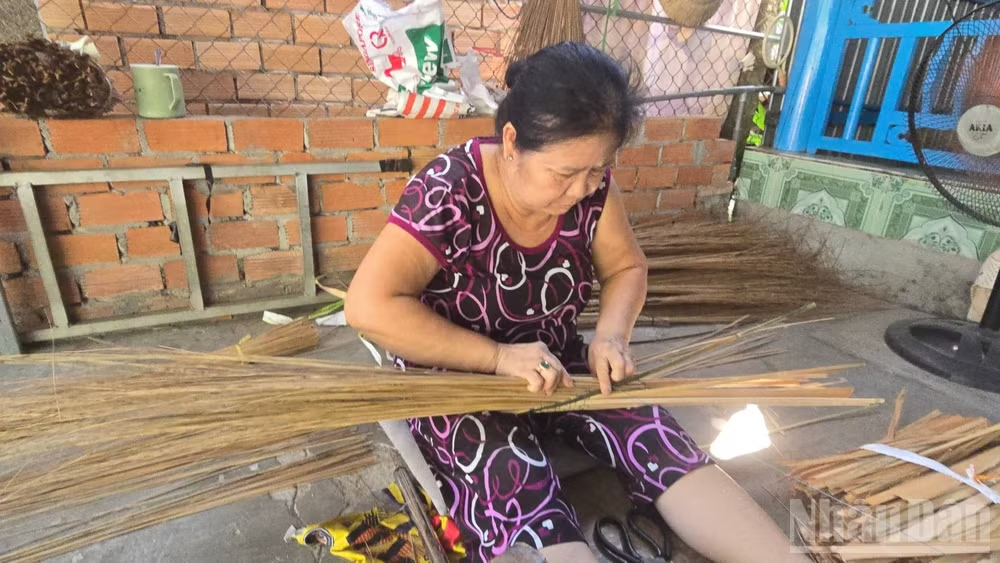
Therefore, business owners like Ms. Lan are always mindful of every step of the process. This explains why, for over three decades, Vinh Chanh coconut fiber brooms have enjoyed stable sales, providing a steady income for hundreds of rural workers in Tay Binh A hamlet.
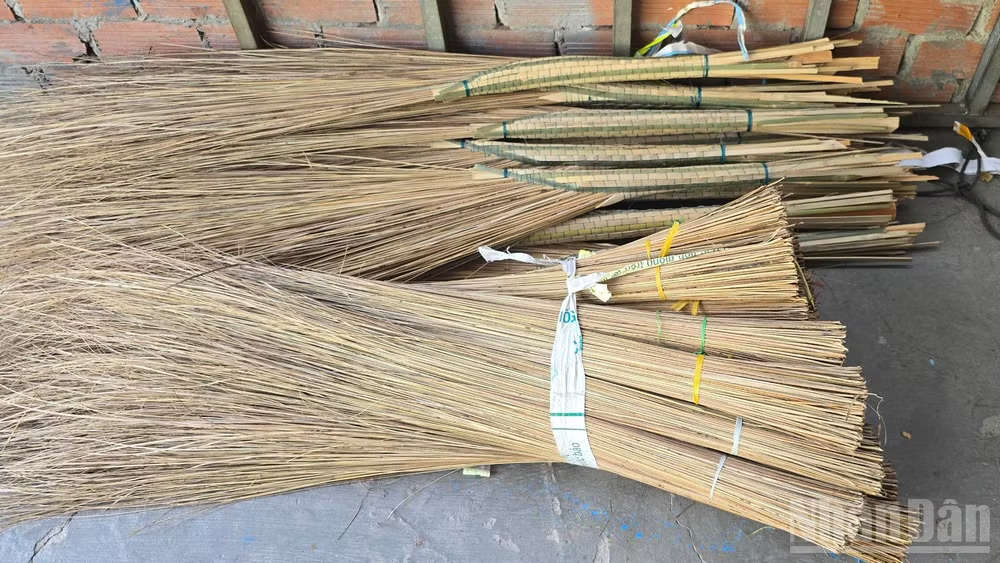
In her house by the canal, 63-year-old Dang Thi Kieu Oanh nimbly ties dried coconut fibers together to make brooms. She makes brooms while also delivering orders to her customers. Ms. Oanh shared that she is the second generation in the family and has been involved in the craft for over 20 years. A sense of pride shines in her eyes; from its inception to the present day, the broom-making craft has always been done by hand.
To complete a product, it must go through 4 to 5 stages with many participating steps, among which the broom-making stage is the most important and therefore requires meticulousness, skill, and perseverance from the craftsman.
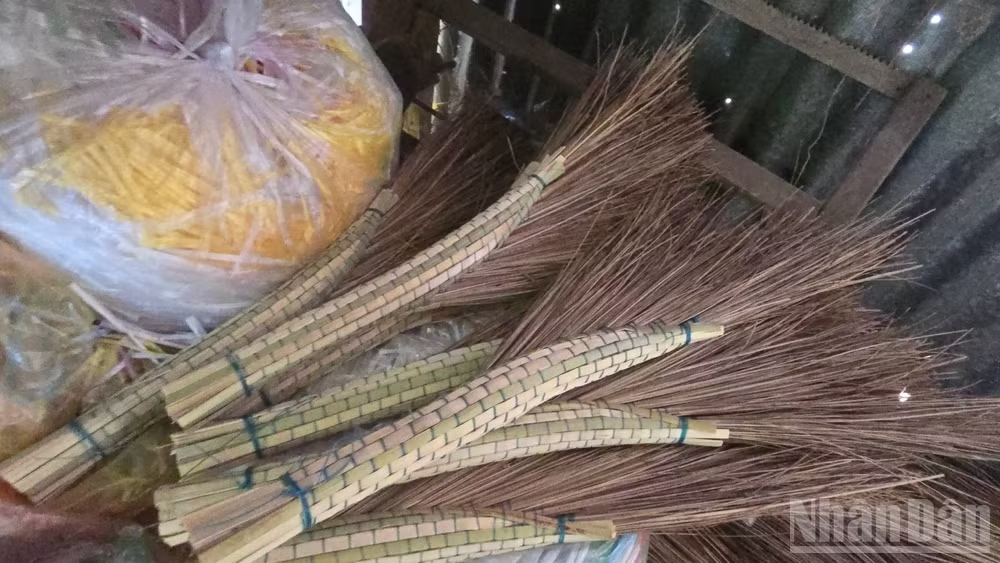
Ms. Oanh said that the coconut fiber raw materials are ordered from Ben Tre (formerly). Coconut fiber brooms from Tay Binh A region come in small and large sizes, with different prices. According to Ms. Oanh, brooms made from coconut fiber are more convenient for sweeping yards and gardens than other types of brooms, which is why the product is sold year-round.
Ms. Oanh recounted: "Like many other traditional craft villages, coconut fiber brooms are always in high demand during the Lunar New Year. From the 12th lunar month onwards, the craft village is bustling with activity. Buyers place orders in advance, and the workers have to work quickly to meet demand. Despite high demand, the price of each broom remains unchanged compared to normal times."
Coconut brooms from Vinh Chanh village have been distributed by traders to many localities such as Dong Thap, Vinh Long, Can Tho city and Ho Chi Minh City... However, along with the joy, the craft village is still facing many difficulties and challenges from competition from industrial products, fluctuating raw material prices, limitations in capital and technology, which are significant obstacles.
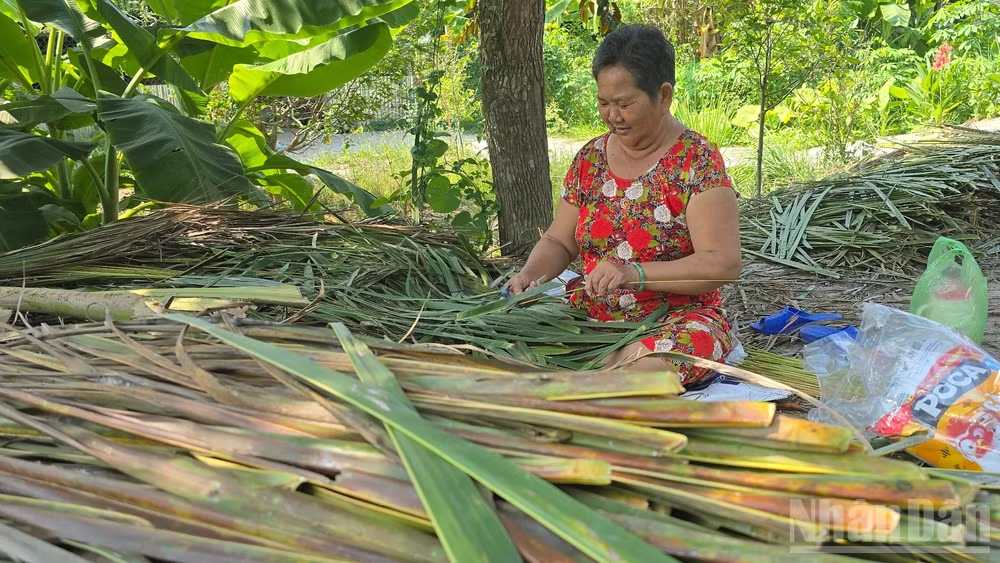
And due to this trend, younger generations prefer working in industrial zones rather than sitting in one place, spending their days monotonously splitting coconut fronds, stripping the fibers, or bundling them into brooms. Most of those involved in the craft are now middle-aged or elderly, creating an urgent need to preserve and pass on the skills to future generations.
For the sustainable development of craft villages, greater attention from all levels and sectors is needed in supporting capital, vocational training, trade promotion, and brand building. At the same time, consideration should be given to developing craft villages in conjunction with experiential tourism, thereby both increasing income and promoting traditional cultural values.
Source: https://nhandan.vn/giu-lua-lang-nghe-bo-choi-cong-dua-vinh-chanh-post956739.html

















































































Comment (0)