

Gratitude becomes a profession.
The elderly people in Trinh Xuyen village (also known as Chieng village) still pass down the story of the origins of the traditional medicine profession. More than three centuries ago, a Chinese doctor, while practicing his trade, stopped in the ancient land of Chieng. At that time, he was taken in by the ancestors of the Nguyen Dinh family, who provided him with food and shelter without charge. Before returning to his country, grateful for their kindness, the doctor passed on a valuable remedy for rheumatism.
Since then, the remedy has been passed down through many generations in the family. The old Chiềng village, now Trịnh Xuyên hamlet, is associated with the reputation of a long-standing traditional medicine village, famous throughout the Northern Delta region.
According to family genealogies and accounts from elders, the herbal remedy has been passed down through 14 generations without being lost. The formula, the way the ingredients are adjusted, and the preparation methods have all been meticulously and carefully preserved. The principles of "passing on knowledge to descendants" and "prioritizing virtue over profit" have become the family tradition of the Nguyen Dinh family in the former Chieng village, now Trinh Xuyen hamlet, throughout seven centuries of practice. Those who inherit the trade not only learn the names of the herbs and how to weigh them but also must internalize medical ethics, treating patients as if they were family members.
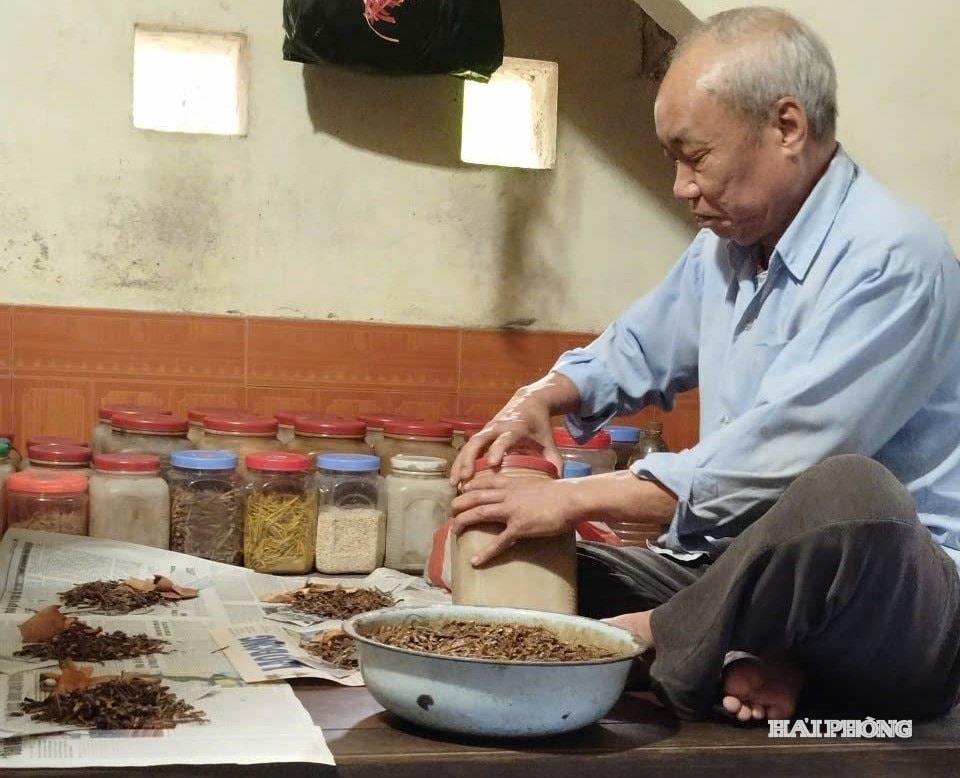
Currently, Trinh Xuyen village has about 30 families practicing traditional medicine, all descendants of the Nguyen Dinh clan. Mr. Nguyen Dinh Nhat, 73 years old, said that since childhood he learned from his parents how to identify different medicinal herbs by their scent and color. “Making medicine requires not only following the correct formula but also having the right mindset. Each dose of medicine given to a patient carries my responsibility,” Mr. Nhat shared.
The traditional herbal remedy for rheumatism comes in two forms: a decoction and a powder. The decoction contains 24 ingredients, while the powder contains 6, working together to support each other. Notably, both forms have a pleasant, sweet taste, making them easy to drink and suitable for people of all ages. According to Mr. Nhat, the remedy focuses on treating rheumatism, dispelling cold, promoting blood circulation, clearing meridians, and helping to reduce pain and improve mobility for those suffering from bone and joint diseases.
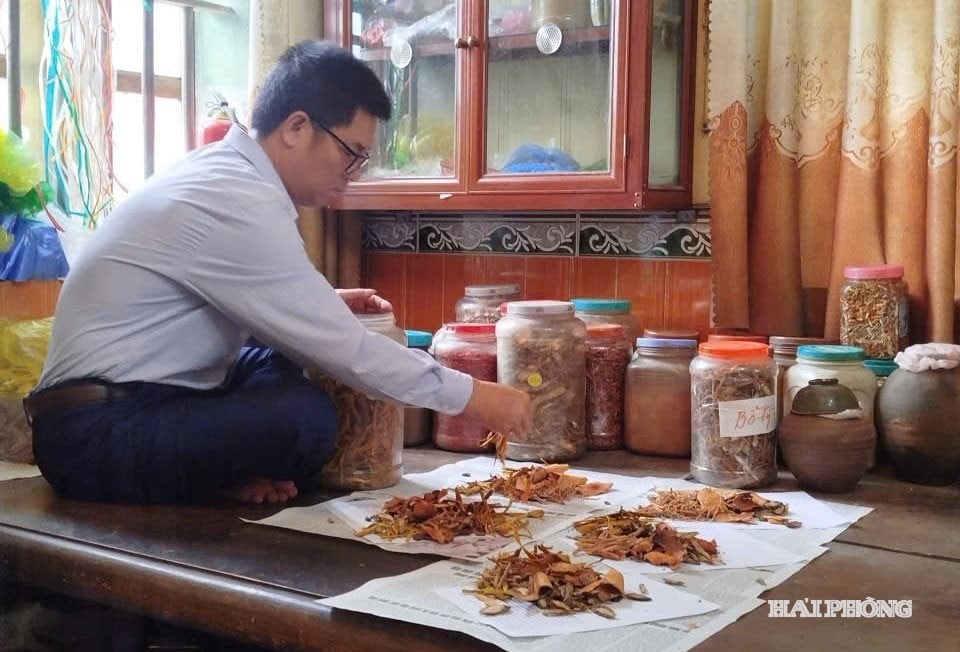
The medicinal herbs used in this remedy are carefully selected from reputable suppliers. Upon arrival, the herbs are processed and prepared according to a secret recipe, ensuring hygiene and quality. Some herbs must be roasted until golden brown and then buried underground, while others must be soaked in ginger wine and then exposed to dew for a specific number of nights to meet the requirements. The finished medicine is carefully stored in earthenware jars, airtight boxes, or wrapped in multiple layers to prevent mold and preserve its medicinal properties.
Not only relying on inherited experience, many practitioners in Trinh Xuyen also proactively pursue formal training. Nguyen Dinh Phung stated that staying committed to the profession and preserving it is a source of happiness for him. Besides helping his family, he also attends professional training courses, updating his knowledge of medicinal herbs and regulations in the health sector. "Preserving the profession must go hand in hand with learning; otherwise, we will fall behind," Phung said.
Keep the faith.
The reputation of the herbal remedy has spread not only within the region but also attracted many patients from other provinces and cities. Mr. Ngo Van Giap ( Quang Ninh province) said that two years ago he suffered from prolonged joint pain and was diagnosed with rheumatism. Following a friend's recommendation, he went to Trinh Xuyen to get the medicine. After a month of regularly using both the decoction and the powder, his symptoms significantly improved. “I can move around more easily and sleep better. Since then, I come back every year to get the medicine to maintain my health,” Mr. Giap shared.
Many people from as far away as Central and Southern Vietnam also come to Trinh Xuyen traditional medicine village. During the months of March and August in the lunar calendar, the transitional seasons when bone and joint diseases are more likely to occur, the atmosphere in the village becomes even more bustling. In front of the houses, bags of medicinal herbs are neatly arranged, and inside, the sounds of weighing and packaging herbs are a familiar rhythm of the craft village.
Despite the large number of patients, those practicing this profession maintain their principle: they only prepare and dispense medicine at home, not selling it door-to-door. Patients are carefully questioned about their health condition and medical history to prescribe appropriate medication. In severe cases or those with unusual symptoms, they advise patients to go to a medical facility for examination and treatment as directed by a doctor.
Besides providing medical value, the traditional medicine profession also helps improve the economic lives of many families. Ms. Nguyen Thi Tham, Head of the Culture and Social Affairs Department of Vinh Lai commune, said that most people working in traditional medicine have stable lives and decent houses. What is particularly commendable is that they are always exemplary in local movements, actively contributing to the construction of roads, cultural centers, and humanitarian activities.
Preserving the tradition of traditional medicine is also about preserving a part of the soul of the village. Through more than 300 years of ups and downs, from the stories of early affection to the changes of today, Trinh Xuyen traditional medicine village continues to quietly radiate its fragrance, like the medicinal herbs in each prescription.
MINH NGUYENSource: https://baohaiphong.vn/giu-lua-nghe-thuoc-o-trinh-xuyen-538565.html
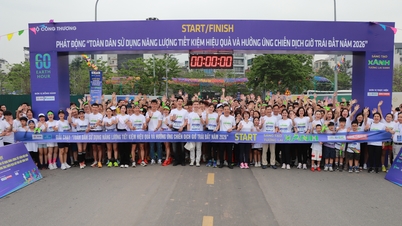
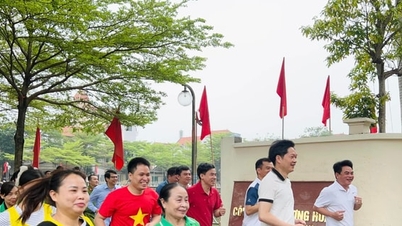
![[Photo] Hanoi residents enthusiastically participate in the 2026 Olympic Run Day.](https://vphoto.vietnam.vn/thumb/1200x675/vietnam/resource/IMAGE/2026/03/22/1774154260360_ndo_bl_91e6430c9ea310fd49b232-8788-jpg.webp)

![[Photo] Prime Minister Pham Minh Chinh departs for an official visit to the Russian Federation.](https://vphoto.vietnam.vn/thumb/1200x675/vietnam/resource/IMAGE/2026/03/22/1774160262864_vna-potal-thu-tuong-pham-minh-chinh-len-duong-tham-chinh-thuc-lien-bang-nga-8656056-6903-jpg.webp)
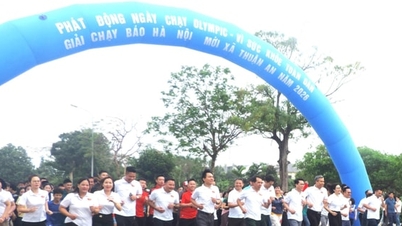
![[Image] 126 communes and wards of Hanoi participate in the 2026 Olympic Run Day.](https://vphoto.vietnam.vn/thumb/1200x675/vietnam/resource/IMAGE/2026/03/22/1774155767210_ndo_br_4013885316804510786-copy-jpg.webp)






























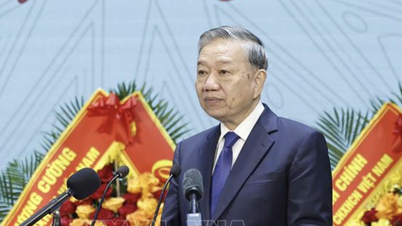
![[Photo] General Secretary To Lam attends the ceremony commemorating the 80th anniversary of the founding of the Engineering Corps.](https://vphoto.vietnam.vn/thumb/402x226/vietnam/resource/IMAGE/2026/03/22/1774154480574_anh-man-hinh-2026-03-22-luc-11-41-07.png)















Comment (0)