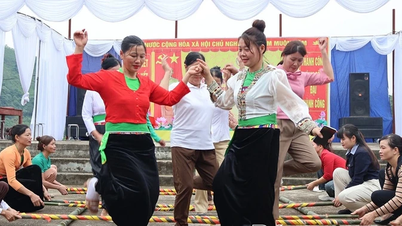
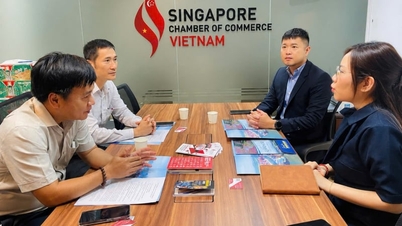
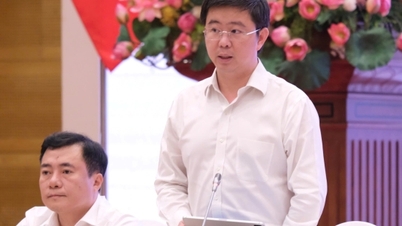
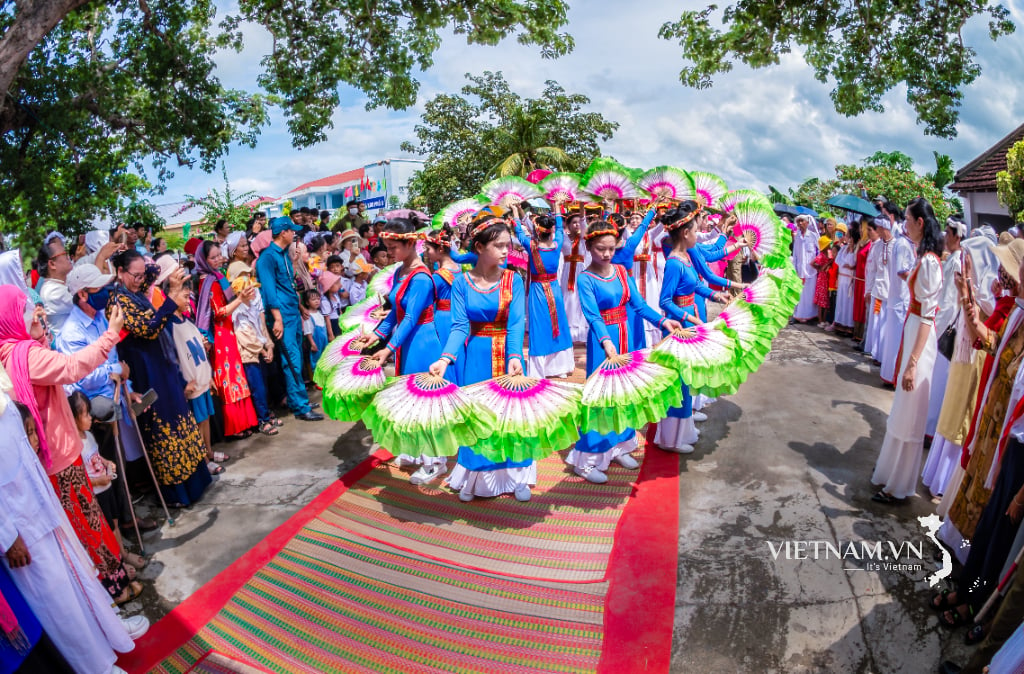
The Muong community in Dai Dong commune preserves the beauty of their traditional costumes and folk games.
For a long time, traditional brocade weaving has been a beautiful feature and a source of pride for the Muong women of Dai Dong commune. Hundreds of women participate in the craft village. Village artisans like Ms. Duong Thi Bin and Ms. Bui Thi Lan in Luc hamlet have made significant contributions to reviving the weaving craft and expanding the brocade brand of the Luc Nghiep Thanh Traditional Brocade Weaving Cooperative into the wider market.
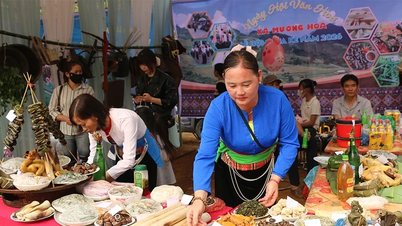
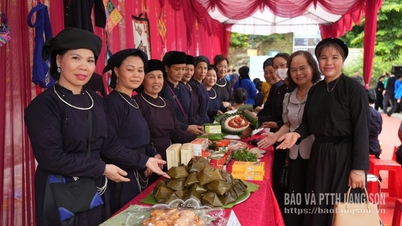
Recently, local handicraft products and images of traditional brocade weaving were introduced and promoted at the Cultural Camp during the Hung Kings Commemoration Day - Hung Temple Festival and the Ancestral Land Culture and Tourism Week in the year of the Horse 2026. The recreation of the vibrant atmosphere of the craft village along with products embodying the essence of the weaving craft received much attention and appreciation from locals and tourists.

Muong women from Dai Dong commune recreated the traditional brocade weaving craft at the Cultural Camp during the Hung Kings Commemoration Day - Hung Temple Festival and the Ancestral Land Culture and Tourism Week in the year of the Horse 2026.
Dai Dong is also home to the folk melodies of the Thuong Rang - Bo Meng style, the Sac Bua singing style, and children's songs. The commune has two clubs dedicated to preserving and promoting the Muong ethnic identity; 100% of the hamlets and villages maintain the activities of their amateur performing arts groups. Besides artisan Quach Thi Lon from Khanh hamlet, who has been awarded the title of Outstanding Muong Singing Artisan, there are dozens of other artisans in the hamlets and villages who regularly participate in activities and perform Thuong Rang - Bo Meng songs at club events, competitions, and exchanges both within and outside the province.


![Reviving Traditional Crafts: [Part 1] What Path for Vietnamese Craft Villages?](https://vphoto.vietnam.vn/thumb/192x108/vietnam/resource/IMAGE/2026/07/02/1782951259680_1403-screenshot_1782884455-nongnghiep-201356.jpeg)

Foreign tourists experience campfire activities and immerse themselves in the cultural life of the Muong ethnic group at the Khanh hamlet community tourism site in Dai Dong commune.
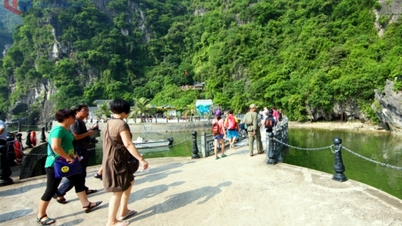
Currently, community-based tourism has been established in Khanh hamlet. The natural landscape of forests, mountains, rivers, and streams, along with the preservation of tangible and intangible cultural heritage among the people, are potential strengths that the locals are developing to create attractive tourism products.
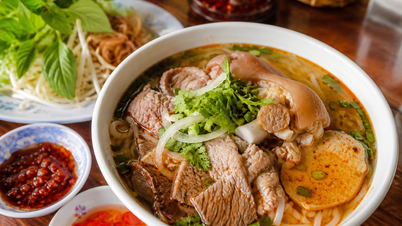
Ms. Bui Thi Lieu, head of Khanh hamlet, shared: "Although it's just the beginning, the community tourism destination has already welcomed quite a few groups of visitors, including foreign tourists, to visit and explore. The destination has three households providing accommodation services; tourists enjoy participating in activities such as harvesting crops, fishing on the Buoi River, savoring Muong cuisine , and experiencing traditional ethnic arts."

Over 70% of households in Dai Dong commune live in traditional stilt houses.
This area still preserves the unique Muong stilt house architecture, with over 70% of the residents' houses being stilt houses. Following the popular trend, most buildings are constructed using concrete, combining traditional Muong culture with durability and modernity.
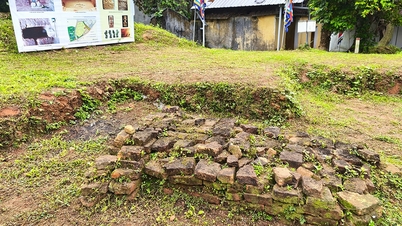
In particular, this area also features the Muong Khoi Revolutionary War Zone National Historical Site – an important "red address" famous for the "Truong Son Guerrilla School for Resistance against the Japanese" event in 1945 and the cradle of the revolution in the Muong Vang region. The historical site is one of the attractions for visiting and educating about revolutionary traditions. The Revolutionary War Zone's traditional house displays many valuable historical artifacts and relics such as bronze drums, ancient gongs, weapons, and battle maps related to the revolutionary activities of the army and people of the Muong Vang region during the period of resistance against Japanese fascism and French colonialism.
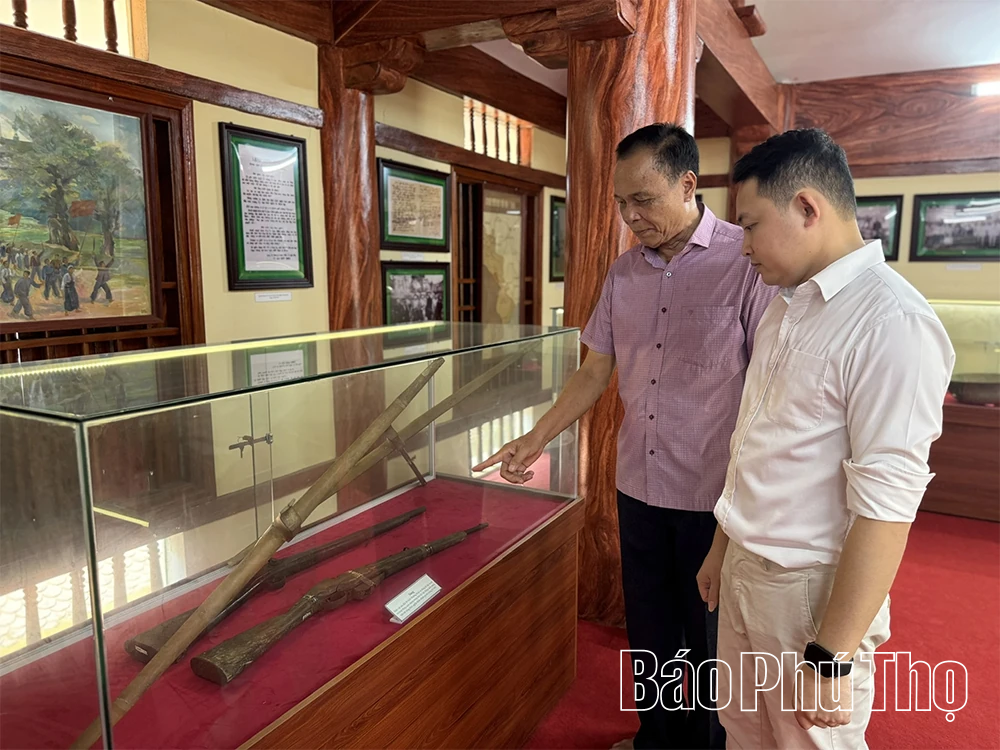
The Muong Khoi Revolutionary War Zone historical site is a source of traditional pride for the people of Dai Dong commune.


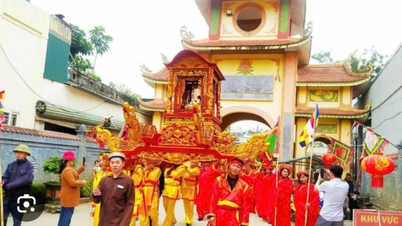
Comrade Bui Van Huy, Head of the Culture and Social Affairs Department of Dai Dong Commune, affirmed: The local government always prioritizes the task of preserving and promoting traditional cultural values associated with the daily lives of the people. Besides encouraging the establishment of cultural preservation clubs, folk songs, and folk dances to preserve distinctive cultural features, the commune strengthens the organization of traditional festivals and folk performances; builds and implements regulations, customs, and civilized lifestyles in weddings, funerals, and festivals, linked to the "All People Unite to Build a Culturally Rich Life" movement.
In addition, the commune has intensified the dissemination of conservation policies, fostering a sense of pride among the people regarding heritage; encouraging students and young people to participate in cultural activities, learn about local history, and preserve folk songs and traditional games; and rewarding and encouraging individuals, artisans, and influential figures in preserving heritage. In particular, the commune has utilized resources to invest in building and upgrading cultural centers and sports fields in the hamlets to provide venues for cultural, artistic, and sporting activities; preserving and restoring historical and cultural relics; and exploiting cultural values, traditional crafts, and ethnic costumes to develop community tourism, helping people increase their income and providing them with further motivation for preservation.
Bui Minh
Source: https://baophutho.vn/giu-lua-van-hoa-dan-toc-muong-o-dai-dong-253532.htm