

The goal of the 2018 General Education Program is that, in addition to learning fundamental knowledge and skills, junior high school students will be guided in setting life goals. Specifically, students will learn about various professions and develop career awareness to continue their studies at the high school level according to their career orientation through the selection of elective subjects.
GIVING STUDENTS A UNIVERSITY EXPERIENCE
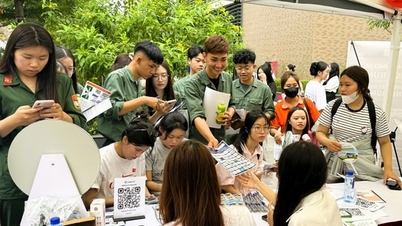
It is precisely because of these orientations that, unlike before when students typically only received career guidance and vocational experience at the high school level, or even as early as grade 11, now, from grade 8 onwards, students are exploring the realities of university education and the models of developing professions to shape their own future. Taking students to experience university life is a new approach to career guidance lessons in junior high schools that is beginning to be implemented in Ho Chi Minh City.
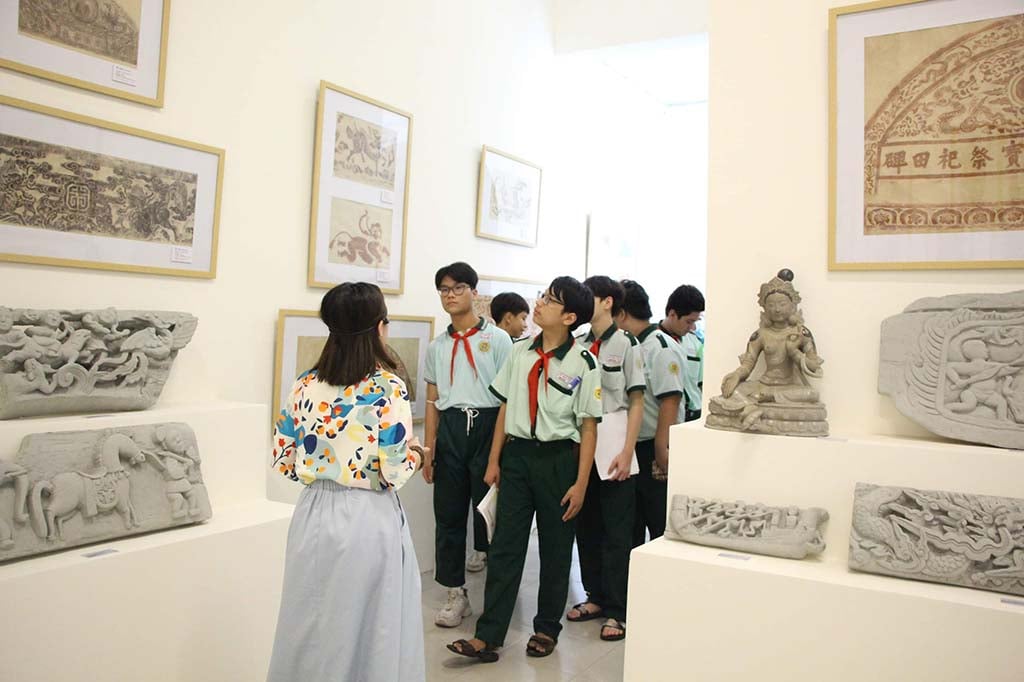
For the first time, 8th-grade students from Ha Huy Tap Secondary School (Binh Thanh District, Ho Chi Minh City) took turns conducting art lessons at the Academic Space of the Ho Chi Minh City University of Fine Arts. During the lesson, the art teacher from Ha Huy Tap Secondary School acted as a teaching assistant, while the lecturer from the University of Fine Arts became the "8th-grade teacher," guiding students through the space, introducing them to different art forms such as painting and sculpture, and discussing career opportunities.
Ms. Nguyen Hoang Yen, Deputy Head of the Department of Educational Quality Assurance and Student Affairs at the Ho Chi Minh City University of Fine Arts, said this is the first time the university has welcomed junior high school students to visit and learn about the academic programs and career opportunities offered. Ms. Hoang Yen assessed that this new initiative demonstrates the university's commitment to and innovation in career guidance starting from the junior high school level. This helps students to quickly access fields and professions related to their subjects, thereby providing them with the right direction for their studies in high school and helping them identify their passions to pursue in their chosen careers.
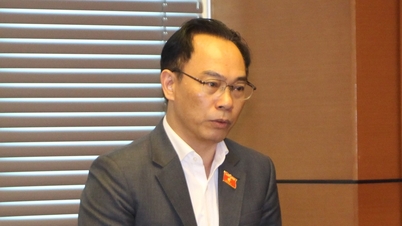
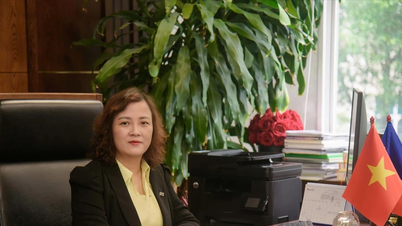
Mr. Cao Duc Khoa (Principal of Huynh Khuong Ninh Secondary School, District 1, Ho Chi Minh City)
EQUIPPING STUDENTS WITH PROFESSIONAL KNOWLEDGE
In a state of surprise and novelty while attending an art class at the university with a university lecturer, an 8th-grade student from Ha Huy Tap Secondary School shared: "Normally, I take drawing classes at a center, but now, coming to the University of Fine Arts, I've learned about more professions that start from a talent for drawing. Through this, I understand that studying drawing and fine arts doesn't just make you a painter, but you can also become a sculptor, an animator, a graphic designer, and so on..."
Meanwhile, art teacher Mai Dinh Minh Anh from Ha Huy Tap Secondary School shared that this activity, in addition to aiming to innovate teaching methods and assessment of the subject, also aims to equip students with knowledge of professions related to art, thereby providing early career guidance for students.
Teacher Minh Anh also frankly pointed out the limitations of teaching art in high schools, namely the lack of facilities. The school has one art classroom displaying works by teachers and students, but it still cannot meet the in-depth requirements of the subject, making it difficult for students to visualize the interest of the subject. Sending students to study at a university will help them gain a more visual understanding of the subject and make learning more enjoyable. In particular, according to Ms. Minh Anh, many students show excellent artistic talent during their middle school years, but this often diminishes in grades 8 and 9 to focus on subjects required for the entrance exam to grade 10. Therefore, a class at a university will help them nurture their passion and provide career guidance for the future.
LEARNING AT THE FACTORY/COMPANY
Also during this school year, students from Nguyen Du Secondary School (District 1, Ho Chi Minh City) will take turns participating in experiential career guidance sessions at the Post and Telecommunications Technology Academy, the Telecommunications Department, the Fire Prevention and Fighting Police Department, an instant food factory, a vocational training school, etc.
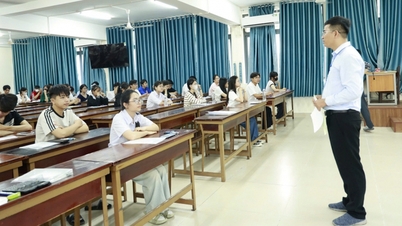
Ms. Nguyen Doan Trang, Principal of Nguyen Du Secondary School, said this is a new approach in the school's educational activities. In previous years, the school often connected with high schools to introduce enrollment information for 10th grade, but now, to help students best prepare for high school, choose subject combinations that suit their abilities, interests, and career aspirations, the school organizes visits to universities, factories, and enterprises. The school strives to provide students with a diverse perspective on training types and professions so that they can make the most accurate choices possible.
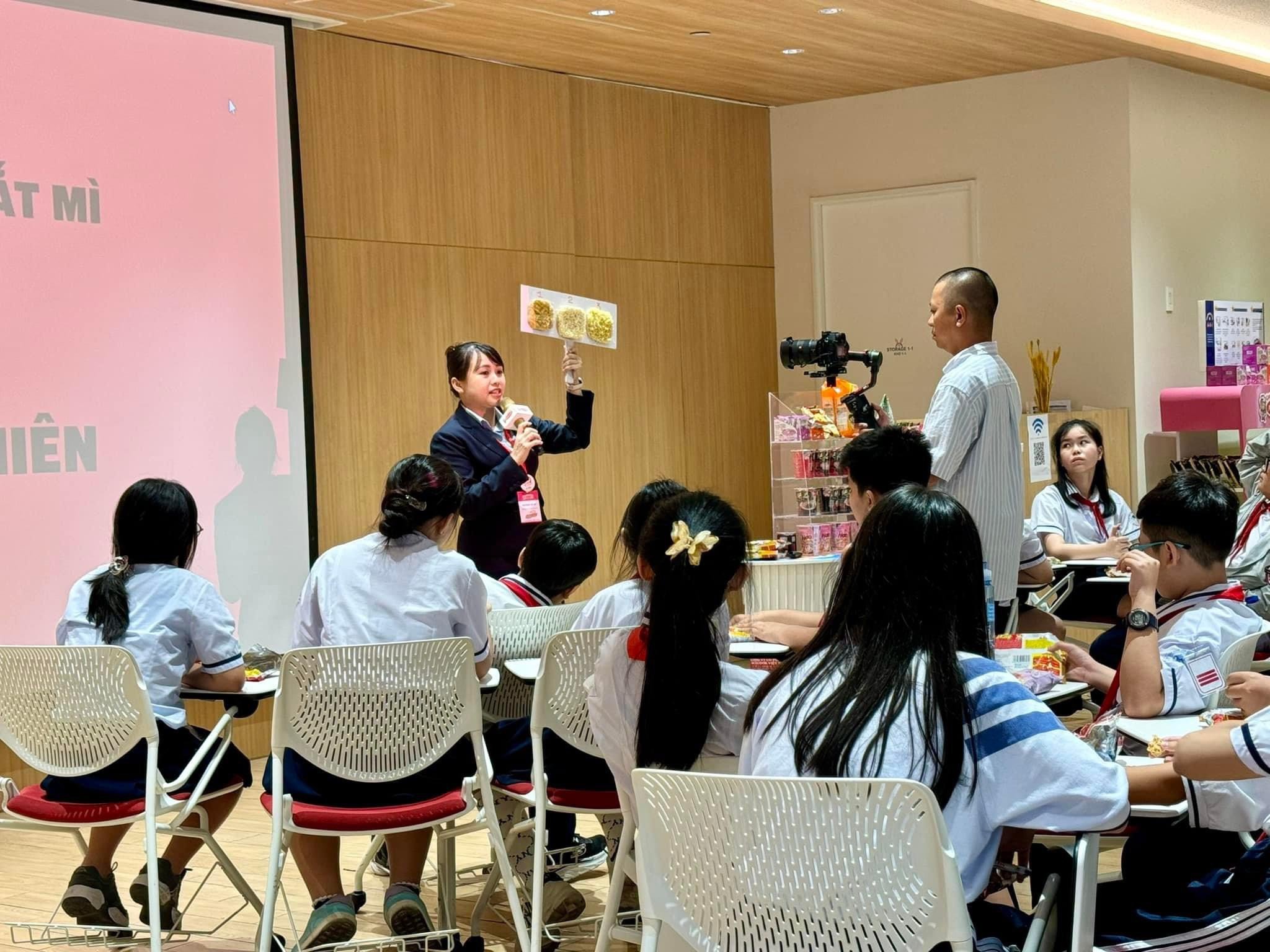
Students from Nguyen Du Secondary School (District 1) learn about instant noodle production technology.
Early career guidance begins with curriculum orientation.
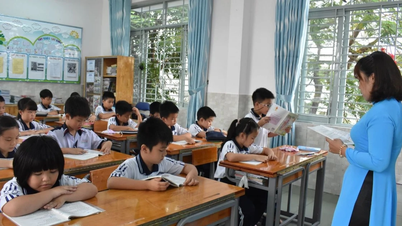
Referring to changes in career guidance at the lower secondary level, Ms. Tran Thuy An, Principal of Minh Duc Secondary School (District 1), acknowledged that the 2018 General Education Program requires early implementation of these requirements. Career guidance today is no longer just about channeling students into educational models suitable to their abilities and family circumstances after graduating from lower secondary school, but also about guiding students to understand their strengths, which professions are suitable, and which subject groups they should study to choose a high school…
Mr. Cao Duc Khoa, Principal of Huynh Khuong Ninh Secondary School (District 1), also said: "Career guidance is now different, broader, earlier, and with more diverse approaches. Besides basic knowledge about professions, schools are proactively connecting students to create a foundation, nurture their passions, and provide career orientation. The earlier the preparation, the better students understand what field to study and what profession to pursue to suit their individual abilities and maximize their potential."
Similarly, Ms. Hua Thi Diem Tram, Principal of Ha Huy Tap Secondary School (Binh Thanh District), also pointed out that secondary schools must innovate their career guidance to help students meet the requirements of the 2018 General Education Program at the high school level. Career guidance at the secondary school level must demonstrate the role and responsibility of equipping students with the initial skills and knowledge to approach various fields and professions so that they can choose the right subject groups at the high school level. "Organizing experiential learning opportunities for students with different professions and training schools is a chance for them to 'listen' to themselves in the most positive way. Seeing, knowing, understanding, and being interested will be the basis for them to choose subject combinations that develop their abilities, strengths, and talents."
Help students "define" themselves early on.
Regarding changes in career guidance for students in junior high schools, the leaders of the Ho Chi Minh City Department of Education and Training acknowledged the need for innovation in career guidance as implemented under the 2018 General Education Program, applicable to both junior and senior high schools. Early career guidance helps students "position" themselves early on, enabling them to choose the right elective subjects according to their career orientation in senior high school. The innovative model of junior high schools creating a university-style learning environment is a very novel approach, opening up opportunities to access subjects while also giving junior high school students an early glimpse into various fields and professions, allowing them to confidently orient themselves towards their careers when they enter senior high school.
Source link





































































Comment (0)