

One morning in mid-March, on the drill training ground of the 3rd Battalion, 82nd Regiment, a decisive command rang out. In the training formation, the soldiers simultaneously performed the movements.
At the end of the line, Private Lo Van Phong (of the Thai ethnic group), a soldier in Squad 1, Platoon 1, Company 9, was still hesitant when performing the right turn. Noticing this, Lieutenant Ly A Vu, the platoon leader of Platoon 1, quickly stepped forward to demonstrate the movement, then patiently guided him step by step. After several repetitions, Phong finally performed the movement correctly. Seeing the young soldier smile with relief, the platoon leader nodded in satisfaction.
|
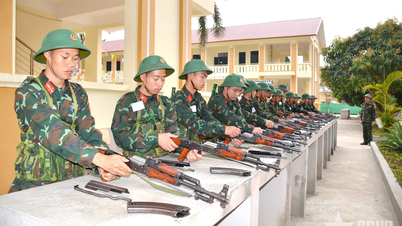
Officers from Battalion 3, Regiment 82, Division 355 (Military Region 2) mentor, guide, and correct drill movements for new recruits. |

Such situations are not uncommon in new recruit training. According to Lieutenant Ly A Vu, each training course has a number of soldiers who have difficulty grasping the initial content. The reasons are quite diverse: some have limited educational backgrounds; some are unfamiliar with systematic learning methods; and some face language barriers due to a lack of proficiency in standard Vietnamese. In addition, many soldiers are away from their families for the first time, and their psychology is still timid and lacking confidence when entering the strict discipline of the Army.
Recognizing this, from the moment they received the new recruits, the Party Committee and commanders of Regiment 82 focused on thoroughly understanding the characteristics of each soldier. Through soldier files, discussions with local authorities and families, and initial living arrangements, the unit specifically classified their level of knowledge, learning ability, and psychology. Based on this, they developed a plan to provide assistance tailored to each individual. Each soldier with limitations was assigned a dedicated officer, squad leader, or more capable soldier to directly mentor them. This support extended not only during training but also in their daily lives.
Captain Pham Hai Dang, Political Officer of Battalion 3, said: “The soldiers who are slow to learn are not doing so because they lack effort, but because they are not yet familiar with the learning method. If the officers are impatient and give superficial instructions, the soldiers easily become discouraged. But when the officers demonstrate and then let them practice step by step and correct them on the spot, the learning efficiency increases significantly.”
Battalion 3 determined that training methods must be specific, visual, and persistent. In infantry drill and combat techniques training, officers often break down movements into smaller steps, demonstrate them repeatedly, and provide slow instruction. Then, the soldiers immediately practice and correct each detail. In addition to regular training, platoons also organize supplementary training in the afternoon or evening. Skilled soldiers are assigned to mentor their comrades using a "Pairing Together" model. This allows those who are slower to adapt to practice more time and feel more comfortable with the help of their peers.
Private Vang A Na (of the Mong ethnic group), a soldier in Squad 3, Platoon 5, Company 10, is a typical example. In the early days of his military service, Na was unfamiliar with the disciplined lifestyle and training content. During drill and formation lessons, many of his movements were not performed in rhythm, and at times he was hesitant in front of a large group. With the patient guidance of officers and comrades, especially through extracurricular tutoring, Na gradually improved. After nearly three weeks of persistent training, Na gradually adapted to the unit's training pace. In a recent drill and formation inspection, he performed the movements decisively and in rhythm, and was rated as "good" by his officers.
Sharing about his progress, Private Vang A Na said: “At first, I was very confused and couldn't remember anything no matter how hard I tried. But with the help of my commanders and comrades, and extra practice at night, I gradually caught up. Every week, I see myself improving and becoming more confident.”
In reality, the biggest difficulty for many new recruits in the early stages lies not only in knowledge or skills but also in feelings of inferiority. In the early days of training, many are hesitant to speak up or afraid of making mistakes in front of the group. Recognizing this, the commanders at Regiment 82 always prioritize motivating the troops. During meetings, officers frequently emphasize the spirit of solidarity and mutual assistance within the unit. Even small improvements by soldiers are promptly recognized and praised in front of the group, creating motivation for them to strive harder in their studies and training.
Thanks to a synchronized approach, the results of the 82nd Regiment's CSM training in recent years have been maintained and gradually improved. At the end of the CSM training, the percentage of soldiers achieving good and excellent results has increased from approximately 83% previously to over 85%, with many soldiers who were initially slow to adapt now achieving good results. Lieutenant Colonel Bui Ngoc Tuyen, Commander of the 82nd Regiment, shared his experience: “In CSM training, each soldier has a different starting point. Therefore, officers at all levels must understand each case thoroughly, choose appropriate training methods, and patiently mentor them. When officers are dedicated, and the collective is united and supportive, soldiers who initially have limitations can completely improve and successfully complete their tasks.”
Experience at Regiment 82 shows that the perseverance of officers, team spirit, and appropriate training methods are the "keys" to overcoming initial difficulties, helping soldiers gradually mature and become more steadfast in the military environment.
-----------------
What is most needed is perseverance, closeness, and responsibility from the commander.
This year, Battalion 4, Regiment 19, Division 968 (Military Region 4) was assigned the task of receiving and training new recruits from Thanh Hoa, Nghe An, and Ha Tinh provinces – regions rich in revolutionary traditions. The quality of these new recruits is quite high, resulting in faster acquisition of knowledge, political awareness, and understanding of training content; their discipline, learning spirit, and training attitude have also shown significant positive changes.
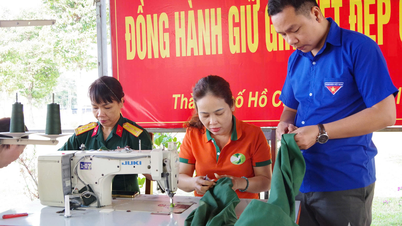
In addition, a small number of comrades have limited education, difficult family circumstances, and are unfamiliar with the living, studying, and training environment in the Army, so they are still unfamiliar with it and absorb the training content more slowly than the general level. For these soldiers, the unit has developed a separate education , training, and support plan; increased tutoring in each area; and leveraged the role of squad and platoon officers and skilled soldiers to organize "pairs to help each other learn," directly guiding and supporting those who are slow to grasp the material.
|
The commander of Platoon 4, Company 2, Battalion 4, Regiment 19 (968th Division, Military Region 4) instructs new recruits on folding blankets and sheets. Photo: GIANG ĐÌNH |

The unit also strengthened its efforts in monitoring and managing ideology, providing timely encouragement and motivation; closely combining education and training with building an environment of solidarity and mutual assistance within the unit. The Battalion Commander also regularly paid attention to, guided, and shared management and training experiences with platoon and company officers, especially with soldiers who were slow learners.
In my opinion, the most important thing for a commander when educating and training slow learners is patience, closeness, and responsibility. Officers must be truly attentive, thoroughly understanding the circumstances and feelings of each soldier to choose the appropriate educational method; closely combining strict discipline with sincere encouragement and support, creating confidence for soldiers to strive for improvement. When officers are caring, persistent, and set a good example, most slow learners can gradually overcome their limitations, integrate, and progress with the unit.
Captain TRAN HUU LINH (Battalion Commander of Battalion 4, Regiment 19, Division 968, Military Region 4)
------------------
Understand the circumstances and psychology of the soldiers.
In 2026, Battalion 500, Regiment 738 (Tay Ninh Provincial Military Command) received and trained new recruits from communes throughout the province. Through training and practice, we observed a fairly consistent quality of recruits. The majority of recruits possess adequate educational qualifications, good health, a high sense of discipline, and actively participate in unit activities. They have generally grasped the main contents of military regulations, physical training, and infantry combat techniques.
|
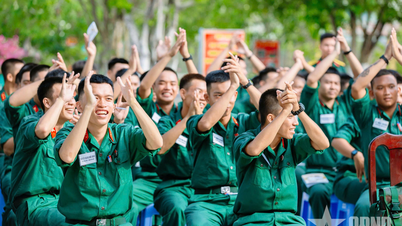
New recruits of Battalion 500, Regiment 738, Tay Ninh Provincial Military Command, participate in games during their day off. Photo: LE TIEN |
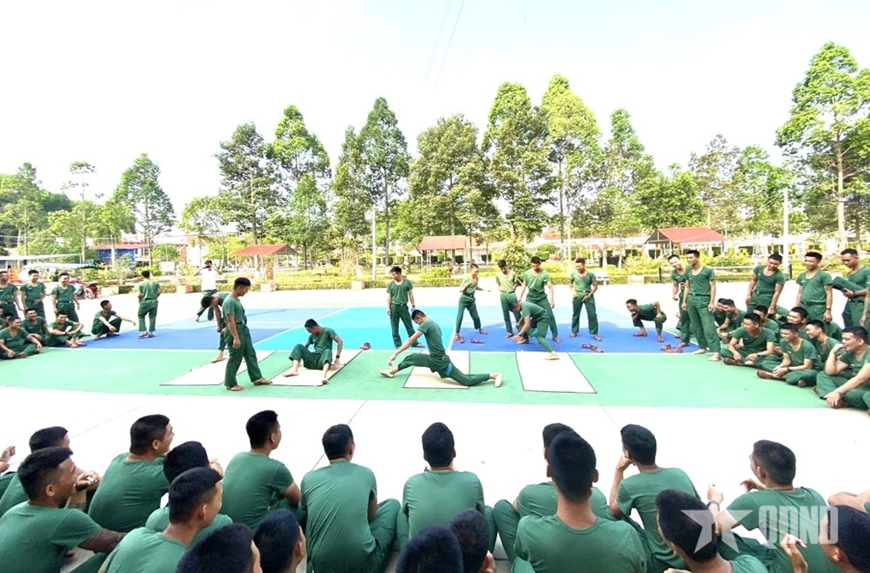
Besides the generally positive performance, there are also a small number of soldiers who may have slower learning abilities or limited understanding due to differences in educational background, family circumstances, and living environment before enlistment. However, this number is not large and is a common occurrence in the annual training of new recruits.
To improve the overall quality of training, the unit proactively identifies each individual, specifically categorizing soldiers who show signs of slow progress to develop appropriate mentoring and support plans. During training, officers provide meticulous guidance using a "hands-on" approach, and organize additional practice sessions outside of regular hours to help soldiers master each movement and training content. At the same time, the unit leverages the role of squad leaders and skilled soldiers in mentoring and supporting their comrades, creating a positive learning environment and fostering a spirit of unity within the unit.
Experience and training practice show that, to effectively educate and train soldiers with limitations, the most important thing is the perseverance, responsibility, and closeness of the officers. When officers thoroughly understand the circumstances and psychology of each soldier, and harmoniously combine strict discipline with sincere encouragement, the soldiers will gradually change their perceptions, gain motivation to strive, and improve day by day.
Captain NGUYEN VAN MAN (Battalion Commander of Battalion 500, Regiment 738, Tay Ninh Provincial Military Command)
---------------------
Show care and encouragement to the soldiers.
This year, the quality of new recruits in Platoon 3, Company 573, Battalion 11, 226th Anti-Aircraft Artillery Brigade (Military Region 9) is generally quite good. Most of them have a correct understanding of military service, strictly adhere to discipline, and are active in learning and training. Many soldiers quickly grasp the content of regulations and physical exercises, and demonstrate a spirit of solidarity and support for their comrades during training.
However, the unit also has some comrades who are slow to learn, mainly due to differences in educational background and unfamiliarity with the military environment. Some soldiers are still shy, lack confidence, and have low levels of self-discipline in daily life and studies.
|
Soldiers of Platoon 3, Company 573, Battalion 11, 226th Anti-Aircraft Artillery Brigade (Military Region 9) participate in a flag-capturing game. Photo: DUC DAO |

Based on that reality, we developed a suitable education and training plan. I, along with my fellow squad leaders, actively monitored the soldiers' feelings to provide timely encouragement and support. During training, the unit organized mentoring, assigning squad leaders to assist weaker soldiers, while also promoting political education and fostering team spirit. In my opinion, for soldiers to progress, especially those who are slow to improve, the most important qualities of a commander are exemplary conduct, responsibility, and perseverance. A commander must be both strict in discipline and caring, encouraging, and creating conditions for soldiers to confidently study and train, thereby gradually maturing and successfully completing assigned tasks.
Lieutenant NGUYEN THANH SANG (Platoon Leader of Platoon 3, Company 573, Battalion 11, 226th Anti-Aircraft Artillery Brigade, Military Region 9)
Source: https://www.qdnd.vn/ban-doc/thu-ban-doc/go-nut-cho-chien-si-cham-bat-nhip-1031539


![[Image] Nguyen Tat Thanh Street is expected to be widened, reducing traffic congestion.](https://vphoto.vietnam.vn/thumb/1200x675/vietnam/resource/IMAGE/2026/03/24/1774326200262_ndo_br_3-6869-jpg.webp)























































Comment (0)