

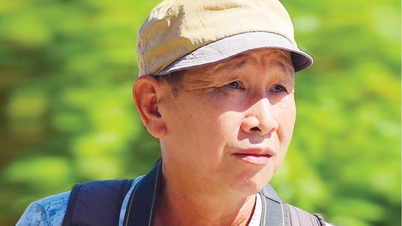
Xu Man was originally from De Kron village, Yang Bac commune, An Khe district (now Dak Po commune, Gia Lai province). Because of poverty and lack of money to pay head tax, his father was sold by the village chief to the district chief, Mo, as a slave for the price of seven buffaloes. At that time, the boy, Sieu Duong – Xu Man's childhood name – was only about 10 years old. After some time, missing his father, Duong asked his mother to take him to visit him in Plei Bong, only to find that he too was captured and enslaved. Duong's mother didn't know that the village chief had already agreed to sell both of them to the district chief, Mo, for the price of three buffaloes, just waiting for the boy to be old enough to work before taking him away…
Like the Kinh people, ethnic minorities at that time also had to endure an inhumane tax called the poll tax, or head tax. This tax was levied on men aged 18 and older. Initially, each male had to pay 1 hào (Vietnamese currency), but it gradually increased over time. When Father Xu Man was arrested, the head tax had increased to 3.2 đồng, equivalent to the price of 1 quintal of rice. At first, the French colonialists allowed tax payment in kind, but later they forced payment in cash. This was a devious tactic because for ethnic minorities, their agricultural products were of low value and difficult to sell, and since they were not yet accustomed to trade, cash was very scarce.
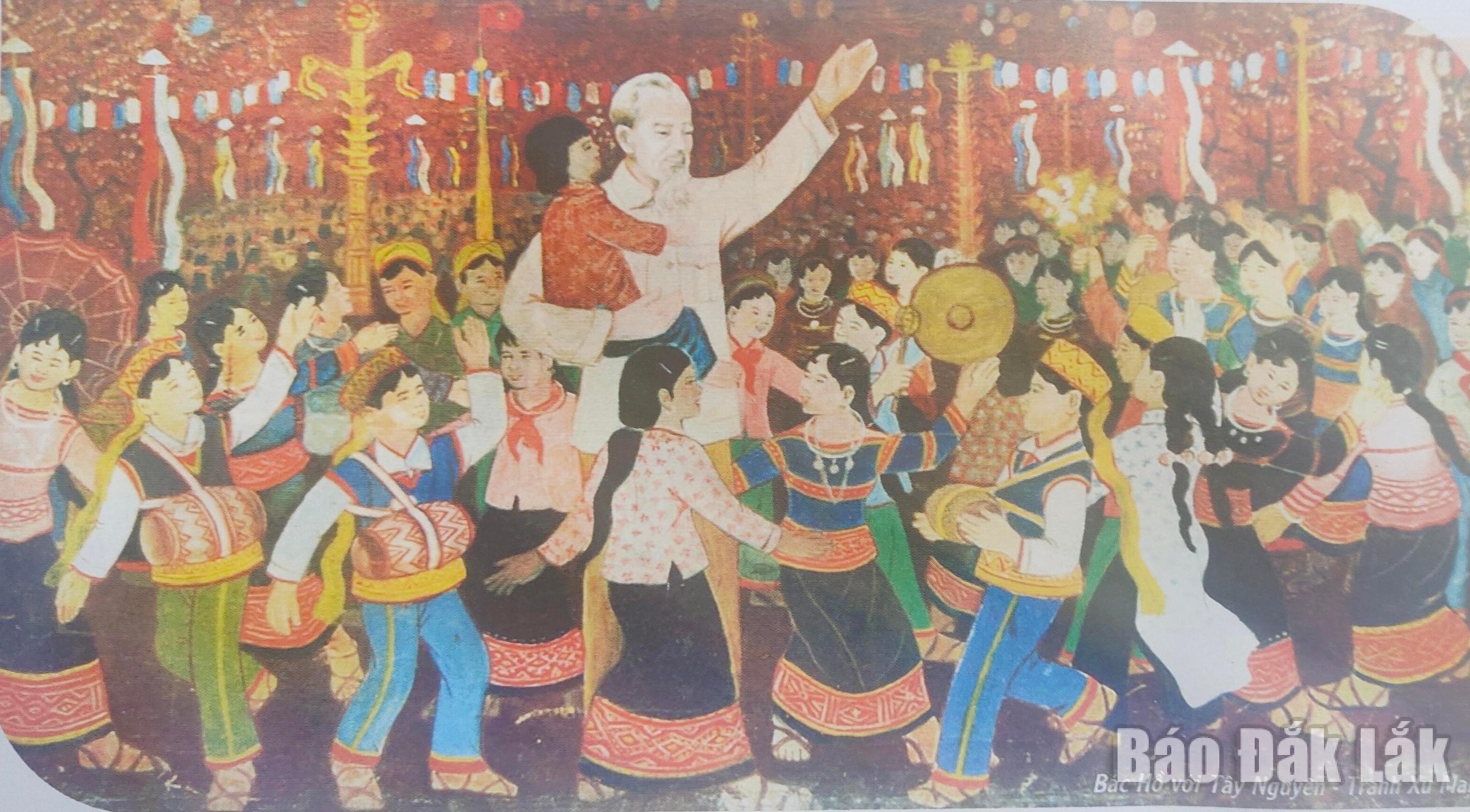 |
| The painting "Uncle Ho with the ethnic groups of the Central Highlands" by artist Xu Man. |
Lacking the money to pay taxes, they could also pay with their labor by performing forced labor for the "State." However, this method only led to more severe exploitation. Because there were many taxpayers but little work for the "State," the French colonialists devised a way to sell these forced labor contracts to plantation owners. Seizing the opportunity, the plantation owners set extremely low daily wages to prolong the forced labor period. Therefore, instead of paying taxes equivalent to about 30 days of forced labor, the plantation owners extended it to 50 days – sometimes even 70-80 days. Not only were they exploited, but they were also beaten, fined, and subjected to further delays in working days by the plantation owners.
Not only did people have to pay a head tax, but they also had to pay taxes on whatever they did. Farming paid a rice tax, raising cattle paid a cattle tax... But the most absurd thing, according to the artist Xu Man, was that even elephants had to pay a tax equivalent to 20 days of forced labor, just like humans. If they didn't finish their work, the "State" would sell them back to plantation owners. So every year, both the owners and the elephants had to go through forced labor together…
Living under such an oppressive and exploitative regime with no way out, the poor, like Xu Man's parents, had no choice but to sell themselves to the village chiefs, becoming commodities in the hands of the rich or powerful rulers. And like the landlords and officials in the plains, there were no shortage of cruel individuals among them. District Chief Mo was one of them… Becoming a slave, the boy Duong was assigned the task of tending cattle. Early in the morning, Duong blended into the herd of hundreds of cattle like a clay figure, only to be driven back home late at night. Yet, on many days, Duong was punished by his master, who used the excuse that he hadn't had enough to eat. Huddled in a thin blanket for warmth under the master's house, with the wind howling from all sides and his stomach rumbling with hunger, Duong often couldn't hold back his sobs. He remembered one time, so hungry that he had to fight with the master's dogs for bones… In the same plight as his son, Duong's father was also frequently beaten and punished by his master. Overworked, he became exhausted and fell ill. Seeing him useless, Mo drove him out of the house. After a short time struggling with illness, he died. Like his father, Duong's mother gradually lost her strength, and three years after her husband's death, she also passed away, leaving Duong alone in the world. Master Mo declared: "Your parents died before paying off their debts, so you must compensate them. At the price of 10 buffaloes, you must remain a slave for another 25 years!"
It's uncertain whether Dơng would have survived all those years if the army hadn't attacked the outpost, captured District Chief Mô, and liberated him. When the revolution arrived, like many oppressed people in the Central Highlands, Xu Man eagerly joined the liberation army. In 1954, he relocated to the North. From a slave status, he was rescued by the revolution and trained to become an artist. Xu Man often says: If the revolution hadn't come, he would have remained just a slave, Dơng. It's easy to understand why many of Xu Man's works feature images of President Ho Chi Minh. He confessed: President Ho Chi Minh is the greatest source of creative inspiration in his life!
Ngoc Tan
Source: https://baodaklak.vn/van-hoa-xa-hoi/202604/hoa-si-xu-man-va-quang-doi-no-le-e092583/























































Comment (0)