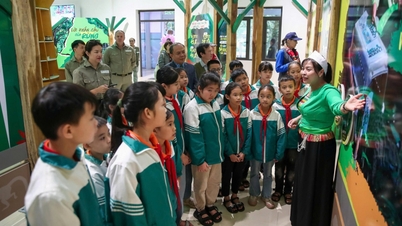
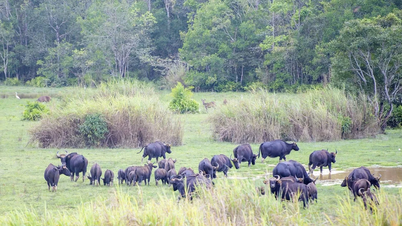
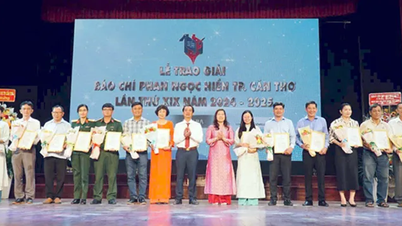
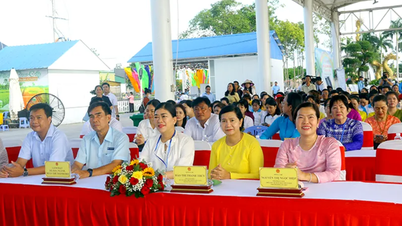
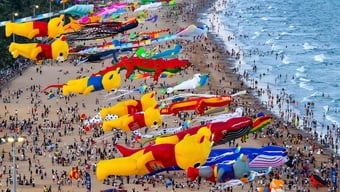
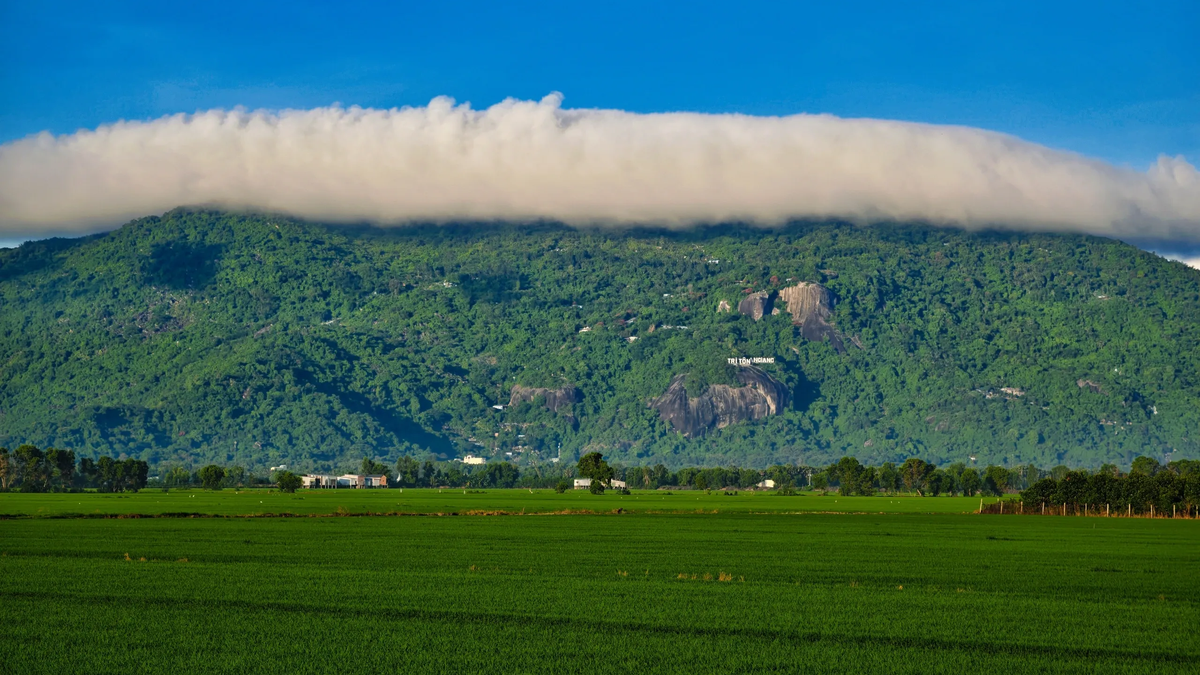
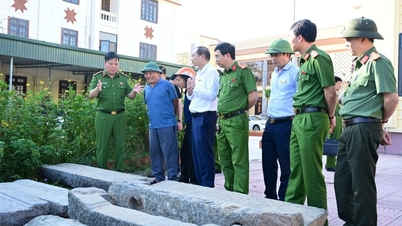
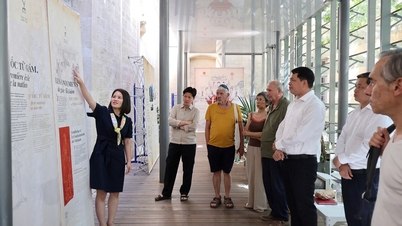
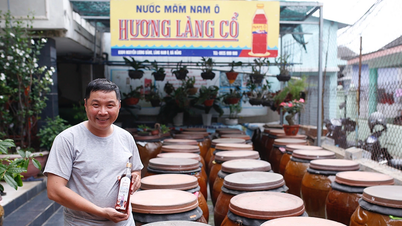
The Khmer people's Moon Worship Ceremony at Kh'leang Pagoda (Soc Trang ward) attracts a large number of locals and tourists.
Historical sites - tourism resources
The classified historical sites are now managed quite systematically and scientifically by Can Tho City. The Can Tho City Museum is directly responsible for managing the following national historical sites: the Chuong Thien Victory Special Monument, the Can Tho Prison National Monument, the Can Tho Provincial Party Committee Base National Monument, the Tam Vu Victory National Monument, the site where the US-Diem regime massacred civilians during the establishment of the Vi Thanh - Hoa Luu strategic zone, the Ho Chi Minh Memorial Temple in Luong Tam commune, and the Soc Trang Provincial Party Committee Base National Monument... Most of the remaining historical sites are managed at the commune and ward levels.
One of the localities with many national-level historical sites is Binh Thuy ward, with 6 sites including: the tomb of scholar Bui Huu Nghia, Binh Thuy ancient house, the Hau Giang branch of the An Nam Communist Party, Hoi Linh Pagoda, Binh Thuy communal house, and Nam Nha Buddhist temple. Mr. Nguyen Viet Quan, Standing Vice Chairman of the People's Committee of Binh Thuy ward, affirmed: "This is a particularly valuable cultural resource, serving many goals simultaneously such as traditional education , preservation of identity, cultural and religious activities, and tourism development." These sites can be connected with the Hung King Temple in Can Tho City, the annual Southern Traditional Cake Festival, and other tourist attractions and experiences.
Prominent in Phu Loi and Soc Trang wards are the Khmer temples, rich in cultural identity and beautiful architecture, closely associated with the Khmer people's culture. Many temples have been classified as historical relics and are famous tourist destinations. According to the leaders of Soc Trang ward, the ward has gradually connected historical sites and religious establishments in the area with typical tourist destinations, forming routes and points of interest to serve tourists. In particular, the focus is on exploiting structures with distinctive value such as Kh'Leang Pagoda and Clay Pagoda...

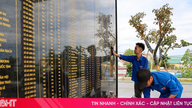

The architectural, cultural, and religious values of the relics are being exploited to serve tourism and experiential activities; initially forming activities to introduce, guide, and promote the image of the locality. According to statistics, the number of visitors to relics and religious sites in Soc Trang ward has increased steadily over the years. In 2025 alone, historical and cultural relics in the area welcomed 25,624 visitors.
In Cai Rang ward, tourism is identified as a potential sector in its development plan, linked to the unique riverine culture and historical sites. On average, Cai Rang attracts over 1 million tourists annually. A noteworthy achievement of the ward is its successful integration of the Cai Rang Floating Market Culture, a national intangible cultural heritage, with other local historical sites such as Hiep Thien Cung, the Le Binh Battle, and the Ong Cuu Victory.
To turn resources into products.
The potential and advantages of combining heritage preservation with tourism development are clear. The leaders of Can Tho City are very interested in this work, considering it one of the key tasks in the development of culture, tourism, and the cultural industry. Communes and wards are also very proactive and decisive in leveraging this strength, starting with compiling statistics, managing, and identifying strengths and weaknesses in the exploitation of heritage sites for tourism in order to find solutions. For example, Phu Huu commune has identified three main tourism product lines: Red, Green, and Experiential. The Red Tourism line focuses on building a "Inter-Provincial Party Committee Journey" tour connecting with the Southern Uprising historical site in Chau Thanh commune. The Green Tourism line aims to exploit the strengths of ecological agriculture and the canal system. The Experiential Tourism line involves reviving traditional craft villages such as water hyacinth weaving, mat weaving, and charcoal burning, allowing visitors to participate directly and create unique souvenirs.
In Truong Long commune, home to the Ong Hao Victory Monument, the local authorities are focusing on improving the "Colorful Truong Long" tour route, directly connecting the Ong Hao Victory Monument with ecological spaces (fruit orchards), production spaces (Truong Khuong Cooperative), and cultural spaces (Truong Long communal house). Thuan Hung ward is developing a model connecting tourism tours between the Thuan Hung communal house, a national architectural and artistic monument, with ancient houses and the Thuan Hung rice paper making village, Bang Lang stork garden, Tan Loc ecological garden, etc. My Xuyen ward is developing a "Journey to rediscover the ancient Bai Xau trading port associated with the Old Market area," connecting visits to religious sites and the Chen Kieu Pagoda monument with experiences in production and characteristic culinary services such as noodle soup and banh cong (rice cakes).
One key solution that localities are pursuing is the application of digital platforms, virtual reality technology, and artificial intelligence in the digitization, management, display, and promotion of heritage. Models such as QR code embedding, 3D, VR, etc., need to be improved and implemented more widely.



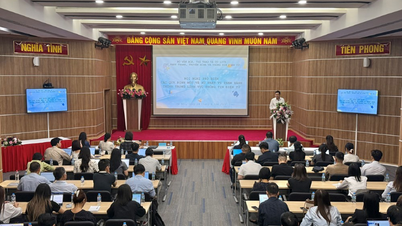
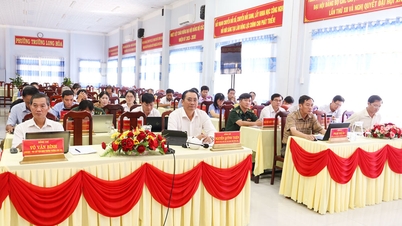
At a recent scientific seminar on the theme "Preserving and promoting historical and cultural relics associated with tourism development in Can Tho City," Mr. Tran Van Huyen, Deputy Secretary of the Can Tho City Party Committee, affirmed that the relics in the city are an important resource, contributing to nurturing the identity and shaping the soul and character of the people of Can Tho. The Can Tho City Party Committee has issued Project No. 03-DA/TU dated April 29, 2026, on the development of the cultural industry and building the Can Tho cultural brand within the Mekong Delta region; and is focusing on leading the development of a specialized resolution on the city's cultural development in the new era. "The city aims for the comprehensive development of its strengths; gradually building Can Tho into a cultural industry center of the region, contributing to promoting economic growth, showcasing the image of the people of Can Tho, and enhancing the city's position in the integration process," Mr. Tran Van Huyen emphasized.
Text and photos: DANG HUYNH
Source: https://baocantho.com.vn/hoi-nhap-tu-di-san-van-hoa-a206865.html

![[Photo] General Secretary and President To Lam attends the 13th National Congress of the Ho Chi Minh Communist Youth Union](https://vphoto.vietnam.vn/thumb/1200x675/vietnam/resource/IMAGE/2026/06/25/1782356968989_ndo_br_1-jpg.webp)
![[Photo] General Secretary and President To Lam receives Palestinian Ambassador Saadi Salama](https://vphoto.vietnam.vn/thumb/1200x675/vietnam/resource/IMAGE/2026/06/25/1782365384740_a1-bnd-9423-8322-jpg.webp)
![[Image] Schools organize meetings and introduce teaching models to students admitted to grade 10.](https://vphoto.vietnam.vn/thumb/1200x675/vietnam/resource/IMAGE/2026/06/25/1782368077271_ndo_br_z7970052192242-1ec8daeb77a6eed1a4e9f58c564ddd3e-jpg.webp)