

It will be completed in 3 years.
After the Ho Chi Minh City People's Council approves the plan, the project will prepare, appraise, and approve the feasibility study report, and prepare for compensation (expected to relocate 1,017 houses) in 2024. In 2025, the authorities will proceed with compensation, support, and resettlement, while simultaneously commencing construction and completing the project within three years. In addition to the northern bank, Ho Chi Minh City is also studying a project to renovate, relocate, and resettle residents living on and along the southern bank of the Doi Canal, improving living conditions for households. Accordingly, a 13-meter wide, 9.7-kilometer long protective corridor along the southern bank of the Doi Canal will be reinforced with embankments and expanded throughout the entire 39-hectare area, with a total investment of over 9,000 billion VND. This project requires the acquisition of over 35 hectares of land affecting 5,055 households.
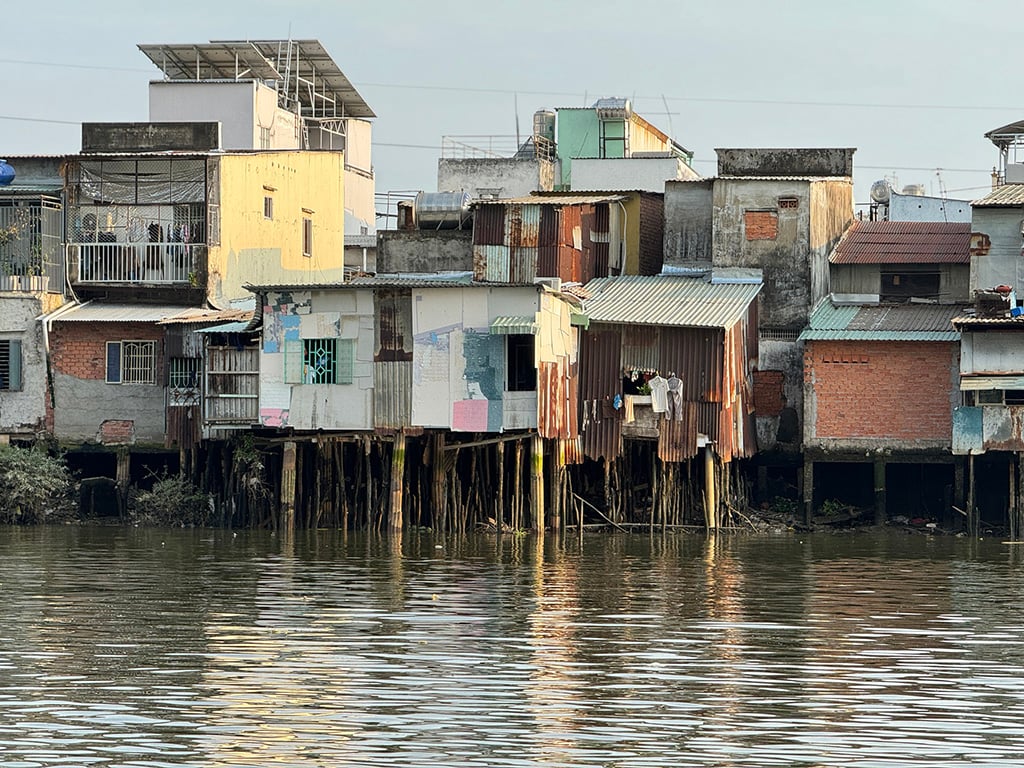
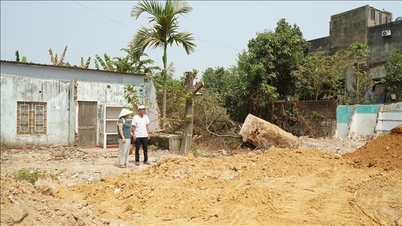
Many houses are built right on top of the canal.
This is not the first time Ho Chi Minh City has submitted a plan to relocate and renovate the Doi Canal. In previous years, the city also included in the resolutions of the Ho Chi Minh City Party Committee a plan to relocate and renovate this canal, along with many other rivers, canals, and streams in the area. At times, the authorities conducted surveys and prepared for compensation, but then halted the process until now.
Ho Chi Minh City adjusts planning, removes obstacles for 88 social housing projects.
Most recently, in 2021, the Department of Construction submitted to the Ho Chi Minh City People's Committee a plan for urban renovation and development for the period 2021-2025. Due to the large scale of the project and the number of houses needing relocation, the Department of Construction proposed dividing it into two phases. Phase 1 involves relocating 2,670 houses, with a total budget of 9,073 billion VND. Of this, 6,300 billion VND is allocated for compensation and land clearance.
This phase of the project involves clearing encroachments on canals and waterways, reinforcing embankments, dredging canals, and building infrastructure such as widening alleys, connecting waterways, and organizing business and trading activities in a "riverside" style to enhance the area's riverside landscape. Phase 2 will relocate 2,385 households, and the winning bidder will reimburse the budget for the work completed in Phase 1. This phase of the project extends to Pham The Hien Street after the bidding process and selection of the investor.
While present at the Doi Canal area, a Thanh Nien reporter witnessed people living crammed together in makeshift houses built on the canal.
Mr. Thanh, the head of a household here, said his family has lived on the Doi Canal since 1999. Twelve people, including adults and children, live in a makeshift house of about 40 square meters, resulting in cramped and stuffy living conditions. Besides Mr. Thanh's house, most of the houses in this "riverside neighborhood" are temporary structures made of wooden walls and corrugated iron roofs. All of the residents' daily activities take place on the river. When we asked about plans to relocate the residents to renovate the Doi Canal, Mr. Thanh said he had heard about it many times but nothing has happened yet.
"I first heard about the relocation and clearance project 20 years ago. Now I'm married, have children almost 20 years old, and I haven't seen anything yet, only hearsay. If they do, I hope the city will do it soon and provide support policies to help people settle down. Because with my house, I probably don't qualify for resettlement. The compensation wouldn't be enough to buy a new house, while my family has 12 members," said Mr. Thanh.
Mr. Nhon, a local resident, shared that the city had repeatedly planned to renovate the Doi Canal but failed due to the use of a socialized approach. However, this time he believes the city will succeed because it will use budget funds, similar to the approach used for the Nhieu Loc - Thi Nghe Canal or the Tan Hoa - Lo Gom project. "The Nhieu Loc - Thi Nghe Canal project was completed quickly using budget funds. Projects like this are very difficult to compensate for, and even hard to make a profit, so private companies aren't interested because they only focus on profit. The government isn't pursuing profit but rather the common goal of helping the city develop and serving the majority, not just the interests of a select few. Therefore, I believe the people will support and agree for the common good," Mr. Nhon said.
Ho Chi Minh City adjusts 4 transportation projects with a capital of over 11,400 billion VND.
Choose the option of "living with the floods".
According to Mr. Pham Binh An, Deputy Director of the Ho Chi Minh City Development Research Institute, the city had a plan to relocate 6,500 households between 2021 and 2025, in conjunction with pollution control programs, housing programs, river embankment development projects, and riverside economic development . However, this plan has progressed very slowly because the city initially used a public-private partnership (PPP) model, but the law subsequently prohibited its use, while limited budget resources have stalled the program.
Mr. Vuong Quoc Trung, from the Center for Urban and Development Research, also expressed concern about the difficulties in utilizing state budget funds. Furthermore, finding suitable locations for relocating and resettling households is a major challenge. The city no longer has much vacant space for building new residential areas, especially near the city center. To address this issue, Mr. Trung suggested that Ho Chi Minh City could utilize the mechanism outlined in Resolution 98, allowing the City People's Council to use local budget funds for compensation, support, and resettlement. The land, after compensation and site clearance, would then be auctioned off to reimburse the city's budget.
Given the limited budget, Dr. Nguyen Thiem, an architect and Vice President of the Ho Chi Minh City Urban Planning and Development Association, proposed that socializing resources from businesses is the optimal solution. "We must think in terms of mutual benefit and shared responsibility to solve the problem. If we only see the benefits for the state without considering the benefits for investors and the people, no investor will participate, especially in the context of legal obstacles and an extremely difficult economic situation," he said.
Not supporting relocation or demolition, Ms. Chau My Anh (Ho Chi Minh City Institute for Development Research) proposed a bold solution: "living with the floods." Because Ho Chi Minh City has over 300 years of history and development, the image of houses along and on the banks of rivers and canals has become a familiar memory for the city's residents in particular and for everyone when mentioning Saigon - Gia Dinh in general. According to her, while renovating the canal banks might make the city look cleaner and more orderly, wouldn't this cause the city to lose its vitality, its historical memories of people's lives, and the sounds of boats carrying goods from all over, the shouts, the aromas, and the smell of spoiled agricultural products mingling in this urban landscape?
Therefore, Ms. Chau My Anh's proposed solution is: Instead of resorting to forced eviction and land clearance, the lesson from Thailand shows that they have planned floating markets to attract tourists. Local people there are not deprived of their homes and jobs by urbanization, and they benefit even more from the state's policies on conservation, management, and tourism promotion. Initially, due to limited resources, it is necessary to focus on key projects and areas, avoiding scattered investments. Simultaneously, appropriate assessments of financial and human resources should be conducted. Policies and specific mechanisms should be refined to encourage the socialization of capital. Access to loans from credit institutions and international financial institutions such as ODA, the Asian Development Bank (ADB), and the International Development Association (IDA) should be strengthened.
The more you do it, the slower you get.
Statistics from 1993 to the present show that the canal's width has narrowed due to encroachment by households, with the total number of houses located on and along the canals reaching over 65,000. To date, after numerous resolutions, Ho Chi Minh City has only relocated over 38,000 houses. The relocation of houses on and along the canals has slowed down over time. Specifically, 9,266 houses were relocated during the period 1993-2000, 15,548 during 2001-2005, 7,542 during 2006-2010, 3,350 during 2011-2015, and 2,479 during 2016-2020.
Source link

![[Photo] General Secretary and President To Lam meets with National Assembly delegates from ethnic minorities.](https://vphoto.vietnam.vn/thumb/1200x675/vietnam/resource/IMAGE/2026/04/20/1776696701056_a1-bnd-8331-3342-jpg.webp)
![[Image] National Assembly discusses the implementation of the socio-economic development plan.](https://vphoto.vietnam.vn/thumb/1200x675/vietnam/resource/IMAGE/2026/04/20/1776696707422_ndo_br_img-20260420-185419-jpg.webp)















































































Comment (0)