Looking back at the enlightening spirit of Phan Châu Trinh and the Duy Tan (Modernization) Movement of the early 20th century is not only about reviewing the past but also a way to embrace the new, finding the essential "philosophy of learning" for a Vietnam striving in the digital age.
Scholars "change lanes"
Confucian thought still emphasized the philosophy of "learning for practical use," and "only when books are put to use do one regret not having enough." However, in the context of the world in the latter half of the 19th century, the core content of the traditional examination system in Confucian-influenced countries in general, and Vietnam in particular, was no longer relevant.
In the latter half of the 19th century, facing the threat of invasion, pioneering Confucian intellectuals such as Nguyen Truong To, Nguyen Lo Trach, Pham Phu Thu, and Nguyen Thanh Y quickly realized that "steam-powered vehicles, screw-driven ships, gas-powered lamps—all of these were unprecedented" (Nguyen Truong To). They submitted heartfelt petitions to the court, proposing reforms in education, economics, and national defense. These calls for reform went unanswered at the imperial court.
At the beginning of the 20th century, a new generation of Confucian scholars emerged, with the "trio" from Quang Nam: Phan Chau Trinh, Huynh Thuc Khang, and Tran Quy Cap. Not only did they recognize the backwardness of the contemporary examination system, but they also acted decisively to bring about reform. The provincial examinations became a political forum, where they used the examination hall to denounce the rote learning and outdated examination system.
Shifting from traditional education to modern education, from studying to become an official to studying to "get rich," from the beaten path of loyalty to the monarch to a new path of prioritizing the people, they laid the first brick for the path of enlightening the people's minds. The ideology of "Enlightening the people's minds, uplifting the people's spirit, and improving the people's lives" gradually took shape, becoming not just a call to action but a roadmap and a "steering wheel" for action, leading to the ultimate goal of "standing at the best possible point."


Opening the way to new learning
With a tradition of scholarly achievement, access to Western civilization, and the ability to propose progressive and innovative ideas, the Confucian class in Quang Nam province had even more experience and a solid foundation to advocate for a spirit of practical learning and work, and moreover, to implement the enlightenment of the people.
Quang Nam province was the "cradle" of the Modernization Movement, where the idea of enlightening the people was most vividly implemented. As early as 1906, new schools sprang up, such as the Dien Phong School (Dien Ban) – where teacher Phan Thanh Tai taught both Vietnamese and French while spreading patriotic ideas. The spirit of practical learning and vocational skills was emphasized through memorable verses: "Hurry and go learn a trade / After learning, we will bring it back to teach each other," and "Learning is about having a trade and a profession / First, protect yourself, then help others."
In his petition to the French government, Phan Châu Trinh proposed very practical measures: establishing primary schools in rural areas, creating New Learning societies, public speaking societies, even societies for short haircuts, wearing Western clothing, and societies for reforming traditional fabrics. Notably, the issue of women's rights was also emphasized, with the viewpoint of "equality between men and women," and "women and girls should receive education like boys."
From education, the changes spread to commerce with trade unions and farmers' associations; they spread to culture and ideology with the birth of the Vietnamese Quốc ngữ script, newspapers, and public speaking. Modern education opened a new path, changing the perceptions of an entire generation, transforming Quảng Nam into a base for the movement before it spread to Central and Northern Vietnam.
"Highway" of education
Enlightening the people means not only expanding and raising their intellectual level, but also changing their mindset, shifting from the old way of learning to the new way. When the people's intellectual level changes, their understanding of democratic rights will also change and improve. This is the inevitable path – the moral and ethical direction – for Vietnam in the early 20th century.
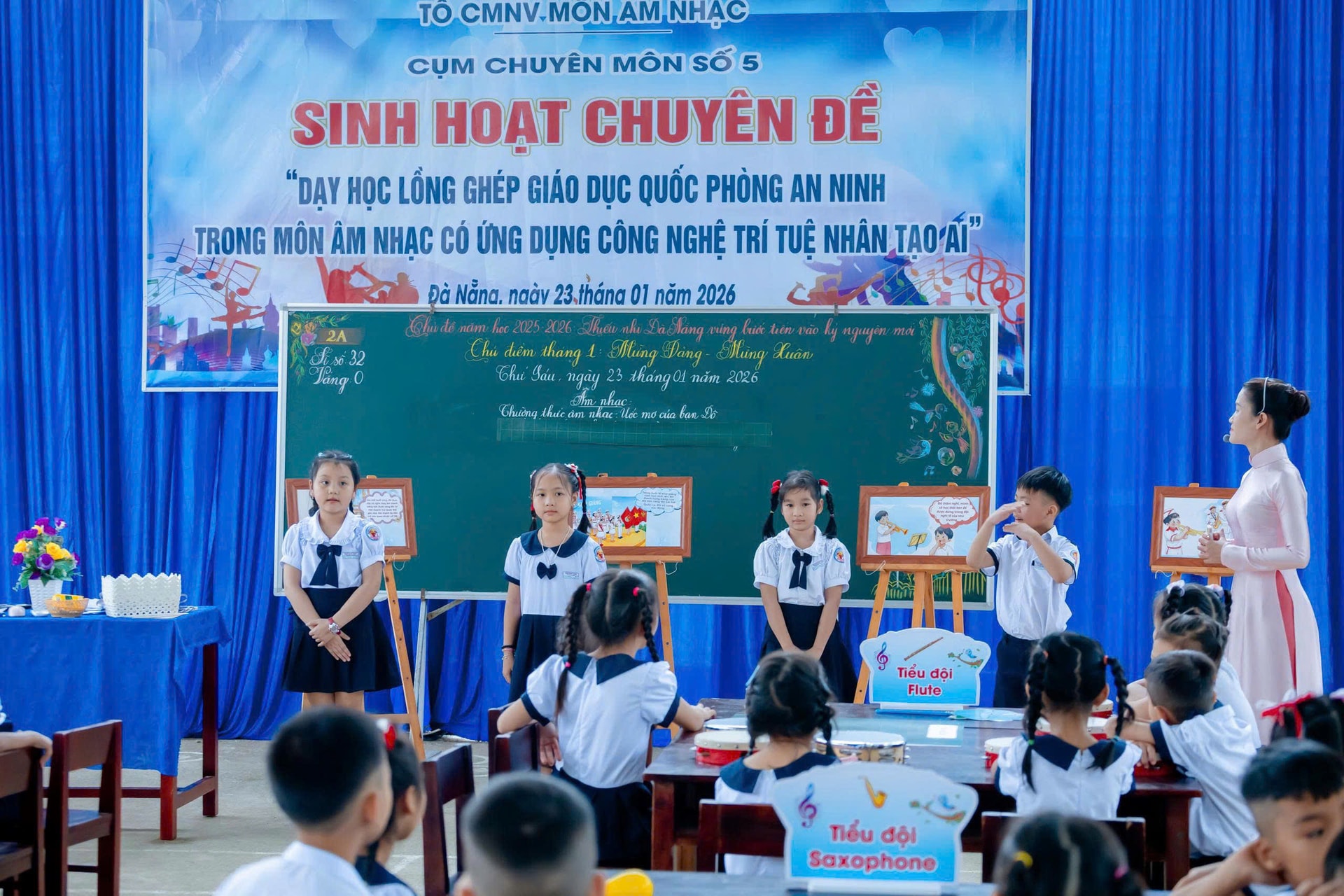
If, at the beginning of the 20th century, traditional Confucian education lagged behind Western scientific achievements, today, traditional education is also facing unprecedented challenges from artificial intelligence (AI) and digital transformation. It's impossible to teach outdated concepts to a completely new world. Phan Châu Trinh's spirit of "enlightening the people" remains relevant, but it requires a different understanding: enlightening the people in the digital age is not just about disseminating knowledge, but about teaching how to think, how to adapt, and how to master technology.

The lesson from Phan Châu Trinh's philosophy of "enlightening the people" and revealing the path of learning is a lesson in methodology. In the context of the explosion of digital education and digital human rights, Vietnam needs a new "philosophy of learning" that is learner-centered, rooted in practical learning, and driven by creativity.
One hundred and twenty years ago, the spirit of reform, the ideology of "enlightening the people," and the achievements of "opening the path to learning" illuminated the way for a generation to rise up and become self-reliant. Today, that spirit must continue to guide a "great acceleration" in the path of education, to enable the country to catch up, progress alongside, and surpass in the era of globalization, in accordance with the spirit of Resolution No. 71-NQ/TW dated August 22, 2025, of the Politburo on breakthroughs in education and training development.
Source: https://baodanang.vn/khai-lo-dao-hoc-3328862.html