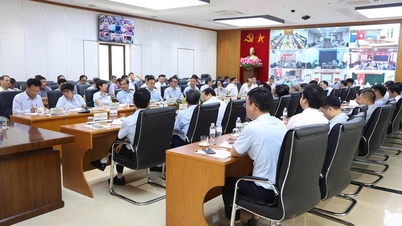
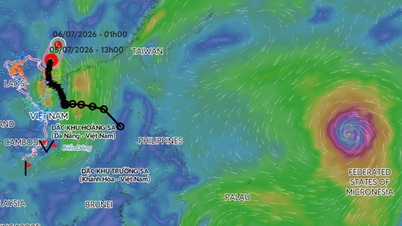
At 7:00 AM on the same day, the storm's center was located at approximately 20 degrees North latitude and 108.3 degrees East longitude, about 70km east of the Bach Long Vi Special Economic Zone. The strongest winds near the storm's center were at level 8-9, with gusts up to level 11; the storm was moving northwest at a speed of 15-20km/hour.

Map showing the predicted trajectory and path of the storm at 7:00 AM on July 4, 2026. Source: Vietnam Disaster Monitoring System.



According to forecasts, by the evening of July 4th, the storm will move towards the Vietnam- China border area, continuing to maintain its intensity at level 8-9, with gusts up to level 11. By the morning of July 5th, the storm will gradually weaken into a tropical depression and by the evening of the same day will further weaken into a low-pressure area over Guangxi province (China).
Due to the influence of the post-storm circulation, from the night of July 4th to July 6th, Lai Chau province experienced scattered showers and thunderstorms, with some areas experiencing heavy rain. Rainfall amounts generally ranged from 30 to 70mm, with some areas receiving more.
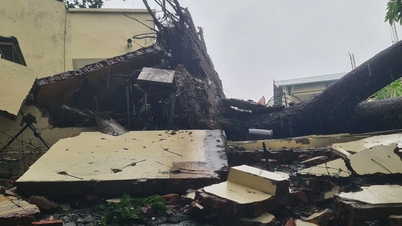
Localized thunderstorms and heavy rainfall may be accompanied by phenomena such as tornadoes, lightning, and strong gusts of wind, causing trees to fall, damaging houses, transportation infrastructure, and other facilities; overloading urban drainage systems, causing flooding in residential areas, traffic congestion, reduced visibility while driving, slippery surfaces, and traffic accidents. Localized heavy rainfall can also cause landslides in mountainous areas, and flooding in urban areas and low-lying regions.
People need to proactively monitor weather forecasts and warnings closely; limit travel through flooded areas and streams during heavy rain, and implement disaster prevention and control measures to ensure the safety of people and property.


Source: https://baolaichau.vn/thoi-tiet-lai-chau/khan-cap-ve-con-bao-so-1-720400