

"Elevating" folk paintings
Following the success of the "Spreading the Cultural Identity of Traditional Tet" program during the Year of the Dragon Tet holiday, in April and May 2024, Latoa Indochine continuously launched a series of "Painting - Folk Art" exhibitions at various cultural spaces in Hanoi .
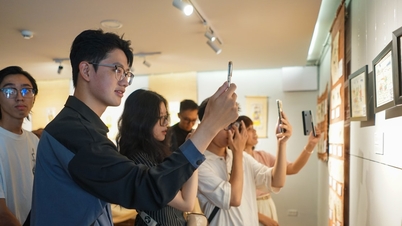
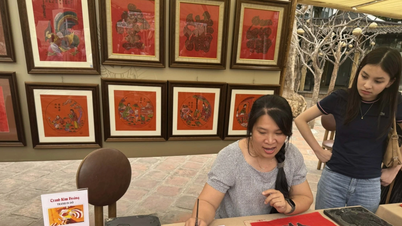
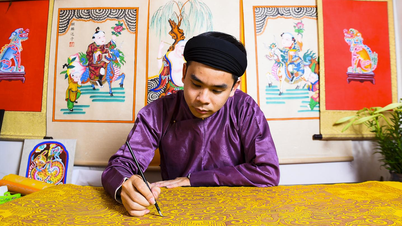
Here, in addition to displaying artworks, Latoa also organizes hands-on activities such as painting folk paintings on environmentally friendly paper. Attendees receive insights from Latoa Indochine artists about the cultural value and meaning of each folk painting, and are directly guided through the painting process on famous folk painting styles such as Hang Trong paintings, Dong Ho paintings, Kim Hoang paintings, and Lang Sinh paintings.
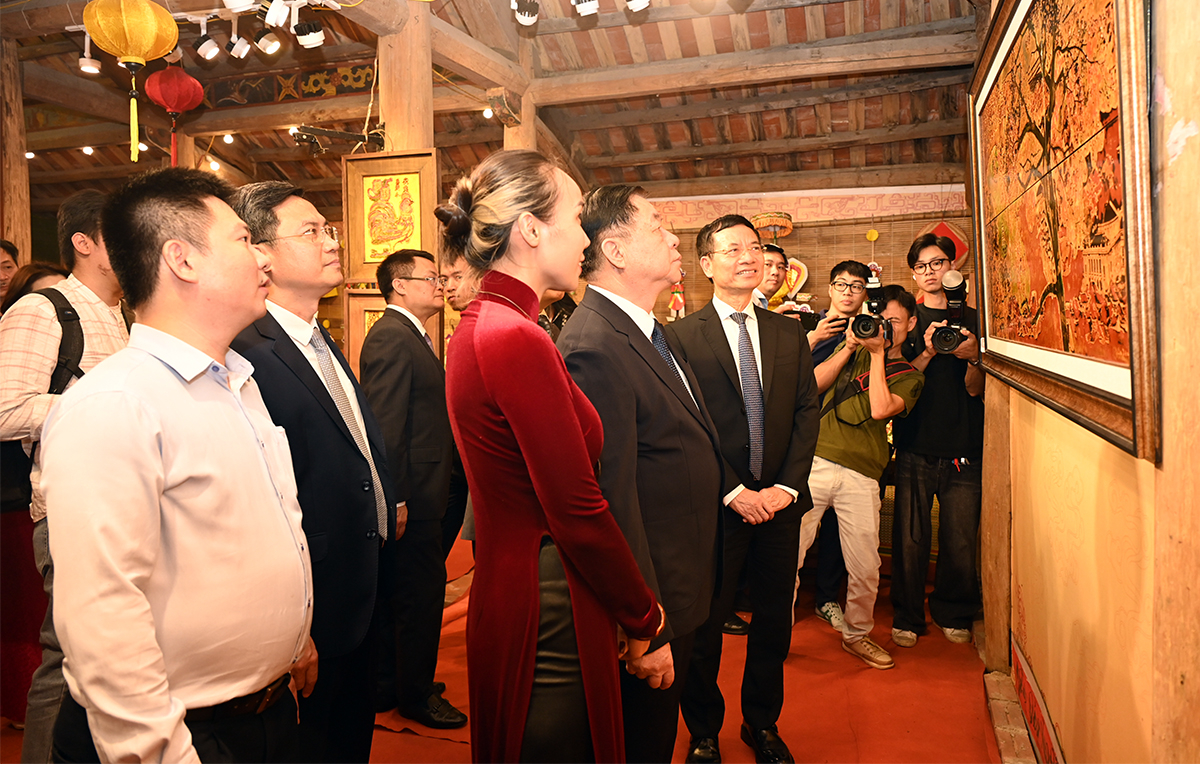
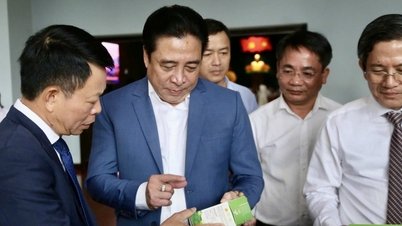
Head of the Central Propaganda Department Nguyen Trong Nghia and Minister of Information and Communications Nguyen Manh Hung visited the "Folk Art - Coloring" exhibition at Van Mieu - Quoc Tu Giám on the evening of April 17, 2024. Photo: Latoa Indochine
“Through this event, we hope that each participant can not only enjoy the creative fun but also gain a better understanding of folk paintings. Artists, collectors, and art lovers will have the opportunity to connect, exchange, and share experiences in preserving and developing folk cultural heritage,” shared Ms. Dieu Linh, a member of Latoa Indochine.
According to Latoa Indochine Chairman Pham Ngoc Long, the "Folk Painting" program is a continuous series of activities of the group, linked to the preservation and promotion of traditional cultural values. The Latoa Indochine group was established in June 2022, bringing together artists who share a passion and dedication to traditional lacquer painting and folk culture. Concerned about preserving folk paintings, they unanimously agreed that, facing the risk of extinction, these art forms need to be more present in life, in every home.
However, Vietnamese folk paintings all share a common limitation: they are printed on cheap, low-quality dó paper, are not durable, and are usually only sold during Tet (Lunar New Year) or used for religious ceremonies, and are discarded after a single use. Furthermore, the demand for decorating living spaces is different now; few people still use paper paintings pasted on walls. For folk paintings to be preserved and thrive in a modern environment, these shortcomings must be overcome; the paintings must be more beautiful, more valuable, and more durable… Based on this analysis, the group members researched and experimented with painting on new materials, and lacquer was the first name that came to mind.
However, lacquer is inherently a "fickle" material, difficult to define precisely, while one of the distinguishing features of folk paintings is the use of lines to define the form. Through their research and experimentation, the group's artists discovered a method of defining the lines in paintings using lacquer carving techniques.
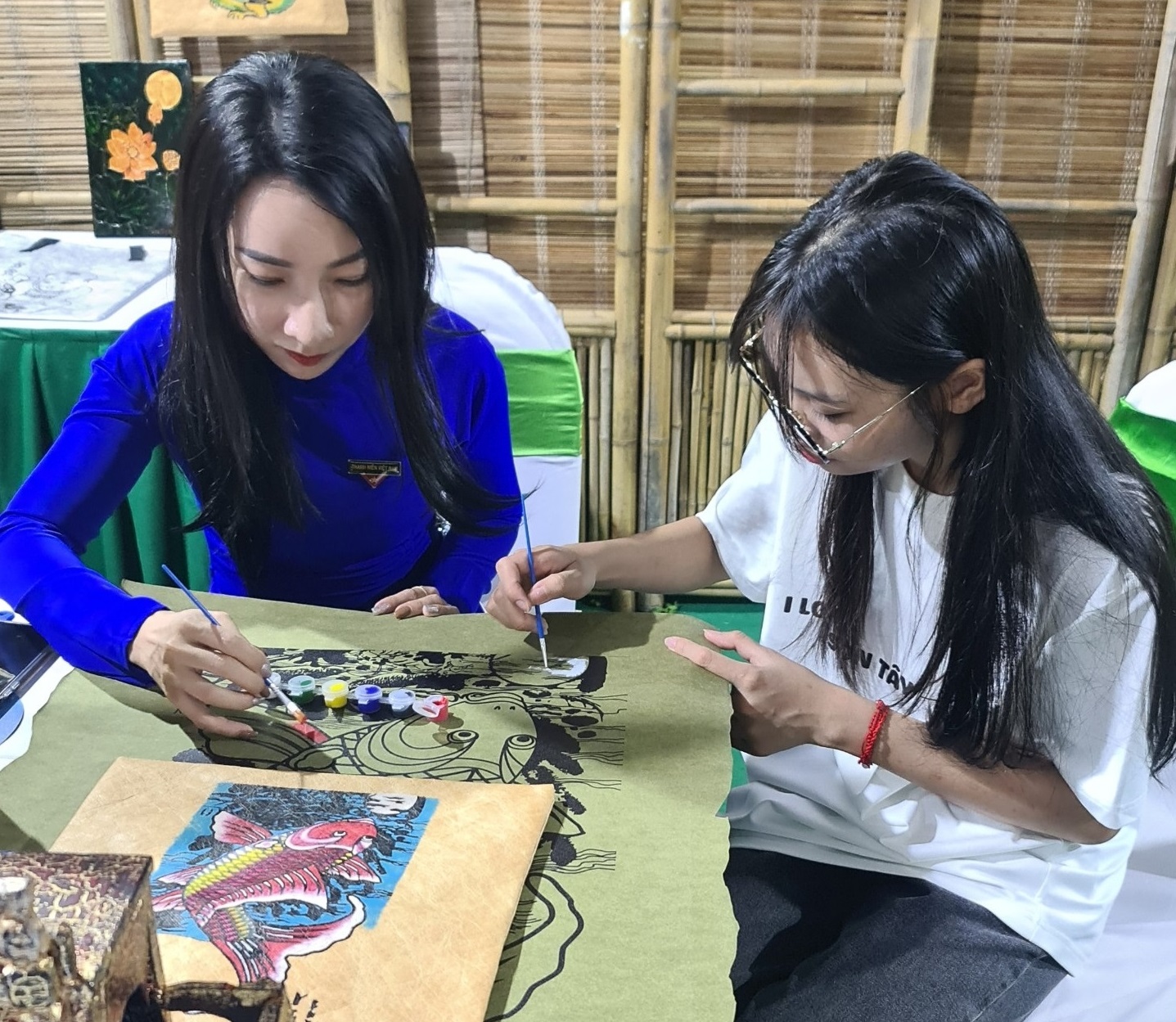
The public experiences painting traditional folk art at an event organized by Latoa Indochine.
“When using lacquer, we have to use lacquer to create the details, but we can never achieve the same level of finesse as our ancestors. Our forefathers created and perfected the art of painting with skill, so why don't we take advantage of it by combining the strengths of those painting styles? We combine these two techniques, creating truly interesting and surprising results. Each painting is unique, each time we paint is an exploration , exploiting the material with different emotions and techniques,” shared artist Luong Minh Hoa.
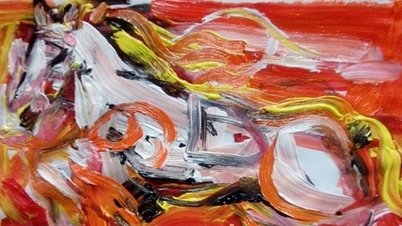
However, according to Mr. Pham Ngoc Long, lacquer painting also has limitations, such as its rather "flat" colors, often in muted, dark tones. To overcome this, the artists in the group often use a lot of gold and silver to make the paintings brighter and the shapes more prominent. In particular, the paintings have depth and create a very different color-shifting effect when light shines on them. And in the final stage, completing the paintings, the artists often apply the paint directly with their bare hands.
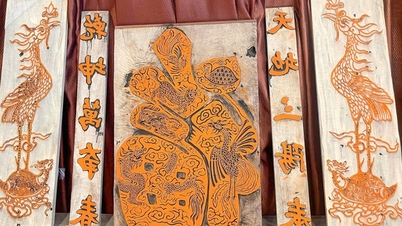
“After many years of research and practice, we have completely mastered the technique of carved lacquer painting. This is a new innovation based on traditional techniques while still preserving the spirit and essence of folk paintings. Carved lacquer painting does not lose the connection between the old and new materials, making folk paintings richer and more magnificent,” Mr. Long said.
Spreading Vietnamese values
According to many experts, the shift from drawing and printing on dó paper to carved lacquer paintings has opened a new direction in preserving and promoting the value of folk paintings. While still featuring familiar themes and subjects, the new techniques have given folk paintings a "new look." Modern carved lacquer paintings are more luxurious, durable, and adaptable to various architectural styles without losing the essence of traditional Vietnamese aesthetics.
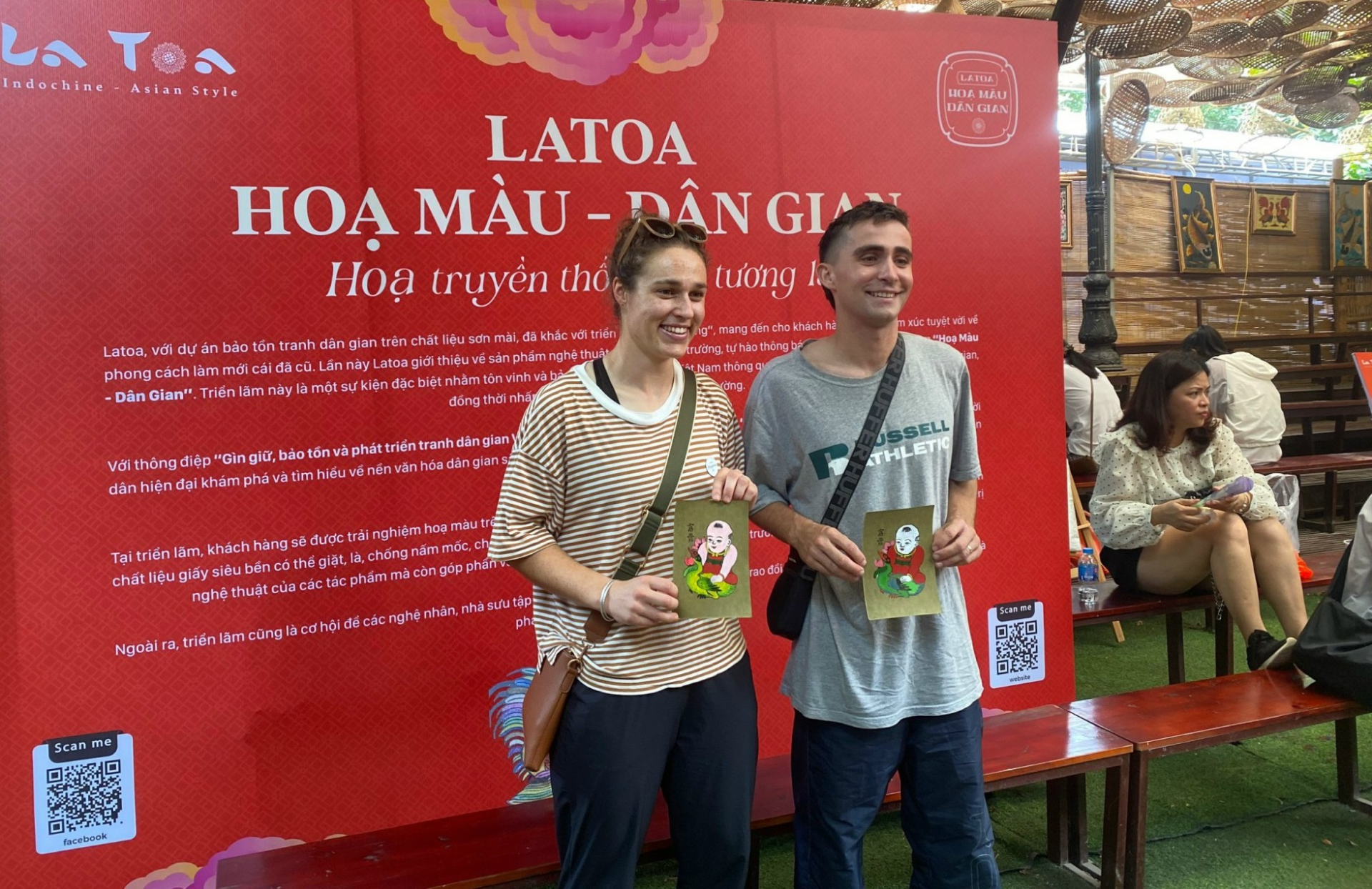
Foreign tourists are excited about the experience of painting traditional folk art.
Using the lacquer painting technique, artists from Latoa Indochine have created dozens of folk paintings that evoke a bygone era. Some are monumental and elaborate works, such as the nearly 5-meter-long reproduction of "Truc Lam Dai Si Xuat Son Do," painted in the long scroll style, featuring 82 characters, each with a distinct demeanor and appearance. There are also colorful folk paintings such as: the Divine Rooster, the Five Tigers, the Prosperity and Wealth paintings, and paintings of famous figures. The artists have taken viewers on a journey from the past to the present, from the old to the new, from tradition to modernity, filled with emotion and surprise.
According to Professor Dr. Truong Quoc Binh - Member of the National Cultural Heritage Council, the lacquer-carved folk paintings of Latoa Indochine are a very valuable innovation, which could not have been achieved without a passion for ancient traditions.
"This is a remarkable cultural transformation, as it both promotes the value of traditional lacquer and wood carving art and showcases the essence of traditional Vietnamese folk painting," commented Professor Dr. Truong Quoc Binh.
Also highly appreciating the innovative approach of the Latoa group, researcher and artist Phan Ngoc Khue believes that this is truly a meaningful project for preserving and promoting folk paintings.
“Uncle Khue dedicated his entire life to preserving folk paintings. When my brothers and I discovered how to make them, he once spent an entire day at the workshop with us. During a meal, he said something that we will always remember: ‘If you can do this, then I can die now.’” Mr. Long recounted enthusiastically.
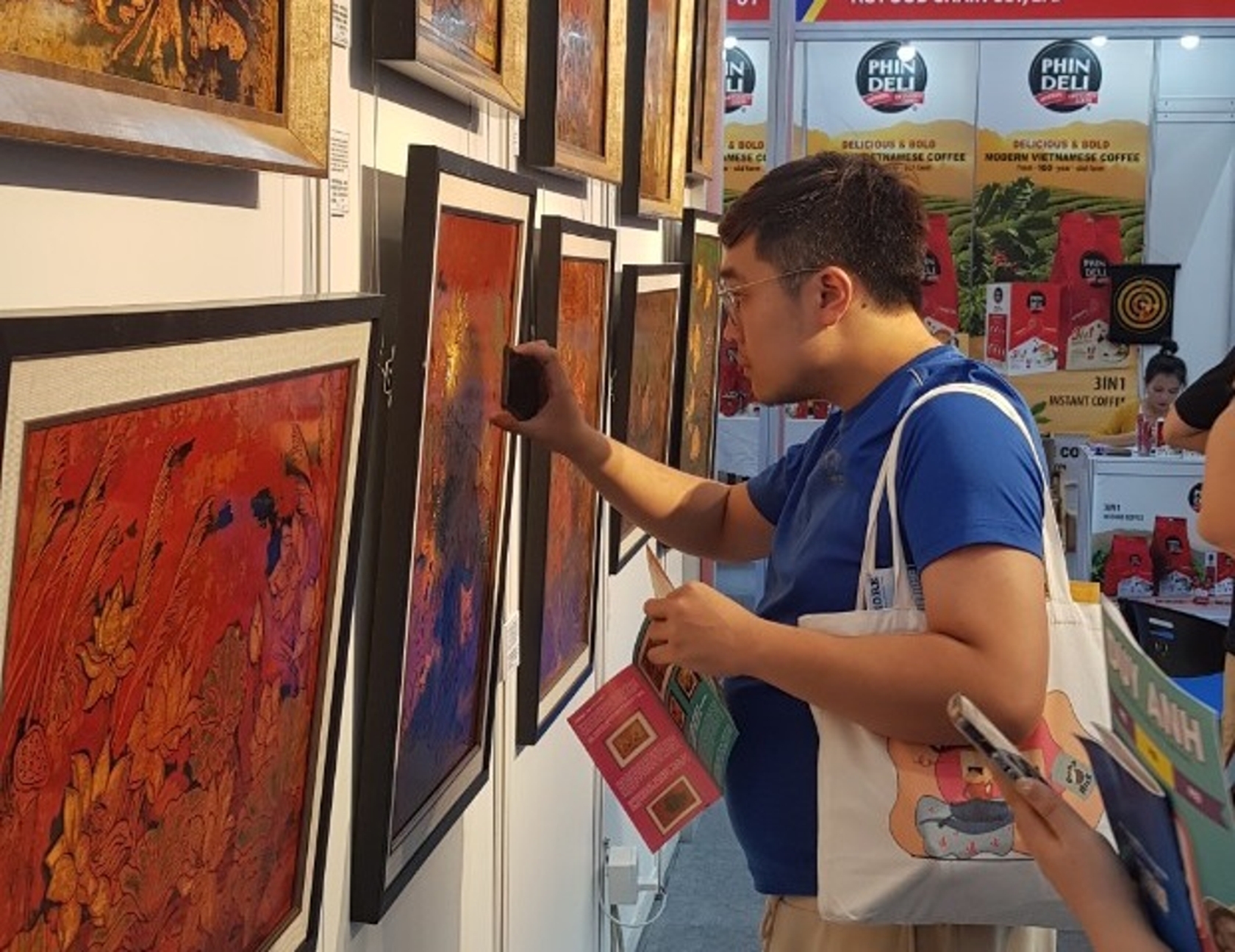
Visitors use light to illuminate the carved lacquer paintings of Latoa Indochine at an exhibition in Guangzhou, China.
Following the event marking a technical breakthrough with the exhibition titled "The Path" at the end of 2022, over the past year, Latoa Indochine has brought Vietnamese folk paintings to dozens of art events both domestically and internationally. These include: the Hanoi Creative Design Festival 2022, the Hue Festival 2023; participation in Vietnam Day in Japan, Vietnam Day in France 2023, and numerous exhibitions in South Korea, China, South Africa, Thailand, and more.
According to Mr. Pham Ngoc Long, it is very encouraging that not only in Vietnam but also in all places where Latoa Indochine brings Vietnamese folk paintings, the crowds are "tremendous". The public enthusiastically embraces these traditional values, especially the youth - which greatly surprised the team members.
“We named the group “Latoa” to mean spreading, to ensure that Vietnamese cultural values reach a wider audience. Latoa’s carved lacquer paintings are not simply works of art, but also bridges between the past and the present, between traditional and modern art. Our wish is that Vietnamese folk paintings will spread widely and inspire all those who love art, who appreciate the unique beauty of Vietnamese traditional culture and art,” Mr. Long affirmed.
Khanh Ngoc
Source: https://www.congluan.vn/khi-tranh-dan-gian-duoc-khoac-ao-moi-post296519.html
![[Image] National Assembly discusses the implementation of the socio-economic development plan.](https://vphoto.vietnam.vn/thumb/1200x675/vietnam/resource/IMAGE/2026/04/20/1776696707422_ndo_br_img-20260420-185419-jpg.webp)


![[Photo] General Secretary and President To Lam meets with National Assembly delegates from ethnic minorities.](https://vphoto.vietnam.vn/thumb/1200x675/vietnam/resource/IMAGE/2026/04/20/1776696701056_a1-bnd-8331-3342-jpg.webp)































































Comment (0)