


Pressure from qualification barriers
Over the past decade or so, the trend of using foreign language certificates to be exempt from high school graduation exams and for university admissions has become widespread. For postgraduate programs, these certificates are even a mandatory requirement for graduation. While aiming to enhance students' international skills and open up better job opportunities in a global environment, this regulation, in practice, has inadvertently created a psychological burden and given rise to superficial learning methods.
For many students who don't diligently practice and improve their skills during their studies, language certificates seem like a significant challenge. Ms. Nguyen Anh Hoa, currently a graduate student at a university in Hanoi , once faced difficulties with her foreign language certificate. To defend her graduation thesis, Ms. Anh Hoa was required to have a foreign language certificate at level B2 or higher. Following the university's requirements and enticing offers from online English centers, Ms. Anh Hoa registered for an online Aptis English certificate exam preparation course called "Aptis Easy - 3 Weeks to Conquer B1, B2, C Aptis ESOL Certificates." The center promised to provide a series of practice questions during the course and guaranteed that the exam would be based on one of the given sets. Furthermore, for some lessons, the practice questions even included keywords for easy memorization. Some questions even clearly state that, with the same content, a male voice reading the text will give a different answer than a female voice reading it.

Ms. Anh Hoa spent many days memorizing the answers, even staying up all night before the exam to memorize them. It wasn't until she was standing outside the exam room, talking to other candidates, that she realized the exam questions had been changed and were no longer the same as what she had memorized. As expected, Ms. Anh Hoa did not achieve the score she hoped for and had to retake the exam. When asked about the validity of the foreign language certificate if everything had gone smoothly, Ms. Anh Hoa sighed and admitted that because she was past the age for studying and had long-standing gaps in her knowledge, achieving the actual passing score was very difficult.
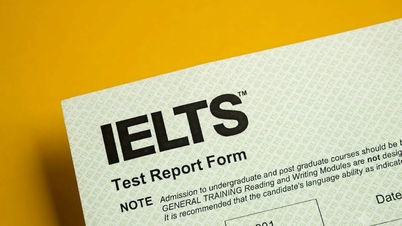
Unlike Anh Hoa, Nguyen Cong Quoc Trung, currently an 11th-grade student from Phuc Thinh commune, Hanoi, is focusing his efforts on achieving an IELTS score of 8.0. Quoc Trung stated that the upcoming university entrance exam is extremely challenging. Obtaining a good IELTS score at this time would be very beneficial for students, as it would exempt them from the English subject in the high school graduation exam and give them priority in university admissions.
Although the university entrance exam is still a year away, Quoc Trung has to focus his efforts on obtaining the IELTS certificate before the start of his 12th grade year because final-year students like him also need to solidify their academic knowledge and prepare for aptitude tests. Quoc Trung shared that many of his classmates have dropped out of IELTS preparation because they couldn't balance their main subjects, and it requires a lot of effort to start from scratch. Despite persevering with his initial goal, the large workload and the pressure to achieve high grades from his peers meant that some nights, Quoc Trung could only sleep 4 hours to complete the massive amount of homework for the next day.
This situation also reveals inequality in access to education between different regions. While urban students can easily access reputable centers, children in rural and remote areas lack access to advanced learning resources. The race for certificates thus inadvertently creates a large gap in admission opportunities between candidates from different economic backgrounds. The commercialization of education through expensive courses also leads many parents to suffer financial losses and unsatisfactory results. When certificates become the goal, the joy of discovering a new language seems to be replaced by the fear of failing in costly exams.

which should be considered a tool for thinking and working.
It is clear that setting foreign language standards is necessary, but without a proper roadmap, this will become a formidable barrier. The fatigue of learners and the distortions in test preparation centers are a warning sign about the authenticity of current exams.
Building a solid foundation
Given the shortcomings of the certificate race, the focus on short-term scores needs to be replaced with a long-term learning path where learners develop a comprehensive range of skills. Language should be seen as a tool for thinking and working, not as an ornament to enhance a resume.
Ms. Nguyen Phuong Mai, a freelance teacher specializing in preparing students for foreign language certificates, shared that while focusing on foreign language learning offers many advantages for students, it can also negatively impact the curriculum of other academic subjects if time is not allocated properly. Overemphasizing certificates through rote memorization, shortcuts, and short-term exam strategies instead of building a solid foundation will lead to many negative consequences. Students will lack genuine knowledge, constantly struggle with new question types due to a lack of foundation, and tirelessly chase after exams every time an old certificate expires. Furthermore, this leads to inaccurate assessments when applying to schools, studying abroad, or seeking employment. Without genuine competence, even those holding certificates will be overwhelmed in environments where their skill level is insufficient. The teacher also encouraged students to dedicate time to practicing all four skills to truly master the language, thereby confidently applying it to their profession instead of just studying to pass exams.
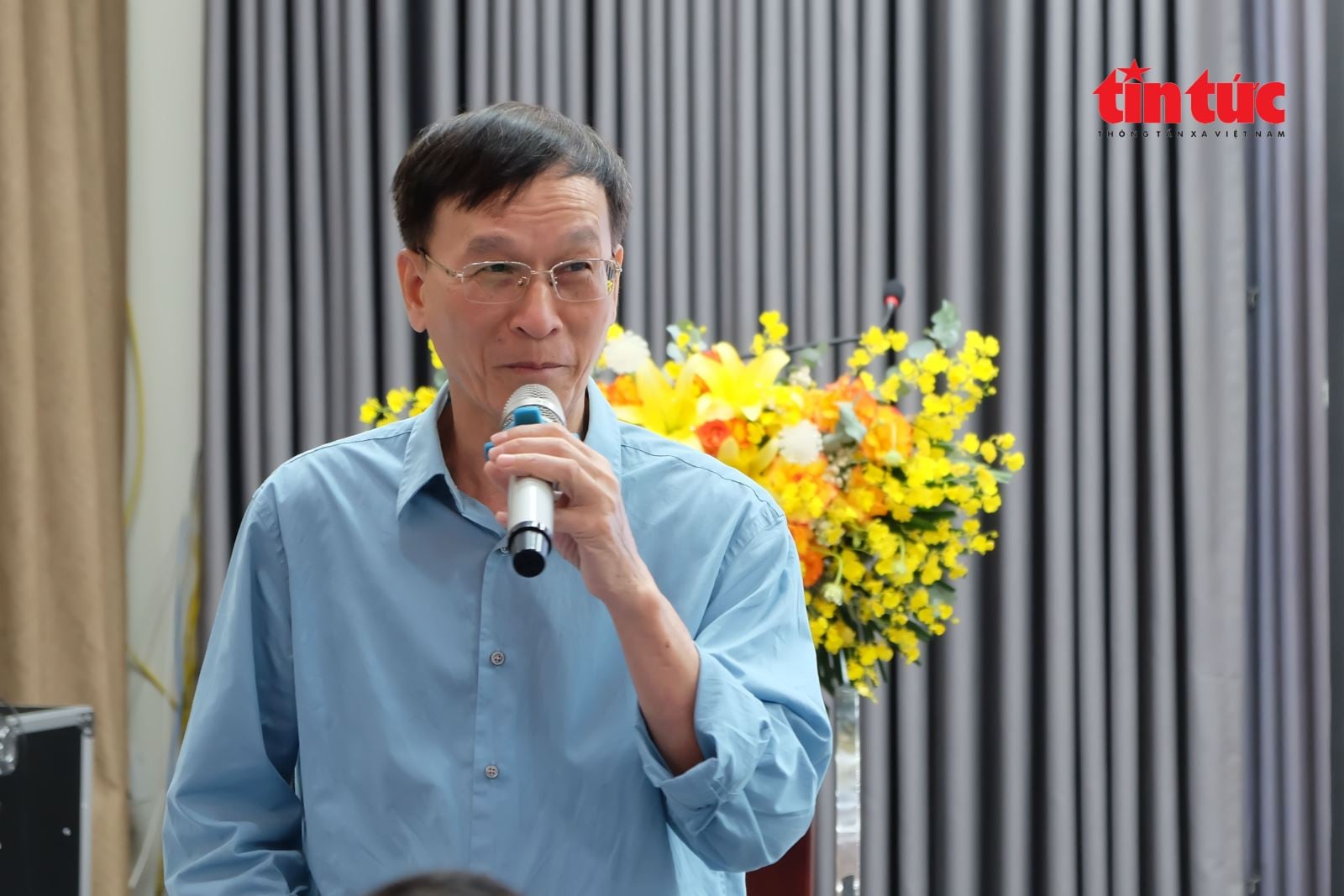
Former Rector of the University of Foreign Languages, Vietnam National University, Hanoi.
From the perspective of an education administrator, Professor Dr. Nguyen Hoa, Chairman of the Scientific and Training Council and former Rector of the University of Foreign Languages, Vietnam National University, Hanoi, stated that improving foreign language proficiency for students is a pressing issue, as reflected in the Prime Minister's decisions such as Decision 2371/QD-TTg approving the Project "Making English the Second Language in Schools in the period 2025-2035, with a vision to 2045" and Decision 2732/QD-TTg approving the Project "Strengthening Foreign Language Teaching and Learning in the period 2025-2035, with a vision to 2045". According to the professor, English should be considered a resource, a capital for comprehensive development, and should not be viewed as a subject for examinations but rather its usage should be broadened. This could include integrating the teaching of content with the English language.
However, with each change, careful consideration and modification are also necessary to suit the current educational environment. Looking at the case of Indonesia, the country used a model of teaching science and mathematics in English from 2006 but had to stop in 2013 due to concerns about its impact on national identity and the potential to diminish the role of the mother tongue. Similarly, Malaysia adopted a similar model in 2003 but had to stop in 2012 because students could not grasp the subject matter.

It was built up naturally.
Changes in examination and competency assessment methods at universities also need to focus on substance, avoiding the overemphasis on international certificates while neglecting other student competencies. A fair educational ecosystem is one where all students, whether in rural or urban areas, have the opportunity to practice their language skills according to their abilities and practical needs.
Besides the government's efforts, the proactive approach of learners plays a decisive role in eliminating the problem of excessive pursuit of academic degrees. Building a habit of daily self-study through information channels, books, and newspapers will help to naturally build a foundation of knowledge. When placed in its proper position as a bridge connecting knowledge, language will become an intrinsic strength that helps people reach further. Foreign language certificates will truly be valuable when they represent genuine intellectual capacity, contributing to building a generation that is capable and confident in the era of global integration.
Source: https://baotintuc.vn/giao-duc/khong-de-ngoai-ngu-tro-thanh-ganh-nang-thi-cu-20260522152151125.htm


































Comment (0)