"We don't need to sign contracts just for the sake of it," Laporta shared, "We only need to add what is truly necessary. The priority is to maintain and strengthen what we have, rather than constantly changing."
That was a remarkable statement, not only because of its content but also because it was made by the president of Barcelona .
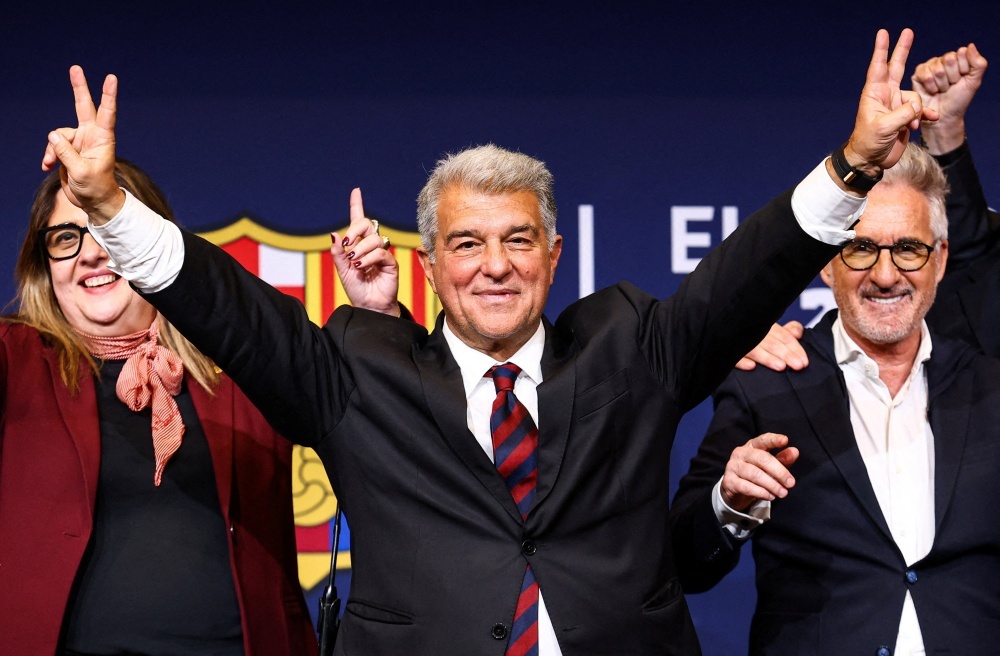 |
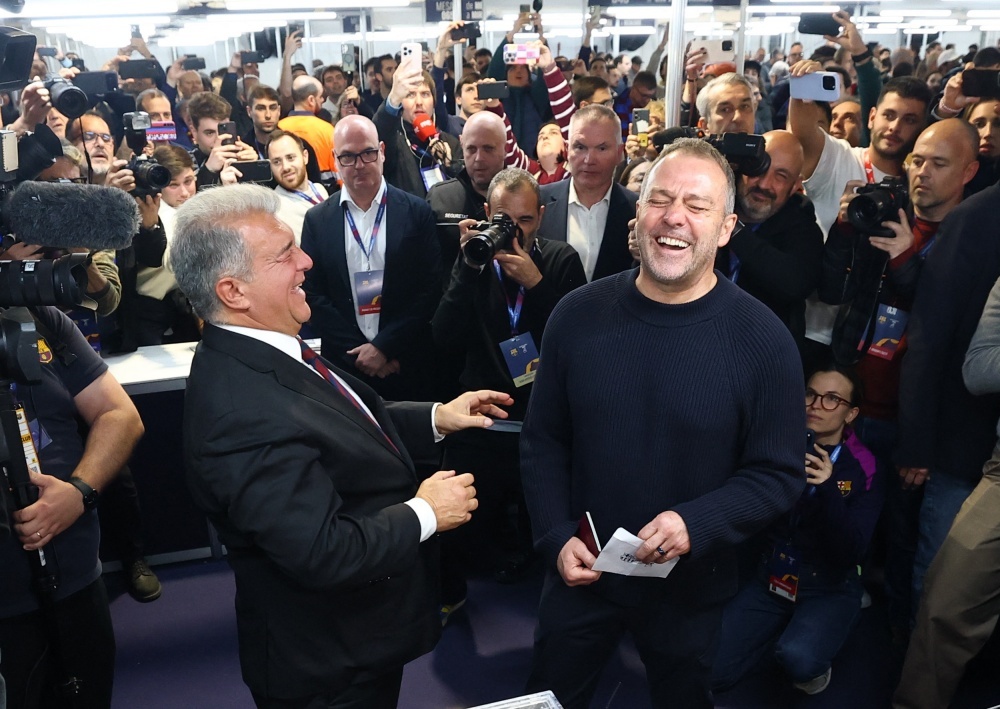
Laporta has made his views clear for his new term at Barca. |
A manifesto for a different face.
In the last two decades, Barcelona has rarely approached the transfer market with such restraint. Under Laporta, especially in his return, the Catalan club has been associated with "financial leverage," big deals, and also emergency decisions.
Therefore, this shift in rhetoric opens up two possibilities: either it's a sign of strategic maturity, or it's a way of adjusting expectations in the face of pressure from financial regulations.
Regardless of the approach, the underlying football logic remains clear. The current Barcelona under Hansi Flick operates stably. The team has a distinct identity: youthful, fast-paced, bold, and full of energy.
More importantly, they showed a level of cohesion rarely seen in recent years. When a system works effectively, it's taboo to disrupt it with unnecessary changes. A prime example is the kind of signings Laporta mentioned in his recent interview with Mon Esport .
The statement "maintain and strengthen" is therefore not merely rhetoric. It is the opposite of Barcelona's past. This was once a club that viewed transfers as a declaration of ambition, rather than a calculated decision.
They used to recruit a host of players in a single summer , even though there was no guarantee they would be registered to play. This lack of control contributed to the club's ongoing financial difficulties, which have persisted since the time of former president Josep Bartomeu.


In that context, Laporta's new approach felt different. Barcelona was no longer chasing quantity but had started talking about fit. Flick had built a tactical foundation and trust in the dressing room.
The path is shaped
Experienced players like Robert Lewandowski , Raphinha, and Pedri understand their roles. Young talents like Fermin Lopez, Gerard Martin, and Marc Bernal are progressing according to plan. Reinforcements should only serve that system, not disrupt it.
One of the hardest skills in football management is knowing when to act and when not to act. Every summer, big clubs are under pressure to make an impact in the transfer market.
 |
Under Flick, Barca possesses a solid core team, and there's no reason to dismantle it. |
Expensive contracts and spectacular launch videos are often seen as a measure of ambition. Barcelona followed that logic for many years. But behind the glamour lay a eroded financial foundation.
What Laporta is saying right now implies that Barcelona doesn't need more names just to satisfy media expectations. They need stability for the current system to develop. Flick has built a solid framework that he is satisfied with, something that cannot be bought with money in the transfer market.
A prime example is Marcus Rashford, the English player who had an impressive start on loan from Manchester United. If it were Barcelona in the past, activating the buy-out clause for €30 million would have been easy.
However, the Catalan club decided to wait and offer more financially manageable options. Rashford and Manchester United are no longer in each other's plans. As long as Barca doesn't rush things, the difficult situation will shift to Rashford and the "Red Devils".
In the context of modern football, which is increasingly dominated by money and image, choosing to "do nothing" is sometimes the wisest decision.
If Barcelona can remain steadfast in this direction, they will not only protect their emerging identity but also avoid repeating the mistakes that have cost the club dearly in the past.



Source: https://znews.vn/khong-nhan-ra-barcelona-post1640263.html



![[Photo] General Secretary and President To Lam works with the Party Committee of the Government on the work of preventing and combating storms, floods, extreme natural disasters and climate change.](https://vphoto.vietnam.vn/thumb/1200x675/vietnam/resource/IMAGE/2026/06/29/1782729441945_a1-bnd-0385-9454-jpg.webp)
![[Image] A look back at the capital's preparations for the century-long master plan.](https://vphoto.vietnam.vn/thumb/1200x675/vietnam/resource/IMAGE/2026/06/29/1782750453122_quy-hoach-100-nam-minh-duy-1-2118-jpg.webp)