

All recent developments signal that the Middle East, North Africa, and the Gulf region are facing significant political and security upheavals.
These days, the Middle East, North Africa, and the Gulf region are abuzz with President Donald Trump's ideas about the future of Gaza, with numerous developments surrounding and related to the new regime in Syria, and with the uncertain outlook for relations between the US and Iran.
All of this signals that this large region is facing significant political and security upheavals.
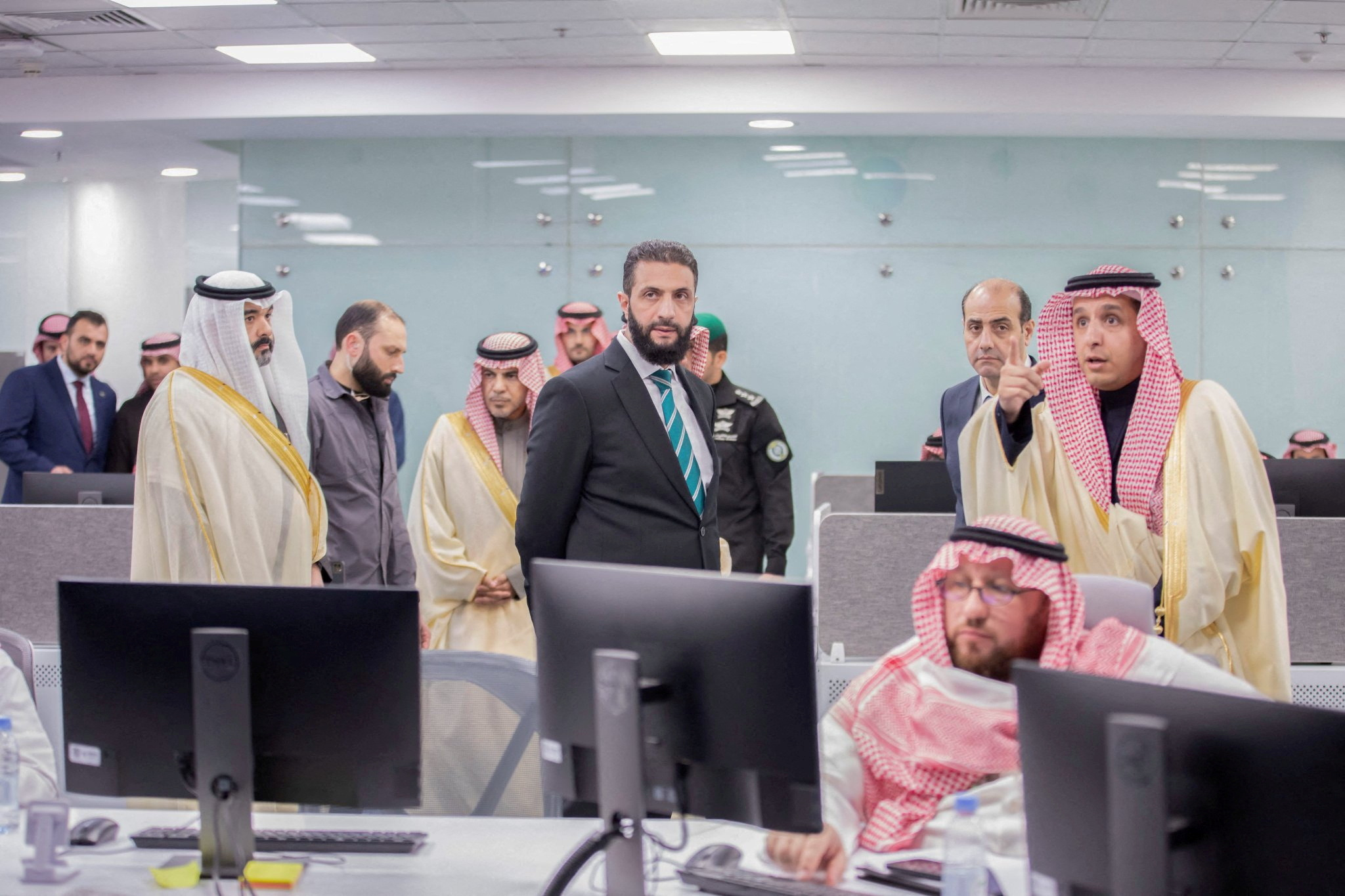
Ahmed al-Sharaa (center), the leader of the new Syrian regime, visits Saudi Arabia on February 2, 2025.
Trump's idea of taking the Palestinians out of Gaza and placing the strip under US control, while impractical, conveys a message of absolute US support for Israel and encourages Israeli Prime Minister Benjamin Netanyahu to act with various parties in the region, including Palestine, Hamas, Hezbollah, the Houthi, and Iran. This alone demonstrates that peace, reconciliation, security, and stability in this vast region are unlikely anytime soon. Trump continues to threaten Iran while simultaneously appearing willing to engage in dialogue with it. With this approach and his continued strong support for Israel, the prospects for improving US-Iran relations under his administration are slim.
Meanwhile, Syria is attracting the attention of many external partners, some of whom have even begun vying for influence. The new Syrian regime is seeking to reposition itself within the geopolitical sphere of influence of these external partners, aiming to leverage its advantages while avoiding being exploited, actively participating in the regional game rather than remaining the mere setting for it. Therefore, this vast region will undergo significant and fundamental changes, but all possible scenarios are at play.
Source: https://thanhnien.vn/khu-vuc-lon-truoc-bien-dong-lon-1852502062257399.htm

![[Image] National Assembly discusses the implementation of the socio-economic development plan.](https://vphoto.vietnam.vn/thumb/1200x675/vietnam/resource/IMAGE/2026/04/20/1776696707422_ndo_br_img-20260420-185419-jpg.webp)



![[Photo] General Secretary and President To Lam meets with National Assembly delegates from ethnic minorities.](https://vphoto.vietnam.vn/thumb/1200x675/vietnam/resource/IMAGE/2026/04/20/1776696701056_a1-bnd-8331-3342-jpg.webp)

































































Comment (0)