


The elections for the 16th National Assembly and People's Councils at all levels for the 2026-2031 term witnessed many groundbreaking innovations, implemented for the first time. These were not simply adjustments in organizational techniques but reflected modern, effective governance thinking on the path to a new era for the country.
Could you please tell us about the advantages and disadvantages in organizing the 16th National Assembly elections and the elections for People's Council representatives at all levels for the 2026-2031 term, given that the organizational work has many new aspects and is being implemented for the first time?
Mr. Pham Dinh Toan: The election of deputies to the 16th National Assembly and deputies to People's Councils at all levels for the 2026-2031 term has many important new features.
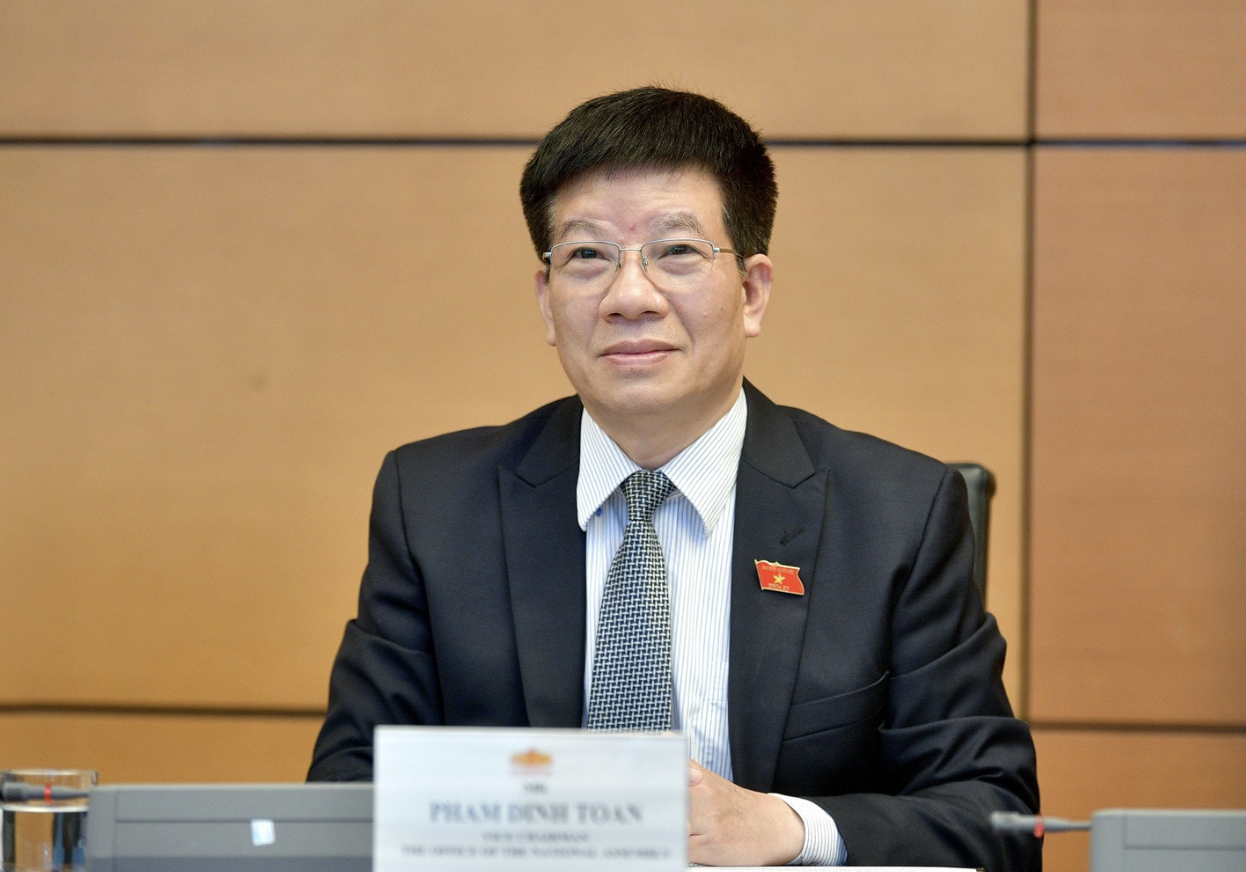
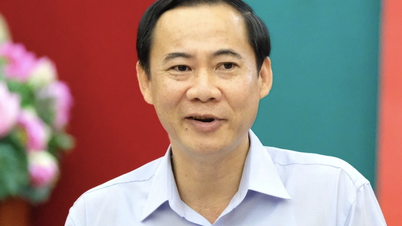
Mr. Pham Dinh Toan, Permanent Deputy Head of the National Assembly Office, Deputy Chief of the National Election Council Office.
PHOTO: PEOPLE'S REPRESENTATIVES
Firstly , this is taking place in the context of our country actively implementing the restructuring and streamlining of the political system's organizational apparatus, reorganizing administrative boundaries, and operating a two-tiered local government model, ensuring a lean, efficient, effective, and effective system to enter a new era of national development.
Secondly, the National Assembly has set the election for Sunday, March 15, 2026, two months earlier than previous elections, and some steps in the election process and procedures have also been completed in a shorter time than in previous terms.
Thirdly, the election organization process involved the application of information technology in several tasks, particularly in the preparation and updating of voter lists, management of candidate profiles, and the creation of minutes, reports, and statistical data related to the election.
On the positive side, the reorganization and streamlining of the administrative apparatus and the implementation of a two-tiered local government model help to simplify administrative structures, improve the effectiveness and efficiency of management, and create conditions for centralized and unified election direction and operation. Holding the election about two months earlier allows for the early consolidation of high-level personnel and leadership structures at all levels, quickly stabilizing the organization to implement tasks in the new term. In addition, the solution of strengthening the application of information technology and digital transformation contributes to the rapid and accurate creation and updating of voter lists; improving the quality of data management and report compilation, aiming towards a modern and professional election organization.
However, in the initial phase of operating the new model, the workload is large, requiring high standards and quality, while the process time is shortened. This demands determination, close coordination, and thorough, systematic, and scientific preparation from an early stage among relevant agencies. The application of information technology also necessitates enhancing the digital capabilities of election officials at all levels.
In response to this need, the National Assembly promptly established the National Election Council, and issued plans and guiding documents in a timely manner; central and local agencies intensified training and prepared the best conditions to ensure the best possible conditions for the election. The overarching goal was to organize a democratic, open, transparent, lawful, safe, and economical election.
This marks the first time a two-tiered government model has been implemented in elections.
What changes are required in the division of electoral units, the structure of representatives, and the supervisory responsibilities of voters over their representatives in the implementation of elections following the merger of provinces and cities and the establishment of a two-tiered government system, sir?

Voters at polling station number 31, Hung Nguyen commune, Nghe An province.
PHOTO: GIA HAN
Mr. Pham Dinh Toan: Organizing elections after the merger of provincial-level administrative units and implementing the two-tiered local government model requires reviewing and adjusting the division of electoral units, the structure of representatives, and the organizational structure serving the elections. However, all aspects are carried out in accordance with legal regulations and guidelines from competent authorities, ensuring the principles of democracy, equality, and reasonable representation.
Regarding the division of electoral districts, localities base their decisions on population size, geographical characteristics, transportation conditions, and population distribution to determine the number of districts and elected representatives, ensuring a relatively even distribution of population and convenience for voters. Localities promptly established and strengthened election committees, prioritizing experienced personnel. Through monitoring visits to localities regarding election preparations, we have not observed any significant difficulties. Some places adjusted polling locations to suit new boundaries, but all adjustments were made to ensure convenience and safety for voters, especially in large areas with dispersed populations.
Regarding the structure of delegates, the reorganization of the administrative apparatus and geographical boundaries affected the distribution of nominated candidates. The country now has 34 provinces and cities; there are no longer district-level People's Councils, only provincial and commune-level ones. The structure of the 16th National Assembly delegates was adjusted to increase the number of delegates at the central level and full-time delegates; correspondingly reduce the number at the local level; and reduce the number of provincial and city leaders who also serve as heads of the National Assembly delegations. At the same time, the proportion of delegates from research institutes, universities, businesses, and production and business associations increased.
For the People's Council, the basic structure and composition maintain a stable proportion of women, ethnic minorities, non-Party members, young people, and re-elected representatives; at the same time, a reasonable proportion of representatives from scientists, intellectuals, artists, workers, farmers, and entrepreneurs is added. The determination of the structure is carried out rigorously, based on democratic consultation and high consensus.
Regarding voting rights, the responsibilities of voters to monitor, make recommendations, and provide feedback are still guaranteed by law. In the context of a streamlined administrative apparatus, the demands for the quality of representatives' work and the effectiveness of oversight are further enhanced; the application of information technology and online interaction channels also facilitates increased transparency, accountability, and responsibility.
Reduce time, improve efficiency.
Does shortening the time required for some steps in the election process have any impact on the organization of the election, sir?
Mr. Pham Dinh Toan: Shortening the time for some steps in the election process does not mean omitting procedures or reducing the quality of the election. After the Law on Election of National Assembly Deputies and People's Council Deputies was amended, the timelines were adjusted to hold the election early on March 15, 2026, but the entire process and procedures - from consultation, nomination of candidates, voter registration, election campaigning to voting and vote counting - remain unchanged and are strictly implemented according to the law. The main new point is the requirement for agencies, organizations, and units at the central and local levels to be more proactive, prepare early and in advance, coordinate closely, and handle work more promptly and scientifically.
In reality, shortening the timeframe places higher demands on responsibility and organizational capacity, especially in areas related to personnel, consultation, candidate dossiers, voter registration, compilation, reporting of results, and election-related data. However, this also serves as an impetus to promote the application of information technology, improve coordination among relevant agencies, thereby ensuring progress while maintaining the quality, democracy, openness, and transparency of the election.
We determined that, although the implementation timeframe may be adjusted, the requirements for accuracy, objectivity, and legality remain unchanged. The organization and implementation are structured in a proactive and systematic manner, ensuring that every stage of the election process is conducted seriously, in accordance with regulations, and with the highest quality.
Regarding the promotion of information technology application and digital transformation in the election period, what specific results have been achieved so far , and are there any difficulties, sir?
Mr. Pham Dinh Toan: One of the new features of this election is the deployment and application of information technology in several tasks. Accordingly, the creation and management of voter lists is carried out through the exploitation and use of the national population database and the VNeID application. In addition to paper certificates issued to voters to participate in voting elsewhere as in previous elections, voters can now request electronic certificates through the VNeID application. Online application forms can also be submitted through the National Election Council's website (in parallel with the submission of paper forms).

Digital transformation and the application of information technology have made it easier for voters to access information about this election.
PHOTO: GIA HAN
In addition, the National Election Council has implemented a software system for managing election information. Local authorities have received training and been introduced to this software system. Through the use of this system, the Office of the National Election Council at the central level and election committees at all levels in localities can input and manage candidate profiles, create minutes, reports, and statistics related to the second and third rounds of consultations, the official list of candidates, the allocation of candidates to electoral units, vote counting data, the list of elected candidates, as well as a number of election reports and statistics.
To date, the application of information technology has yielded several positive results. Specifically, the exploitation and use of the National Population Database and the VNeID application have helped localities quickly compile voter lists; review and update voter lists accurately, and minimize duplication and errors.
Voters who are not able to go to the People's Committee of the commune where they are registered to request a certificate of voting in another location can request an electronic certificate through the VNeID application, facilitating their right to vote. In addition, online candidacy and the use of the election information management system will support the management of candidate profiles, progress reporting, and the compilation of election results and data. This will lead to faster, more transparent, and more efficient management and operation.
However, this is the first time these software programs have been applied in the election process, so some difficulties are unavoidable, such as: the voter list may overlook citizens of voting age who have not yet registered for national identity cards, requiring verification and comparison with local civil registration records; disparities in information technology infrastructure between different areas; the need to further improve the technology application skills of some grassroots officials; and increasingly stringent requirements for cybersecurity.
Importantly, the application of information technology and digital transformation does not directly change the democratic nature of elections, but rather contributes significantly to improving accuracy, timeliness, transparency, and efficiency in their organization. Therefore, technical solutions will continue to be researched and refined to ensure that the application of information technology increasingly serves elections in the best possible way, in accordance with the law, and in a manner that ensures cybersecurity.
Thank you very much, sir!
Source: https://thanhnien.vn/ky-bau-cu-cua-nhung-doi-moi-lich-su-185260301151356283.htm












![[Video] 24-hour News on March 1, 2026: Prime Minister Pham Van Dong - A Symbol of Service to the Fatherland](https://vphoto.vietnam.vn/thumb/402x226/vietnam/resource/IMAGE/2026/03/01/1772370264475_1-3-jpg.webp)



























































Comment (0)