

However, this "honeymoon" phase is coming to an end as tech giants begin shifting from a purely tool-providing model to more sustainable commercial platforms.
The harsh reality is that the operating costs of data centers with tens of thousands of expensive processing chips are running into millions of dollars daily, making investors unwilling to pay unconditionally to attract users. The emergence of chatbot responses as a new advertising "gold mine" is a necessary step to offset these enormous bills.
Enormous cost pressure
The cost per AI response is now many times higher than a traditional Google search. Sam Altman, CEO of OpenAI, frankly admitted in an interview that: "The operating costs of these models are enormous; they're shocking every time we look at the billing statements."

To address the financial challenge, OpenAI has begun testing the display of ads to a non-paying user base. These digital ads will only appear at the end of responses and will be clearly labeled to distinguish them from the chatbot's natural content. Fidji Simo, OpenAI's application director, affirmed on social media that the ads will not interfere with the ChatGPT's response content.
Despite businesses' commitments to protecting user experience, the emergence of advertising continues to raise concerns about trust. Miranda Bogen, Director of the AI Governance Lab at the Center for Democracy and Technology, warns that users are viewing chatbots as companions, and leveraging this trust to advance advertiser interests is a risky endeavor.
Forrester expert Paddy Harrington also offered insightful observations on the nature of these services, stating: "Free services are never truly free. When a public AI platform needs to generate revenue, the familiar saying comes to mind: if you don't pay for the service, you are most likely the product."
Service stratification and alternatives
Besides inserting advertisements, AI providers are tightening usage limits and creating a clear divide between service tiers. As of March 2026, free ChatGPT users will primarily have access to the GPT-5.3 model with a strict limit of 10 messages every 5 hours, while premium versions like GPT-5.4 Pro will be completely locked behind a paid subscription wall.
Similarly, Anthropic's Claude service also employs a two-tiered limiting system, restricting free users to sending only about 2 to 5 messages every 5 hours. Google is also in this race, clearly separating its free Gemini plan, which uses the 2.0 Flash model, from its Advanced plan, which costs $19.99 per month to access the more powerful 2.5 Pro model and 2 TB of storage.
Tired of the cost and privacy concerns, a segment of users has been turning to alternatives. The #QuitGPT movement has begun to spread within the tech community, encouraging users to abandon paid subscriptions in protest against OpenAI's commercialization strategy.
Professor David Rand from Cornell University warns that: "Many users will become more wary of chatting with ChatGPT because they don't want their personal information used for targeted advertising. If users are afraid to share personal context, AI will become less useful, making the product worse."
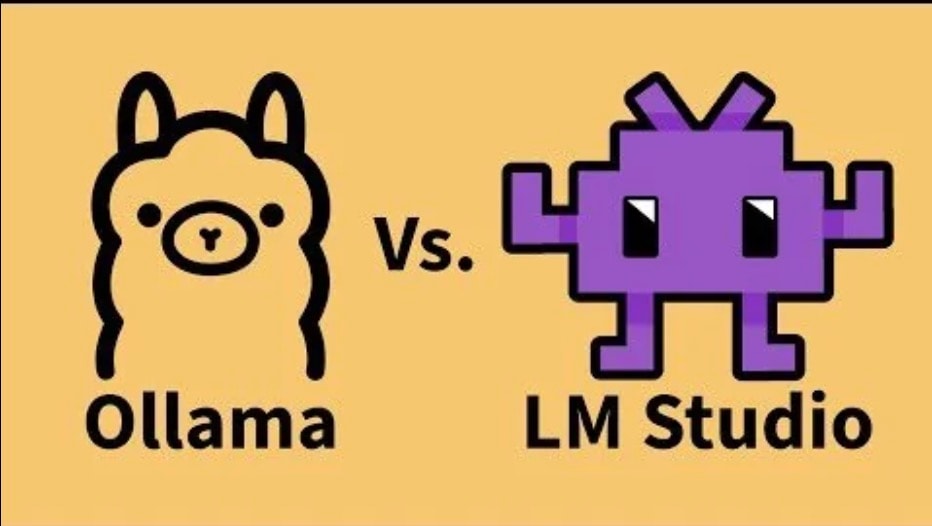
In this context, large-scale language models running locally on personal computers via tools like Ollama or LM Studio are becoming an attractive option due to their absolute data security and independence from the internet.
Source: https://congluan.vn/ky-nguyen-ai-mien-phi-dan-khep-lai-10335312.html













































































![[Photo gallery] Nhon Trach is ready to transform into a modern and civilized city.](https://vphoto.vietnam.vn/thumb/402x226/vietnam/resource/IMAGE/2026/04/02/1775104005524_hinh_1_20260402085339.jpeg)

![[Photo gallery] Dong Phu aims for modern and sustainable urban development.](https://vphoto.vietnam.vn/thumb/402x226/vietnam/resource/IMAGE/2026/04/02/1775104023925_111_20260402104322.jpeg)













Comment (0)