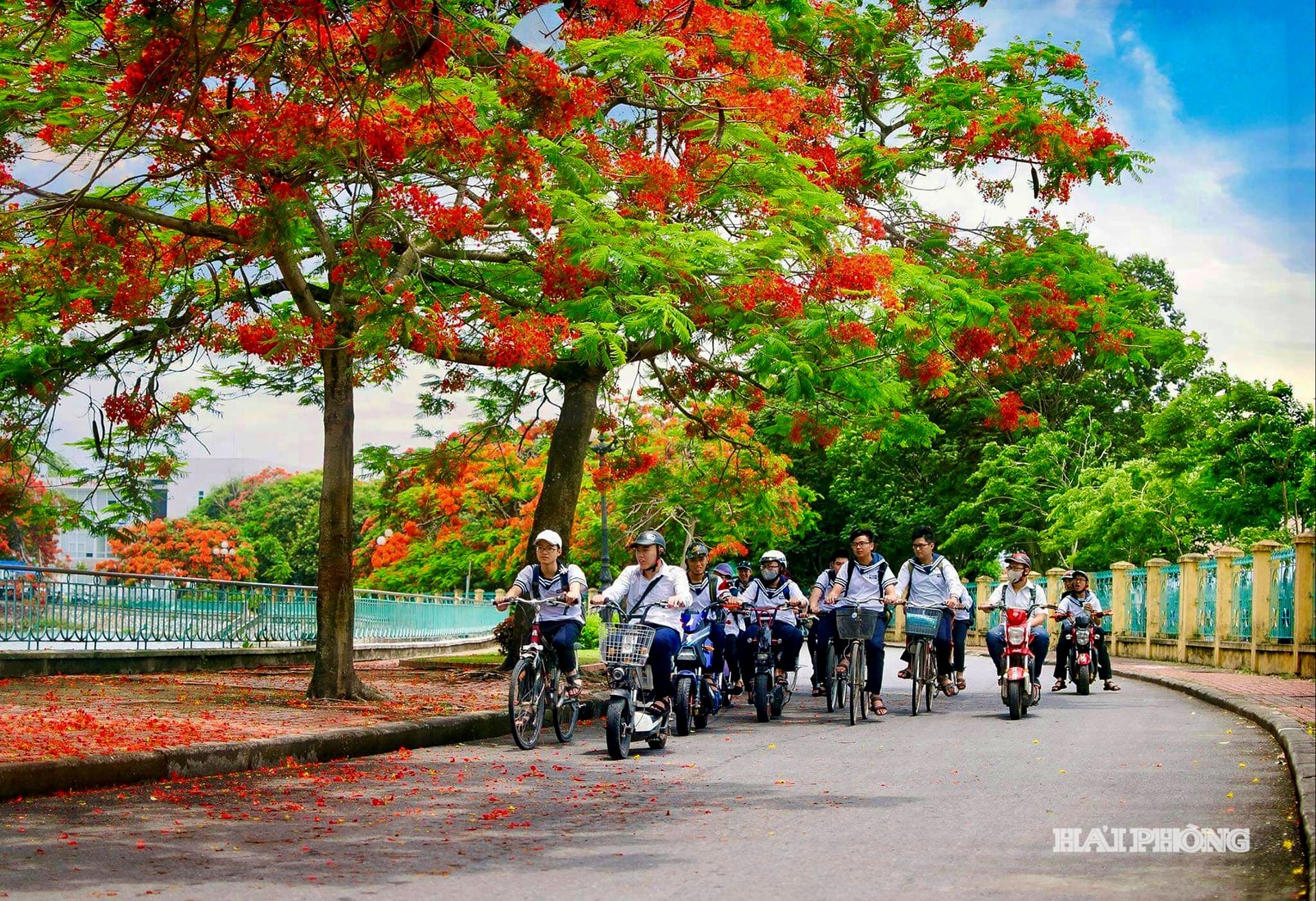
That shade of red not only evokes summer, but also touches upon interwoven layers of memories: history, school days, daily life, and the journey of growing up in a rapidly transforming port city.
From the phoenix wings of a student...
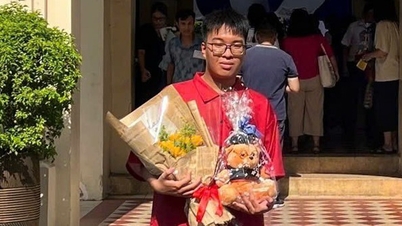
“In the final days of 12th grade, the second semester exams kept us engrossed in thick stacks of notebooks. No one noticed that the flamboyant trees had bloomed in the schoolyard. Until one afternoon, when we looked up, the entire sky was ablaze with red. A feeling hard to name, a mixture of wistfulness and regret, crept into our hearts. Summer had arrived, and it seemed our school days were passing by so quickly…,” shared Ms. Le Thuy Duong (39 years old) from Le Chan ward, a former student of Ngo Quyen High School.
Hoang Thanh Thuy (41 years old), a former student of Le Chan High School, recounted: "In our final year, we went to Van Cao Street, where large flame trees cast their shade in front of the villas, to pick flowers to bring home. At that time, we simply thought of preserving a little bit of summer. The flame tree petals were pressed into notebooks, arranged into 'butterfly wings,' clipped into autograph books, or even glued into notebooks. Later, as I grew up and traveled through many cities, I understood that some beautiful things are not about preserving them, but about witnessing them. Flame tree flowers, therefore, are not just a type of flower, but an irreplaceable part of our memories."
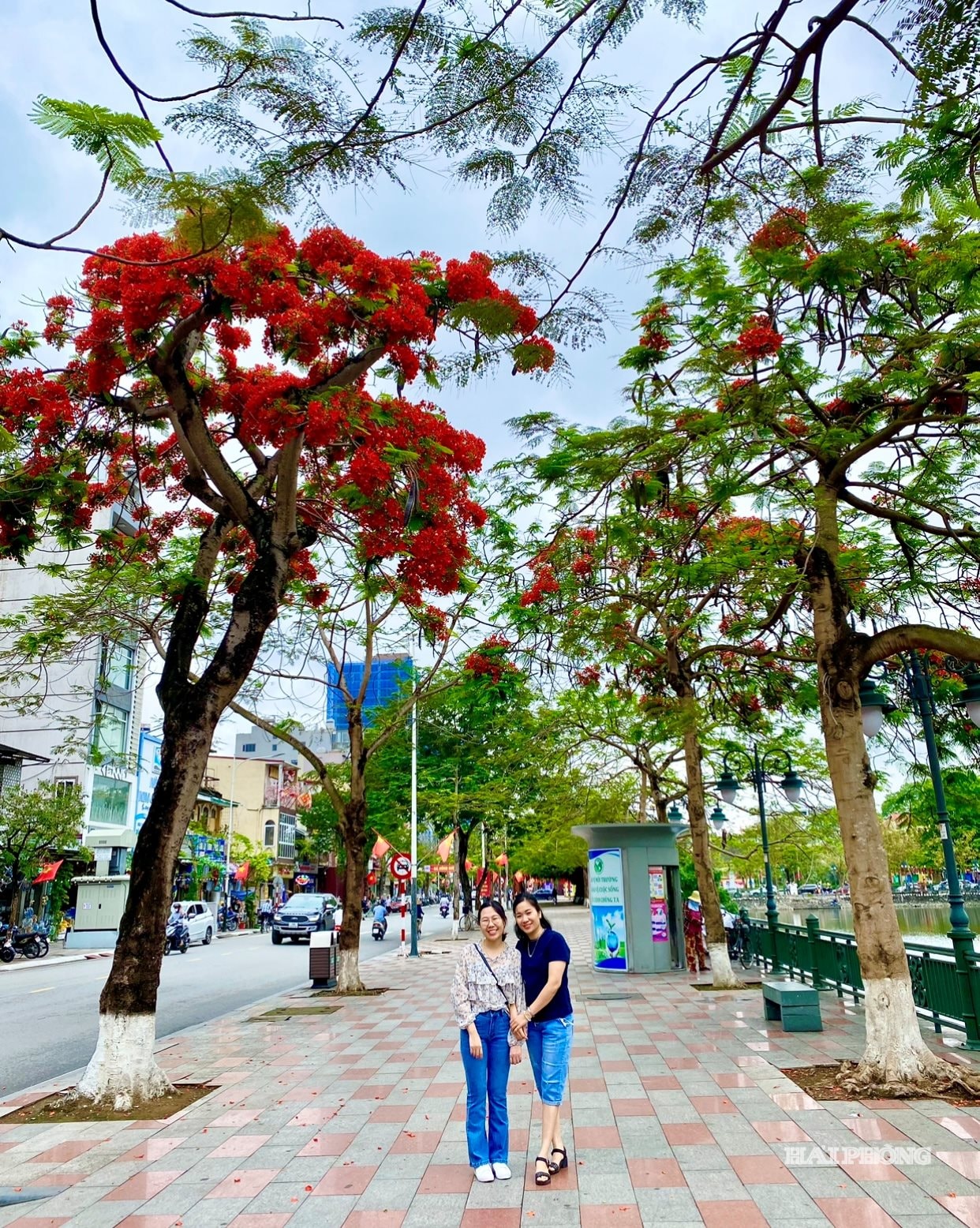
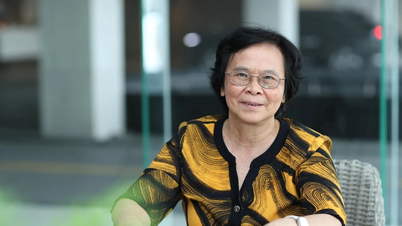
Along the banks of the Tam Bac River, the old flame trees still cast their shade as they did decades ago. Beneath their canopy, the rhythm of city life flows on day after day. Workers rest after their shifts, laborers quickly grab their lunch, and everyday conversations continue. Mrs. Tran Thi Hoa (72 years old) from Hong Bang ward smiled and said, "Working at the port was very hard in the old days. The sun was scorching, and coal dust filled the air. But when the flame tree season came, I felt so relieved. Looking at the flowers blooming, I suddenly felt how long I'd been connected to this city."
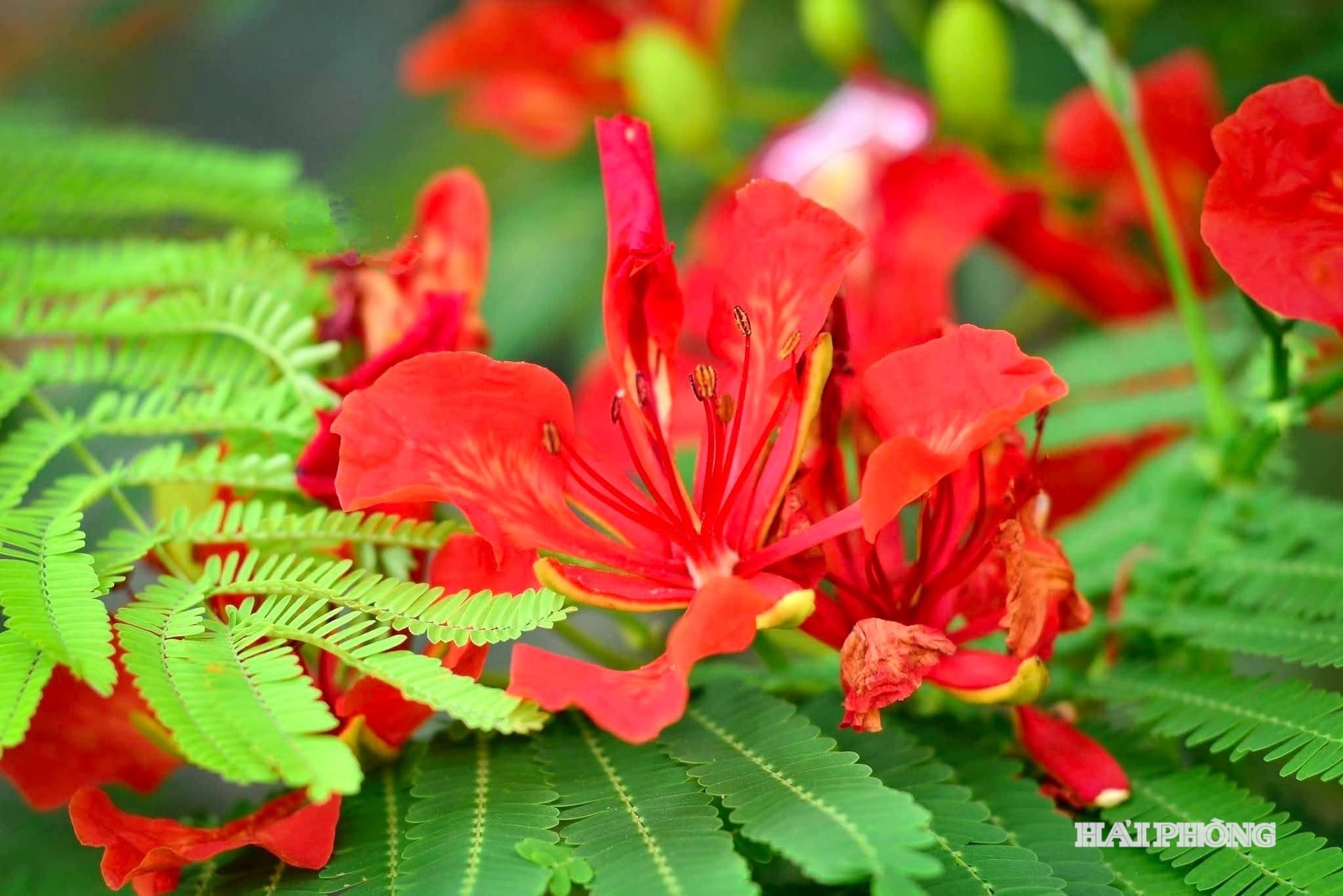
Few people know that the flame tree, so closely associated with Hai Phong, originated in Madagascar and was introduced to the city by the French in the late 19th century. Initially planted only in French-style neighborhoods, over time, the flame tree took root, spread, and became an integral part of the city's landscape. From central streets to new residential areas, the vibrant red of the flame tree blankets the city, creating a unique and distinctive mark that few other cities possess.


...to the red hues of May
If student memories are a vibrant splash of color, then history is the profound backdrop that makes the red of the flamboyant tree blossoms even more special. Going back in time to 1955, after the Geneva Accords, Hai Phong became the final staging point for the French army in North Vietnam. Those May days marked a major turning point in the city's history. The Liberation of Hai Phong on May 13, 1955, closed one era and opened a new chapter for the city.
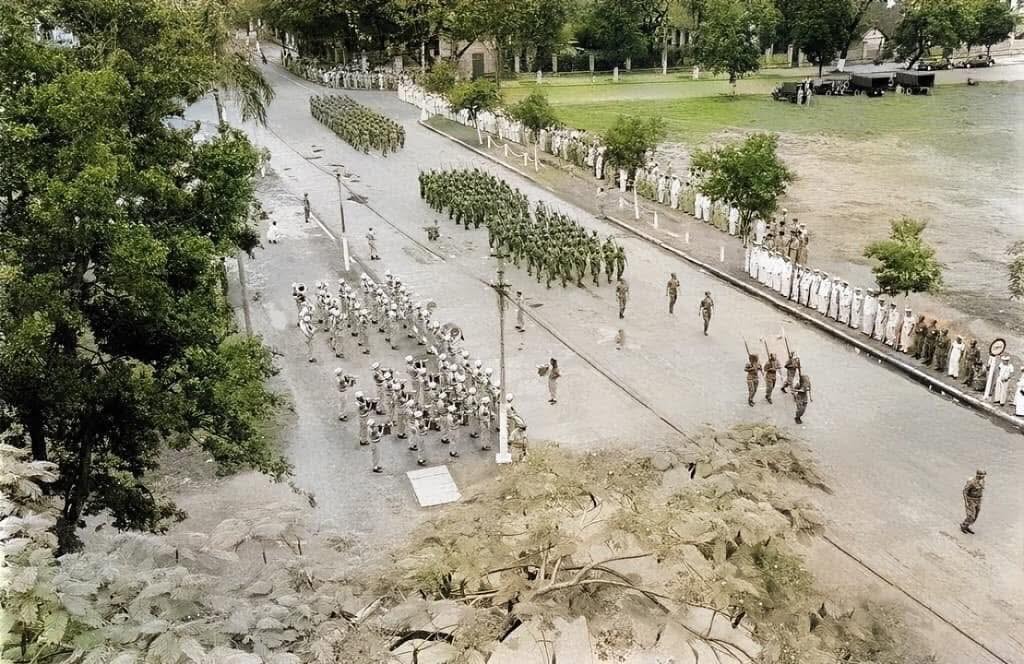
For many people in Hai Phong at that time, May 13, 1955, was an unforgettable day. Beneath the vibrant red blossoms of the flamboyant trees, the last French soldiers departed from the streets of Hai Phong. From that historical milestone, Hai Phong embarked on a journey of reconstruction and development. Through the war, the subsidy period, and the early years of reform, the city has gradually affirmed its position as a major economic center and seaport of Northern Vietnam.
Now, those same rows of flame trees, still as red as ever, continue to witness the daily transformation of the port city. Infrastructure has been comprehensively developed, new urban areas have sprung up, the seaport has expanded, and industry and services have flourished. Against this backdrop of change, the flame trees remain silently present, like a thread connecting the past with the present.
Beyond its iconic landscape, the flamboyant tree has been elevated to a cultural symbol through the Red Flamboyant Flower Festival. Since 2012, the festival has become a prominent annual event, bringing together various artistic, tourism , and investment promotion activities, spreading the image of the city to the whole country and internationally.
According to historian Dr. Doan Truong Son, former Chairman of the Hai Phong Historical Science Association, in the process of national cultural development, generations have always inherited and simultaneously created new forms of festivals suitable to the social context. Building upon the traditional festivals of Hai Phong and Hai Duong in the past, the Red Phoenix Flower Festival becomes a vivid testament to this continuity.



In 2026, the Red Flamboyant Flower Festival will take on a new dimension as it will be held for the first time in the city of Hai Phong after its merger with Hai Duong province. The festival, coinciding with the 71st anniversary of the city's liberation, makes the vibrant red of the flamboyant flowers even more meaningful, representing not only the color of summer but also the color of history, pride, and aspiration.
Ms. Nguyen Thi Hong (48 years old) shared: “I have been studying and working in the highlands since 2014, but every May I want to return to Hai Phong. This year, my family will definitely come back to participate in the Red Phoenix Flower Festival. Not only because of the festival, but also because standing under the phoenix tree makes me feel young again.”
From pressed flame tree petals in school notebooks to the shady canopies lining city streets, and then becoming a cultural symbol of a rapidly developing metropolis, the flame tree has accompanied Hai Phong through all its ups and downs. Each flowering season, one sees not just a tree, but also time, memories, and the entire journey of a city's development. And in that vibrant red, Hai Phong today appears both familiar and new, a city constantly evolving, yet retaining an irreplaceable color. The flame tree doesn't just herald summer; it holds the soul of the port city.
THE ANHSource: https://baohaiphong.vn/ky-uc-dat-cang-tu-sac-hong-phuong-vy-542407.html


![[Image] National conference summarizing one year of operation of the overall organizational model of the political system, the three-tiered government model.](https://vphoto.vietnam.vn/thumb/1200x675/vietnam/resource/IMAGE/2026/07/01/1782882811691_ndo_br_1-jpg.webp)