


Regardless of the consequences, the goal is profit.
The recent series of discoveries and crackdowns on counterfeit goods trafficking rings dealing in products such as medicine, milk, and dietary supplements has raised alarm bells about the sophistication and widespread nature of this problem. Beyond economic losses, these substandard products also pose a direct threat to the health and lives of consumers.

The discovery of nearly 600 counterfeit milk powder brands in mid-April shocked the public. This was especially concerning because many products were labeled for specific groups such as people with diabetes or kidney failure. A series of cases involving substandard food and pharmaceuticals have been exposed.
Earlier in April, Pham Quang Linh (Quang Linh Vlogs) and Nguyen Thi Thai Hang (Hang Du Muc), along with three others, were arrested on charges of defrauding customers related to Kera vegetable candy products. In connection with this case, recently, Miss Grand International 2021 Nguyen Thuc Thuy Tien was also indicted and detained as an accomplice.
It is clear that such cases are no longer minor individual mistakes or systemic errors, but rather manifestations of unethical business practices that prioritize profit above all else, regardless of the consequences for the community and society.
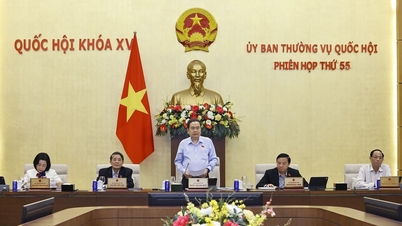
From a cultural perspective, Associate Professor Bui Hoai Son, Standing Member of the National Assembly's Committee on Culture and Education, argues that this is not just an economic or legal issue, but more fundamentally, a cultural and ethical issue in the conduct of businesses and economic actors. The problem lies not only in the severity of sanctions—although clearly still needing improvement to enhance deterrence and enforcement effectiveness—but at its core, it is the decline in business culture and the lack of ethics in production, distribution, and consumption.
Deviation from business ethics
When the ultimate goal of some individuals and organizations is solely profit, rather than sustainable development and responsibility to the community and society, then business culture will become distorted. Legitimate businesses face unfair competition, and consumers lose trust. This is not only a violation of the law but also an erosion of trust.
Sharing her views on this issue, Ms. Ninh Thi Thu Huong, Director of the Department of Grassroots Culture, Family and Libraries, stated that the reality of producing and trading counterfeit and substandard goods in recent times shows that business ethics and culture in a segment of organizations and individuals have not yet been fully formed, and at the same time poses many challenges in the process of building a transparent, responsible, and law-abiding business environment.
"The root cause of this situation stems from the limited awareness of law compliance, business ethics, and social responsibility among a segment of entrepreneurs and businesses. For short-term gain, some have deliberately violated legal regulations to profit, causing serious damage to social trust and the business environment," Ms. Huong emphasized.
Furthermore, according to Ms. Huong, the dissemination of laws, the implementation of policies, and state management lack close and effective coordination among relevant agencies. Improvements to the investment and business environment in some localities have not met practical requirements. The education and training of business ethics and culture have not received adequate attention.
From a legal perspective, lawyer Truong Anh Tu - Chairman of TAT Law Firm - believes that the recent incidents stem from a major "gap" in business culture. Many businesses focus only on immediate profits, neglecting social responsibility and professional ethics. When the sole objective is profit, they easily disregard the boundaries of the law and minimum ethical standards. Meanwhile, although inspection and auditing efforts have been intensified, they still fail to detect and thoroughly address these issues in a timely manner. As a result, consumer trust - a priceless but extremely fragile asset - is constantly being eroded.
Business culture is not just for show.
Associate Professor Bui Hoai Son argues that, under any circumstances, whether the market is favorable or challenging, the key to a business's survival lies not only in capital, technology, or scale, but also in its internal culture – the very thing that creates identity and trust. In the increasingly fierce market economy, with high consumer demands and close scrutiny from the media and society, building a strong business culture is no longer just a "should be done," but a vital requirement for every business.
According to Mr. Son, businesses need to start from within, by building a clear core value system – one that emphasizes honesty, responsibility, integrity, and a people-oriented approach. Transparency must be implemented not only on paper but in all interactions with customers, partners, shareholders, and the community; it must be a long-term commitment to the overall development of society. Businesses need to view business culture not as an external "decoration," but as an internal strategic pillar. A sound business strategy always goes hand in hand with a solid culture. When a business gains consumer trust through kindness and transparency, it not only gains customers but also a supportive community, a sustainable market, and a secure future.
Sharing the same view, Ms. Ninh Thi Thu Huong stated that business culture is a fundamental factor, playing a decisive role in the sustainable and long-term development of enterprises. It is also the foundation for enterprises to make practical contributions to the country's prosperity. Furthermore, enterprises and business associations need to play a role in providing honest, timely, and accurate feedback and critique on policies, addressing practical issues and contributing to the improvement of institutions and the removal of barriers to production and business activities.
Transparency is the foundation for sustainability.

Lawyer Truong Anh Tu.
Lawyer Truong Anh Tu believes that the most important thing is a change in mindset. Businesses need to establish clear codes of conduct and raise legal awareness among all employees.
Furthermore, businesses must publicly and transparently disclose all information: from the origin of raw materials and production processes to product quality. Only when transparency becomes an "unwavering standard" can businesses gain lasting consumer trust. Product quality can be built through technology, but consumer trust can only be maintained through ethics and integrity.
Society and consumers are also crucial "gatekeepers." When consumers dare to reject counterfeit and substandard goods and proactively report fraudulent activities, it acts as a "lever" to force businesses to change. Only when the entire society—from regulatory agencies and businesses to consumers—is united can a culture of transparent business practices become an "unwritten law" for businesses.
Culture must be the backbone of a business.

Assoc. Prof. Dr. Nguyen Thi Bich Loan.
Associate Professor Dr. Nguyen Thi Bich Loan - former Vice Rector of the University of Commerce - stated that culture is the backbone of a business. Corporate culture is created from tangible and intangible values.
In a highly competitive and volatile market economy, building a ethical, transparent, and sustainable business culture requires business owners to first recognize the importance of business ethics. They must then disseminate this awareness through specific mechanisms, policies, and actions. Finally, they must help all members of the business internalize this principle.
At the same time, consumers also need to have a culture of responsible consumption. They need to be bold and courageous enough to speak out and fight fiercely against counterfeit goods, thereby creating a healthy business culture for the market.
Source: https://baolaocai.vn/lo-hong-van-hoa-kinh-doanh-post402985.html




























































































Comment (0)