From mid-2025 onwards, at least three major deals in the AI industry will take place in Silicon Valley. Meta will invest over $14 billion in Scale AI and bring CEO Alexandr Wang to the team.
Google spent $2.4 billion to acquire Windsurf's technology and merged the founding team into DeepMind. Nvidia aggressively spent $20 billion to acquire Groq's technology and hired its CEO and many key personnel.
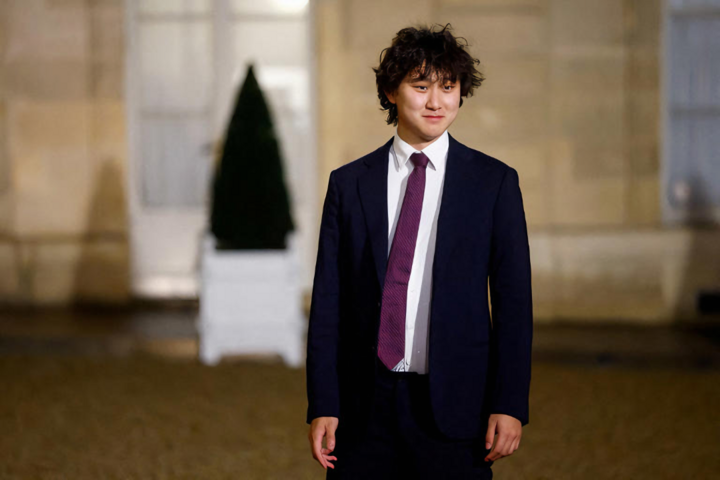
Alexandr Wang, former CEO of Scale AI, has joined Meta. (Source: Reuters)
Meanwhile, leading AI labs are experiencing intense competition for talent.
OpenAI recently rehired many researchers who had left to join Mira Murati's startup, Thinking Machines. Anthropic, founded by former OpenAI staff, continued to attract people from ChatGPT. Conversely, OpenAI also recently hired a security expert from Anthropic to take on a leadership role.
Investor Dave Munichiello (GV) calls this phenomenon the "disengagement" of the startup model. He argues that previously, founders and employees typically stayed together until the company collapsed or a major event occurred.
But in today's AI market, where startups grow rapidly, receive ample funding, and talent is a valuable asset, a company being split up or acquired is entirely possible.
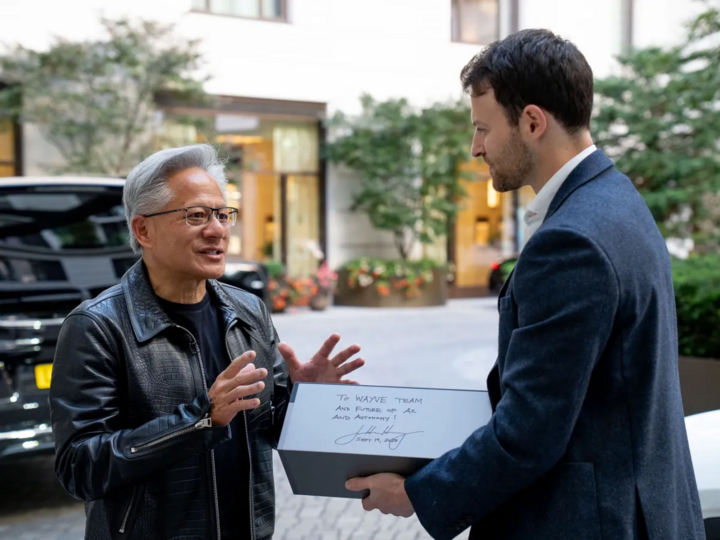
Nvidia CEO Jensen Huang chats with a rising startup – a testament to the talent race in Silicon Valley. (Source: Techcrunch)



Money is a major motivator. Meta was once rumored to be offering lucrative compensation packages worth tens, even hundreds of millions of dollars, to top AI researchers – not only access to powerful computing infrastructure, but also the opportunity to build a massive fortune.
However, it's not just about money. Sayash Kapoor, a researcher at Princeton, argues that a cultural shift in the tech industry is causing many people to no longer want to stay with one organization long-term.
In the past, employees typically stayed at least until they were eligible for stock options or benefits in the company (vesting) after four years, or many genuinely believed in the company's mission.
Now, they're seeing things more realistically: their impact could be greater if they worked in a place with more resources like Google. This trend is also emerging in academia, with many PhD students dropping out of programs to work in AI.
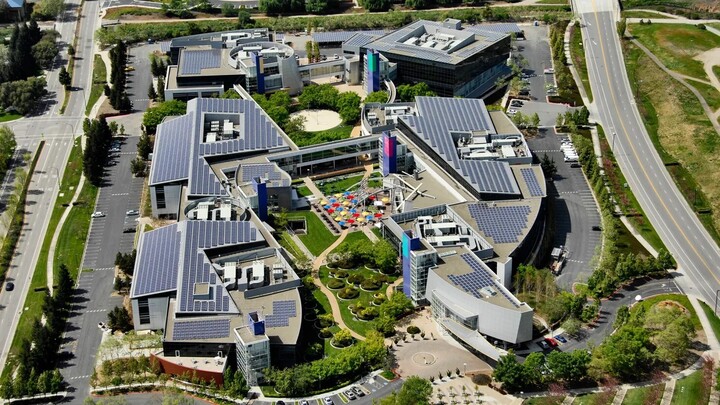
Alphabet's headquarters in Mountain View, California, features an extensive solar panel system. (Source: Getty Images)
Investors also need to be more cautious. Max Gazor, founder of Striker Venture Partners, said he and his team are carefully assessing the cohesion of the founding teams. Many agreements now include safeguards, requiring board approval before licensing technology or intellectual property.
Journalist Steven Levy commented: "Working at an AI startup for one year is equivalent to five years at a startup in the past."
He explained that teams can launch new products that reach millions of users in a short period of time, making employees feel they have accumulated enough experience to move on to another challenge.



Compared to the previous generation—those who had long-term ties to Google, Facebook, Airbnb, or Stripe—today's AI talent is far more pragmatic. They no longer consider rejecting acquisition offers an "honor," but are willing to shift to seize new opportunities.
Silicon Valley is therefore entering a different era, where close commitment – 'loyalty' – is no longer the norm, and AI talent can set their own prices. Large tech corporations are racing to win them over, creating a vibrant but risky talent market.
And the question is , "Will the real price of this constant shift be breakthrough success, or an eroded startup culture?"
Source: https://vtcnews.vn/long-trung-thanh-khong-con-o-thung-lung-silicon-ar1002416.html