My mother's meals taught me so much. They taught me about manners, family values, morality, and above all, the value of family ties.

The mother taught her grandchildren about being resourceful and capable. Photo: DUY KHÔI
Once, I read the poem "Bending Down to Pick Up Fallen Grains of Rice" by poet Nguyen Thi Kim Tuyen, the concluding stanza:
My father
old man with a checkered scarf, hunched over.
Teach me to start with something small.
bend down to your feet
"Picking up fallen grains of rice"


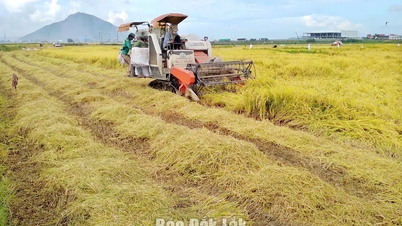
My hometown is in the heart of Dong Cho Ngap (Dog's Yawning Field). That's how the old folks used to describe a vast, desolate, low-lying, acidic, swampy area where "even a dog would have to yawn two or three times to pass through." It's a land where only wild plants like the sedge, the water chestnut, and the wild vine—the kind "given and nurtured by nature"—can survive. I grew up in that countryside, surrounded by acidic soil, salty water, and the simple meals my mother cooked. Meals that, even now, I remember vividly and still crave whenever I think of them.
Back then, my family's thatched house was located right at the confluence of the Cai River and the Ba Tu Canal. The wind from the river blew into our poor, empty but neat and tidy house. The kitchen was my mother's private world and an unforgettable memory for my siblings and me. There, the kitchen cupboard always contained a pot of fermented rice, a pot of braised fish, a few onions, a chili pepper… The firewood was neatly stacked, the wood-burning stove was clean and cozy. Next to the kitchen cupboard was a small wooden platform with a hammock woven from the vines of the Binh Bat tree hanging from it. In that "paradise," my mother lulled me to sleep with the poetic Bac Lieu dialect, with the smooth melodies of the Vong Co folk songs, with the lullaby, "Oh… Saigon lights, green and red…"
My mother taught my sisters that the kitchen is a way for people to judge the domestic skills of the women and girls in the house. The neatness and cleanliness of each rice pot, fish pan, etc., shows how orderly and warm the household is. Thanks to my mother's teachings, my sisters were skillful from a young age; they all cooked well and knew how to help my mother clean the kitchen and the house.

Mother, the first teacher of her young children! Photo: DUY KHÔI
For my mother, the kitchen, bustling with activity from morning till night, and the warm atmosphere of two meals a day, was a way to identify a happy family. So, once, when I visited my sister's house and saw the kitchen cold and empty, everyone glued to their phones, not even looking at each other, my mother cried when she got home...
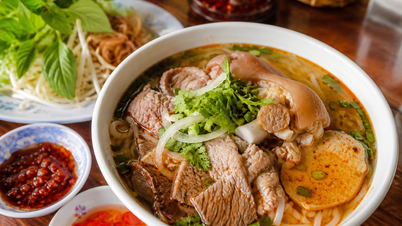
Recalling my childhood, I fondly remember the meals my mother cooked. Back then, she cultivated a vegetable garden beside the house, next to the veranda, and the forest behind the house was full of wild vegetables. That's how she meticulously prepared meals for the whole family. Sometimes it was braised fish, sometimes fermented fish paste, sometimes steamed fish paste, sometimes braised pork with pepper, sometimes rice with coconut milk or cold water… And yet, it was so delicious! On days when we didn't have money to buy food, my mother would scoop rice with cold water and a piece of sugarcane syrup for me to eat, saying, "Try to eat this much, when we have money, your parents will buy you meat!" And on those meals with meat, my five siblings and I would eat heartily, while my parents would just dip their vegetables in the braising sauce… My father would often say, "You kids eat, we're tired of eating this all the time." Only after half a lifetime did I realize that was my father's "greatest lie."
I learned how to be a good person from meals with my parents. My father taught me that when eating fish, you should tear it from the bottom up, never pick off the head first. You should share the best pieces. Before serving rice, you should loosen it up, eat the burnt rice first, then the regular rice. When eating rice with soup, eat gently, without slurping loudly or tapping your chopsticks against the bowl. Talk little during meals, avoid unpleasant conversations, and don't say anything impolite, because "even God avoids interrupting a meal." My mother taught my siblings and me to share meals, the older siblings should give way to the younger ones, to be filial and considerate in our eating habits, and to eat in a way that shows respect and gratitude...
My father taught me that when eating rice, I must eat it cleanly, not letting a single grain fall. He often reminded me, "Bend down and pick up the spilled rice, child"; my mother warned, "Spilling rice is a sin," "There's not even enough rice to eat..." These were lessons in valuing every grain of rice, every fish, in preserving family traditions, in being meticulous, and in not wasting even the smallest grain of rice. I will remember this for the rest of my life: "Bend down and pick up the fallen rice!"
And I also remember the ceremonial meals. On anniversaries and holidays, my parents meticulously prepared the offerings for the ancestors. They offered sacrifices to our forefathers, the land, the rivers, and fallen heroes and soldiers, inviting them to share in the family meal. They lit incense and then called my siblings and me, each to light an incense stick, pour a cup of tea, and share a glass of wine to make the offering meal complete. For my parents, it was a meal of gratitude to our roots. For us, it was a meal about morality and human conduct. To live with respect for elders and superiors, to always repay even the smallest kindness…

At nearly 80 years old, my mother is now frail, and my father is no longer as strong as he once was. But every morning, before the rest of the family is awake, my father diligently cleans the ancestral altar and lights incense for our ancestors. My mother busies herself in the kitchen, cleaning, sweeping, straightening the firewood, and hanging the hammock on the thatched wall... My parents have persistently preserved these family traditions so that we—their children—have a place to live! When their children and grandchildren come home, my parents are overjoyed. The three-generation family meal is filled with warmth and laughter...
For the past few months, my mother has been ill and had to come to the city to live with me. After only a few days, she started complaining about missing home, missing the kitchen, missing the pot of rice cooked over a wood fire with seasonal rice. “I’m worried about your father!” This afternoon, she sat eating with her children and grandchildren in the middle of the city. Her hands trembled as she struggled to eat each bite. When a grain of rice fell, she bent down to pick it up. Looking at her, I suddenly felt like crying!
Memoir: DANG HUYNH
Source: https://baocantho.com.vn/-luom-hot-com-roi--a208859.html