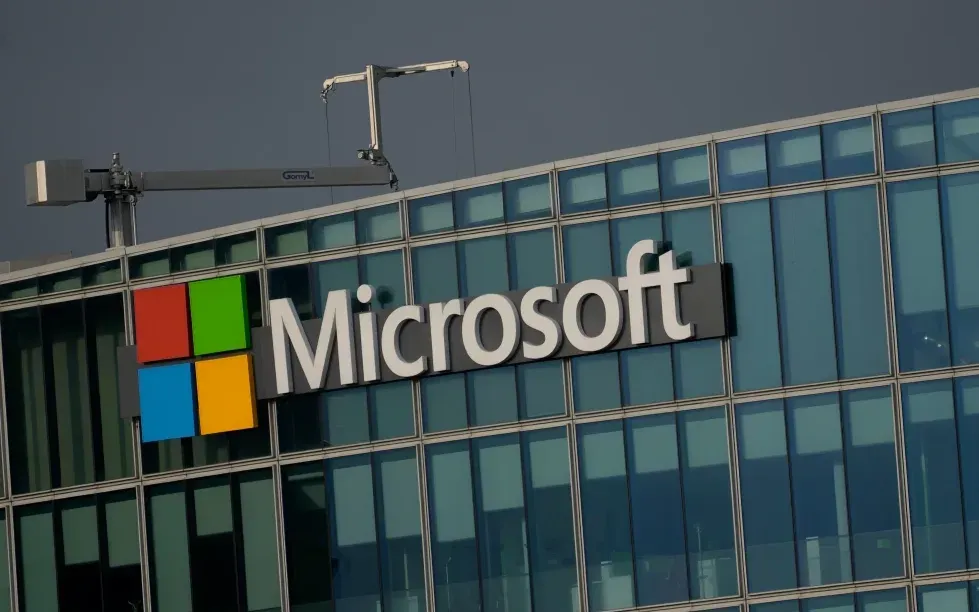
The Microsoft logo at its headquarters near Paris on May 13, 2024. (Photo: AP)
Microsoft has recently taken steps to reduce its reliance on partners and forge its own path in the artificial intelligence (AI) race.
Earlier this month, the American software giant introduced its own developed AI models, tailored to specific business needs at a lower cost than advanced models from OpenAI, Anthropic, and Google.
Microsoft CEO Satya Nadella has also publicly opposed excessive warnings about AI potentially eliminating office jobs or becoming a dangerous weapon. He argues that businesses cannot simultaneously issue such warnings and consume enormous amounts of electricity to build data centers.
Microsoft's early partnership with OpenAI gave it an advantage in the AI wave. However, investors believe the company is gradually losing its leading position. Microsoft's stock price has fallen more than 22% since the beginning of the year, the sharpest decline among major technology corporations. Since the fall of 2025, the company's market value has lost more than $1 trillion.




Customers view Microsoft computers at a store in California on July 29, 2025. (Photo: AP)
To regain investor confidence, Microsoft needs not only to change its messaging but also to demonstrate the business effectiveness of AI.
This year, Microsoft's total investment spending is projected to reach $190 billion, primarily for data centers, chips, and power infrastructure. This massive investment could cause the company's remaining cash flow after expenses to drop significantly, or even turn negative.
Microsoft also recently signed a 20-year agreement with energy giant Chevron. Under the agreement, Chevron will build a gas-fired power plant to supply energy to Microsoft's large data center complex in Texas. However, the project is not expected to begin supplying electricity until 2028.
Expanding computing capacity is considered crucial for Microsoft. Growth of its Azure cloud computing service has been hampered by the company having to allocate processing power to AI services and internal research activities.



Analysts suggest that Microsoft needs to accelerate the growth of Azure, similar to the recent results of Google's cloud computing division. Microsoft's own AI strategy is still under development.
Source: https://vtv.vn/microsoft-tim-loi-di-rieng-trong-cuoc-dua-ai-100260624153620134.htm
![[Photo] Thousands of people participate in a run to show their support for the campaign "Sharing a common determination to build drug-free communes, wards, and special zones".](https://vphoto.vietnam.vn/thumb/1200x675/vietnam/resource/IMAGE/2026/06/27/1782554475933_0673e2a3df7b5e25076a-8283-jpg.webp)


![[Photo] A phone-free summer afternoon at the village library](https://vphoto.vietnam.vn/thumb/1200x675/vietnam/resource/IMAGE/2026/06/27/1782551770949_anh-1-jpg.webp)