

 |
| The people are identified as the main actors in building new rural areas, actively participating in completing the criteria, especially the rural transportation infrastructure criteria. |
New spaces and sustainable movements
Following the merger, Thai Nguyen has 92 administrative units (including 77 communes and 15 wards). The newly established communes all have larger areas and populations, with many combining urban and rural elements. This represents a change in administrative boundaries, expanding the development space and creating conditions for rural areas to be placed within a unified whole, capable of connecting infrastructure, linking the economy , and spreading cultural values.
This expansion has laid the groundwork for a shift in thinking about building new rural areas from breadth to depth. Previously, the main goal was simply fulfilling the prescribed criteria; now, the requirement is to ensure that these criteria are truly integrated into daily life and become a driving force for long-term development.
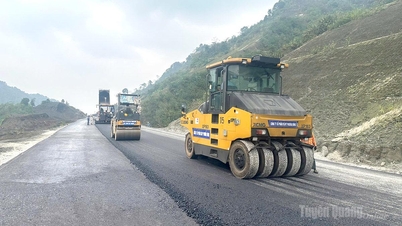
Widening roads, reinforcing irrigation canals, schools meeting national standards, and upgrading village cultural centers are gradually changing the rhythm of life in rural areas.
According to the review, after the merger, 42 out of 77 communes in the province have basically met the criteria for New Rural Development according to the set of criteria for the 2021-2025 period. This is an important foundation for localities to shift their focus from completing the criteria to improving the quality and sustainability of each criterion. Immediately after consolidating the leadership apparatus and advisory system, localities have urgently implemented the task of building New Rural Development with the view that this is a regular, continuous task with no end point.
Mr. Nguyen Minh Tuan, Vice Chairman of the People's Committee of Phu Luong commune, said: The locality currently meets 18 out of 19 criteria for New Rural Development, lacking the general planning criterion after the merger. 12 out of 74 hamlets have achieved the model New Rural Development standard. Immediately after the merger, the commune focused on reviewing and mobilizing resources to complete the remaining criteria, prioritizing investment in infrastructure and working alongside people to improve their lives.
 |
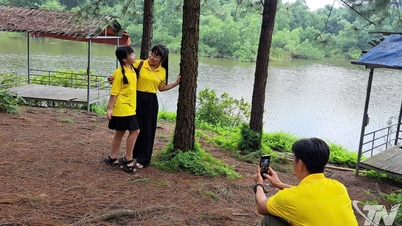
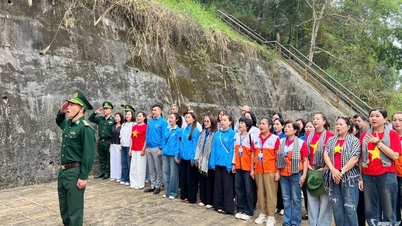
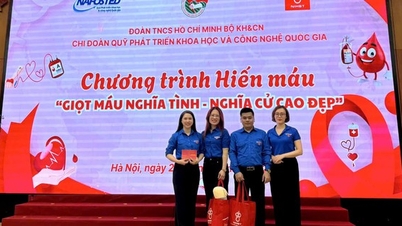
| Demonstrating a proactive spirit, youth union members actively participate in planting trees and working together to protect the rural environment. |
The process of building new rural areas in localities has been implemented as a continuous flow and has a cumulative nature through each stage. The synchronized investment in inter-commune and inter-regional transportation systems has shortened distances, creating conditions for agricultural products, handicraft products, and local goods to participate more deeply in the market.
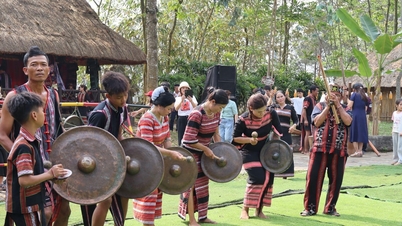
Alongside this, cultural and sports facilities at the grassroots level have received investment and attention, gradually meeting the needs of community activities, physical training, and improving spiritual life, thereby strengthening social cohesion and preserving local cultural identity.
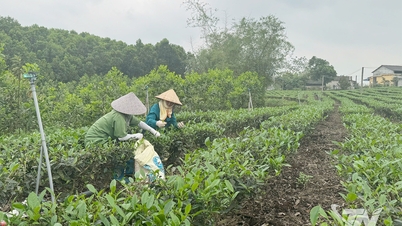
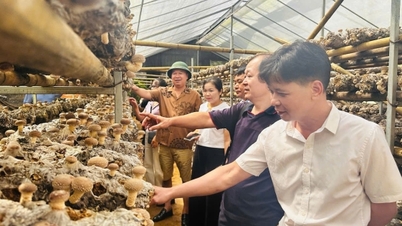
With increasingly complete infrastructure, the rural economy has undergone many positive changes. Cooperative models, production groups, and traditional craft villages are being strengthened in the direction of increasing added value. Agricultural production is gradually shifting from fragmented to integrated supply chains, linked with processing, consumption, and brand building.
As a result, the rural economy is gradually moving away from its sole dependence on raw material production, and is progressively participating more deeply in the value chain and open market. Many OCOP-recognized products have contributed to creating livelihoods, increasing people's income, and shaping the image of a dynamic and distinctive rural Thai Nguyen in the process of integration.
Throughout the process of building new rural areas, the people have always been identified as the central subjects, both directly participating and benefiting from the results. The implementation of the motto "the people know, the people discuss, the people do, the people inspect, the people supervise, and the people benefit" is becoming increasingly substantive, creating consensus and spreading a spirit of responsibility within the community.
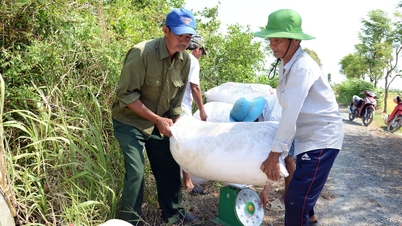
Social consensus therefore becomes a particularly important resource, ensuring that the criteria are sustainably maintained after achieving the standards. Many infrastructure projects are formed through the collective efforts of the people through donating land for roads, contributing labor and other appropriate and transparent resources.
In addition to participating in infrastructure development, people are also proactively innovating their production thinking, developing household and cooperative economies, contributing to increased income and improved quality of life. In social life, criteria related to culture, security and order, and environmental protection are voluntarily implemented by the community through concrete daily actions.
It is this proactive participation that has given depth to the New Rural Development movement, helping each rural area achieve sustainable transformation from within. Mr. Dong Van Sa, a resident of Bao Bien hamlet, Dinh Hoa commune, shared: "The village roads and alleys are more spacious, and the lives of the people are changing every day. The most encouraging thing is that everything is discussed openly, and people work together and share the benefits, so everyone feels responsible for preserving and building their homeland."
A journey without end.
 |
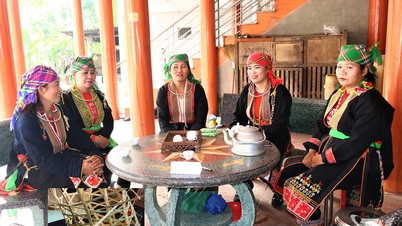
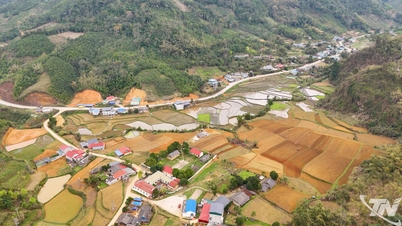
| The appearance of Cho Ra commune after the merger reflects a new development space, where urban and rural elements are harmoniously intertwined, creating a lifestyle that is both modern and familiar. |
In the coming period, Thai Nguyen continues to identify the construction of new rural areas as an important political task, closely linked to the goal of sustainable development and improving the quality of life for its people. Based on this, the province prioritizes mobilizing and effectively utilizing resources to invest in socio-economic infrastructure, especially in remote areas, mountainous regions, and areas inhabited by ethnic minorities, thereby gradually narrowing the development gap between different regions.
A key highlight in realizing that direction is the People's Council's adoption of a resolution deciding on the investment policy for a program to support the renovation and upgrading of transportation infrastructure in 34 disadvantaged and especially disadvantaged communes during the 2026-2030 period. The program has a total capital of over 1,900 billion VND and will be implemented under the mechanism of joint efforts between the State and the people.
Accordingly, the State will support construction costs, while the people will contribute to roadbed construction, land clearance, and other appropriate resources. The program is expected to build and upgrade more than 111km of commune roads, nearly 178km of village and inter-village main roads, renovate and expand nearly 384km of existing commune roads to meet mountainous road standards, and build and renovate the remaining more than 313km of village roads, ensuring they are paved according to regulations. For bridges, spillways, and culverts along the route, the State will support all construction costs, excluding land clearance.
Alongside infrastructure investment, the province continues to refine its comprehensive development orientation for rural areas. Recently, the Provincial Party Standing Committee issued a plan to implement the Comprehensive Rural Development Project for the period 2026-2030, aiming to build an ecological agriculture, modern rural areas, and civilized farmers. The plan focuses on restructuring the agricultural sector towards sustainability, developing high-tech concentrated livestock farming, strengthening forest management and protection, and promoting intensive aquaculture.
Along with that, the goal is to develop 20 more OCOP products achieving 3 stars or higher, increase the percentage of communes meeting the new rural development framework, increase income, improve the rate of access to clean water, and achieve sustainable poverty reduction. Applying science and technology, building organic raw material areas, promoting production linkages along the value chain, and developing community-based agricultural tourism continue to be identified as important directions.
 |
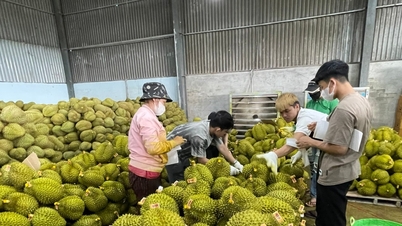
| Authorities at all levels and specialized agencies are actively accompanying and supporting people in developing the economy and gradually improving their living standards. In the photo: A model of growing red-fleshed dragon fruit for high income in Trang Xa commune. |
Throughout this entire process, Thai Nguyen has consistently adhered to the principle of putting the people at the center. All policies and solutions are aimed at promoting the role of the people as the main actors, ensuring that people participate in discussions, decision-making, supervision, and directly benefit from the fruits of development. Practical experience shows that wherever the community's role is effectively promoted, the New Rural Development movement has greater depth and wider reach.
With that approach, building new rural areas in Thai Nguyen aims at the long-term goal of creating a solid foundation for each rural area to develop harmoniously and sustainably, becoming a livable place where people feel secure and committed to building a future together. The journey towards new rural areas therefore has no end point. After the merger, that journey takes on added depth through restructuring and innovative thinking.
In this new development space, with a new approach, rural Thai Nguyen is gradually reaching new heights, where the economy is linked to culture, modernity goes hand in hand with tradition, and growth is coupled with sustainability. On this journey, the people are both the center, the driving force, and the owners of all development achievements.
According to Decision 51/2025/QD-TTg, the National Criteria Set for New Rural Communes for the period 2026-2030 includes 10 criteria and 47 indicators. Specifically, the 10 criteria are: Planning; Socio-economic infrastructure; Rural economic development; Rural human resource training; Culture, education, and health; Poverty reduction and social security; Science, technology, and digital transformation; Rural environment and landscape; Building the political and public administration system; Access to law and security, national defense. Each criterion is divided into three groups to suit the rearrangement and reorganization of administrative units and the development level of the communes. This is a breakthrough, ending the approach of "one set of criteria for all communes," thereby increasing flexibility, practicality, and improving the likelihood of achievement. For Thai Nguyen province, the Resolution of the First Provincial Party Congress sets the goal of having 95% of communes meet the standards of the New Rural Development program by 2030. |
Source: https://baothainguyen.vn/kinh-te/202602/mien-que-buoc-vao-nhip-phat-trien-moi-8af1dab/
![[Image] Nguyen Tat Thanh Street is expected to be widened, reducing traffic congestion.](https://vphoto.vietnam.vn/thumb/1200x675/vietnam/resource/IMAGE/2026/03/24/1774326200262_ndo_br_3-6869-jpg.webp)





















































Comment (0)