

For a long time, the rice-shrimp rotation model in the provinces of the Ca Mau peninsula, such as Soc Trang, Bac Lieu, Ca Mau, and parts of Kien Giang, has been considered a sustainable method to help farmers escape poverty. However, this model has never yielded such high value as in the 2023-2024 winter-spring crop. In particular, the widespread cultivation of high-quality fragrant rice varieties like ST24 and ST25, considered among the best rice in the world , has helped farmers increase the value of both their shrimp and rice crops.
"The 'Dog-yawning field' reaps a double harvest."
Looking at the rice paddies of ST24, ST25, and OM18 varieties planted on shrimp ponds in Hong Dan, Phuoc Long districts and Gia Rai town ( Bac Lieu province ), it's hard to imagine that this area was once the epicenter of the "Dog-Yawning Fields." A land that was once a swampy, acidic, saline area overgrown with weeds, where people could only graze buffalo and raise ducks year-round. Yet today, through human intervention, it has been transformed into rice paddies on shrimp ponds, laden with golden grains, ready for harvest.
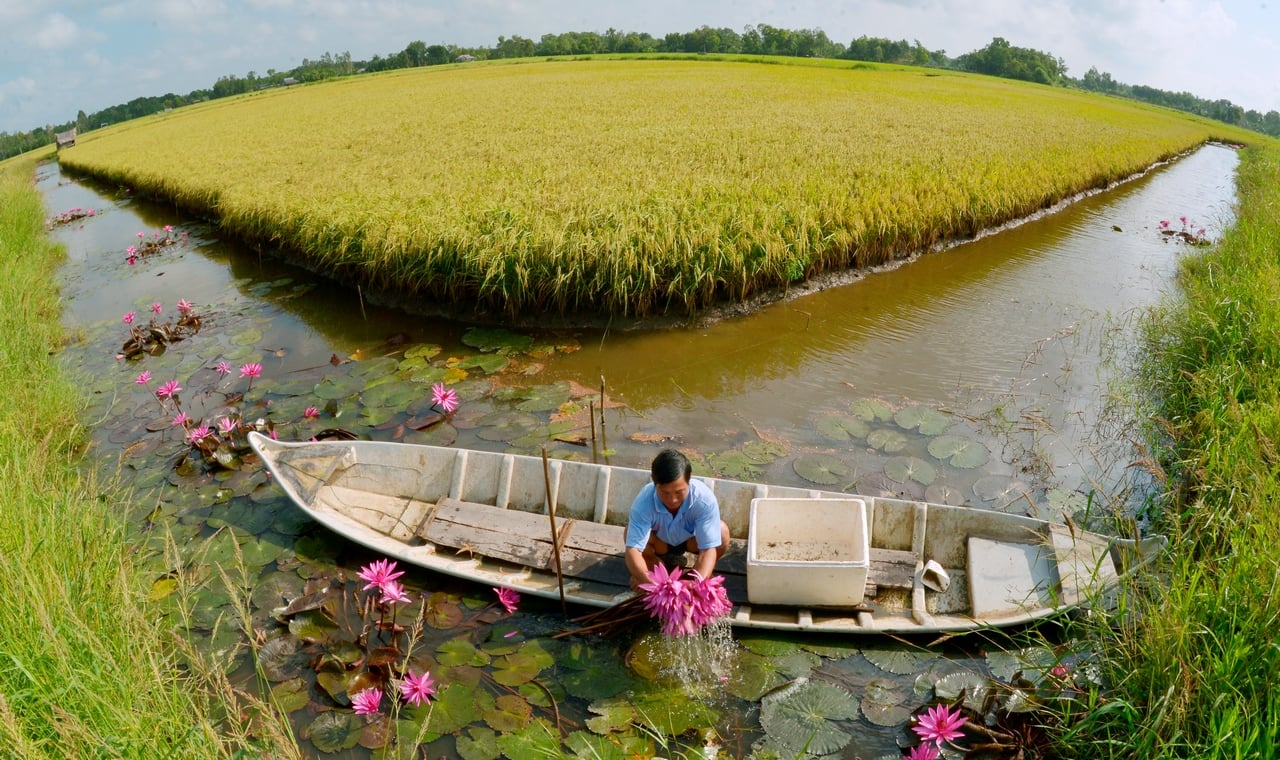
Rice-shrimp farming model in Hong Dan District, Bac Lieu Province
Mr. Nguyen Van Phong, Director of An Khang Agricultural Service Cooperative (Ninh Quoi A commune, Hong Dan district, Bac Lieu province), happily stated: "The cooperative has 50 members and over 850 hectares of cultivated land, including 200 hectares for rice-shrimp farming. This season, thanks to favorable weather, rice yield reached nearly 7 tons/ha, an increase of 0.5 - 1 ton/ha, a rare high yield." Even more encouraging for farmers is the average selling price of rice at 240,000 VND/sack, an increase of nearly 70,000 VND/sack (1 sack of rice equals 20kg - PV). After deducting expenses, farmers earned a profit of 68 million VND/ha.
Mr. Phong explained that the visible benefits of growing rice on shrimp farming land include reduced rice seed and fertilizer use, limited pesticide use, and lower costs while maintaining high yields. Furthermore, the rice-shrimp rotation system helps farmers break the chain of disease transmission from one rice crop to the next. The organic matter remaining after the shrimp crop also provides nutrients for rice growth. Conversely, rice rotation not only helps clean the shrimp pond environment, but the straw and rice husks, by-products after harvest, also provide a rich food source for the shrimp. "This year, we had a bumper crop and good prices, so everyone is happy. The cooperative will definitely expand the rice-shrimp farming area for the next season," Mr. Phong said.
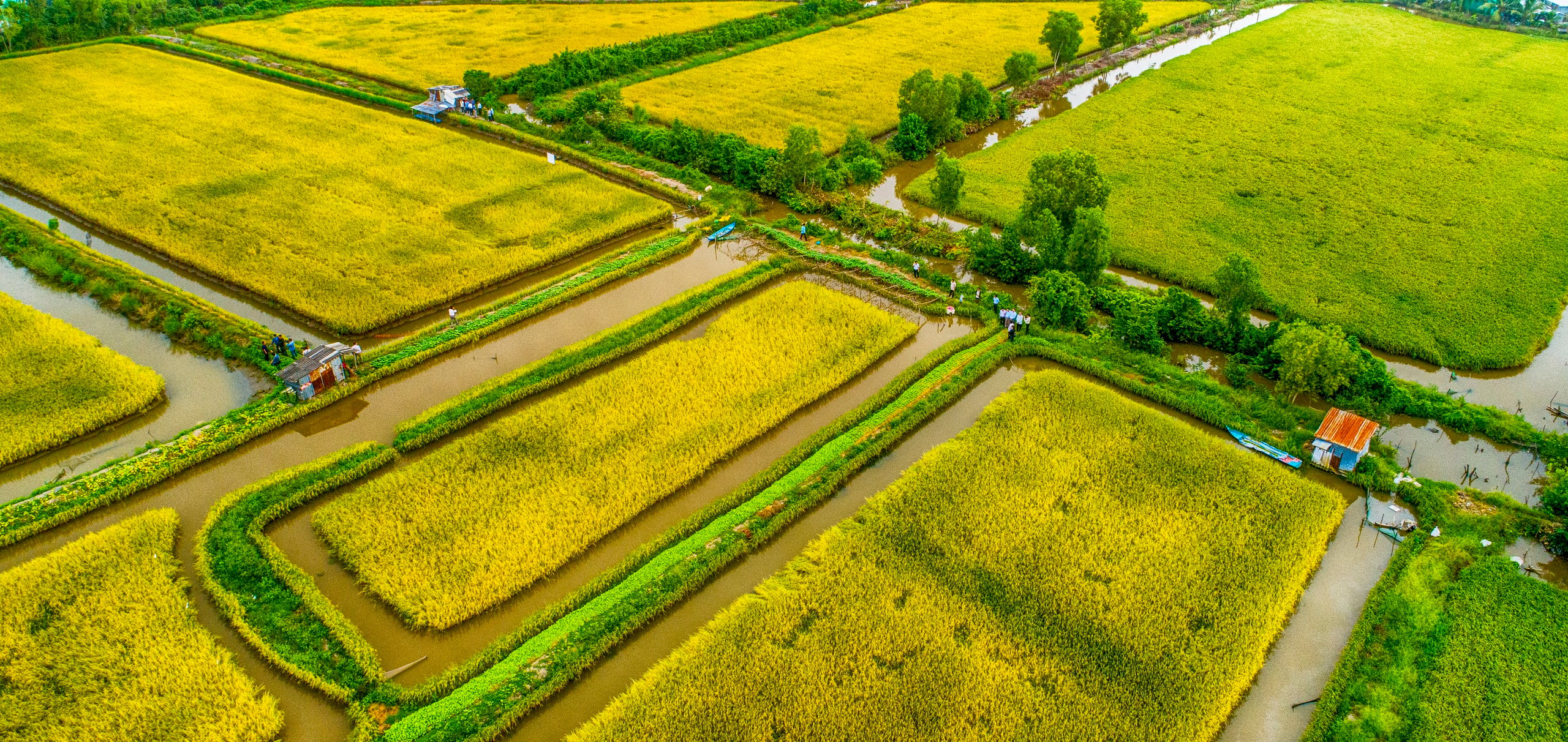
The rice-shrimp farming model opens up greater prospects for farmers in the Mekong Delta.
Pham Van Muoi, Deputy Director of the Bac Lieu Department of Agriculture and Rural Development, happily reported that approximately 15,000 hectares of the nearly 47,000 hectares of rice-shrimp farming area in the province have already been harvested. Popular fragrant rice varieties such as ST24, ST25, Mot Bui Do, OM18, and Dai Thom 8... are all fetching prices ranging from 10,600 to 11,500 VND/kg. This is a record high price, helping farmers increase their profits by 9-24 million VND/ha compared to the previous year. "Previously, farmers mainly relied on shrimp farming, but now they are also focusing on rice. Thanks to the availability of many high-quality, well-priced rice varieties, coupled with the application of science and technology in cultivation, the rice-shrimp farming model in the locality has truly achieved high efficiency," Mr. Muoi said.
The world's best rice helps double income.
Similar to Bac Lieu, in the last days of the year, visiting the communes of Thoi Binh district (Ca Mau province) will reveal people harvesting freshwater prawns raised in rice paddies. Thoi Binh is also the district with the largest rice-prawn production area in Ca Mau province, with approximately 18,000 hectares, followed by U Minh, Tran Van Thoi, Cai Nuoc districts, etc., with a total area of nearly 40,000 hectares across the province.
Mr. Le Van Mua, residing in Tri Luc commune, Thoi Binh district, said that his 5.5 hectares of ST25 rice grown in his shrimp ponds have just been harvested, yielding nearly 6 tons per hectare. "Even better, ST25 rice continues to win the award for the best rice in the world in 2023, so from the beginning of the season, traders have been guaranteeing the purchase price of nearly 10,000 VND/kg. Thanks to that, my family earned nearly 200 million VND in profit from this rice crop."
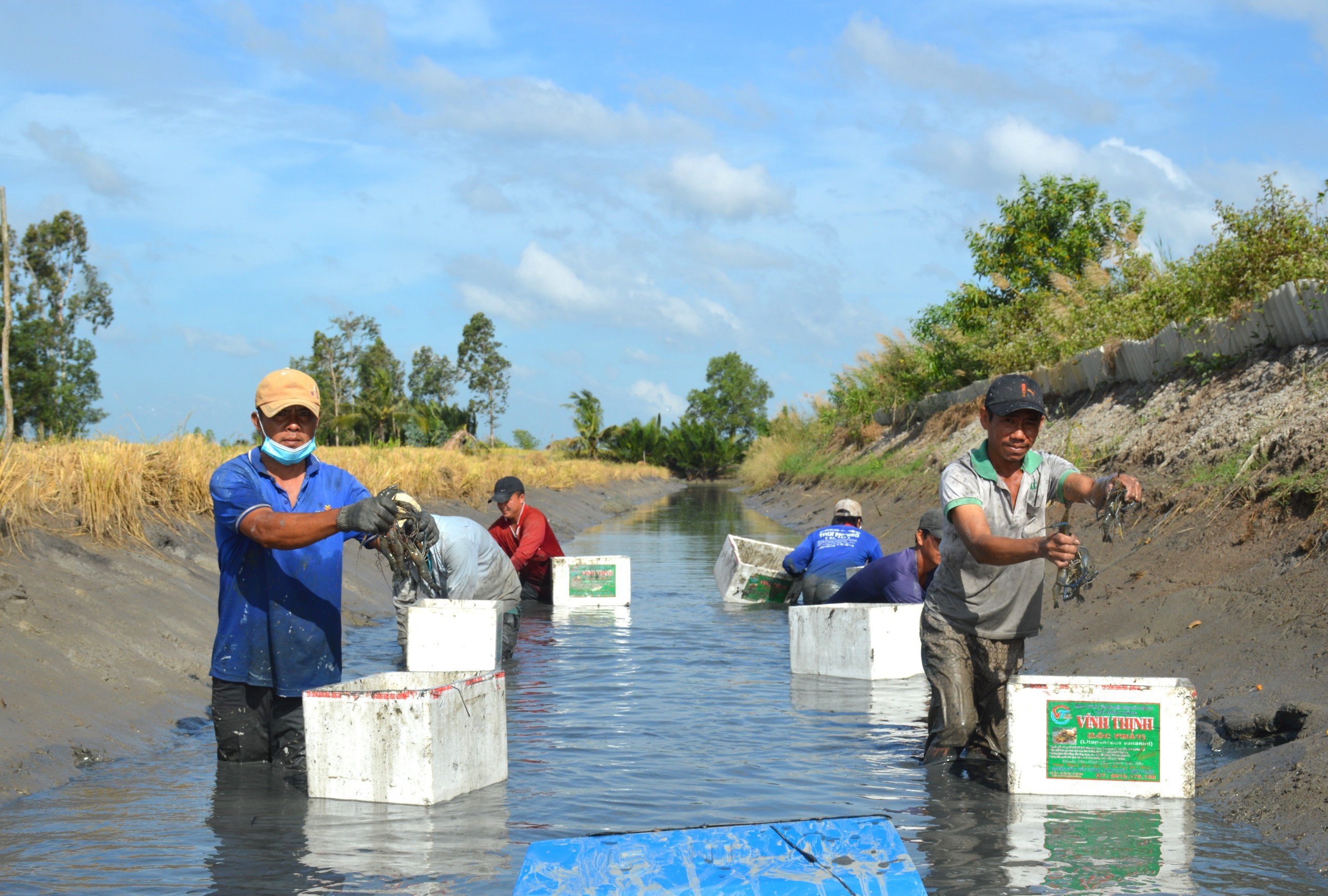
Farmers in Thoi Binh district (Ca Mau province) harvest shrimp in rotation with high-quality rice.
As a well-known rice-shrimp farming household in Tan Bang commune, Thoi Binh district, Mr. Huynh Van Dung recounted that previously, with an area of 1.5 hectares, his family earned a maximum of about 50-60 million VND per year. That was until Mr. Dung and two other households were selected by the authorities to participate in the project "Improving the Sustainability of Rice-Shrimp Farming Systems." "Thanks to this project, we farmers received systematic training, not just relying on experience as before. For example, instead of the old habit of discarding the straw from the previous rice crop after threshing, we now tie it into bundles and put it in the fields to create algae, which serves as food for the shrimp. They also guided us on improving ponds, creating water color, selecting shrimp fry – in general, they were very thorough," Mr. Dung said. By effectively applying these technical solutions, with the same 1.5 hectares of rice fields as in previous years, Mr. Dung's family income has increased to 100-120 million VND per year.
According to Mr. Phan Hoang Vu, Director of the Department of Agriculture and Rural Development of Ca Mau province, the province is promoting the application of science and technology in production to further develop the rice-shrimp farming model. In particular, emphasis is placed on establishing appropriate production processes through linkages; striving to obtain international and multi-certification standards so that farmers can sell their rice-shrimp rotation to more markets at higher prices.
Kien Giang province has also expanded the rice-shrimp farming area to approximately 62,500 hectares; Soc Trang province to 7,500 hectares. Many localities are producing rice-shrimp in more diverse forms, such as: raising two crops of shrimp (tiger shrimp or whiteleg shrimp) in the dry season and planting one crop of rice in the rainy season, intercropped with raising tiger shrimp, whiteleg shrimp, or giant freshwater prawn. Localities are also boldly encouraging the expansion of rice-shrimp models towards clean shrimp - safe rice; fragrant rice - clean shrimp, clean shrimp - organic rice; and connecting with businesses to guarantee sales and ensure output…
It can be said that, from a production model that provided a secure and sustainable livelihood, helping farmers escape poverty, the rice-shrimp farming model is now opening up even greater expectations. It is a sustainable, environmentally friendly production model that creates distinctive, high-quality, and high-value agricultural products, thereby significantly increasing income per unit of land for farmers. For farmers in the Mekong Delta, nothing is more exciting than a bumper rice-shrimp crop in 2023-2024, with good prices and a harvest right at the end of the year, allowing families to have a more prosperous and joyful Tet holiday.
Source link
























































Comment (0)