

With enormous potential, if timely, swift, and targeted action is taken, and with the joint efforts of the government, people, and businesses, Cat Ba Island (Hai Phong City) has every opportunity to realize its aspiration of becoming a world-class "green" tourist island.
The appeal of "green" tourist islands
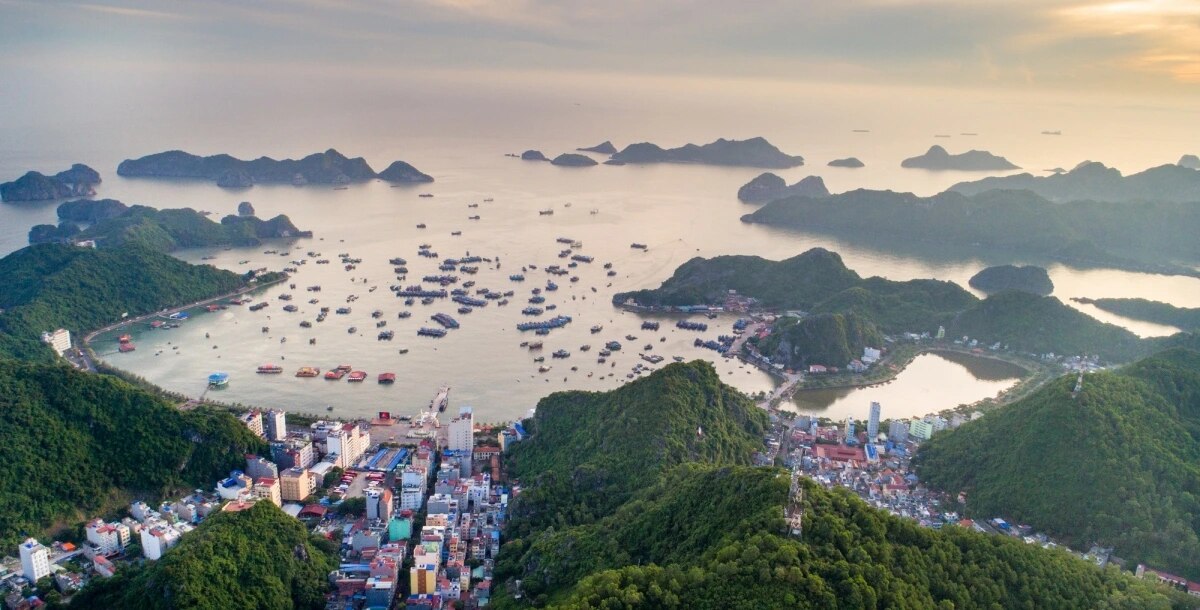
As one of the crucial links in the northern coastal tourism economy , within the national tourism development zone of Hanoi - Hai Phong - Quang Ninh - Ninh Binh, Cat Ba Island (Hai Phong) has early on oriented itself towards ecotourism development, with the expectation of breaking through to become a high-class, smart "green" tourist island.
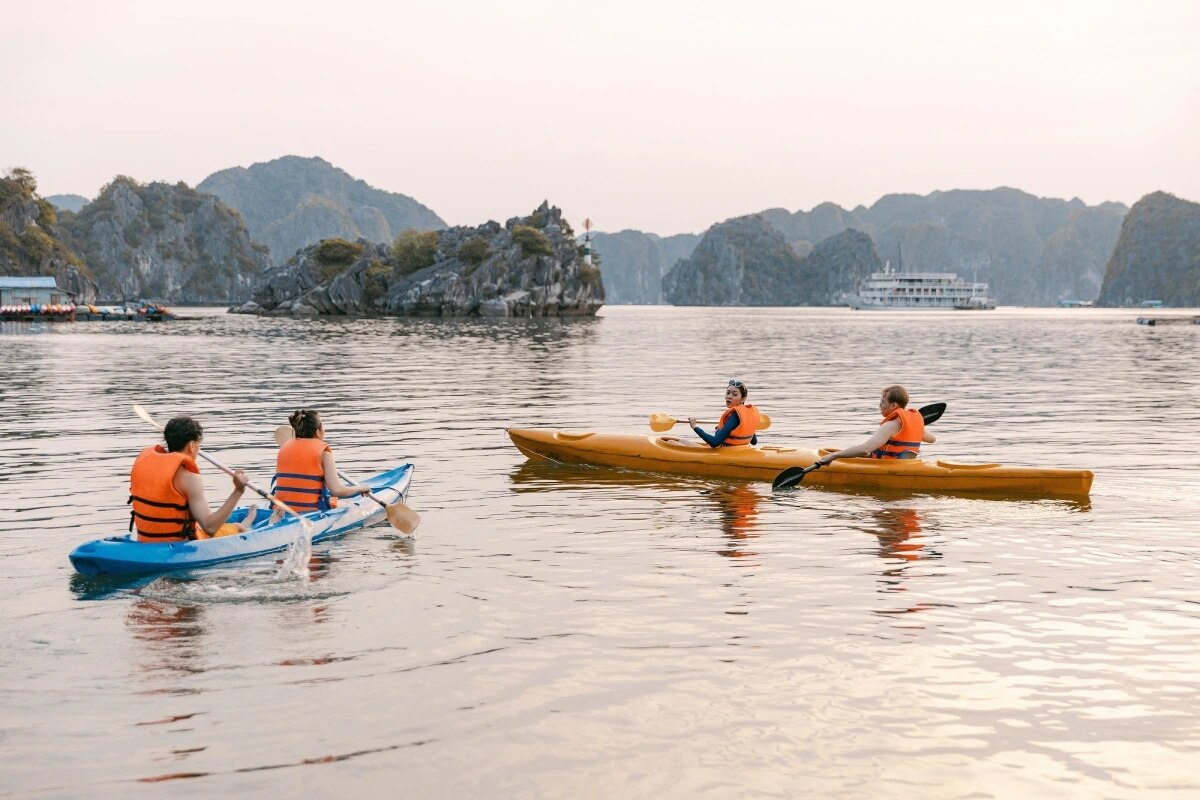
Ecotourism emerged in Vietnam in the early 1990s and is the fastest-growing type of tourism in the industry, with a growth rate of approximately 20-34% per year. The most accurate understanding of ecotourism is creating an organic and harmonious relationship between humans and nature, promoting a sense of responsibility for environmental protection, while simultaneously providing economic benefits to local communities and preserving natural values.
Developing marine ecotourism is one of the important directions set out in the Tourism System Planning for the period 2021-2030, with a vision to 2045.
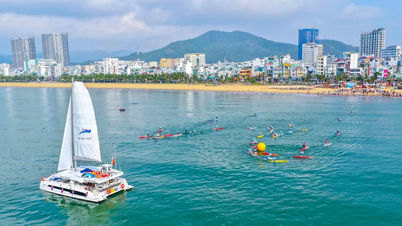
Undeniably, Cat Ba Island possesses all the necessary foundations to become a world-class ecotourism destination. The mere fact that it boasts six national and international titles – including: Special National Scenic Area and Monument, World Biosphere Reserve, National Park, Marine Protected Area, World's Most Beautiful Bay, and most recently, UNESCO World Natural Heritage Site – rightfully positions Cat Ba as a green, smart tourism and resort paradise, a "representative face" of island ecotourism in Vietnam and Asia.
The presence of the Cat Hai – Phu Long cable car line and a robust electric tram system in the central area provides an ideal starting point for quickly establishing a green tourism infrastructure, amenities, and technology ecosystem for the pearl island.
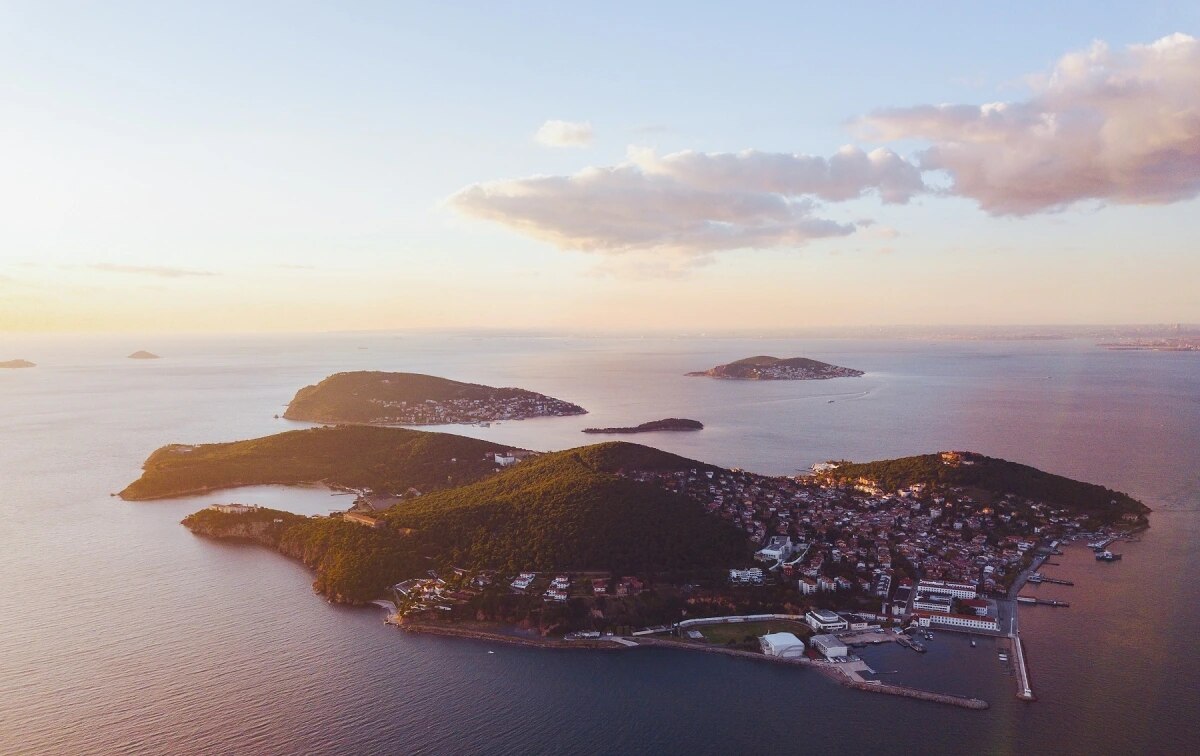
Around the world, "green" and smart tourist islands continue to prove their immense appeal. Examples include Lamma Island in Hong Kong (China), consistently ranking among the world's top car-free islands; Princes Island in Turkey, which says no to gasoline-powered vehicles; and Tau Island in American Samoa, which has switched almost entirely to solar energy. Numerous other tourist islands, such as Honolulu (Hawaii) and the Caribbean nation of Dominica, are also investing heavily in "greening" efforts and achieving unexpected success, attracting a huge number of global tourists each year.
Act quickly to make Cat Ba Island the "mini Maldives of Vietnam".
Like other islands around the world, the key issues Cat Ba needs to address to achieve a spectacular breakthrough and become a world-class green tourist island in Vietnam are noise pollution; exhaust fumes from cars and other vehicles; and waste and wastewater pollution. To ensure sustainable development and accommodate the enormous number of tourists in the future, it is necessary to now plan and invest in well-planned, large-scale infrastructure and tourism projects with modern technology.
According to Professor Dr. Do Cong Thung – former Chairman of the Scientific Council of the Institute of Marine Resources and Environment, the priority solution is to minimize the use of gasoline and diesel vehicles on the island. “About five years ago, the Hai Phong City People's Committee raised the issue: how to ensure that all cars and vehicles emitting air and noise pollution stop at the fishing port and do not operate on Cat Ba Island, and that electric vehicles are used for transportation around the island. That is a necessary vision. Currently, the use of a cable car from Cat Hai to Cat Ba is a very good option, overcoming many environmental pollution problems and limiting the number of vehicles on the island. However, it is not enough to meet long-term needs; additional routes, such as from Cat Hai Island to the center of Cat Ba town, are needed for more convenient transportation,” Professor Dr. Do Cong Thung analyzed.
In addition, experts also believe that it is necessary to accelerate the construction of waste and wastewater treatment infrastructure on a sufficiently large scale and with advanced technology. This is also the wish of the people and businesses on the island after a long time living with garbage and polluted wastewater. “Cat Ba is very beautiful, but there is a lot of floating garbage under the pier, and a foul smell, possibly coming from the sewage pipes. I hope Cat Ba will receive investment from large corporations, which will then treat the wastewater and waste disposal systems to create a cleaner and healthier environment,” shared Mr. Pham Van Linh, originally from Hai Duong, who has lived in Cat Ba for over 10 years.
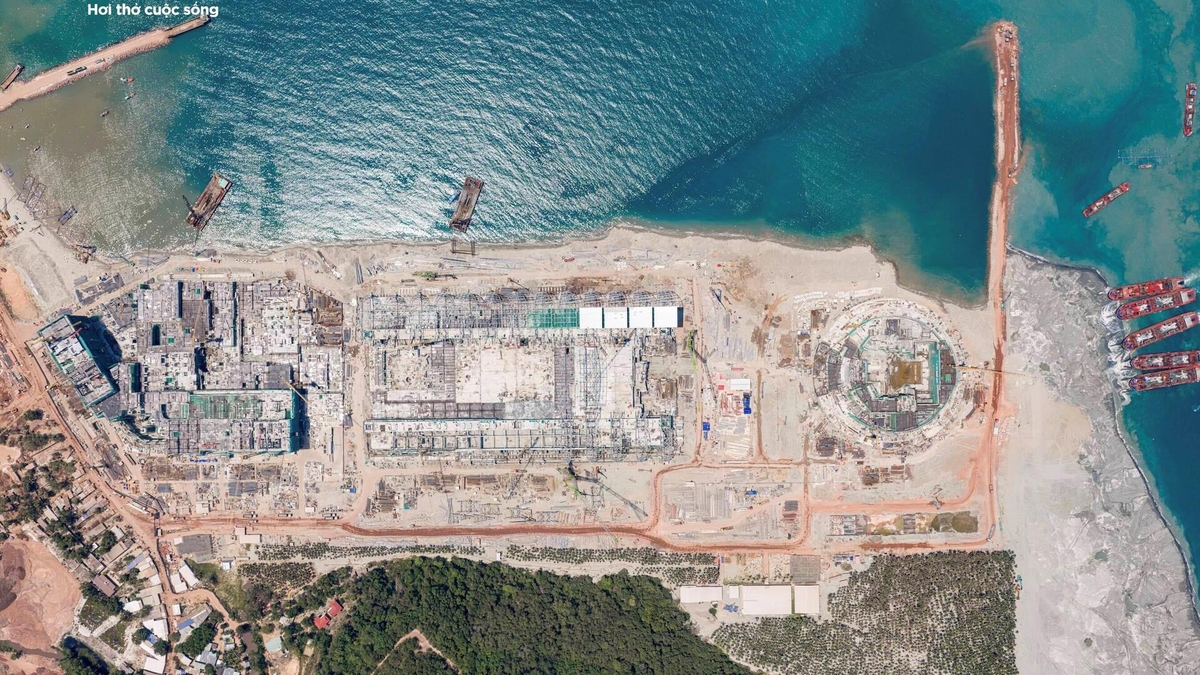
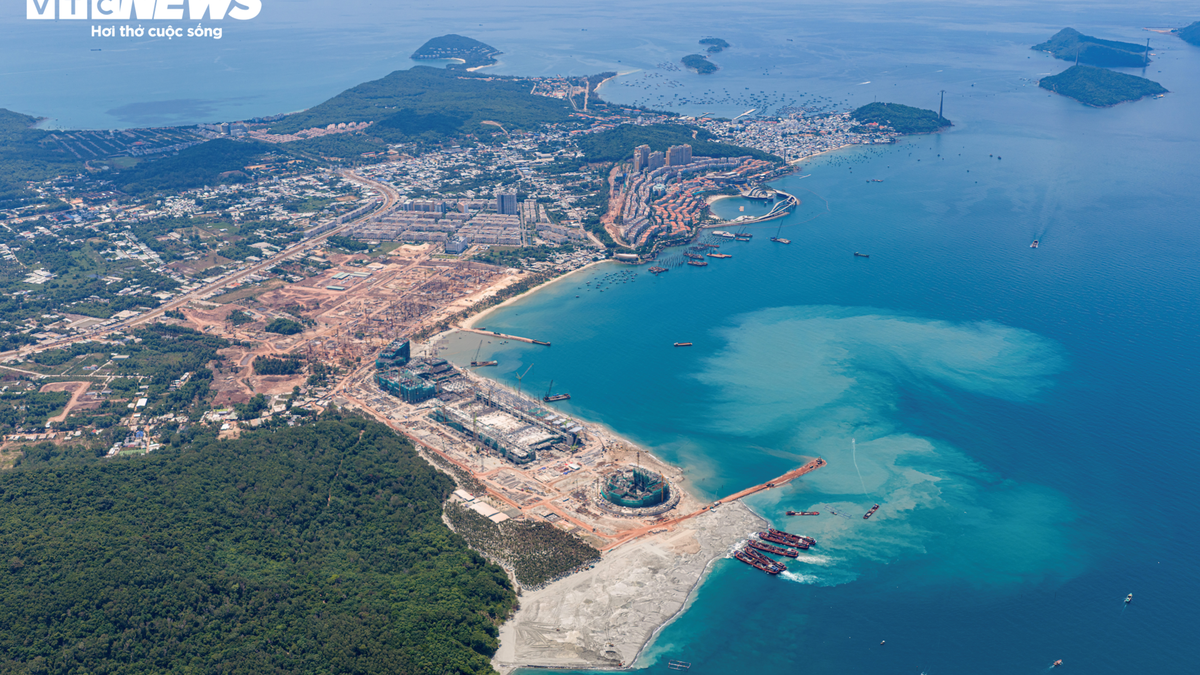
Currently, Hai Phong City and Cat Hai District are making efforts to find solutions to address the pollution problem by accelerating the implementation of projects to renovate and upgrade, and build a wastewater collection and treatment system in the Tung Dinh Lake area and the central area, etc. At the same time, they are attracting large investors to join hands in "greening" Cat Ba. Recently, Phu Quoc Civil Construction Company Limited (a member of Sun Group) announced an investment of nearly 12,500 billion VND to implement the Cat Ba Central Bay Tourism, Service and Commercial Area project, aiming to bring a comprehensive green project to the island.
Notably, the project not only provides a comprehensive and environmentally friendly wastewater and waste treatment system, but also invests in an advanced seawater desalination system and a rainwater harvesting and treatment system to meet the island's freshwater needs. Furthermore, adhering to the goal of transforming Cat Ba Island into a world-class "green" tourist destination, the project is meticulously planned with a central square, an international-standard public artificial beach, pedestrian streets, and a vibrant array of services at its heart. Throughout the project, a green landscape and public water features surround and permeate every aspect, creating a green destination in terms of scenery, amenities, and infrastructure. This is also one of the most well-planned land reclamation projects, applying many advanced and modern technological solutions in line with international trends.
Developing high-end, systematic marine and island tourism, coupled with the creation and protection of a green, ecological environment and smart amenities, is the "key" to the sustainable development of these islands. Michael van de Watering, a leading expert at Royal HaskoningDH, a global consulting firm specializing in land reclamation, maritime projects, and water treatment technology, believes that Cat Ba has a very promising opportunity to become a zero-emission ecological island. Achieving this goal requires concerted efforts from the government, businesses, and the community.
“Businesses play a crucial role in adopting green building practices to ensure new constructions are energy-efficient and environmentally friendly; investing in sustainable tourism initiatives and reducing carbon emissions; and collaborating with local communities to create more job opportunities that support sustainable practices,” said Michael van de Watering.
Source: https://vov.vn/doanh-nghiep/doanh-nghiep-24h/mo-chia-khoa-sinh-thai-dua-cat-ba-cat-canh-post1128286.vov


























































Comment (0)