

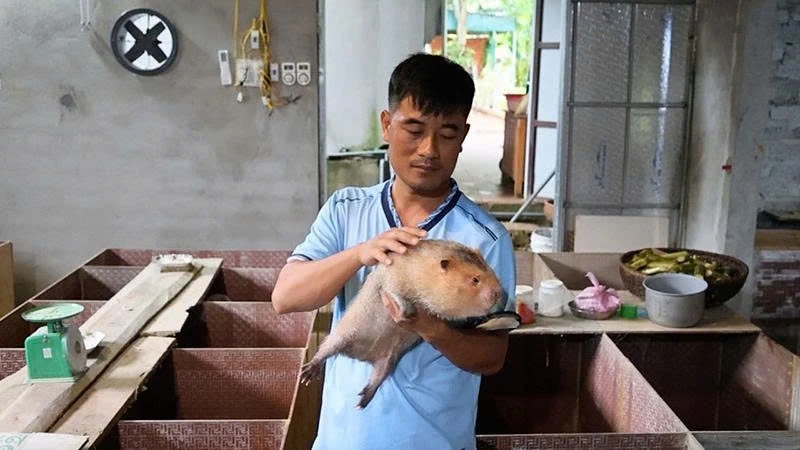
Mr. Bui Van Tu's model of raising specialty bamboo rats has opened up a new direction for economic development for many local households.
In some localities of the province, raising specialty livestock is gradually proving effective, contributing to improved income and creating sustainable livelihoods for many households.
In Hop Tien commune, porcupine farming is becoming a potential economic development direction. Currently, there are about 20 households in the locality participating in raising this animal, forming a specialized livestock farming model that brings stable income to the people.
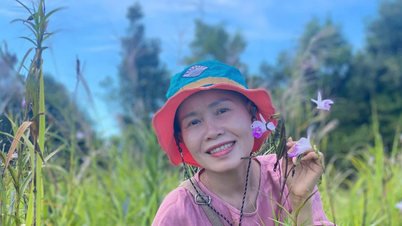
According to Ms. Le Thi Trang, Director of Trang Farm Agricultural and Tourism Cooperative in Hop Tien commune, raising porcupines is a model quite suitable for the conditions of many households. Compared to many other types of livestock, porcupines do not require too much breeding experience, the area of the enclosures is not large, and the initial investment is also at a moderate level.
"This is an easy animal to raise, adapting well to local climatic conditions. Hedgehogs have a fairly simple diet, mainly green vegetables, fruits, and some protein-rich foods like insects. Therefore, breeders can utilize readily available local food sources to reduce breeding costs," Ms. Trang shared.
In addition, Ms. Trang also applies technological advancements in animal husbandry to improve efficiency and minimize environmental pollution. A prime example is the use of biological bedding in the enclosures. This type of bedding helps decompose the porcupine urine and feces, reducing odors and inhibiting and eliminating the growth of harmful microorganisms. Thanks to the application of appropriate technical solutions, porcupine farming has become more convenient, saving farmers labor and maintaining clean enclosure environments.
Besides providing income for breeders, porcupine farming also contributes to enriching the supply of specialty food products for the market. Porcupine meat is favored by many consumers, especially in restaurants and tourist areas. This opens up opportunities for stable consumption, giving breeders more motivation to expand production.
Besides porcupine farming, another specialty animal farming model in Ngoc Trao commune is also yielding significant economic benefits: bamboo rat farming. In 2023, Mr. Bui Van Tu boldly renovated his family's old pigsty to raise mottled bamboo rats. After a period of raising them and accumulating experience, in 2024 he switched to raising peach-cheeked bamboo rats, a breed considered to have higher economic value. Currently, his farm is raising about 100 breeding bamboo rats to provide a source of offspring and supply commercial bamboo rats to the market.
According to Mr. Tú, raising bamboo rats has many advantages because they are easy to care for, rarely get sick, and are suitable for local farming conditions. Their food source mainly consists of plants, roots, bamboo stalks, sugarcane, etc., which are readily available in his family's hillside garden.
“We currently sell bamboo rats weighing 600-800g for about 3.8 million VND per pair. The largest ones, weighing 2-3kg, are priced at around 10 million VND per pair. Since the beginning of the year, our family has earned about 150-170 million VND from selling breeding bamboo rats,” Mr. Tú said.
According to his calculations, if he maintains the current scale of breeding and continues to expand production, he expects total revenue from selling breeding and commercial guinea pigs this year to reach over 400 million VND.
Recognizing the potential of the model, Mr. Tú is continuing to invest in building more enclosures to expand the scale of his operation. The enclosures are designed separately for different purposes, such as breeding areas for bamboo rats, areas for young bamboo rats, and areas for commercial breeding.
"Expanding the breeding is necessary because the available food source in our family's hillside garden is abundant. If we develop more breeding guinea pigs, the economic profit will be much higher," Mr. Tú shared.
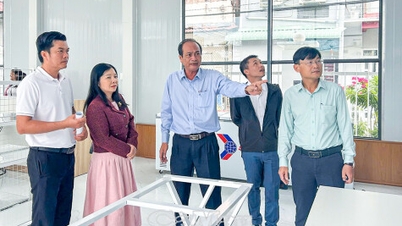
According to Bui Van Thuan, Vice Chairman of Ngoc Trao Commune, Mr. Tu's bamboo rat farming model is being developed by the local authorities as a model to encourage young people to learn and develop their economy. In the future, the Commune People's Committee will work with the commune's youth union to recruit more members into the youth economic development club to share experiences and replicate the model. Building such model projects not only helps people learn from practical experience but also contributes to promoting the entrepreneurship movement in the locality, especially among rural youth.
In reality, many specialized livestock farming models are yielding higher economic returns compared to some traditional livestock. However, for these models to develop sustainably, they require the support of government agencies and specialized sectors in providing technical assistance, disease control, and market connections. Furthermore, the establishment of cooperatives, associations, or economic development clubs will help farmers connect production, share experiences, and enhance product value. With proper support and efficient production organization, this will be a crucial driving force contributing to rural economic development.
Text and photos: Phuong Do - Hoang Dong
Source: https://baothanhhoa.vn/mo-loi-lam-giau-o-nong-thon-280917.htm





















































Comment (0)