

According to Minister Nguyen Van Thang, exploiting sea sand significantly reduces the pressure on the use of river sand. This is an abundant material source, and the Ministry of Transport is expanding pilot programs on expressways in the North and Central regions.
With abundant sea sand, an announcement will be made to allow its widespread use.
Continuing the agenda of the 8th session of the 15th National Assembly , on the morning of October 26th, during group discussions, Minister of Transport Nguyen Van Thang provided information on several transport projects as well as the use of sea sand as a leveling material for transport construction projects.
Regarding landfill materials in the Mekong Delta region, Minister Nguyen Van Thang stated: "Based on reserves and actual demand, we do not lack sand to accelerate infrastructure development in the Mekong Delta. However, when many projects are implemented simultaneously, the demand for sand increases dramatically, leading to localized shortages."
Therefore, the process of local authorities following the correct procedures is very time-consuming, forcing the National Assembly to issue many specialized resolutions to expedite and streamline procedures.
Recently, thanks to the decisive actions of the Government and the National Assembly, over 72.3 million cubic meters of river sand have been fundamentally removed, and permits have been issued for approximately 40 million cubic meters, while the remaining 32.3 million cubic meters are still undergoing processing.
Simultaneously, the government directed ministries and agencies to research sea sand for use as a landfill material. After coordinating with other ministries and agencies for research, the Ministry of Transport found that sea sand is of good quality, does not cause problems with salinization, and has good cohesion.
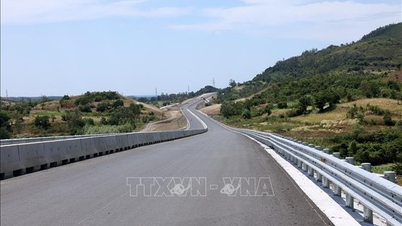
To date, Soc Trang province has licensed approximately 5.5 million cubic meters of sea sand for the Can Tho - Ca Mau section of the expressway.
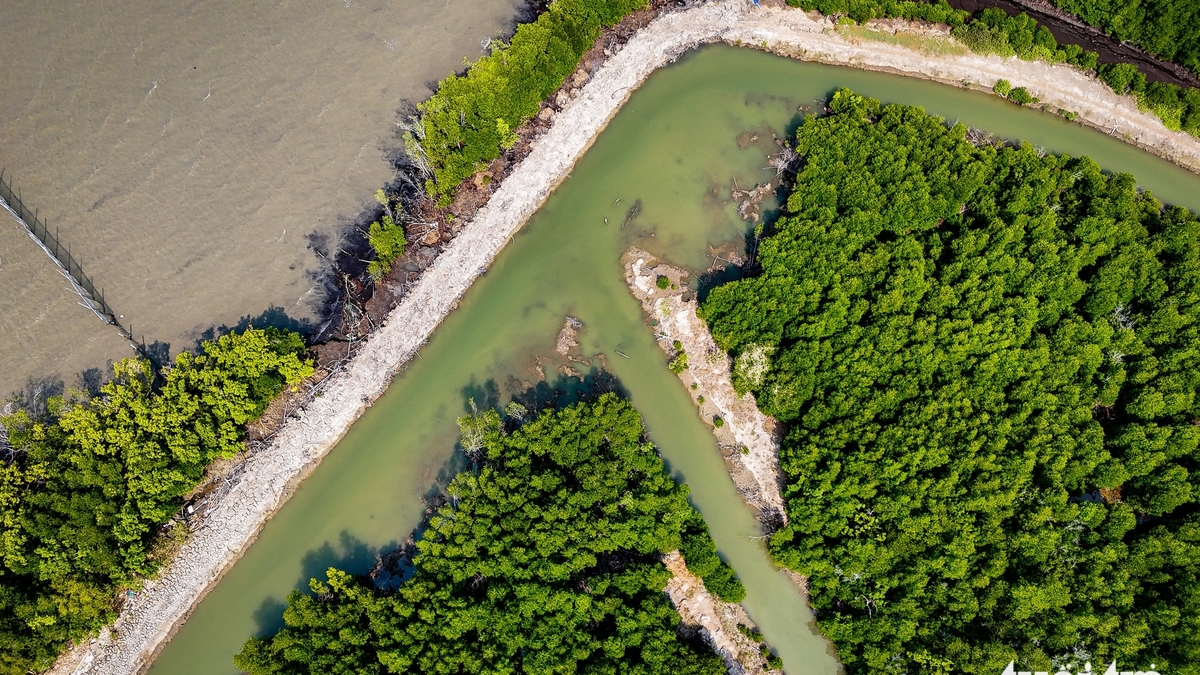
According to him, exploiting sea sand instead of river sand will significantly reduce the pressure on river sand usage. In terms of reserves, Soc Trang alone, if fully accounted for, has approximately 14 billion cubic meters of sea sand. Just one area in Soc Trang currently under licensing already has 145 million cubic meters.
This is an abundant source of materials, and the Ministry of Transport is expanding pilot programs on expressways in the North and Central regions. It is expected that by the end of this year, permission will be granted for the widespread use of sea sand on all expressways. However, exploitation needs to be carried out at a moderate pace to ensure sustainable socio-economic development.
Travel time from Ho Chi Minh City to Can Tho will now be just over an hour after the railway investment.
Regarding the railway sector, Minister Nguyen Van Thang informed that the Government has submitted a report to the National Assembly for consideration and approval of the policy for the North-South high-speed railway project (from Hanoi to Ho Chi Minh City).
In addition, there are currently three major railway projects underway, including three sections of the line: Lang Son - Hanoi; Hanoi - Ho Chi Minh City; and Ho Chi Minh City - Can Tho.
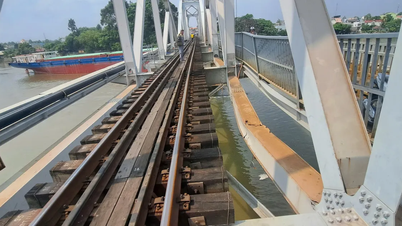
The Lang Son - Hanoi railway line currently operates with mixed gauge (including 1,000mm and 1,435mm gauges). The government will soon submit a proposal to the National Assembly to upgrade this section of the line.

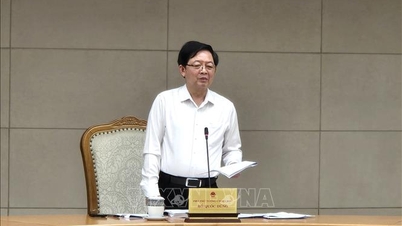
Minister of Transport Nguyen Van Thang speaks at a National Assembly committee meeting on October 26.
Of these, the Lang Son - Hanoi route is currently being planned, with proposals to develop standard gauge passenger and freight transport, at a speed of approximately 200 km/h.
Regarding the Ho Chi Minh City - Can Tho route, the Ministry of Transport is preparing to complete the pre-feasibility report to submit to the Government and the National Assembly.
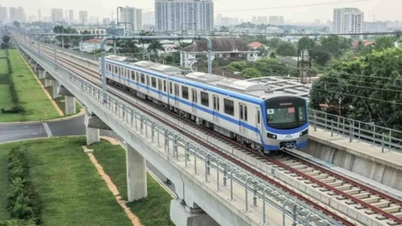
The line will operate on standard gauge railway with a design speed of 200km/h for passenger and freight transport at approximately 170km/h, a length of 174km, and a total estimated investment of approximately US$9.98 billion (equivalent to VND 220,000 billion).
This project will be divided into two phases, with phase 1 being a single-track line, requiring only one round of land clearance, at a cost of approximately 155,000 billion VND; it will be used for both passenger and freight transport due to the very high demand. Once operational, the travel time from Ho Chi Minh City to Can Tho will be reduced to just over an hour.
Improved compliance with traffic regulations leads to a significant reduction in accidents.
Regarding the upgrade of the two-lane expressway, the Minister of Transport said that the Government has recently given very decisive instructions.
According to the Minister, the National Assembly and the Government previously decided that implementing two lanes was appropriate, as many routes had very low traffic volumes at that time. After a period of development, the need for upgrading is inevitable.
"The Ministry of Transport has been coordinating with relevant ministries to upgrade all 2-lane routes to 4 lanes and some limited 4-lane routes to full, or even larger, versions," the Minister informed.
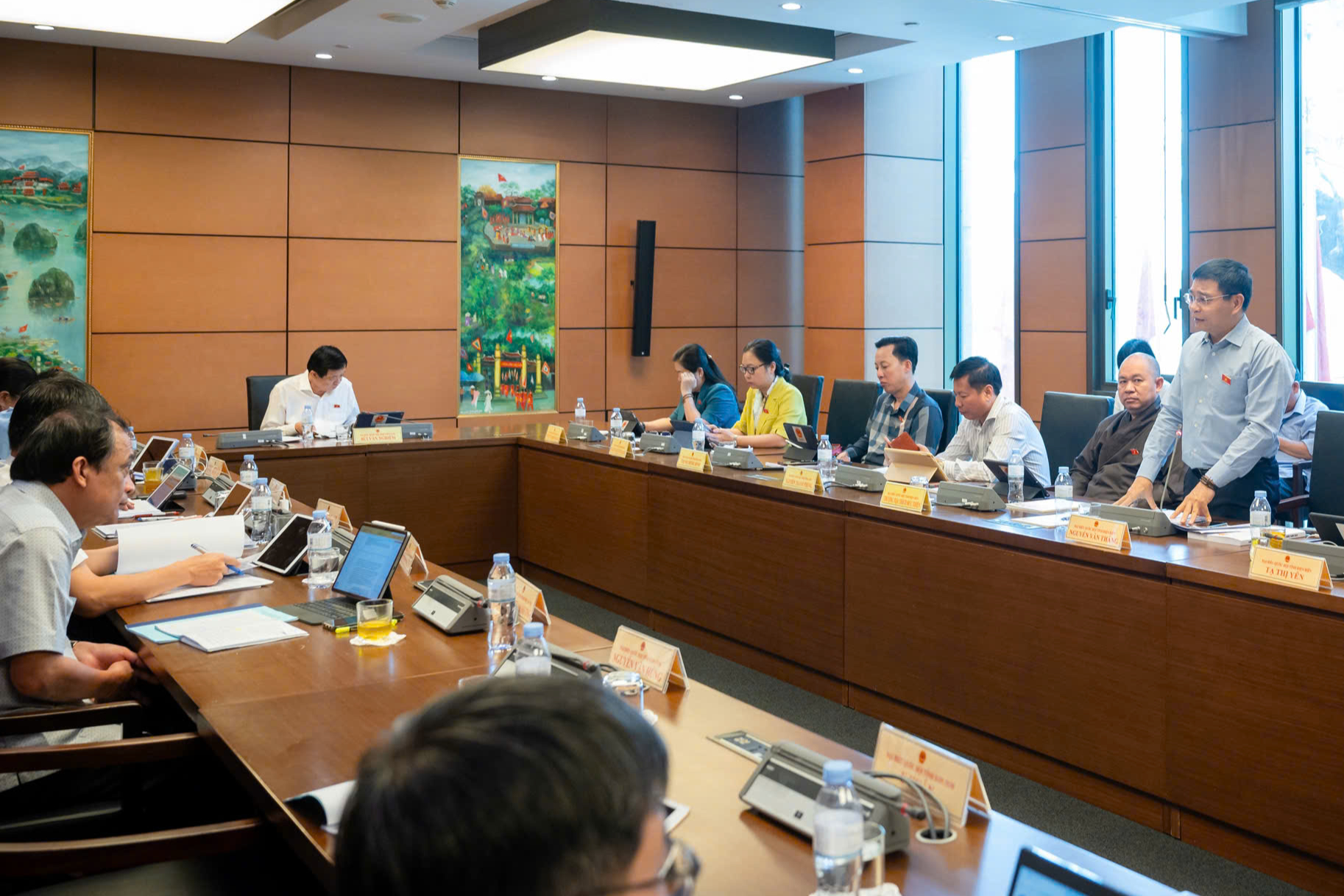
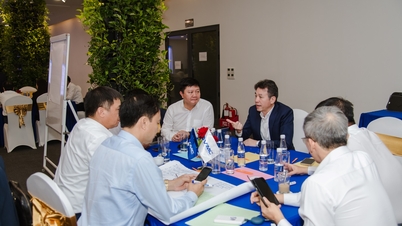
During the group discussion, Minister Nguyen Van Thang provided information on several transportation projects.
Drawing from his experience on a business trip to Europe, Minister Thang shared: "Many of their highways still have 4 lanes but no emergency stopping lanes. Notably, the people's awareness is very good; at that section, they accept slowing down and driving cautiously..."
This shows that wide roads aren't necessarily the only factor. Statistics show that over 90% of accidents stem from the awareness of road users. The wider the road, the higher the speed limit, and if awareness is low, the more catastrophic the accidents will be!
Therefore, along with investing in transportation infrastructure, many solutions are needed, including the involvement of the entire political system, to change traffic habits and culture. Only by improving traffic culture can traffic accidents be significantly reduced."
Thorough research is needed to build the highway in the form of an elevated bridge.
Regarding the proposal to build several elevated highways, especially in areas with weak soil foundations, Minister Nguyen Van Thang said that this is an issue that the Ministry has been studying for a long time.
"The biggest challenge is the cost, estimated to be 3.1 times higher than conventional road construction. If all cost-saving measures are used, it can be reduced to 2.5 - 2.7 times."
Therefore, further research is needed to find ways to minimize costs, which are only 1.7 times higher than conventional roads," the Minister of Transport shared.
Regarding the potential impact of elevated bridges on development space, the Minister stated that many countries previously favored building elevated bridges, but are now beginning to recognize the issues related to development space.
"Before doing anything, you need to think very carefully because once you've done it, there's no chance to redo it," Minister Thang shared.
Source: https://www.baogiaothong.vn/bo-truong-gtvt-sau-nang-cap-duong-sat-tu-tphcm-di-can-tho-chi-con-1-tieng-192241026140454379.htm


![[Photo] General Secretary and President To Lam meets with National Assembly delegates from ethnic minorities.](https://vphoto.vietnam.vn/thumb/1200x675/vietnam/resource/IMAGE/2026/04/20/1776696701056_a1-bnd-8331-3342-jpg.webp)
![[Image] National Assembly discusses the implementation of the socio-economic development plan.](https://vphoto.vietnam.vn/thumb/1200x675/vietnam/resource/IMAGE/2026/04/20/1776696707422_ndo_br_img-20260420-185419-jpg.webp)
















































































Comment (0)